13 hr
Swiss Alps & Lake Como Day Trip: Bernina Red Train & St. Moritz
- Expert local guide
- Small group
- Skip-the-line access
- Free cancellation
Milan To Swiss Alps Train — Bernina Express Reserved Seats
Vineyard terraces at dawn, glacier light by afternoon.
Compare fares, pick the fit — all bookings are mobile-voucher and eligible for free cancellation where shown.
13 hr
12 hr
11 hr
| Experience | Duration | Rating | Skip-the-line | Guide | Small group | Free cancel. | Price | |
|---|---|---|---|---|---|---|---|---|
|
Guided Experience
Most popular
Swiss Alps & Lake Como Day Trip: Bernina Red Train & St. Moritz
|
13 hr | ★ 4.6 | ✓ | ✓ | ✓ | ✓ | €146 | Book → |
|
Guided Experience
Swiss Alps Day Tour: Bernina Red Train & St. Moritz from Milan
|
12 hr | ★ 4.5 | ✓ | ✓ | ✓ | ✓ | $120 | Book → |
|
Guided Experience
Swiss Alps Day Trip: Bernina Red Train & St. Moritz from Milan
|
11 hr | ★ 4.7 | ✓ | ✓ | ✓ | ✓ | $126 | Book → |
Worth it for scenery-first travellers, not commuters
The milan to swiss alps train is priced honestly: 66 CHF for a one-way 2nd class ticket from Chur to Tirano, plus a compulsory seat reservation on panoramic cars and the regional connection up from Milan, which most people forget to budget. What that buys is the Albula–Bernina line, a UNESCO World Heritage railway that climbs from Mediterranean chestnut slopes to the Ospizio Bernina pass at 2,253 metres without a single rack rail — spiral viaducts, the Landwasser and Brusio circular viaducts, glacier ice above Alp Grüm. Compared with milan to swiss alps train tours sold as day packages, buying milan to swiss alps train tickets direct is materially cheaper for the same track. It pays off for photographers, rail enthusiasts and anyone treating the journey as the destination. If you only want to reach Switzerland, it does not; the direct route is faster and cheaper.
Bottom line: Book the milan to swiss alps train tour as an experience worth its fare, or take the faster route and skip it entirely.
The Bernina Express is the superior choice for a direct, panoramic journey, making it the top option for a classic milan to swiss alps train tour.
|
Top pick Bernina Express |
RhB Regional Red Train | |
|---|---|---|
| Seat Reservation Required | Yes (mandatory CHF 32–44 fee) | No (optional CHF 5 reservation) |
| Ticket Cost | CHF 66 base fare (2nd class) | CHF 66 base fare (2nd class) |
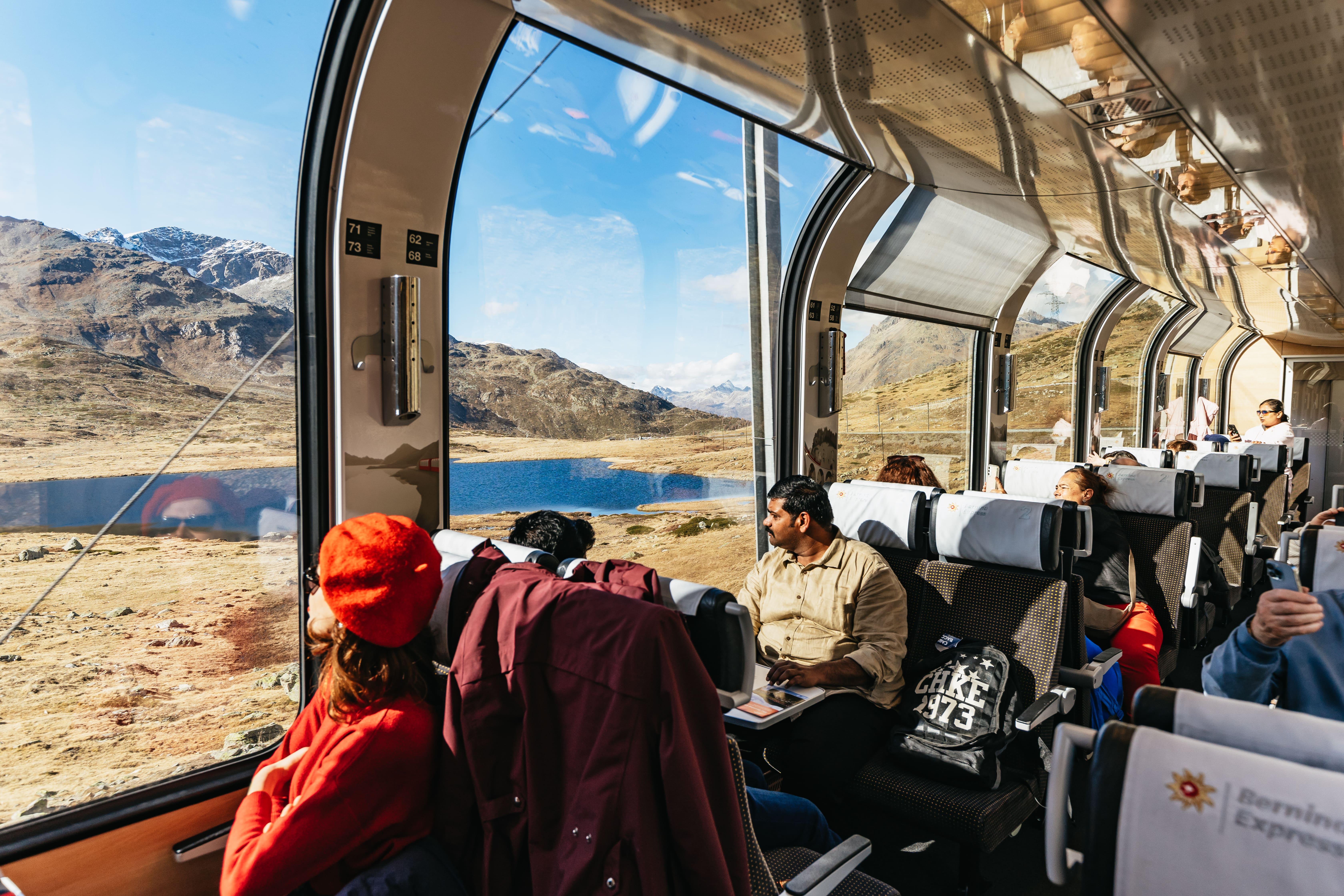
| Window Type for Photography | Sealed panoramic windows (glare potential) | Openable standard windows (no reflection) |
| Frequency | 1 to 3 daily departures | Hourly departures |
| Flexibility to Hop On and Off | — (Requires specific reserved seat) | ✓ (Hop on and off freely) |
| Scenic View Quality | Identical UNESCO route scenery | Identical UNESCO route scenery |
| See tickets & prices |
Verdict: Buy standard milan to swiss alps train tickets to ride the regular milan to swiss alps train along the UNESCO-listed route, or pay extra to join organized milan to swiss alps train tours on the express.
Hand-picked experiences loved by thousands of travelers
12 - 13 hours
Free Cancellation
Journey through the Swiss Alps on the legendary Bernina Express and explore elegant St. Moritz.
12.5 hours
Free Cancellation
Experience the majestic Swiss Alps on a guided day trip featuring the historic Bernina Red Train and St. Moritz.
13 hours
Free Cancellation
Journey through the Swiss Alps on the historic Bernina Red Train and explore glamorous St. Moritz.
12.5 hours
Free Cancellation
Experience the Swiss Alps on an intimate small-group trip from Milan, featuring the Bernina Express and St. Moritz.
12 hours
Free Cancellation
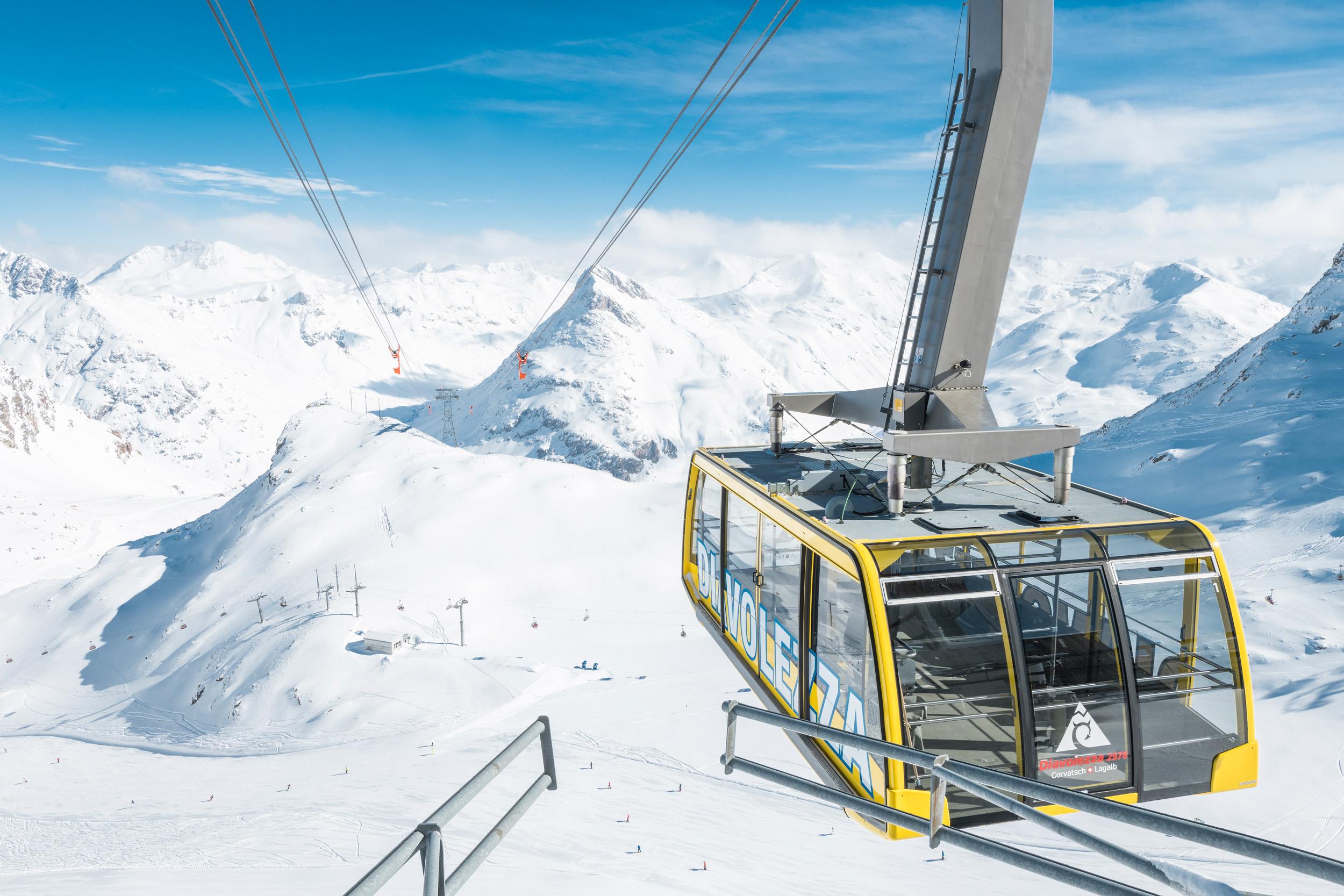
Ascend the Swiss Alps by cable car, enjoy a traditional lunch at 2,978 meters, and ride the historic Bernina Red Train.
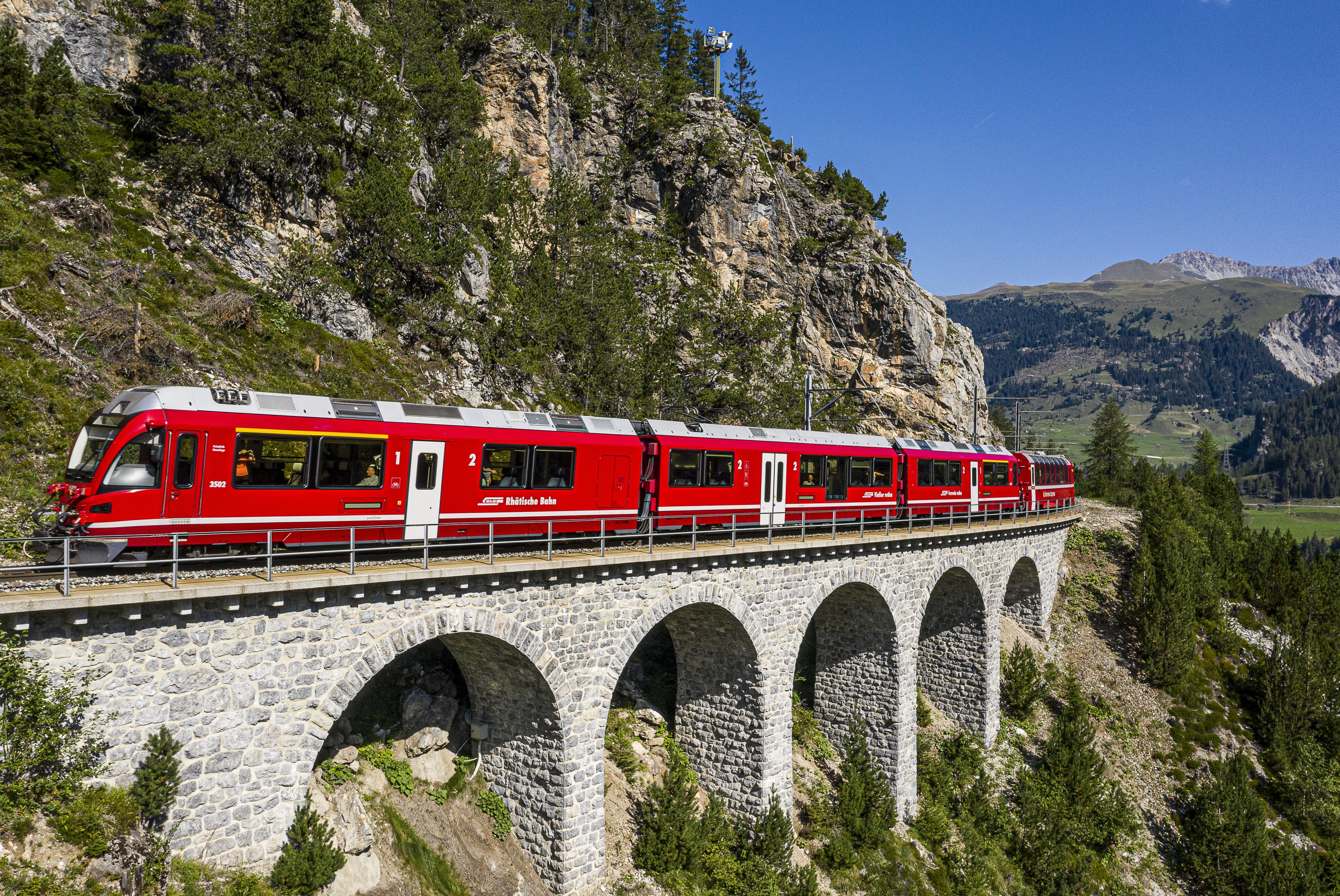
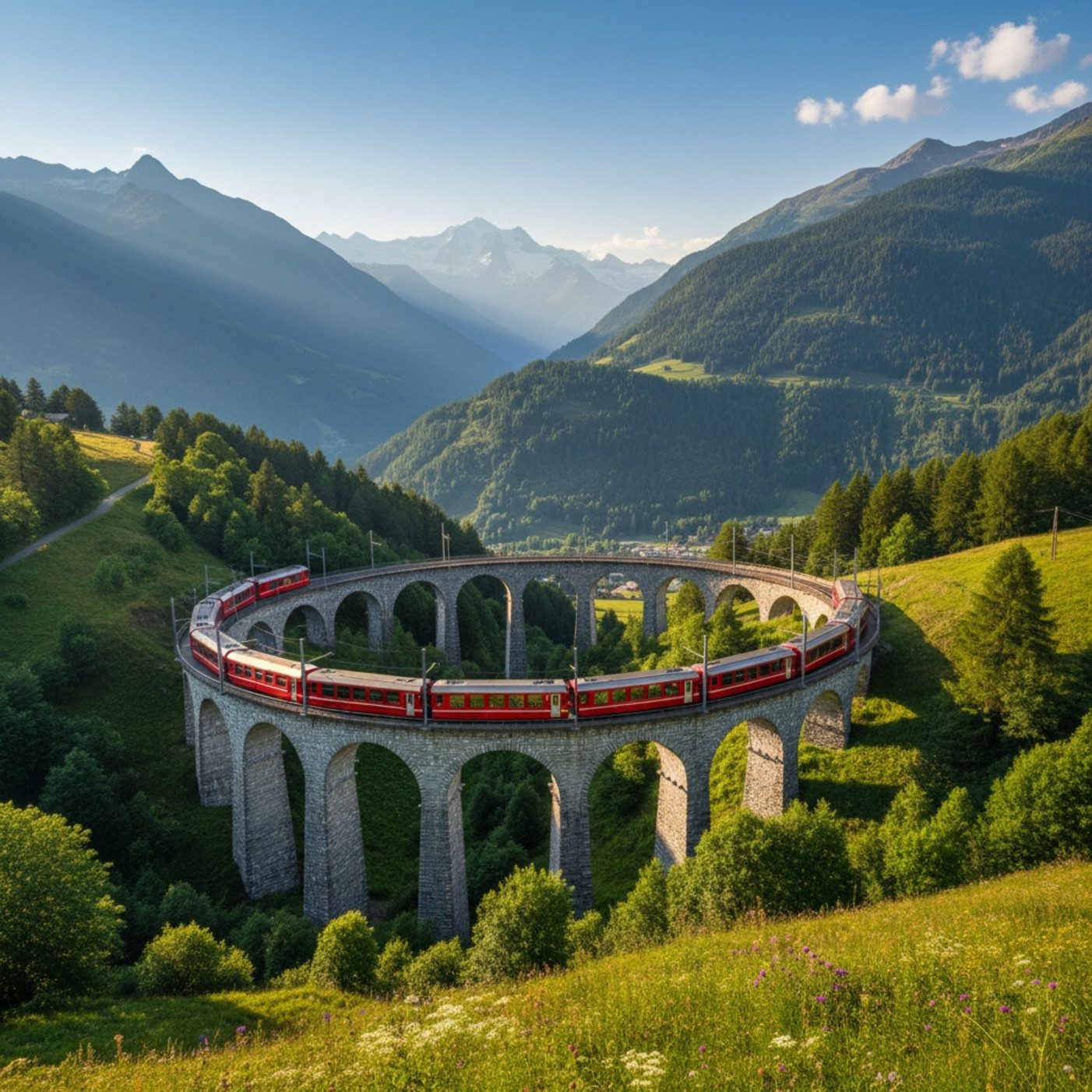
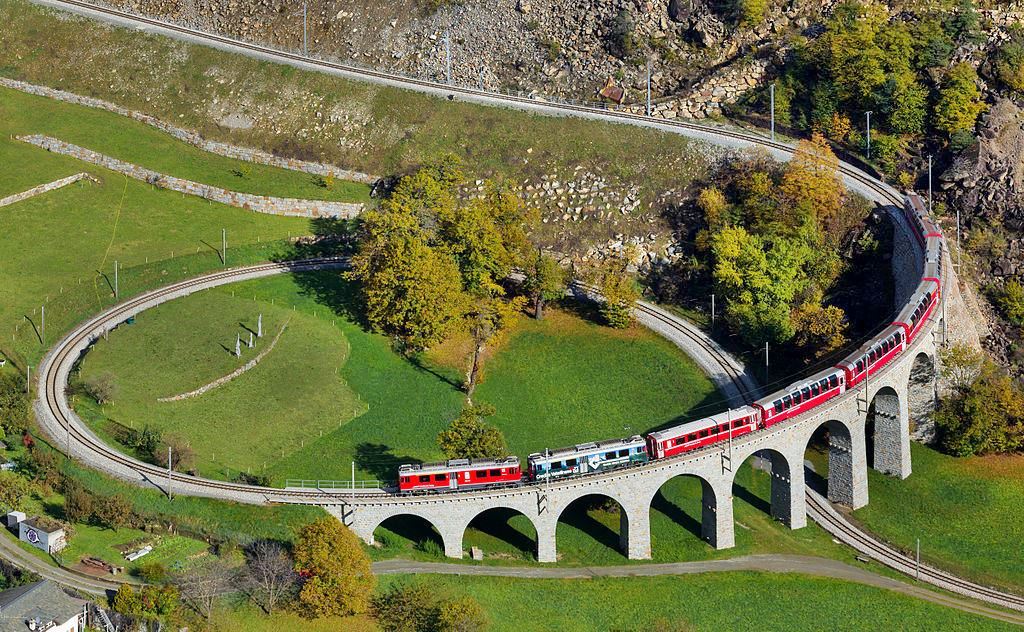
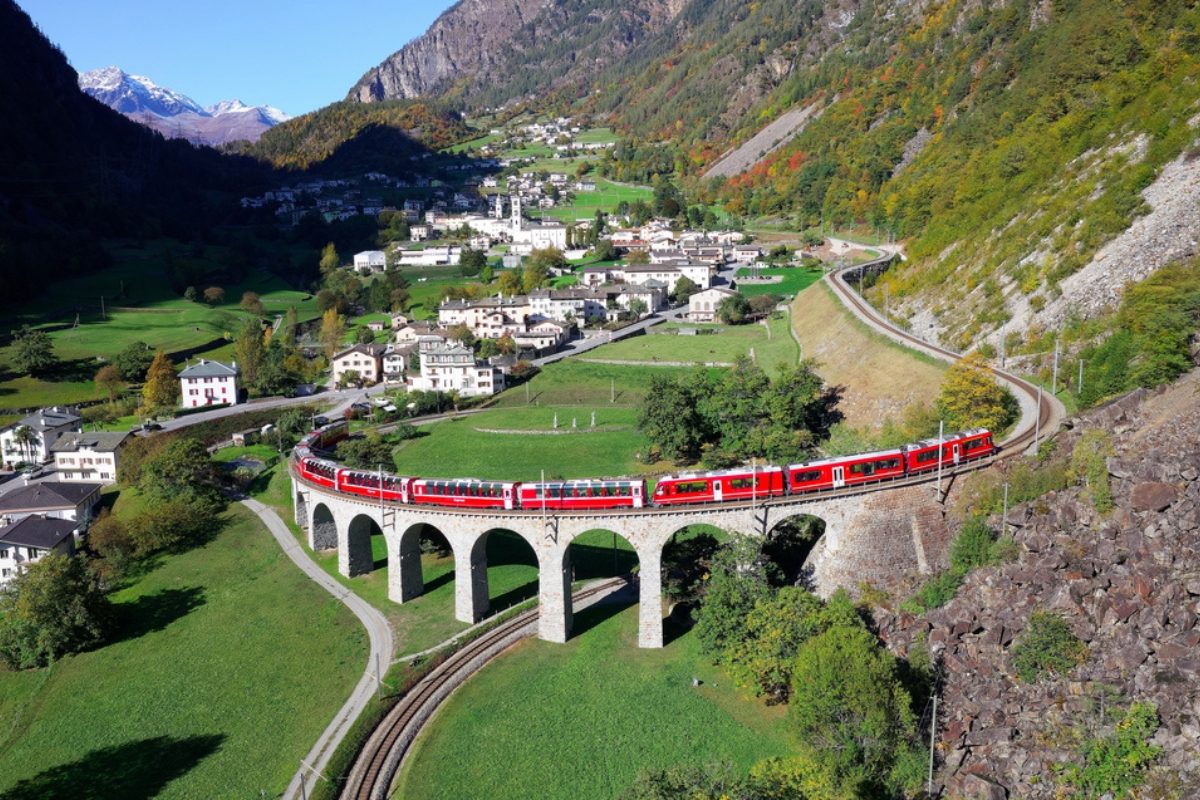
This nine-arch stone viaduct has a radius of seventy meters and a slope of seven percent. It allows the train to overcome a sudden elevation change of ten meters without gears.
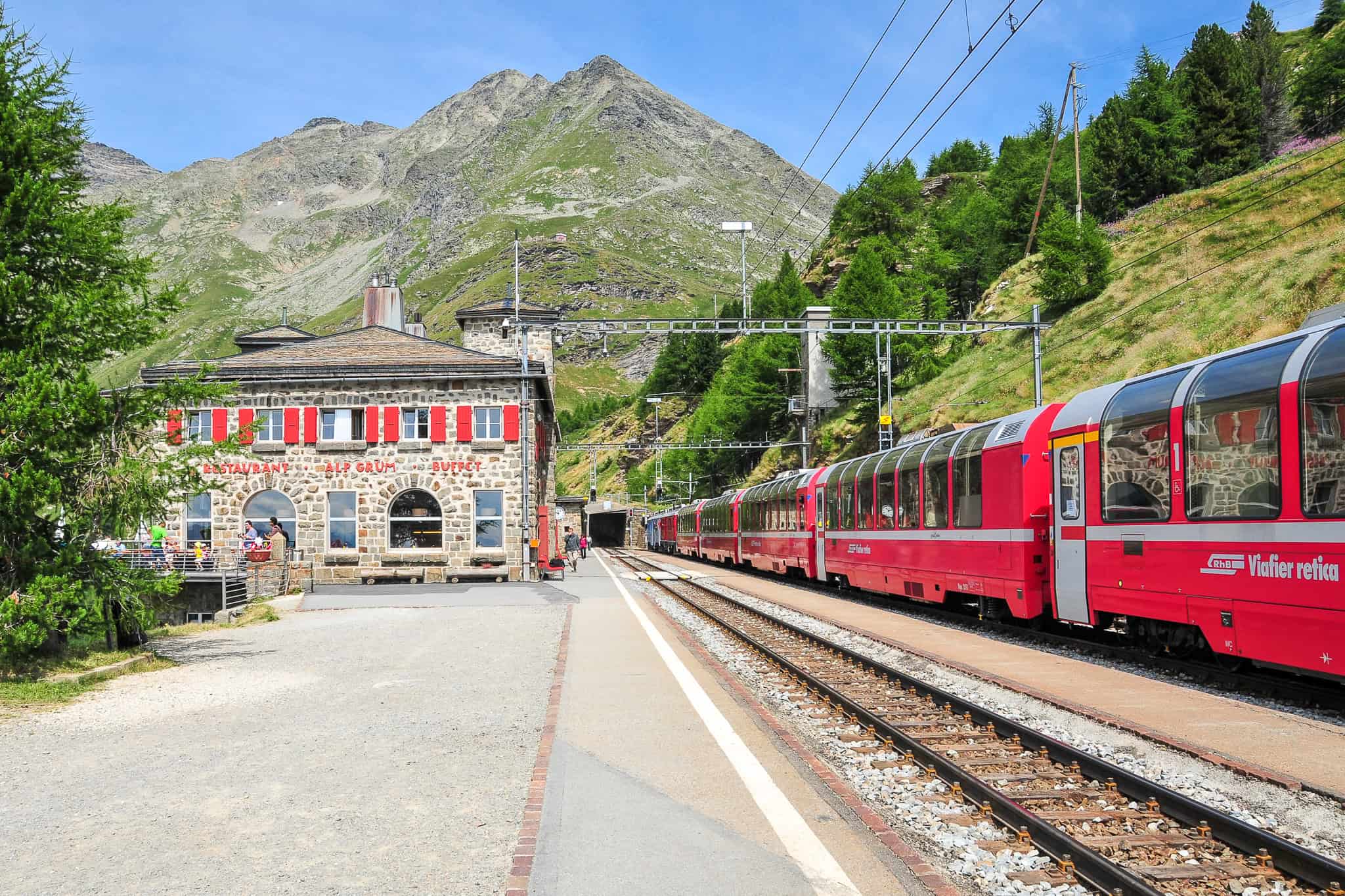
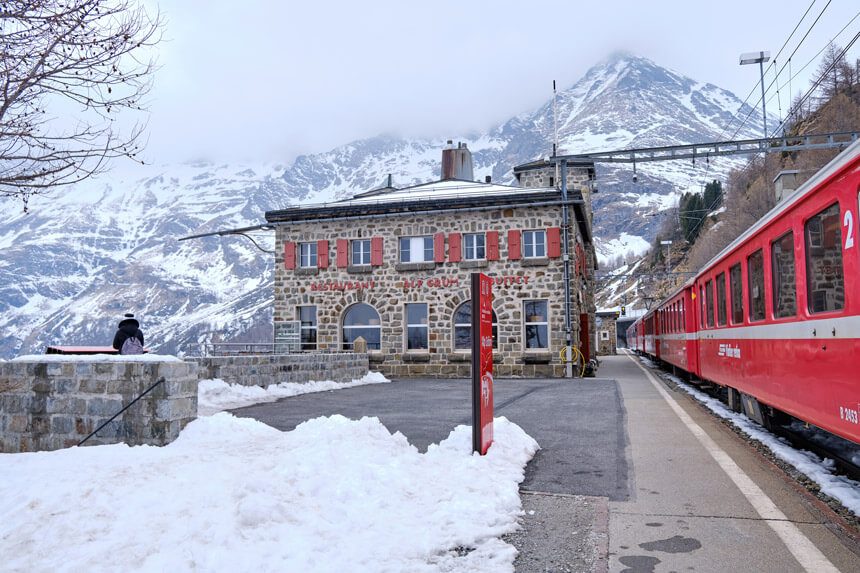
Situated at 2,091 meters above sea level, this historic station house serves as a hotel and restaurant. It offers panoramic views of the Palü Glacier and the valley below.
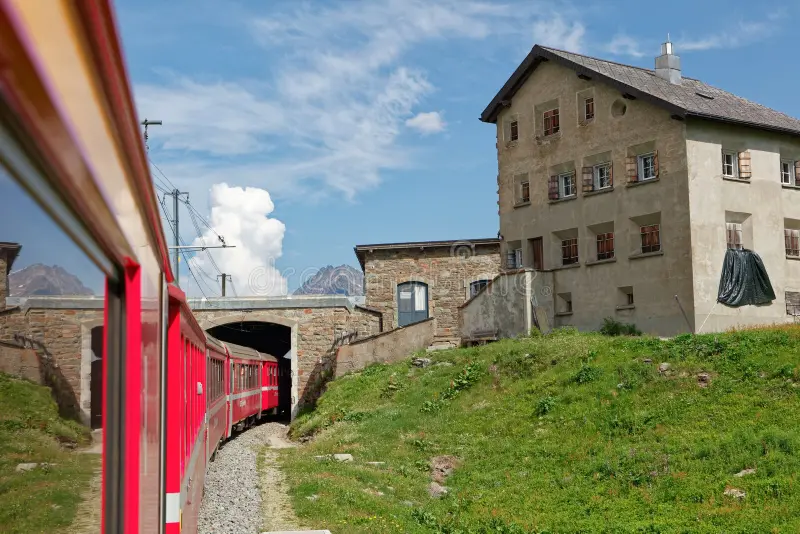
At 2,253 meters above sea level, this is the highest point on the Rhätische Bahn network. It marks the linguistic boundary between Italian-speaking Valposchiavo and Romansh-speaking Engadin.
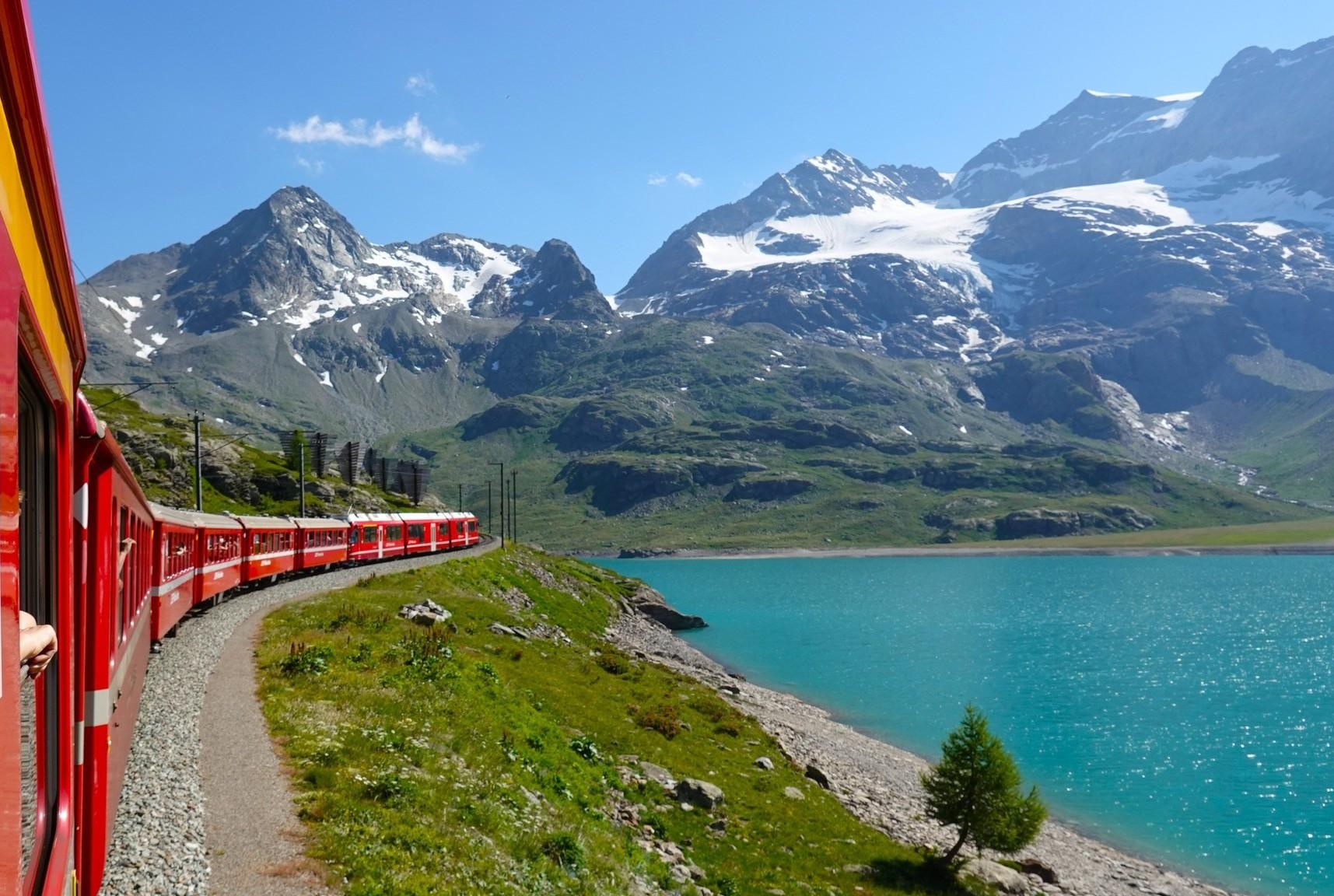
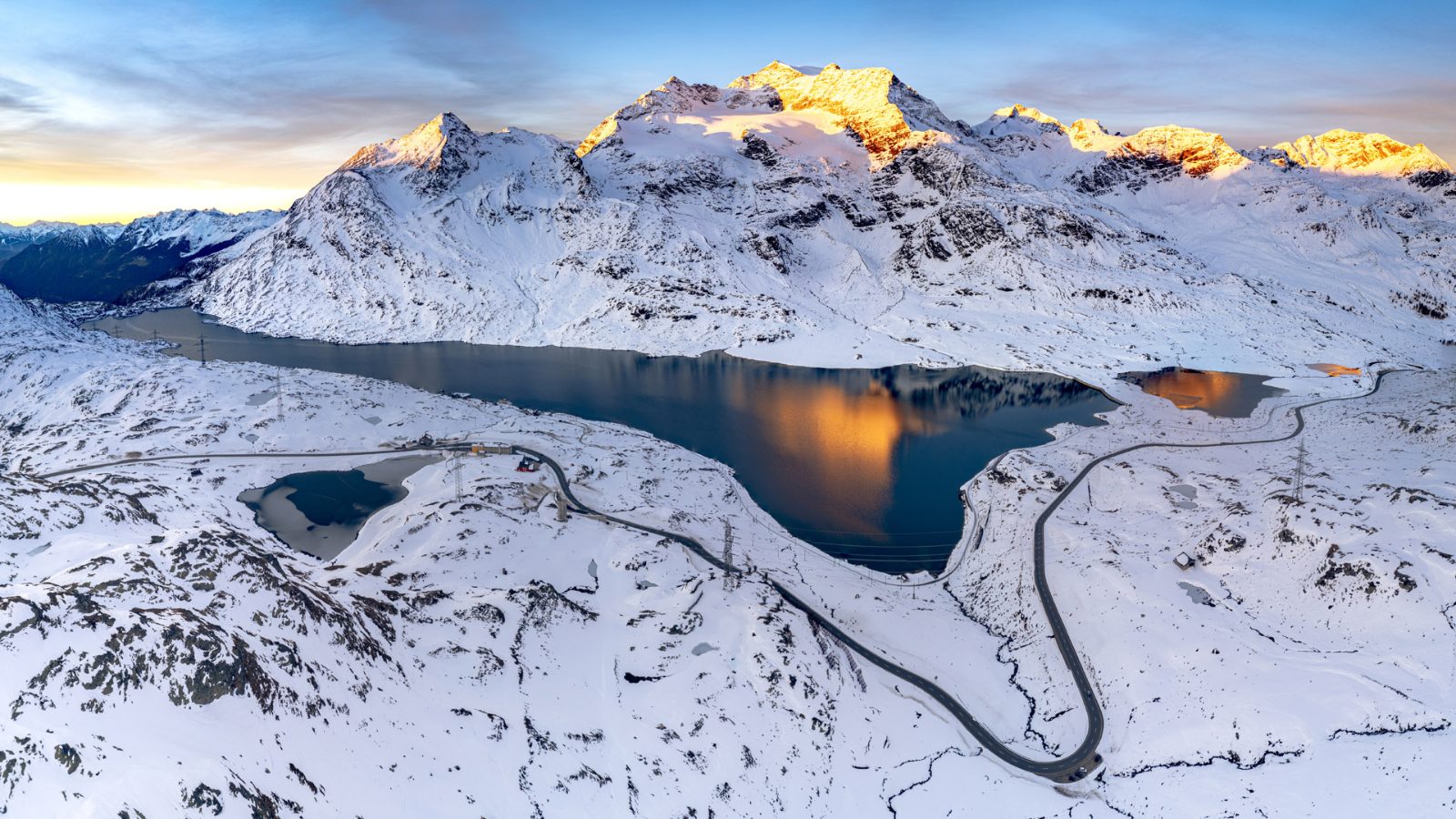
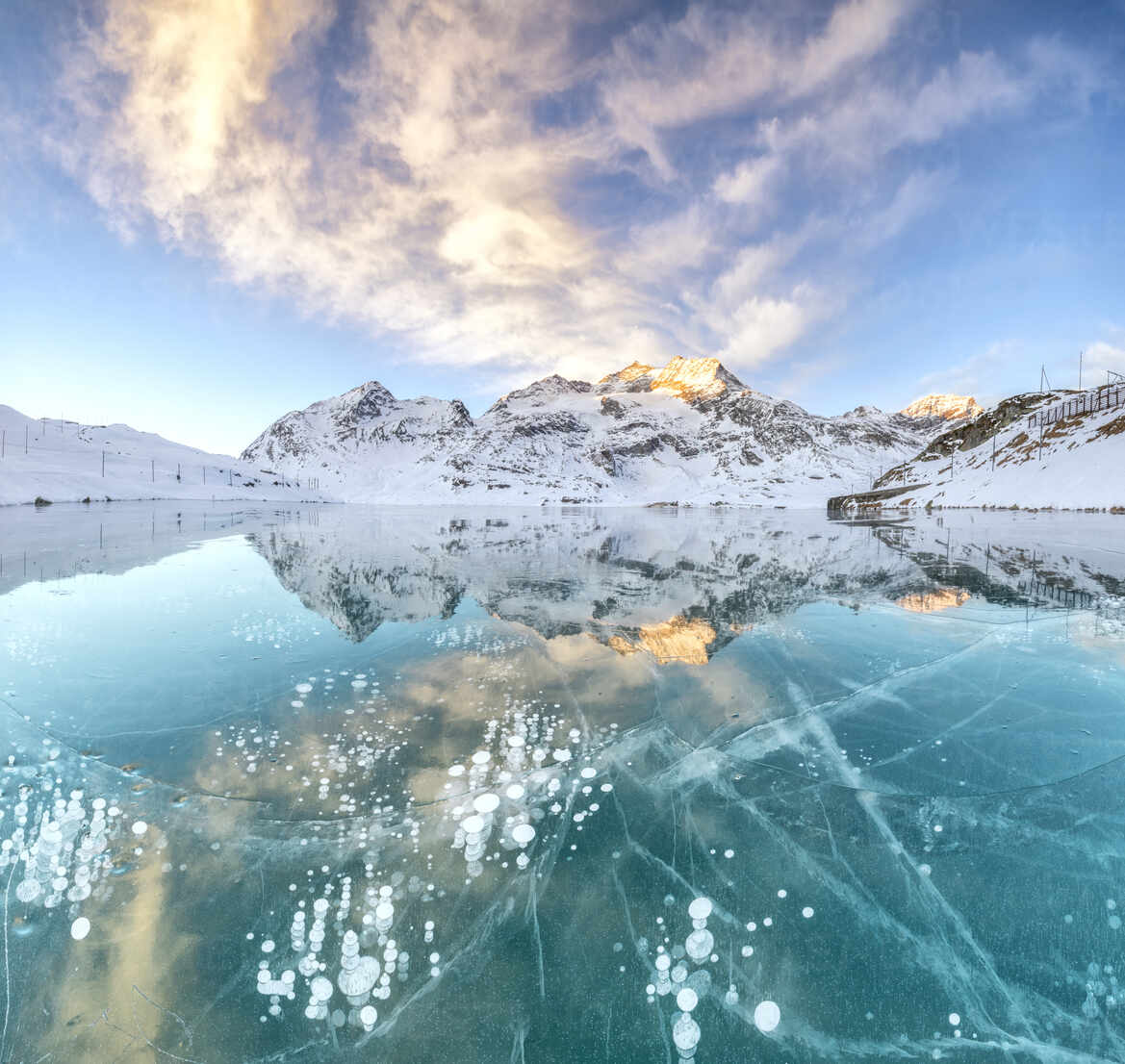
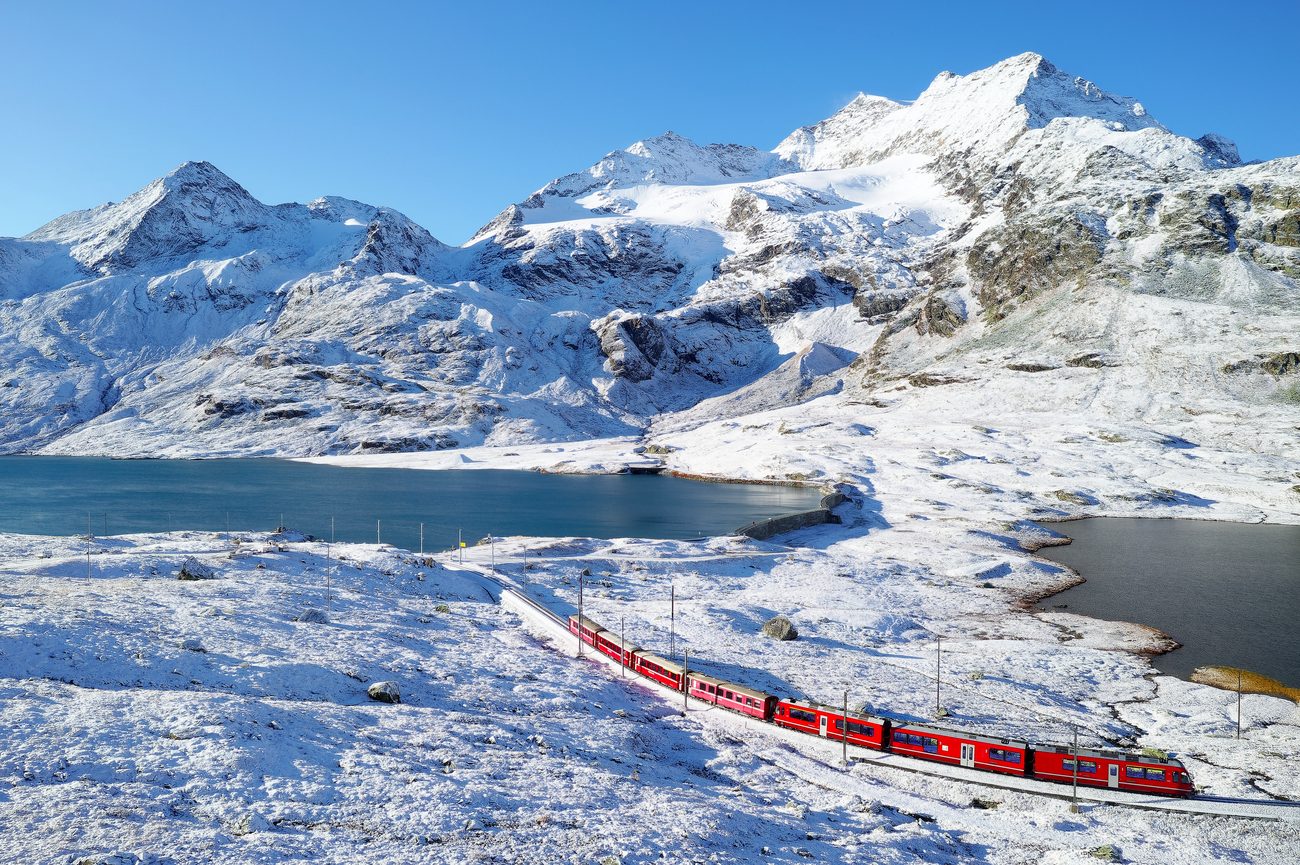
A reservoir located at the watershed of the Bernina Pass, spanning 2.3 kilometers in length. Its milky-white color is caused by glacier silt from the Cambrena glacier.
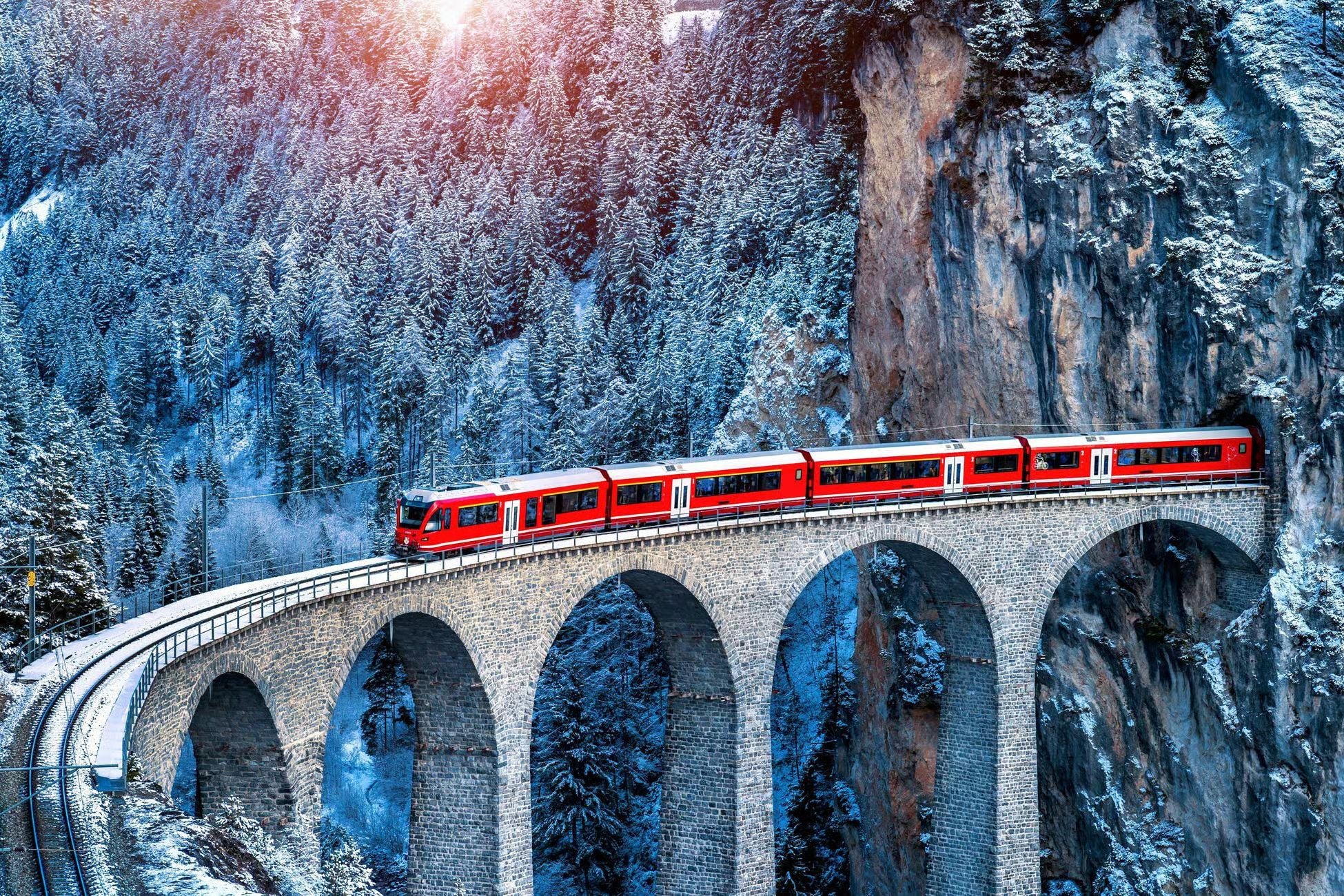
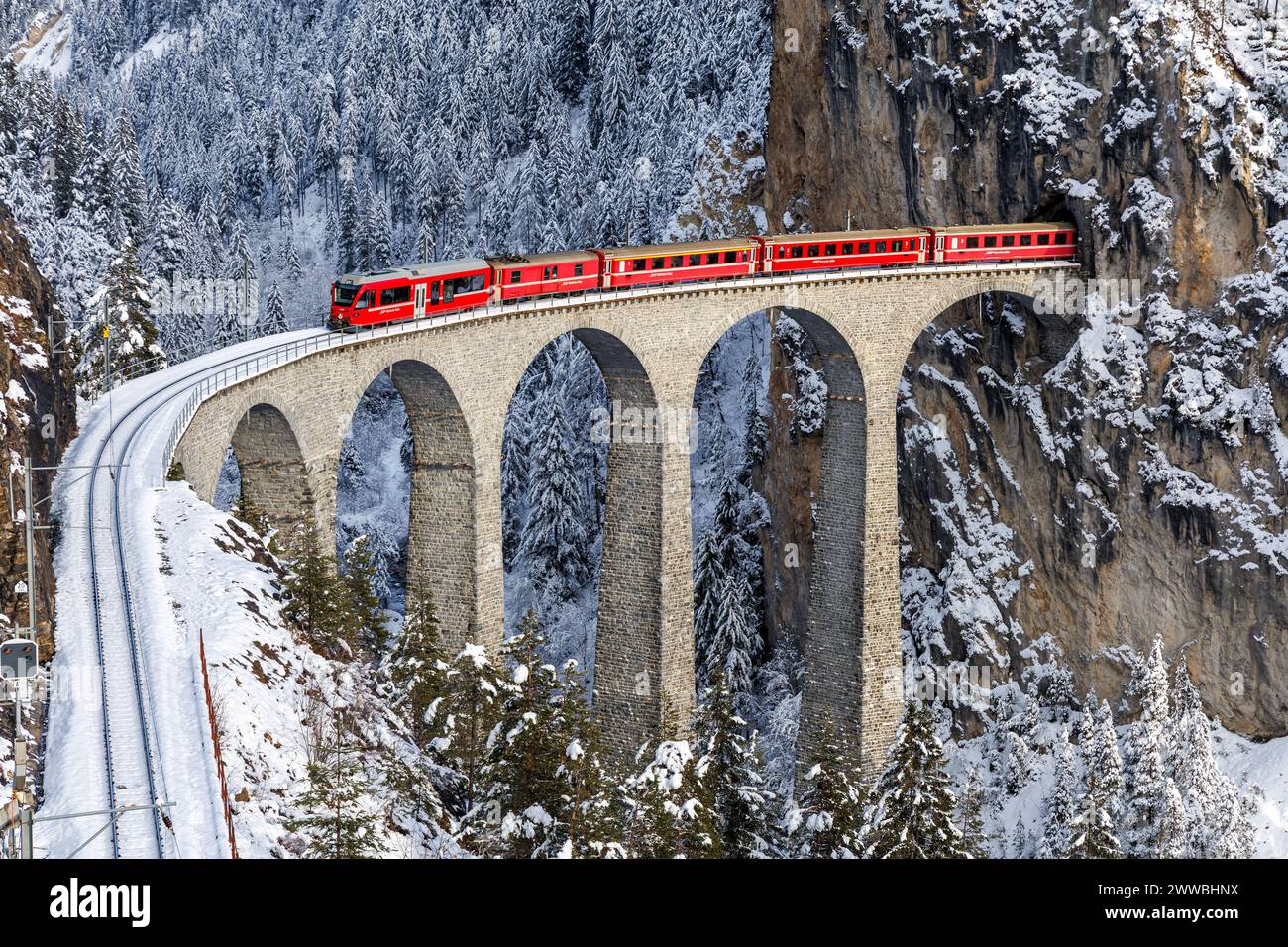
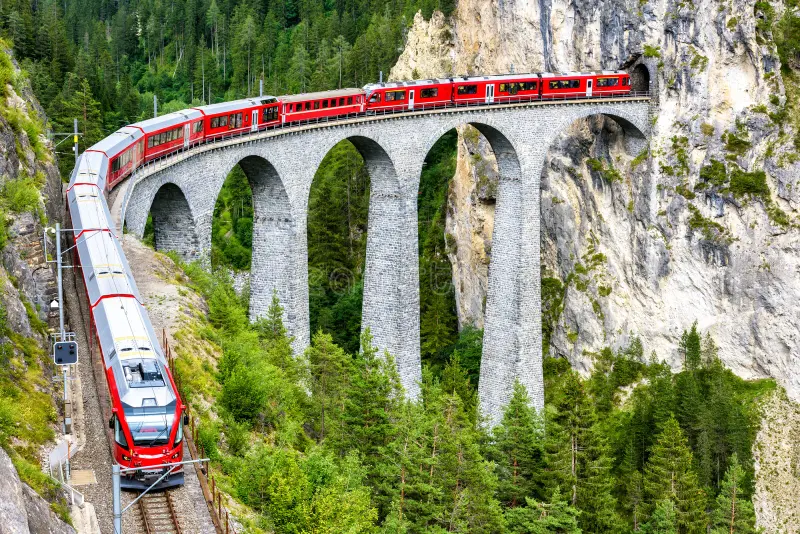
Standing 65 meters high and spanning 142 meters, this single-track limestone viaduct leads directly into the Landwasser Tunnel. It was built using three main pillars without scaffolding.
All the details about your upcoming adventure in one place
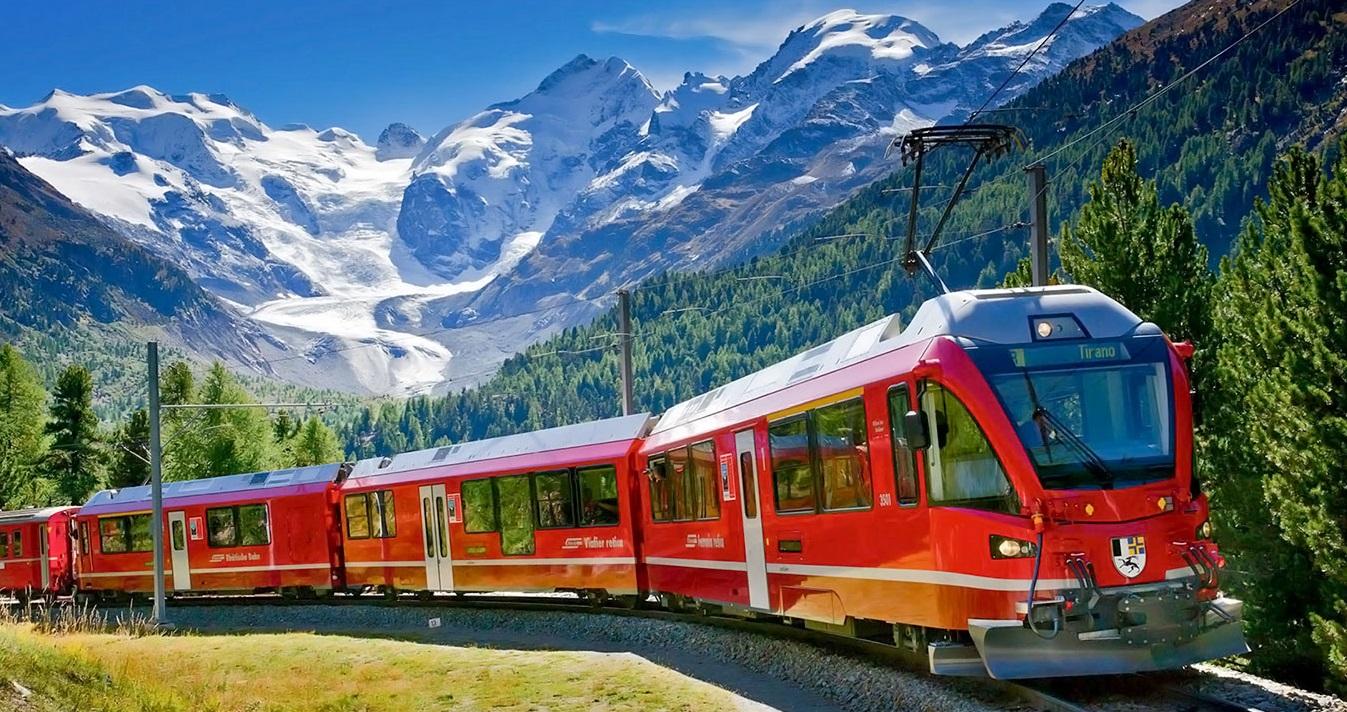
The Milan to Swiss Alps train pairs a regional service up the Valtellina valley to Tirano with the Bernina Express, the red UNESCO-listed Rhaetian Railway line Italians know as the Trenino Rosso del Bernina. From Tirano the route loops through the Brusio circular viaduct, climbs Val Poschiavo past Alp Grüm and crests Ospizio Bernina at 2,253 metres, with the Morteratsch glacier visible from panoramic carriages on the descent toward St. Moritz. Booked as Milan to Swiss Alps train tours, the day comes with a reserved panoramic seat and cross-border connections already arranged.
No cog, no rack, no cable: the Bernina line climbs from 429 metres at Tirano to 2,253 metres at Ospizio Bernina on adhesion alone, making it the steepest such railway in the world. Engineers achieved this with a metre-gauge track that loops back on itself rather than fighting the gradient head-on.
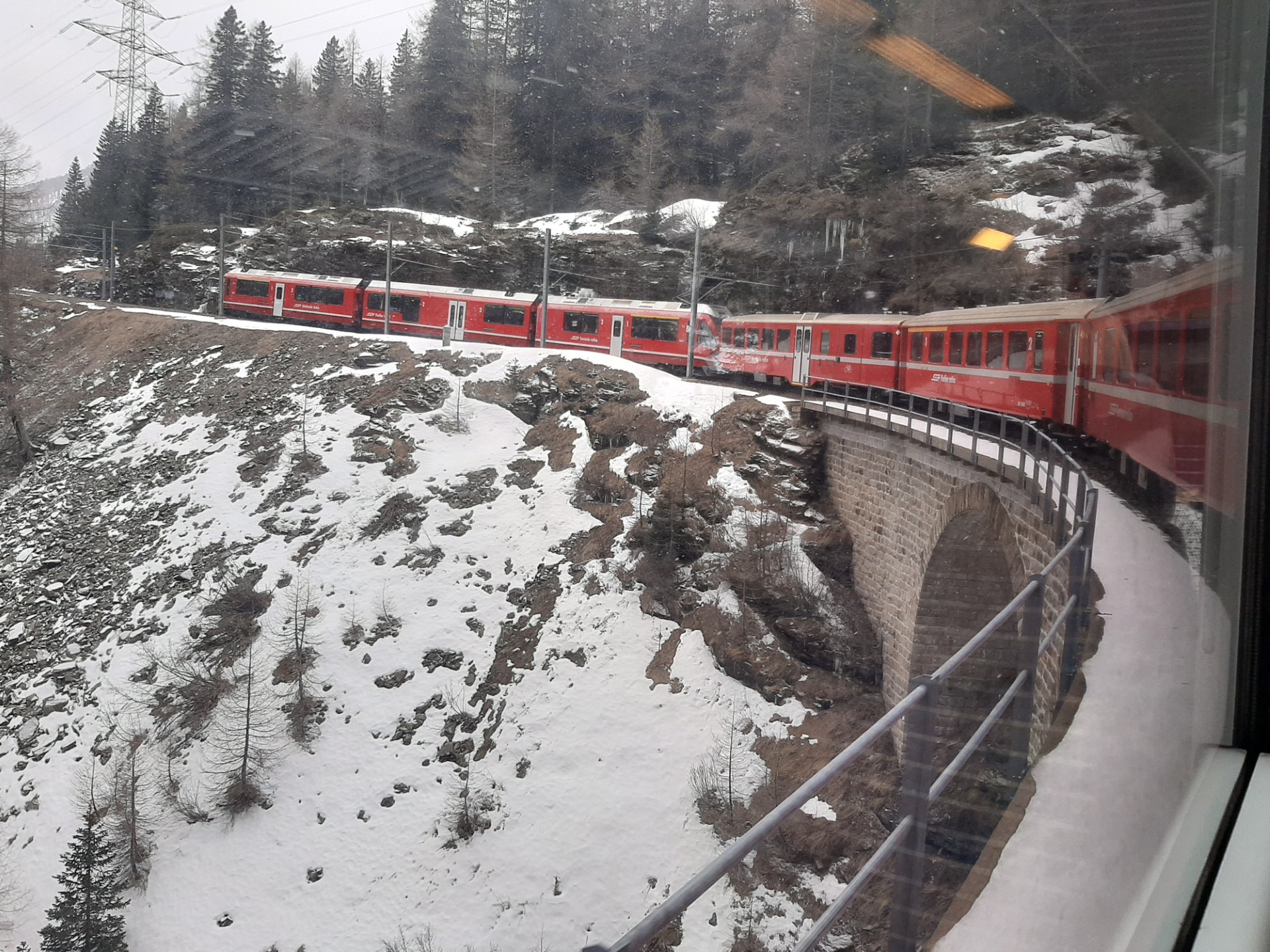
The Rhaetian Railway opened the Bernina stretch in 1910, and UNESCO inscribed it as World Heritage in 2008 alongside the Albula section. That listing recognised a rare thing — infrastructure judged as landscape architecture. The Brusio spiral viaduct, nine stone arches curling through a full circle in open pasture, remains the emblem of the route. Further north the Landwasser Viaduct carries the track 65 metres above the river before vanishing directly into a tunnel mouth cut in the cliff face.
The milan to swiss alps train question is, in practice, a two-part answer. Travellers researching the milan to swiss alps train time discover the crossing is measured in hours rather than minutes, which is precisely the point.
What gives the milan to swiss alps train ride its enduring pull is compression of climate. Palms and vineyards give way to larch, then to bare granite and the Morteratsch glacier within a single afternoon. Alp Grüm faces the Palü glacier directly; the station platform has no road access at all.
Panoramic carriages, introduced with sealed floor-to-ceiling glazing, are reserved separately from the regular red service that runs the identical rails. Those weighing up milan to swiss alps train ticket price will find the base figure fixed by the operator: 66 CHF for a one-way 2nd class ticket from Chur to Tirano, with seat reservation handled apart from the fare itself.
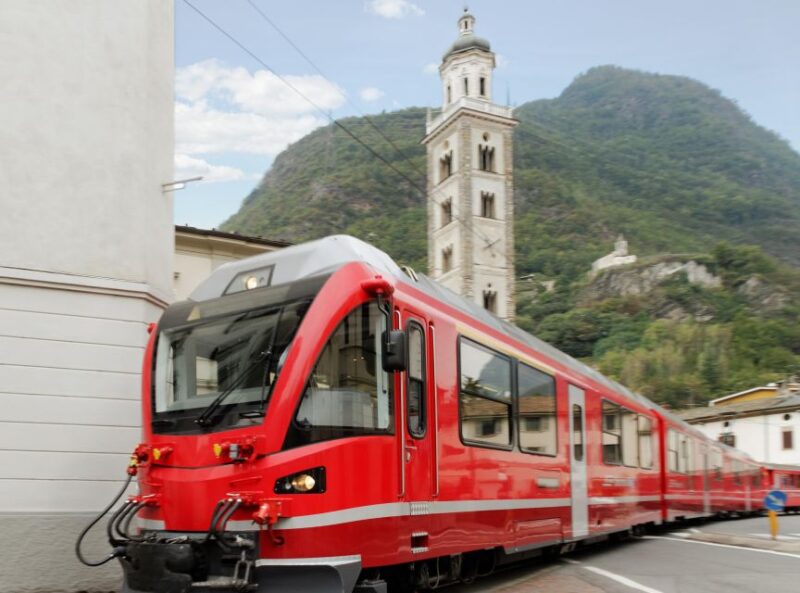
Today the line is a working railway, not a museum piece. Freight moves over it, villagers board at halts where the train stops on request, and the tracks run down the public street in Tirano beside cars and cyclists. Some itineraries chain a milan to swiss alps train ride with venice into a wider circuit of northern Italy, though the alpine crossing tends to be the section people remember. Well-planned milan to swiss alps train tours treat the descent into Poschiavo — past the lake, past the church tower — as the quiet counterweight to the summit.
Infrastructure judged as landscape architecture — a railway inscribed for what it made of the mountain, not merely for crossing it.
Tickets are non-refundable after purchase, but passengers can change travel dates up to 48 hours prior to departure for a fee. The 66 CHF ticket price for the Chur to Tirano route remains subject to standard Rhätische Bahn carriage terms.
Weather · crowds · average price — dots go green to amber to red as each metric rises.
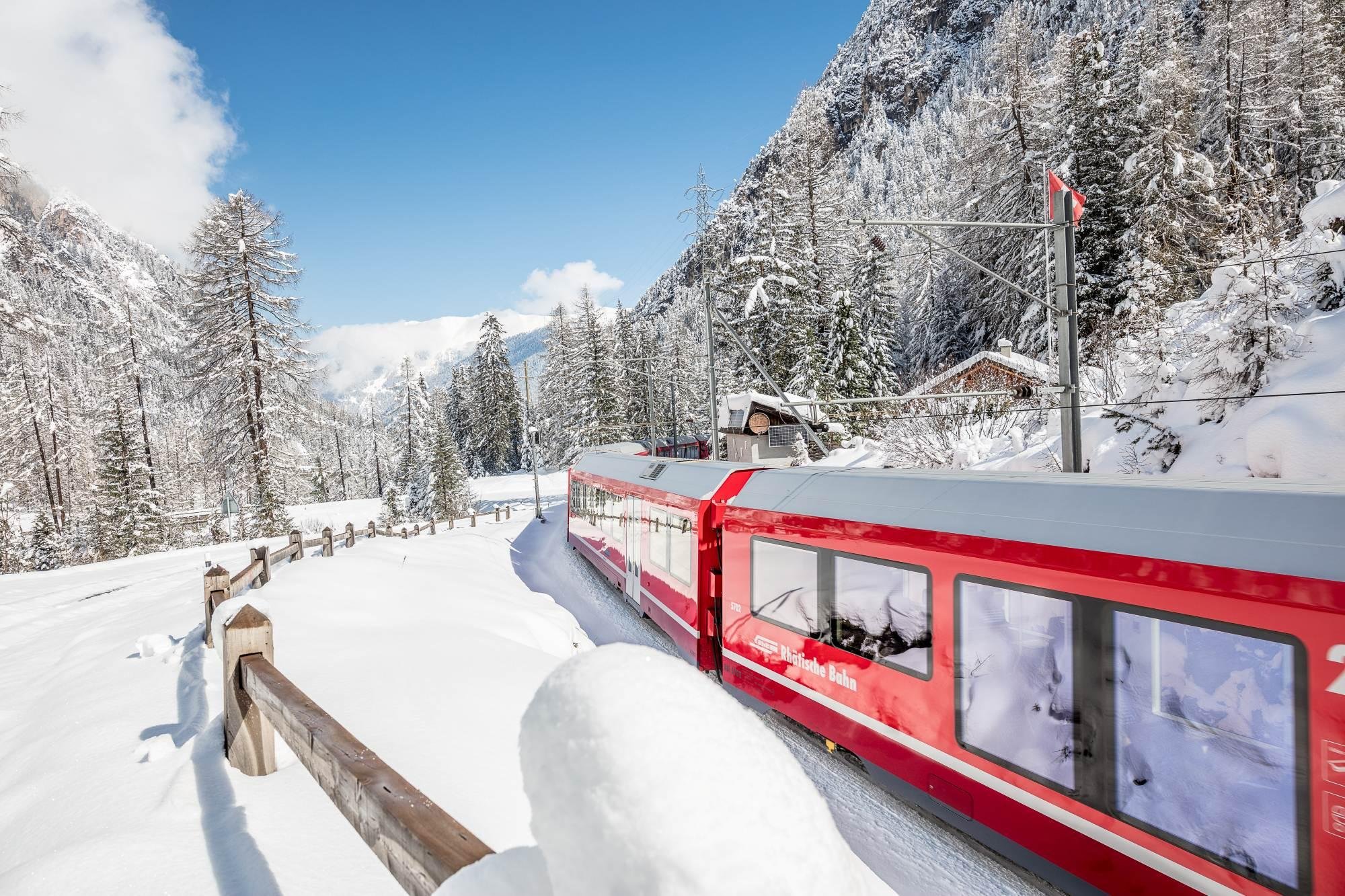
Winter brings deep snow covers along the Bernina Pass, transforming the landscape into a white corridor. Temperatures frequently drop below minus ten degrees Celsius at high elevations.
Summer offers clear alpine vistas and blooming meadows, with average high-altitude temperatures hovering around fifteen degrees Celsius. This is the peak season for hiking at intermediate stops.
Autumn foliage turns the valley forests gold and orange, contrasting with the early snow on the peaks. Passages are quieter with fewer tour groups.
Spring brings melting snows and rushing waterfalls, although some high-altitude trails remain closed due to mud. Carriages are less crowded during these shoulder months.
Panoramic carriage reservations sell out months in advance for peak summer and winter periods. Separate reservation fees apply in addition to the standard ticket.
Although Switzerland and Italy are part of the Schengen Area, random customs checks are conducted on the train. Keep your identification documents easily accessible.
When traveling north from Tirano, the right side of the carriage offers the best initial views of the Brusio spiral viaduct and Alp Grüm.
High-altitude stops like Ospizio Bernina sit at 2,253 meters above sea level. Pack a windproof jacket even when starting your trip in warm Italian weather.
If photographing through panoramic glass, a polarizing filter helps eliminate interior carriage reflections. Keep the lens close to the glass without touching it to reduce vibration.
Ensure you review the seasonal schedules on the official site as departure frequencies vary throughout the year. The milan to swiss alps train operates fewer runs during late autumn.
The Bernina line was born of ambition rather than necessity. In 1904 the Bernina-Bahn-Gesellschaft, a private company backed by Italian and Swiss capital, began driving a metre-gauge railway from Tirano toward St. Moritz. The engineer Carlo Sartori led the surveys. His conclusion was radical for the era: no cogwheels, no racks, no cables. Adhesion alone would carry the trains. That decision fixed the geometry of today's milan to swiss alps train forever, forcing gradients of 70 per mille and curves of just 45 metres radius. Construction proved brutal. The Brusio spiral viaduct, completed in 1908, wound a nine-arch stone circle through open pasture simply to shed altitude. Avalanches buried work camps above Alp Grüm. The line opened in stages between 1908 and 1910, and the Ospizio Bernina summit at 2,253 metres became the highest adhesion crossing in Europe. Winter nearly ended everything. Snowdrifts closed the pass repeatedly, passenger numbers collapsed, and the company slid into bankruptcy. In 1943 the Rhaetian Railway absorbed the bankrupt operator, and only then did year-round service become dependable. Recognition arrived slowly. The Bernina Express name entered timetables in 1973, pairing the pass with the Albula line and its Landwasser Viaduct. On 7 July 2008 UNESCO inscribed the Albula/Bernina corridor as a World Heritage Site, citing the harmony between the granite viaducts and the landscape they cross. What survives is unusually intact: the original alignment, the masonry, the open-air street running through Tirano. Modern panoramic coaches roll over Sartori's century-old formation. Today's milan to swiss alps train tours follow that same unaltered path, and travellers booking a Bernina Express journey ride living engineering rather than a reconstruction. The full one-way fare from Chur to Tirano is 66 CHF (One-way 2nd class ticket from Chur to Tirano). Anyone comparing a milan to swiss alps train tour or securing milan to swiss alps train tickets is buying a seat on a monument.
The Bernina-Bahn-Gesellschaft began construction of the metre-gauge line from Tirano toward the pass.
The nine-arch Brusio spiral viaduct was completed to lose altitude without rack assistance.
The final section opened, completing the highest adhesion-worked alpine crossing in Europe at 2,253 metres.
The Rhaetian Railway absorbed the bankrupt Bernina company, securing reliable year-round winter operation.
The Bernina Express name entered the timetable, linking the pass route with the Albula line.
UNESCO inscribed the Albula/Bernina railway landscape as a World Heritage Site on 7 July.
The original 1910 alignment remains in daily use beneath modern panoramic coaches.
Captures the Rhaetian Railway red train winding along the famous 360-degree helical viaduct. For the best angle, shoot from the ground-level pathway adjacent to the structure. This engineering marvel is a major highlight on milan to swiss alps train tours.
A monumental 65-meter-high curved limestone bridge that leads directly into a cliffside tunnel. Frame your shot from the dedicated viewing platform south of the bridge. Ensure you have your milan to swiss alps train tickets ready to catch this iconic UNESCO World Heritage site from the window.
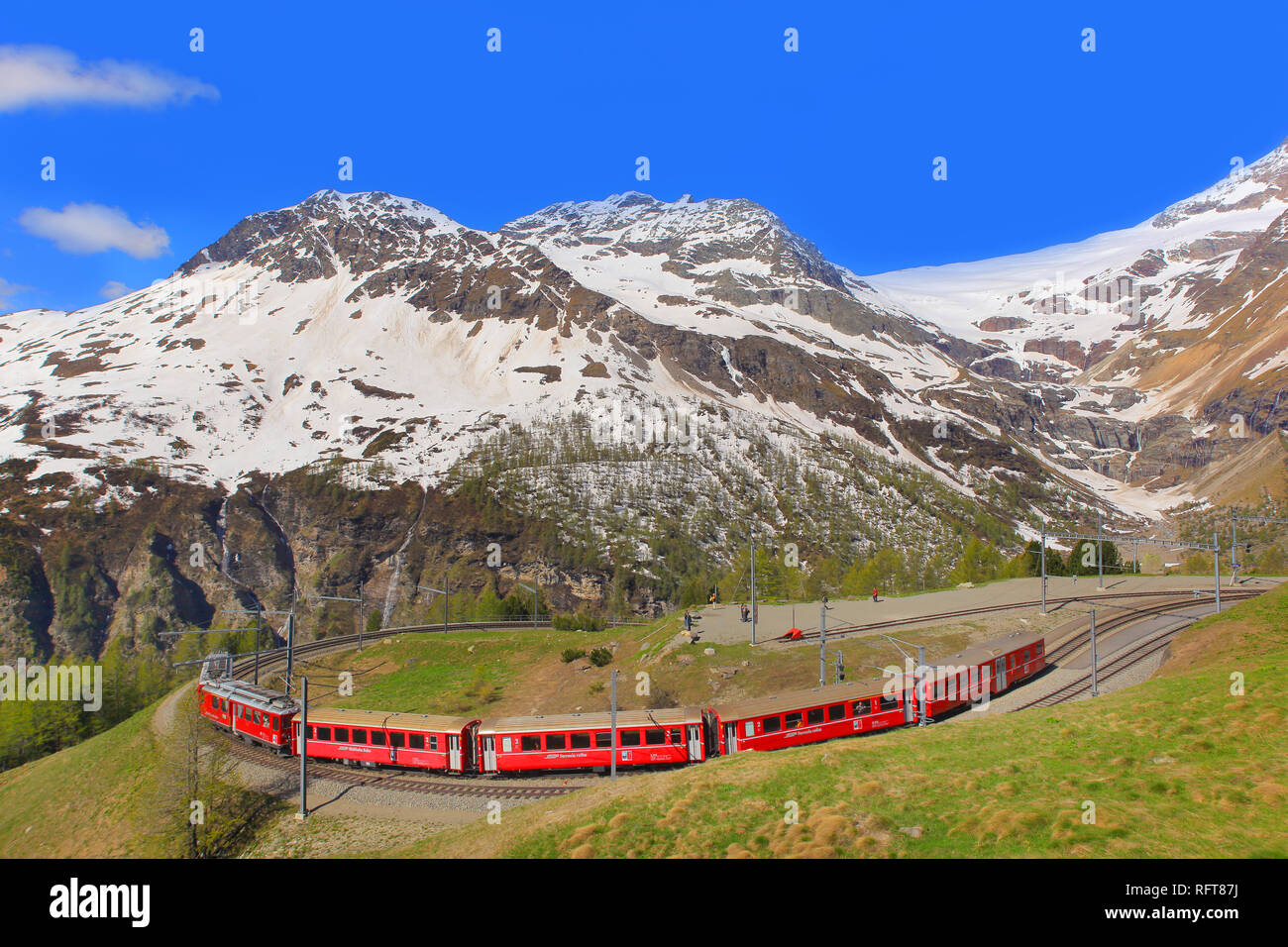
Offers panoramic views of the Palü Glacier and the valley below. Step onto the station platform during the brief stop to capture the sweeping curves. This stop is featured on every classic milan to swiss alps train tour, showcasing the beauty of this Bernina Express train from Italy.
A high-altitude reservoir that glows turquoise in the summer and turns into a frozen expanse in the winter. Stand near the Ospizio Bernina station to photograph the train running along the shoreline. Travelers on the classic milan to swiss alps train will appreciate this dramatic alpine landscape.
Before starting your journey on the milan to swiss alps train, the area surrounding the Tirano station offers excellent opportunities to sample traditional Lombard alpine cuisine.
Located right on the square, this traditional spot is a favorite for travelers using milan to swiss alps train tickets. It serves authentic buckwheat pizzoccheri, local sciatt, and wood-fired pizzas in a warm, rustic setting.
Tucked just behind the platforms, this cozy wine bar and bistrot is perfect if you are on a self-guided milan to swiss alps train tour. It features curated Valtellina Nebbiolo wines paired with local Casera cheese and thin-sliced bresaola.
A modern, vibrant bistro situated a short walk down the main street from the station. Those looking to escape the main crowds during group milan to swiss alps train tours will enjoy their fresh salads and creative pasta dishes.
Everything you need to know for your journey
There is no formal dress code, but layering is recommended due to the temperature changes along the route.
A mobile minibar cart travels through the Bernina Express carriages offering drinks and snacks, but passengers can also bring their own food.
A sixteenth-century Renaissance sanctuary featuring an ornate organ and classic stucco decorations.
An aristocratic historic residence with frescoed rooms and a hidden Italian-style garden.
The ruins of medieval fortifications overlooking the valley, offering views of the surrounding vineyards.
A historic local church in the center of Tirano featuring classic Lombard architecture.
A comfortable hotel located close to the railway station, offering traditional regional cuisine.
An eco-conscious guest house offering modern amenities and convenient access to the train platforms.
A restored historic property with sustainable operations and rooms styled with local materials.
Join thousands of happy travelers who have discovered this incredible experience
Book Your Experience Now