13 hr
Lake Como Cruise, St. Moritz & Bernina Red Train from Milan
- Expert local guide
- Small group
- Skip-the-line access
- Free cancellation
Bernina Express — Milan to Swiss Alps Day Trip by Train
Two countries before lunch, one red train through the ice.
Compare fares, pick the fit — all bookings are mobile-voucher and eligible for free cancellation where shown.
13 hr
11 hr
12 hr
For a milan to swiss alps day trip by train, the key choice is not a separate sightseeing tier but the Bernina Express ticket setup: route length, class, and the required seat reservation. Most first-time visitors should compare the St. Moritz–Tirano short route with the longer Chur–Tirano route, then decide between 2nd and 1st class based on space and budget.
|
Top pick 2nd class standard panorama coach |
1st class extra space panorama coach | Long route ticket Chur–Tirano through service | |
|---|---|---|---|
| Route covered | St. Moritz–Tirano | Same train, same route | Chur–Tirano |
| Class/comfort | Standard seating; panoramic coach | More space and quieter feel | Same as booked class |
| Fare level | Lower base fare | Higher base fare | Higher route fare |
| Reservation/supplement | Mandatory seat reservation; same supplement | Mandatory seat reservation; same supplement | Mandatory reservation; route-based supplement |
| Best for | Budget-focused day trippers | Comfort-first travelers | Longer one-seat ride |
| See tickets & prices |
Verdict: If you want the simplest milan to swiss alps day trip by train tour, book the short route in 2nd class; choose 1st class for more room, and pick the long route only if you want the Chur–Tirano through journey.
Worth it for scenery-first travelers, not rushers
The milan to swiss alps day trip by train sells a full day of logistics, not a bargain fare. The rail leg itself is 33 CHF second class between St. Moritz and Tirano; what packaged milan to swiss alps day trip by train tickets add is the coach transfer out of Milan, the Valtellina run to Tirano, a reserved panoramic seat, and someone else handling the timings. Judged as a UNESCO-listed Rhaetian Railway crossing — the Brusio circular viaduct, the Bernina Pass at 2,253 metres, Lago Bianco, Morteratsch glacier views — it pays off for first-timers who want the Engadine and the Alps in one pass. It pays off less for budget rail travellers who could self-assemble the same seat, or anyone who dislikes long coach stretches. Options bundling a Lake Como cruise justify the premium best.
Bottom line: If Alpine scenery is your reason for coming, a Bernina Express day trip from Milan earns its price; if you are counting francs, the plain rail ticket does most of the same work.
They complement each other, but most Milan visitors who want the fullest scenic setup prefer the Bernina Express; the regional Bernina Line is the better pick if you want more flexibility and a lower-cost scenic ride.
|
Top pick Bernina Express |
Bernina Line regional train | |
|---|---|---|
| Panoramic cars | Modern panoramic cars | No panoramic cars |
| Onboard services | Catering, Wi‑Fi, InfoT(r)ainment | No catering or InfoTrainment |
| Reservation requirement | Seat reservation required | Reservation optional, CHF 5.00 |
| Flexibility | Fixed train booking | Any regional connection |
| Fare/supplement | Express supplement CHF 32–44 | No express supplement |
| Ideal for | Best for curated scenic comfort | Best for flexible scenic travel |
| See tickets & prices |
Verdict: Choose the Bernina Express for the most polished panoramic ride, or the Bernina Line regional train if you want the same route with more spontaneity and fewer extras.
Hand-picked experiences loved by thousands of travelers
12 - 13 hours
Free Cancellation
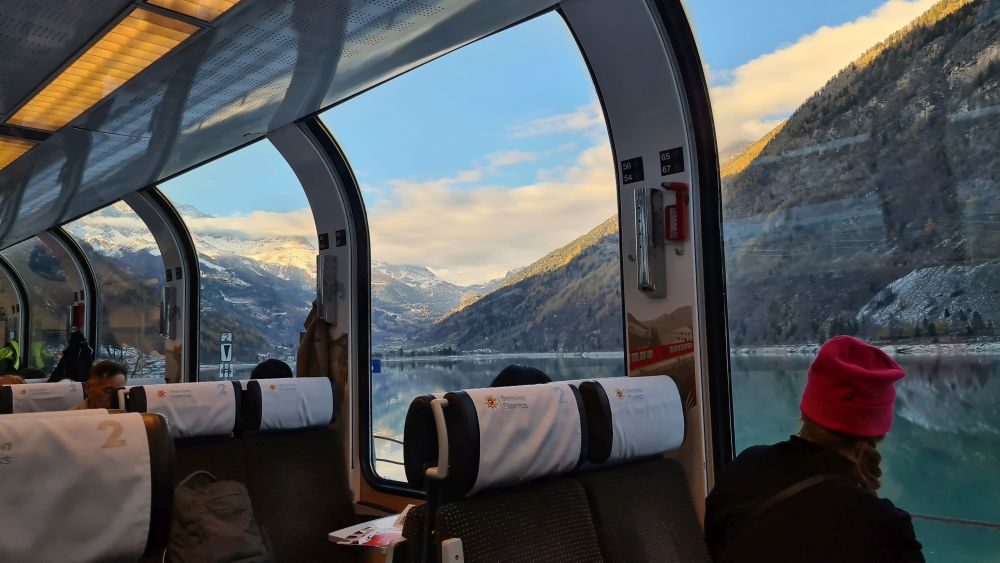
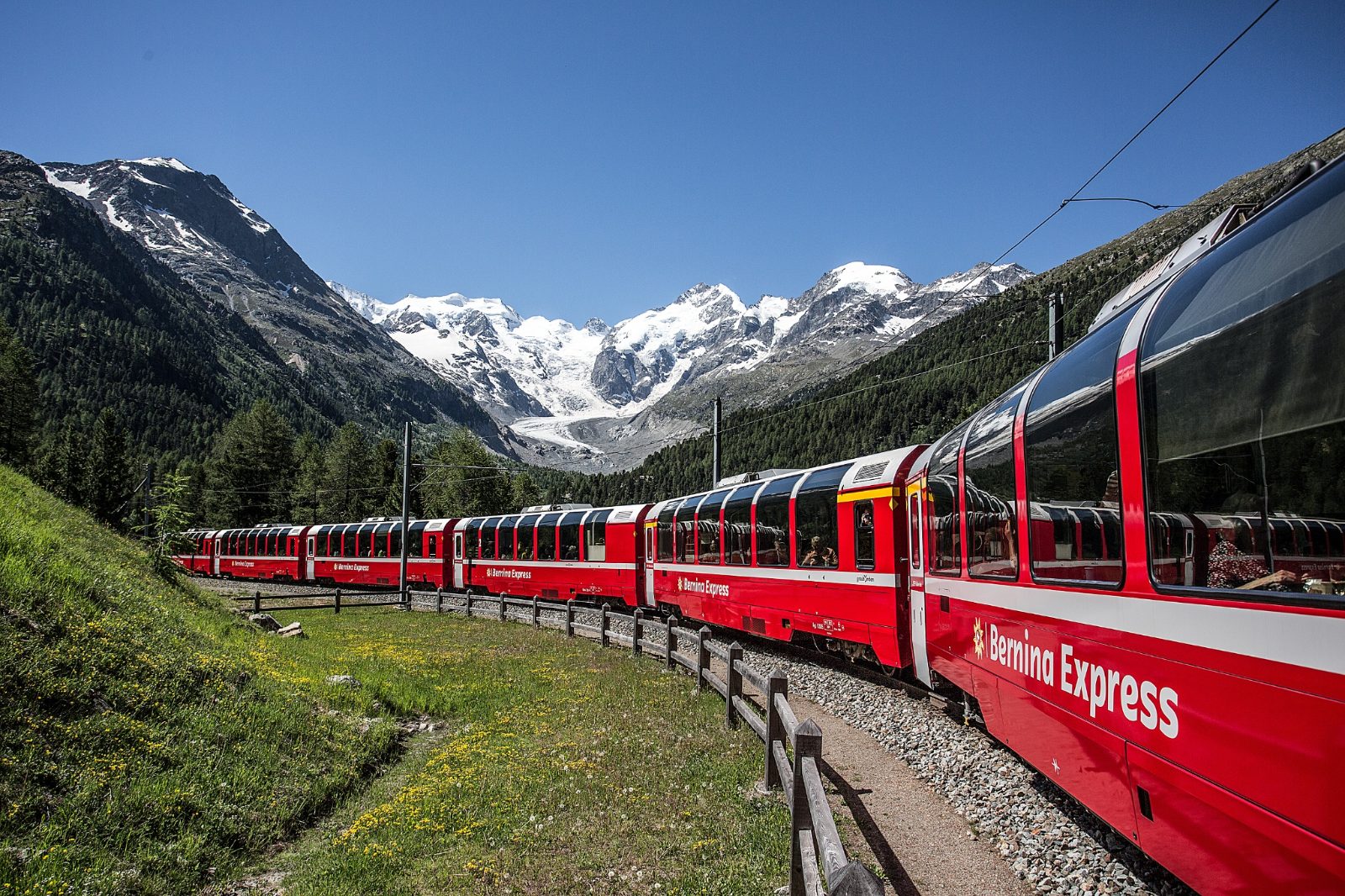
Glide from Milan to glamorous St. Moritz, then ride the glass-topped Bernina Express through the Alps.
12.5 hours
Free Cancellation
Full-day guided escape from Milan to St. Moritz via the legendary Bernina Express.
13 hours
Free Cancellation
Ride the open-window Bernina Red Train through the Alps to St. Moritz, round trip from Milan.
12.5 hours
Free Cancellation
Full-day trip from Milan to Lake Como, Tirano and St. Moritz via the UNESCO Bernina Express.
10 hours
Free Cancellation
A private 10-hour escape from Milan into the Swiss Alps, a hidden fortress and the storied Devil's Bridge.
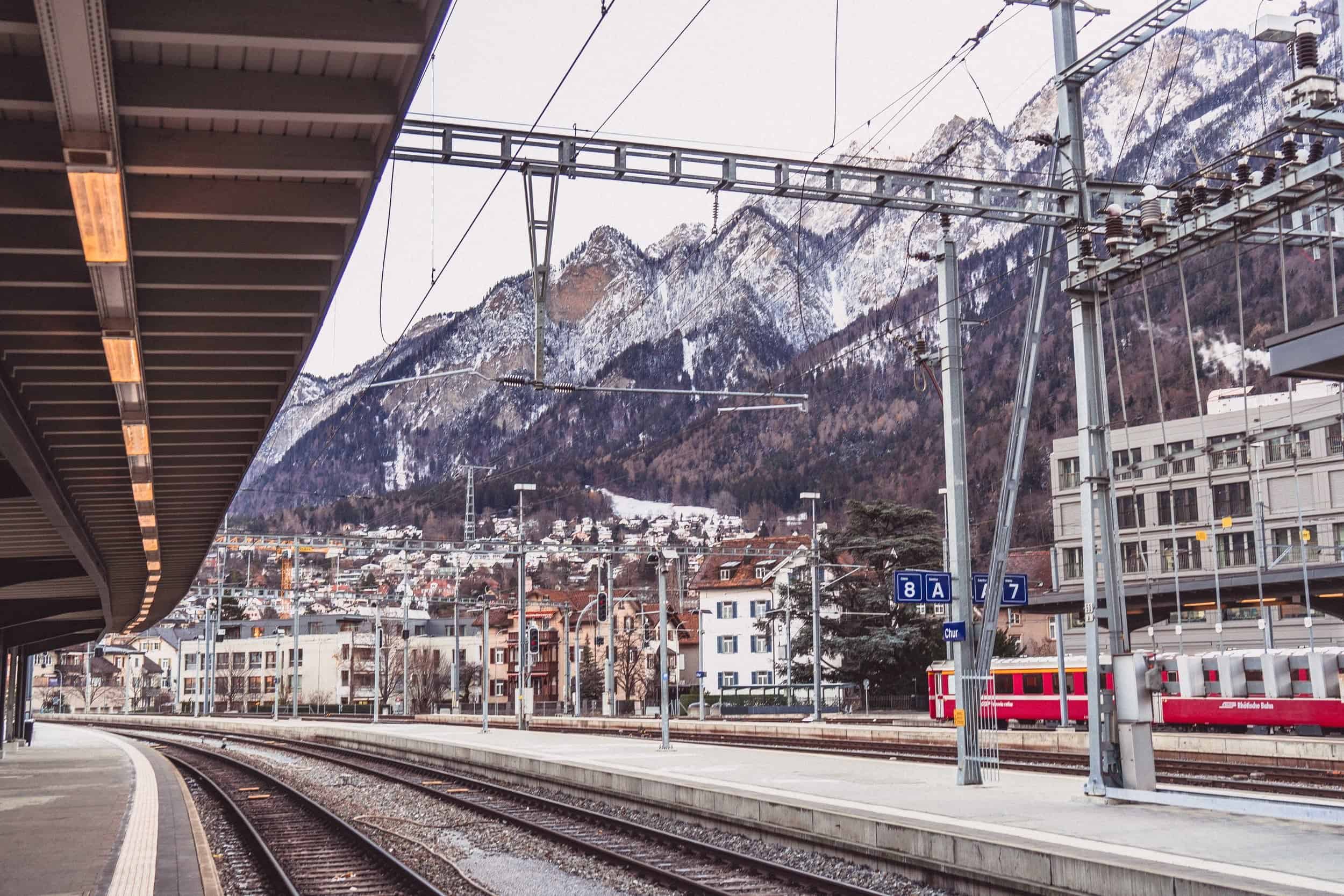
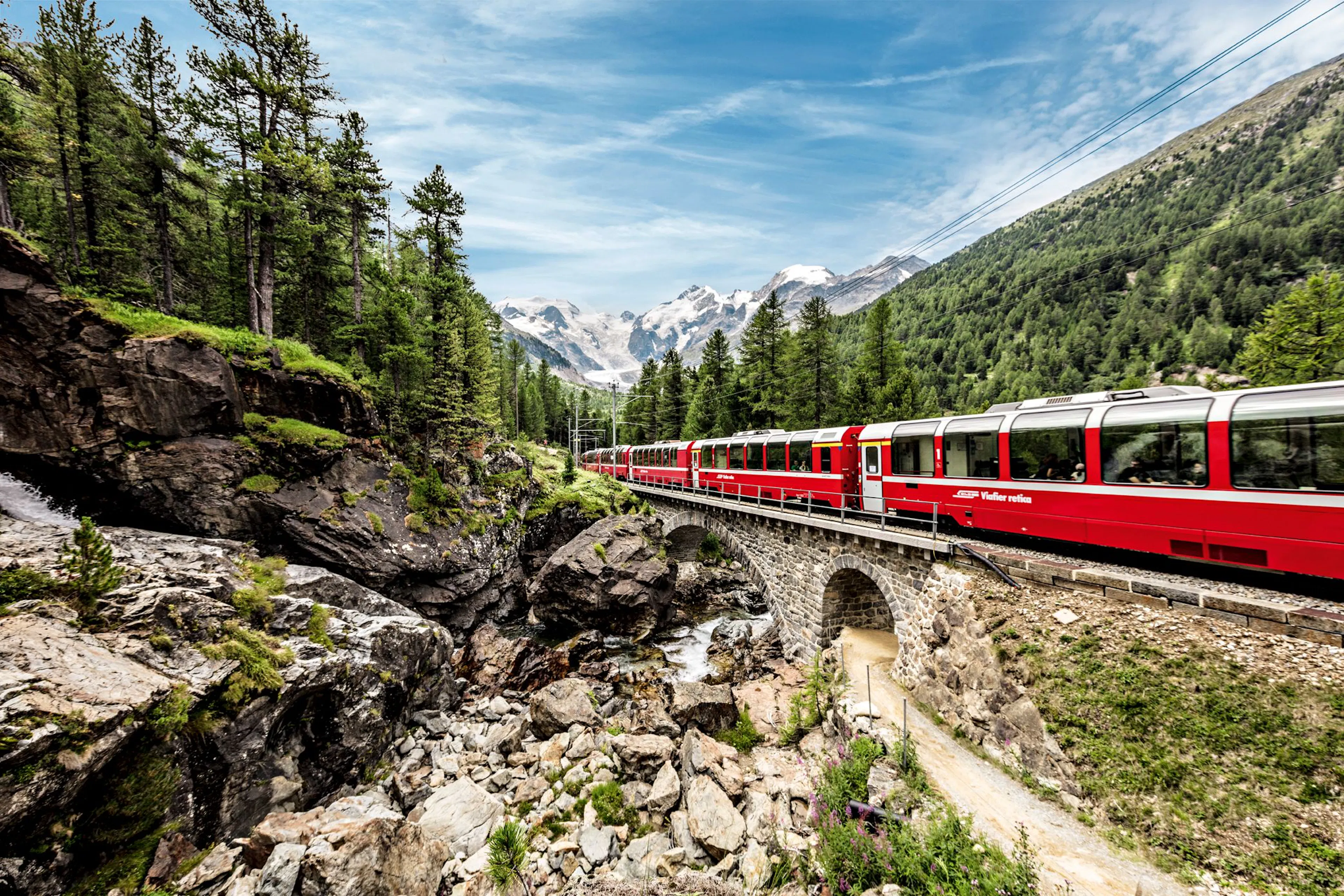
Board with your reservation and passport ready. The Bernina Express route begins in Chur, the oldest town in Switzerland, and continues toward the high Alps and Tirano.
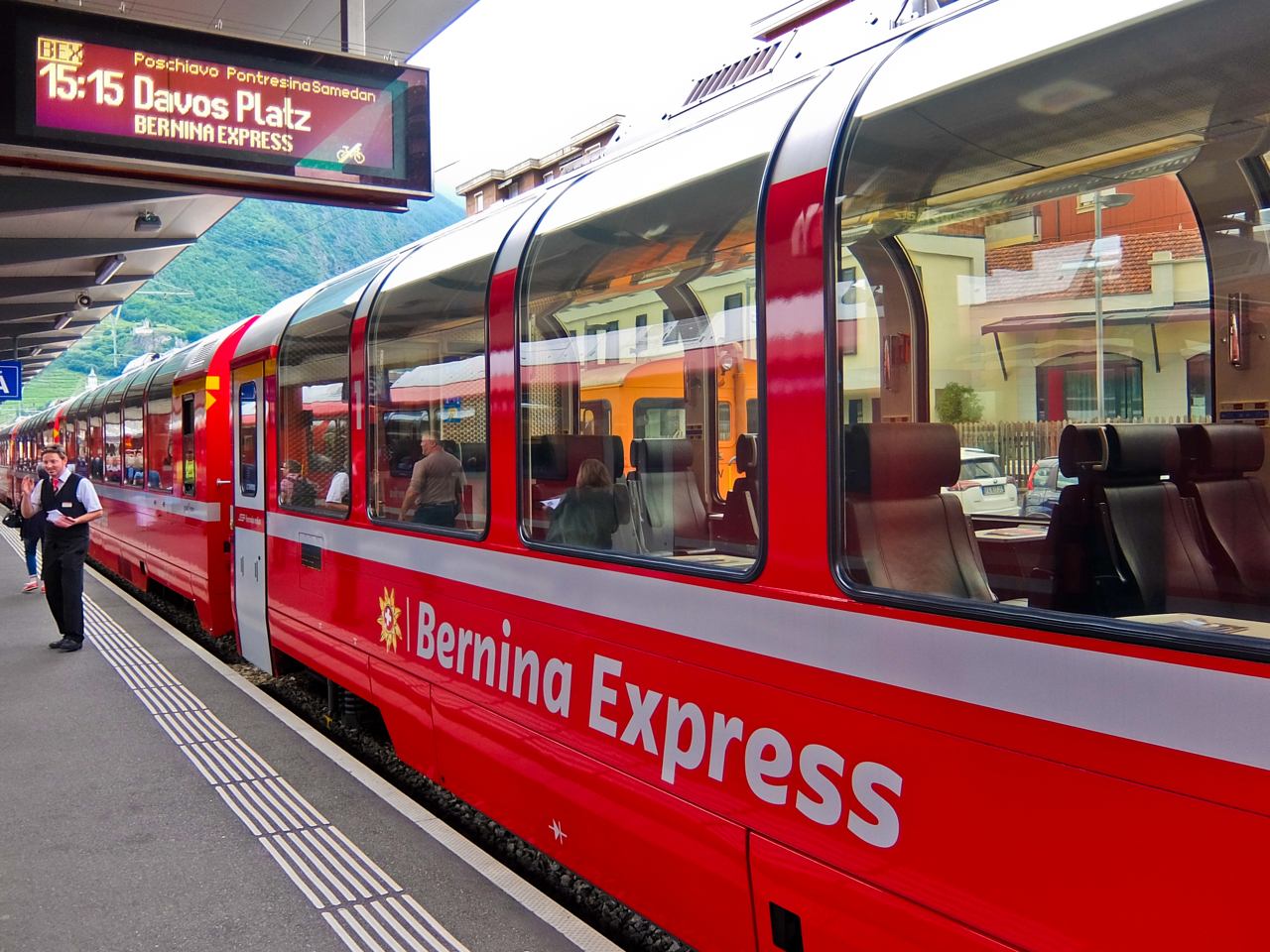
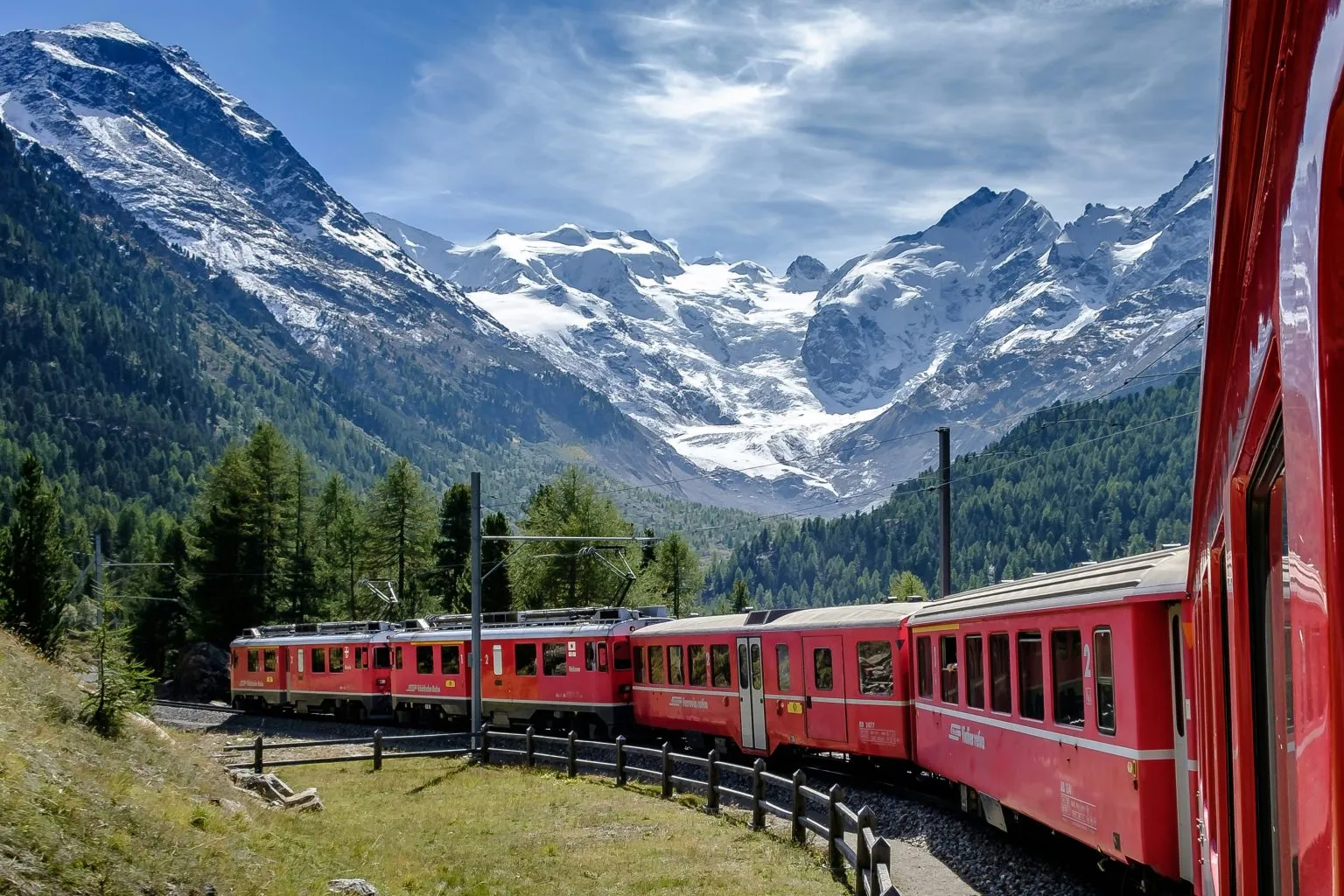
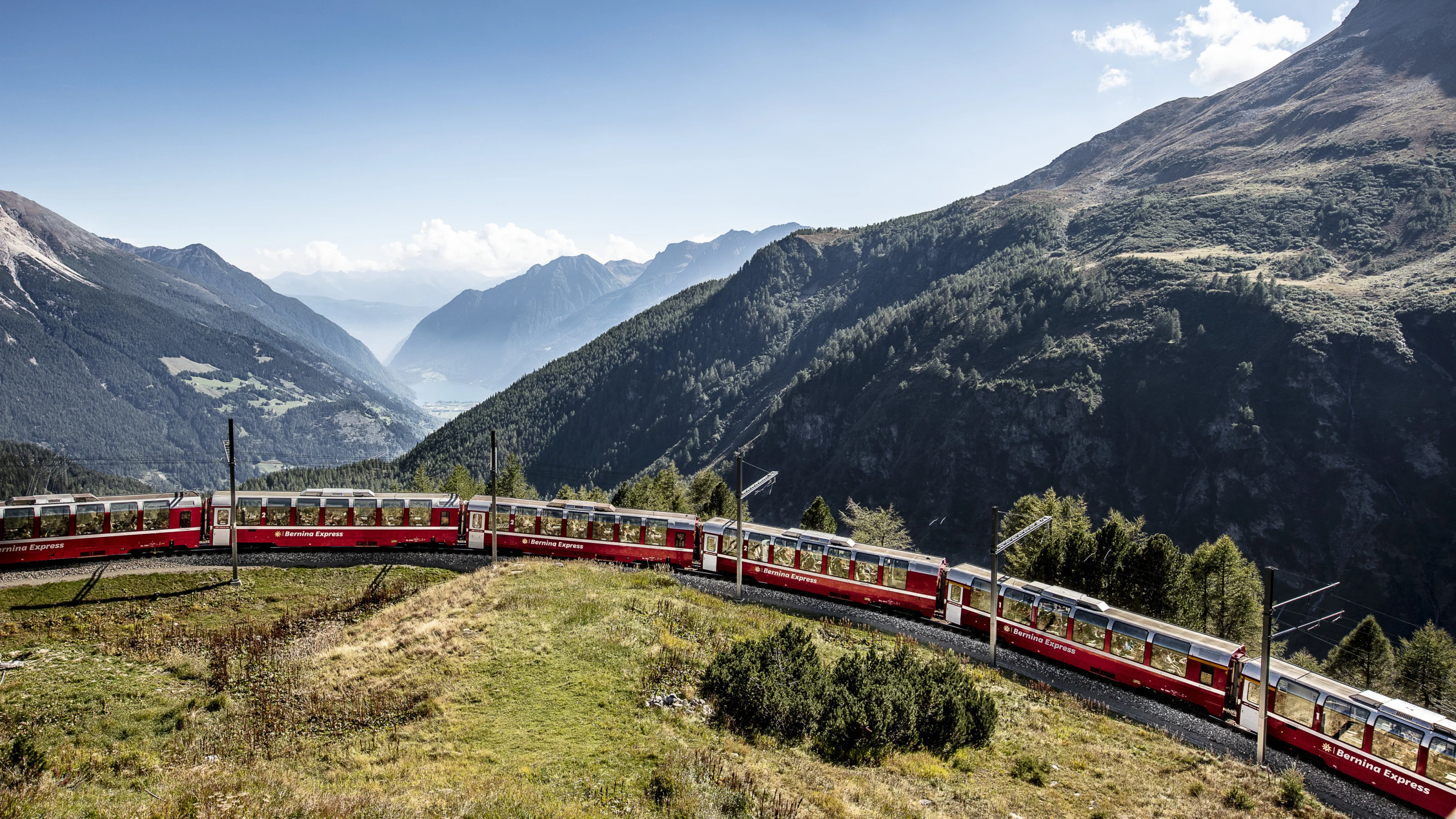
Watch for the Landwasser Viaduct, spiral sections, the Bernina Pass, and the UNESCO-listed Albula and Bernina lines. This is the heart of the ride for a milan to swiss alps day trip by train.
Use the turnaround in Tirano for a meal or a short town walk before heading back. Keep your return timetable aligned with the same booked service family.
Board the return train with enough time for passport checks and luggage storage. If you are combining the ride with Milan, allow margin for regional connections before and after the Bernina Express.
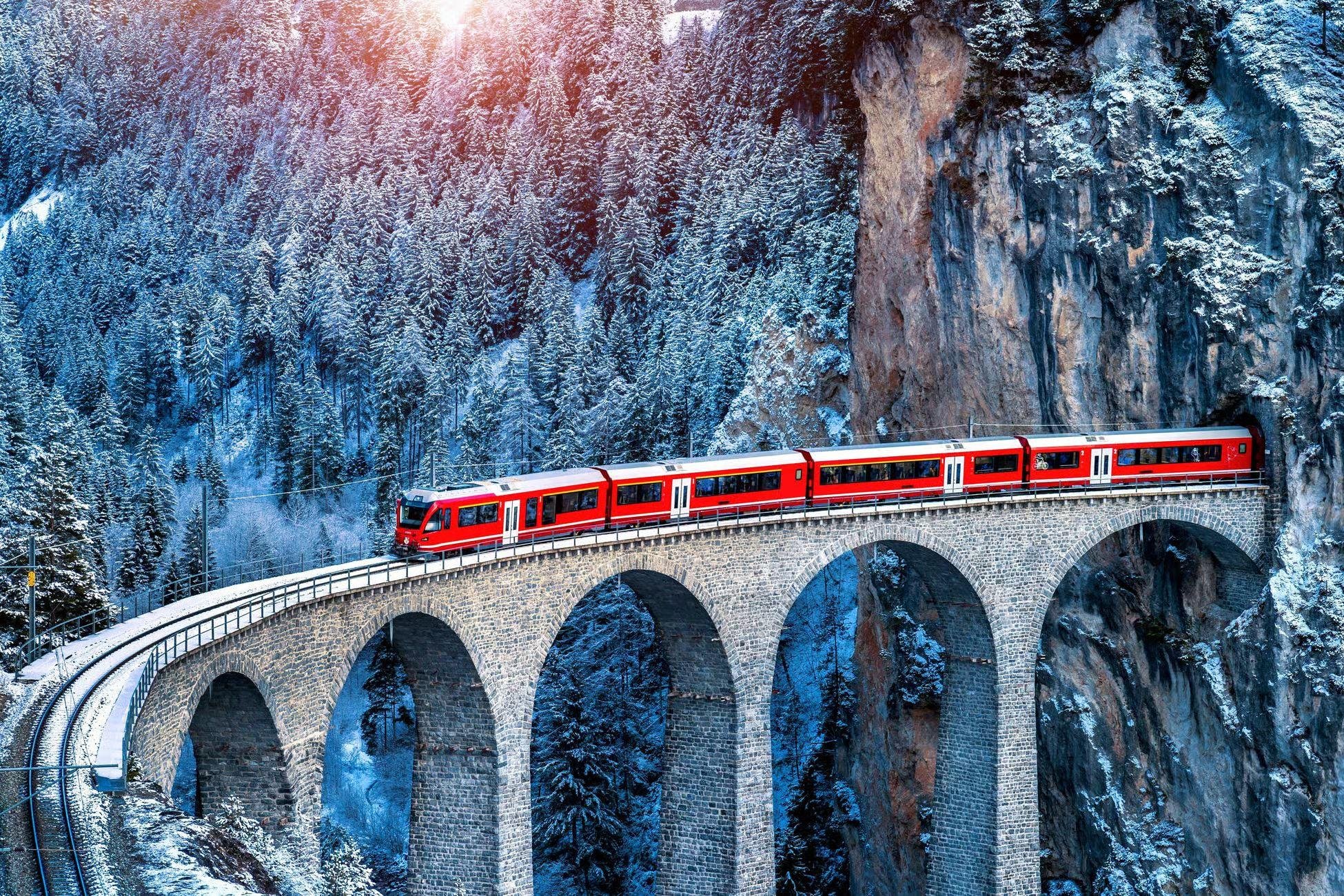
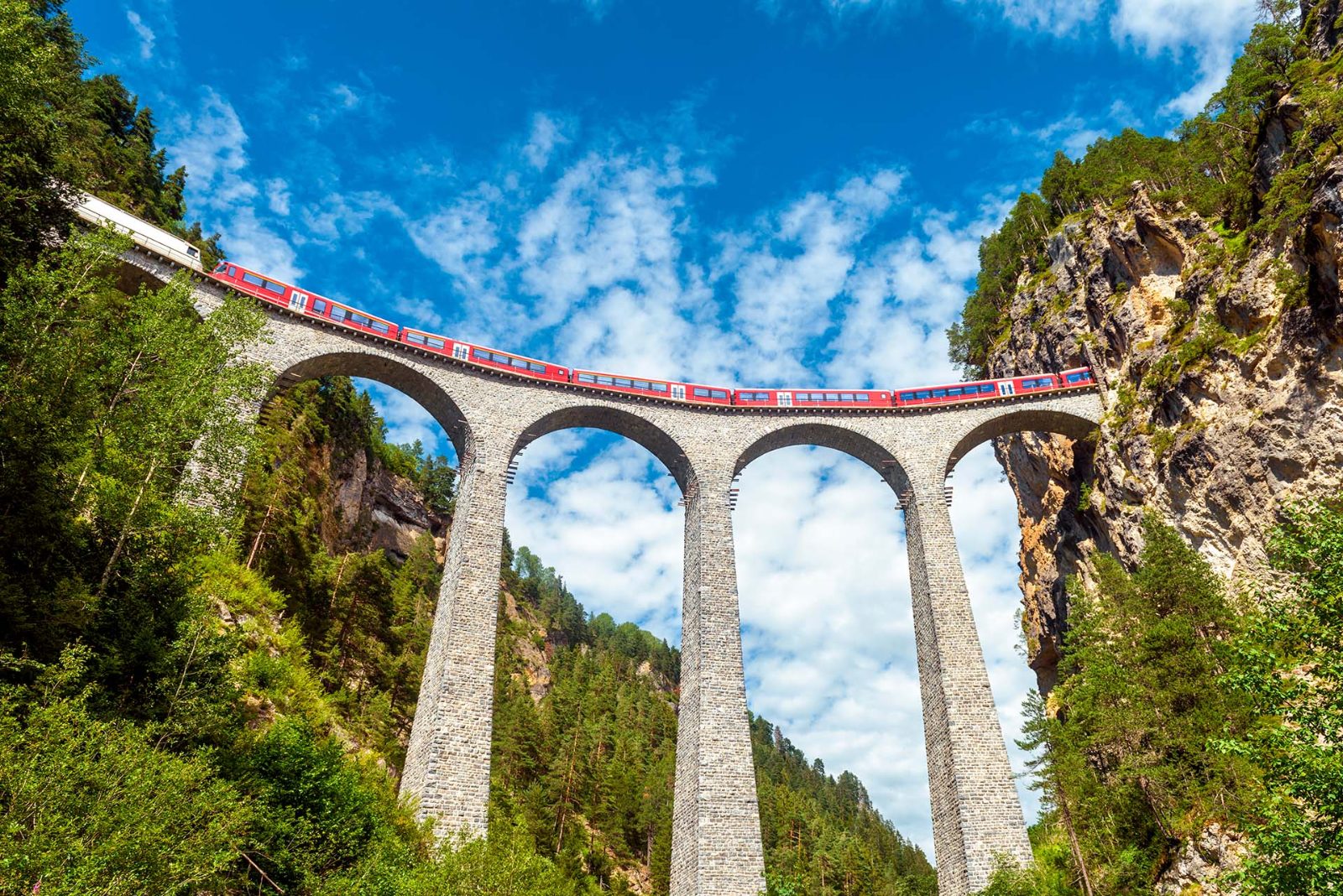
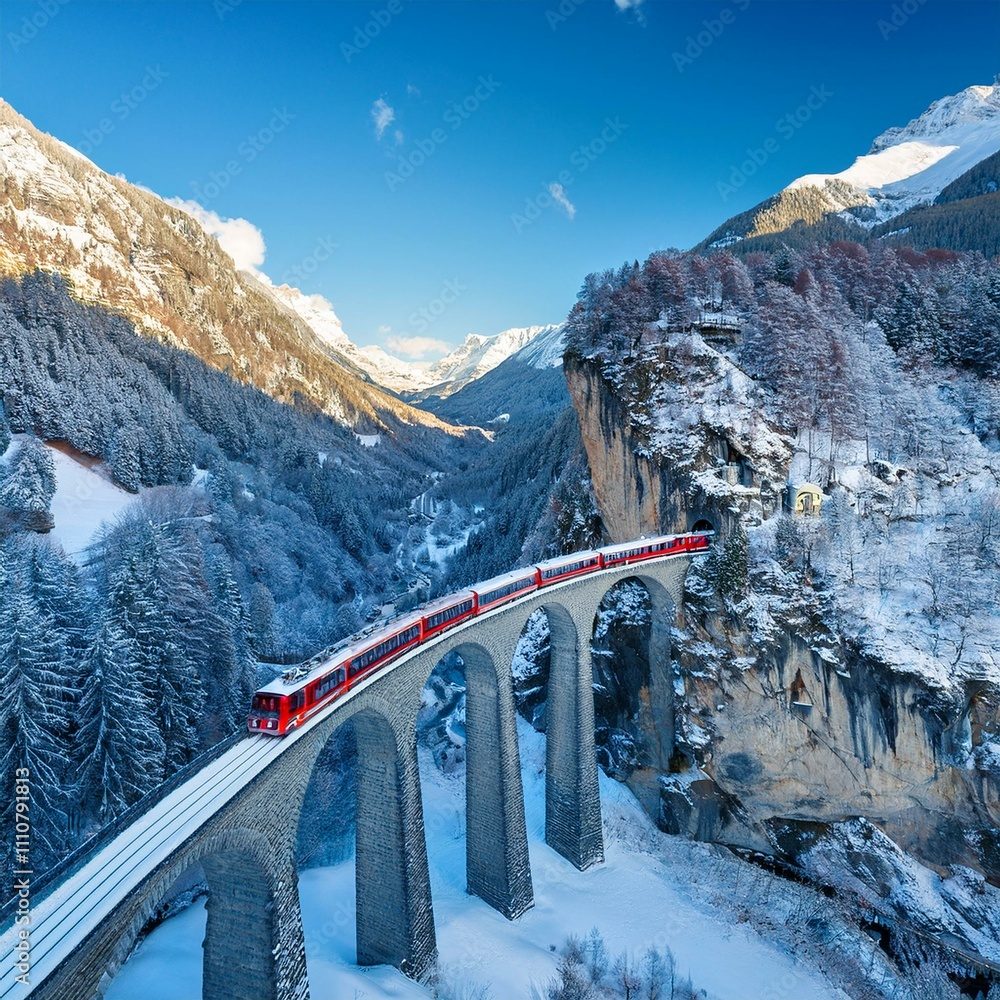
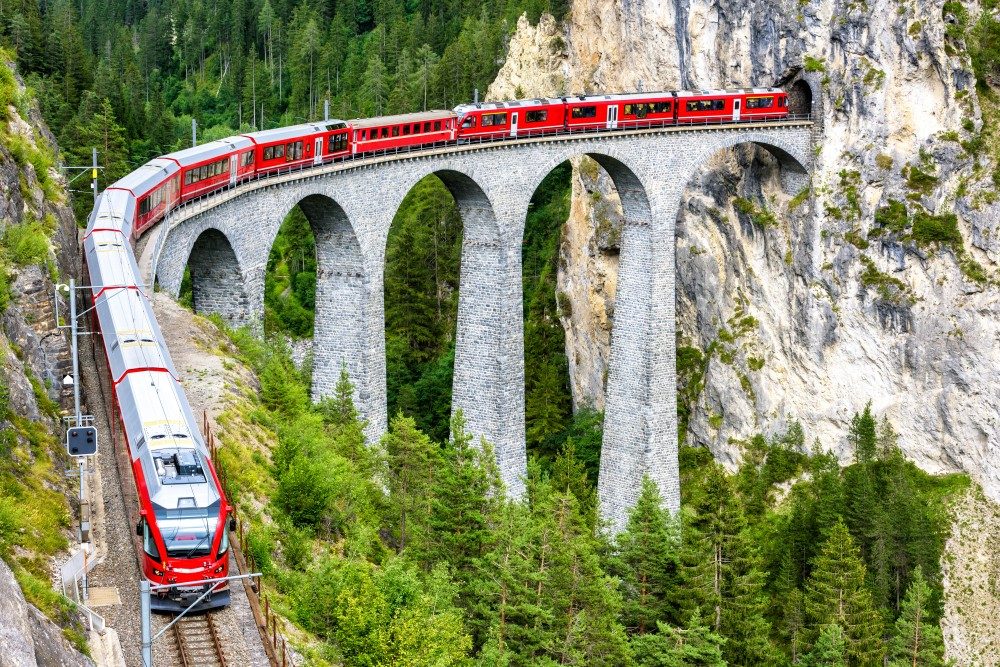
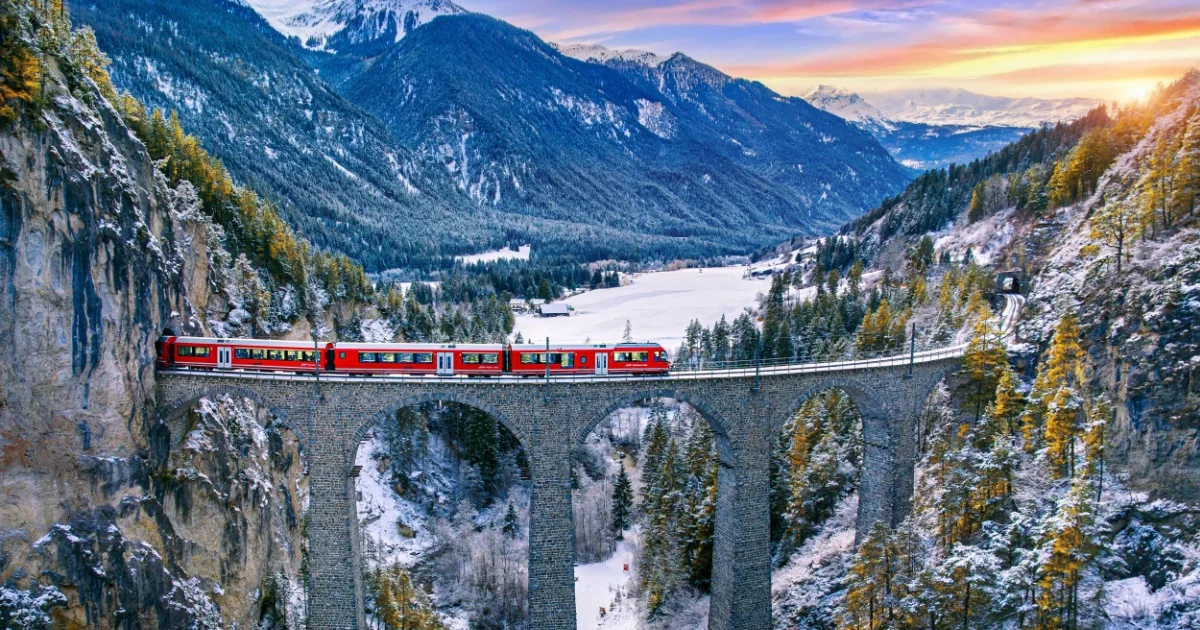
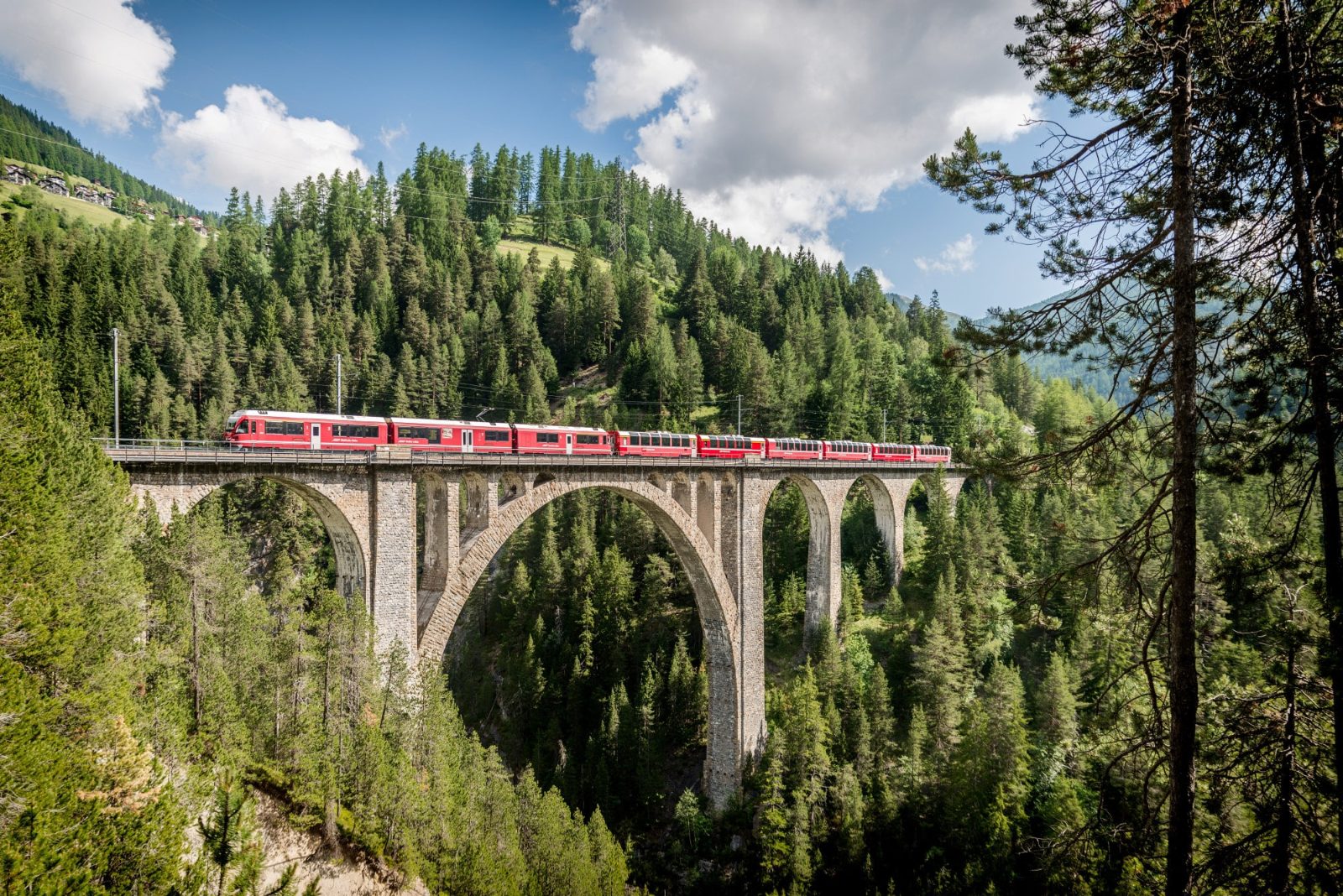
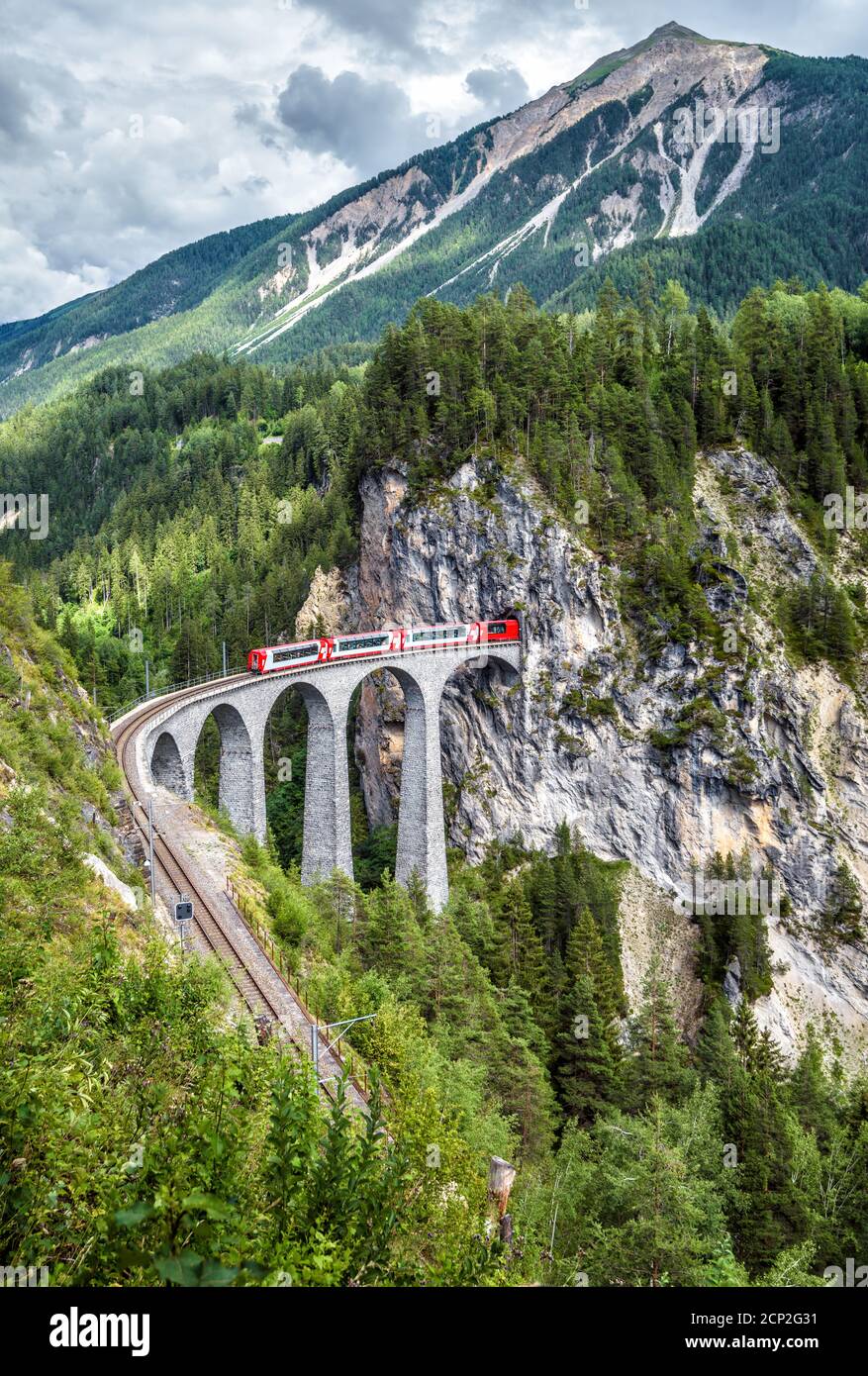
This 65-metre-high viaduct is one of the RhB’s most recognisable structures and a UNESCO World Heritage landmark. The bridge is 142 metres long and stands on five stone pillars, which is why it photographs so well from the valley below.
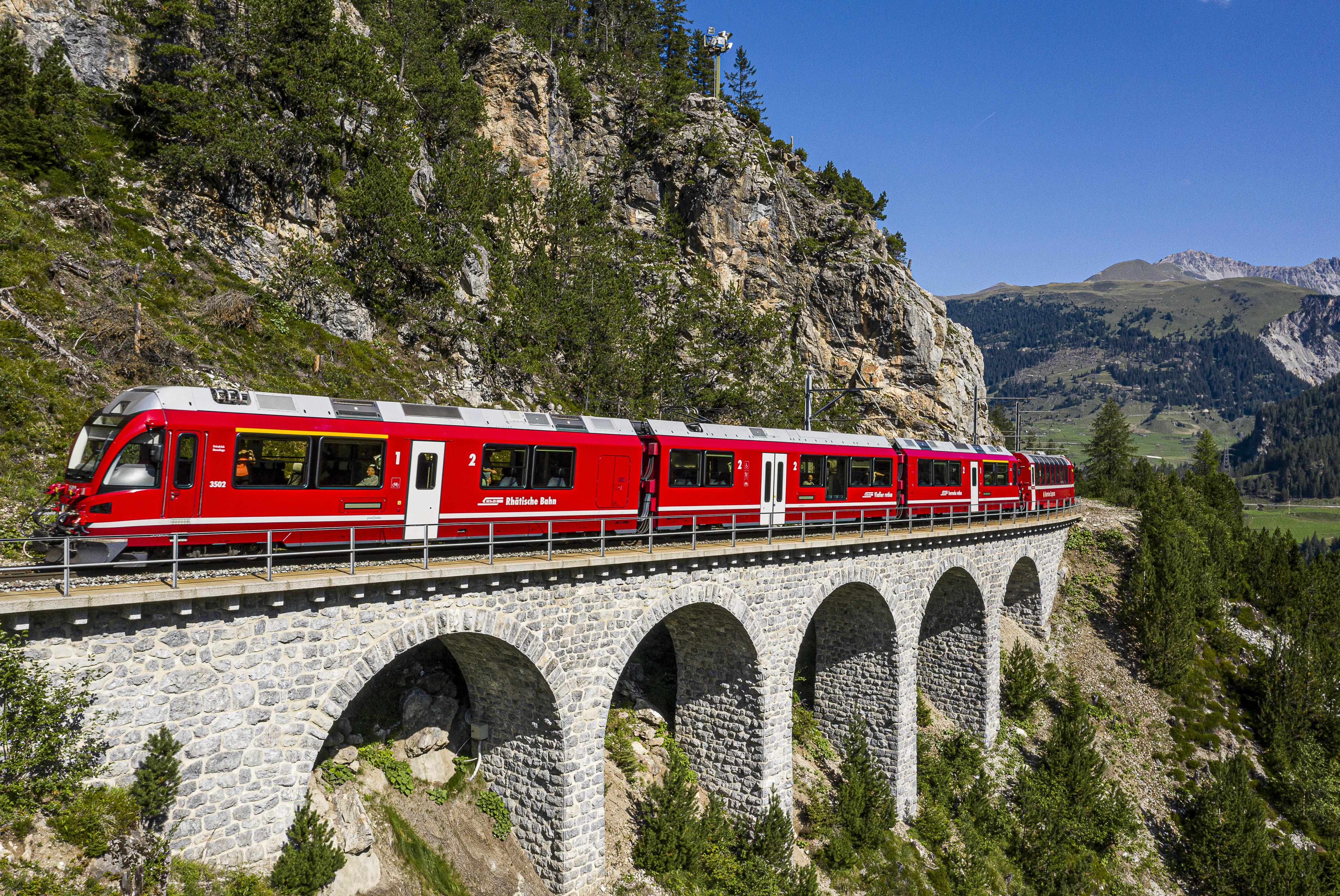
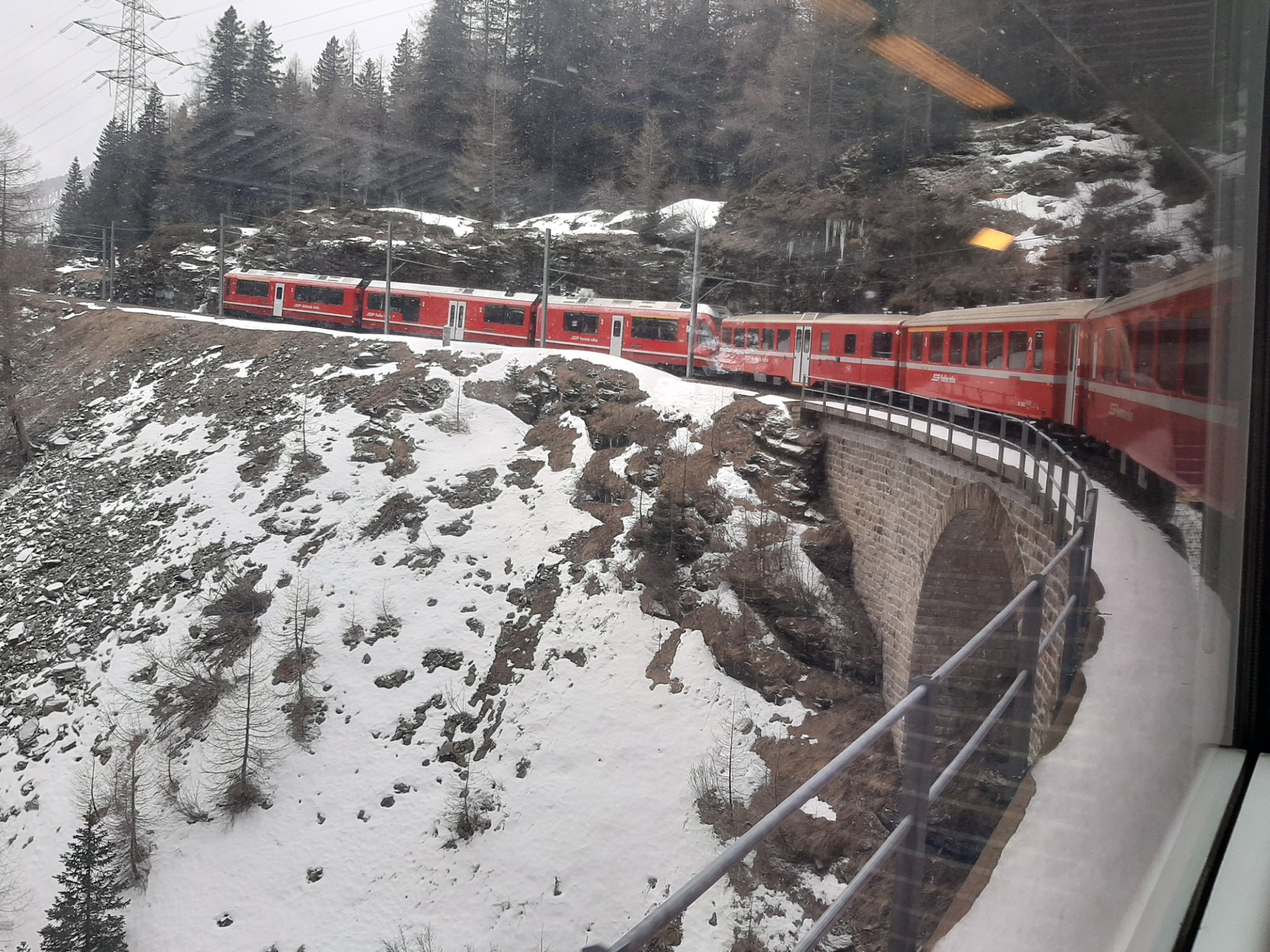
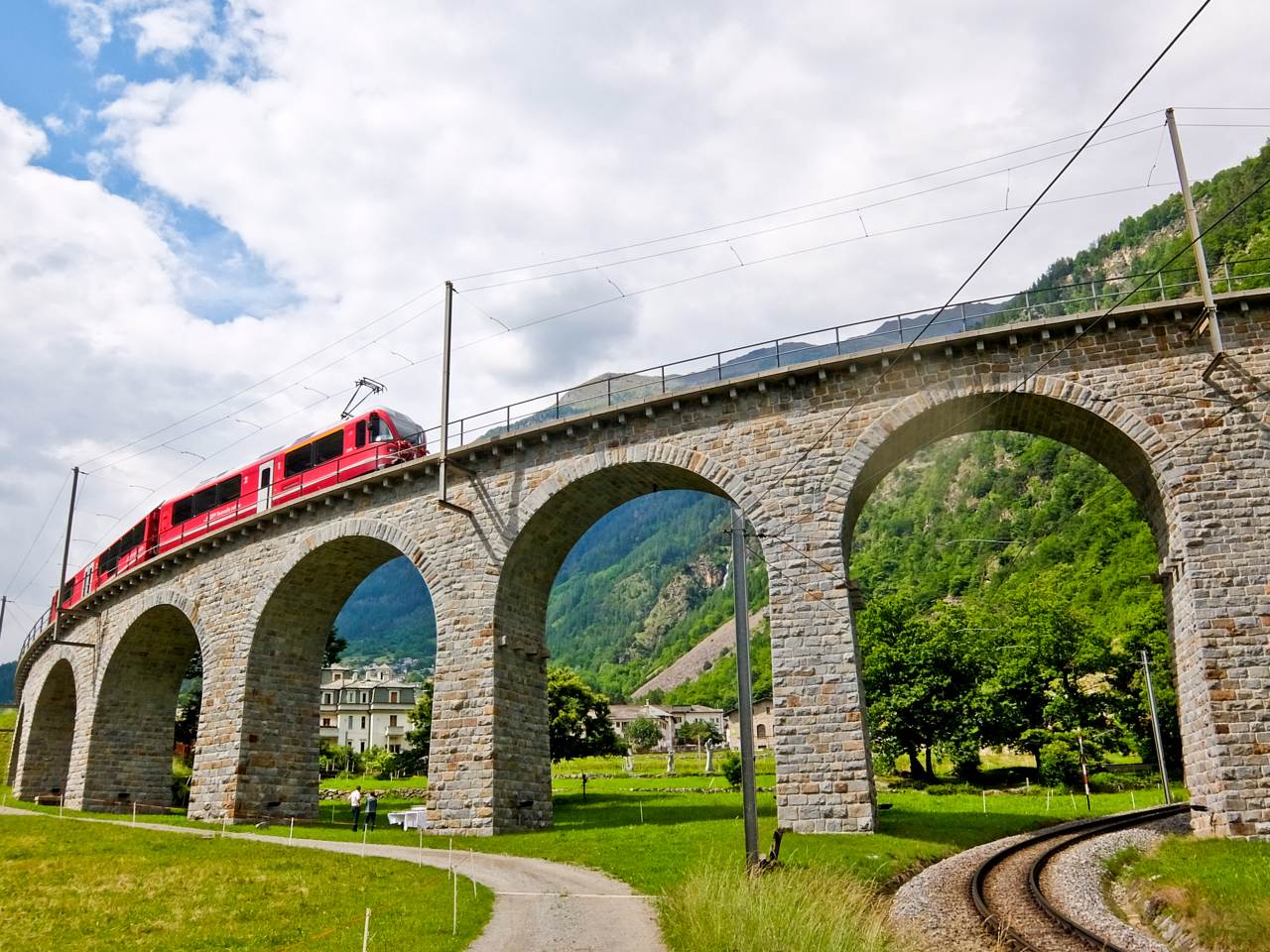
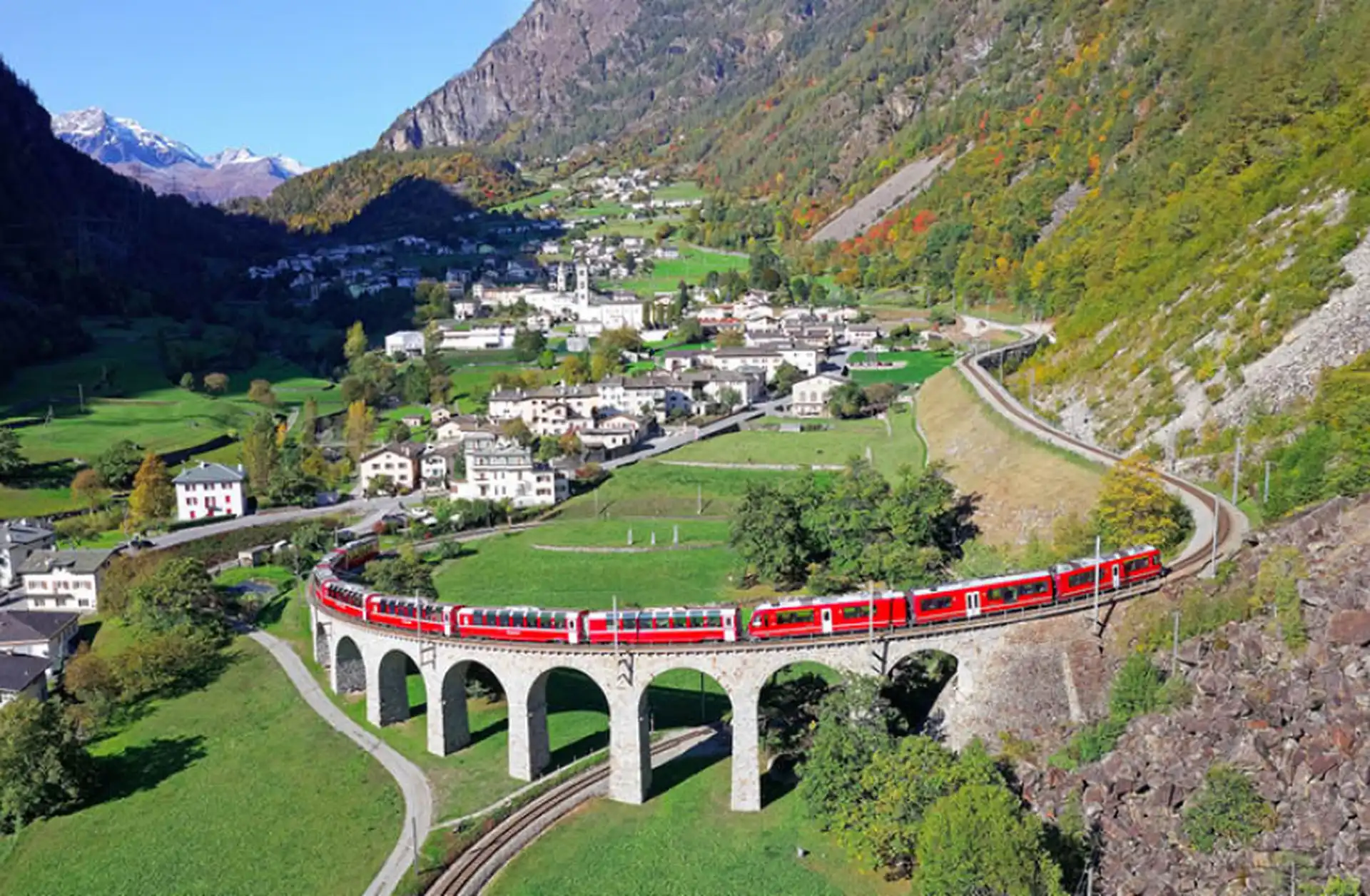
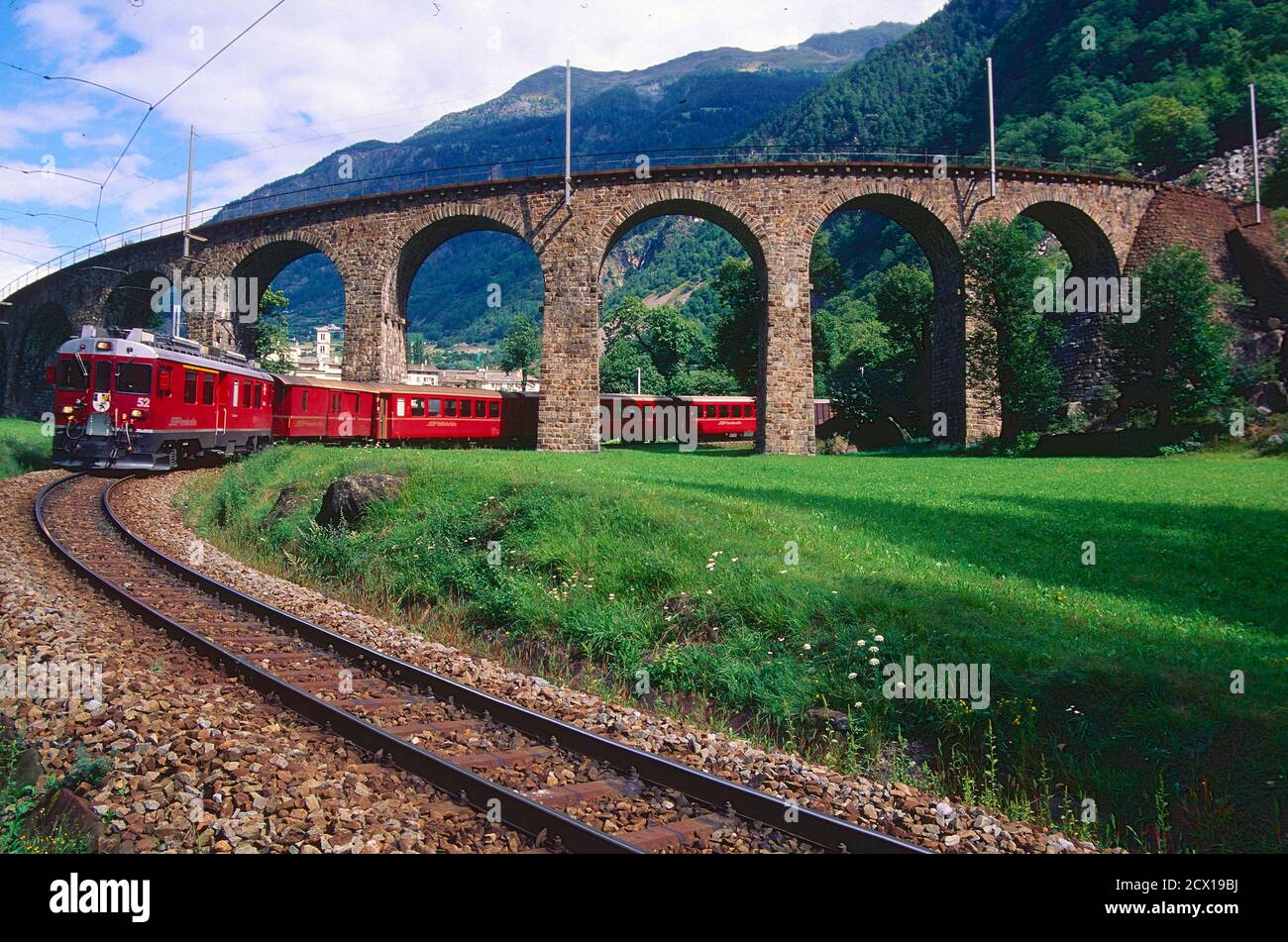
This nine-arched stone spiral is the route’s best-known looping structure. The train uses the full circle to gain altitude without a steep direct climb, a classic Alpine engineering solution that remains visually striking from every angle.
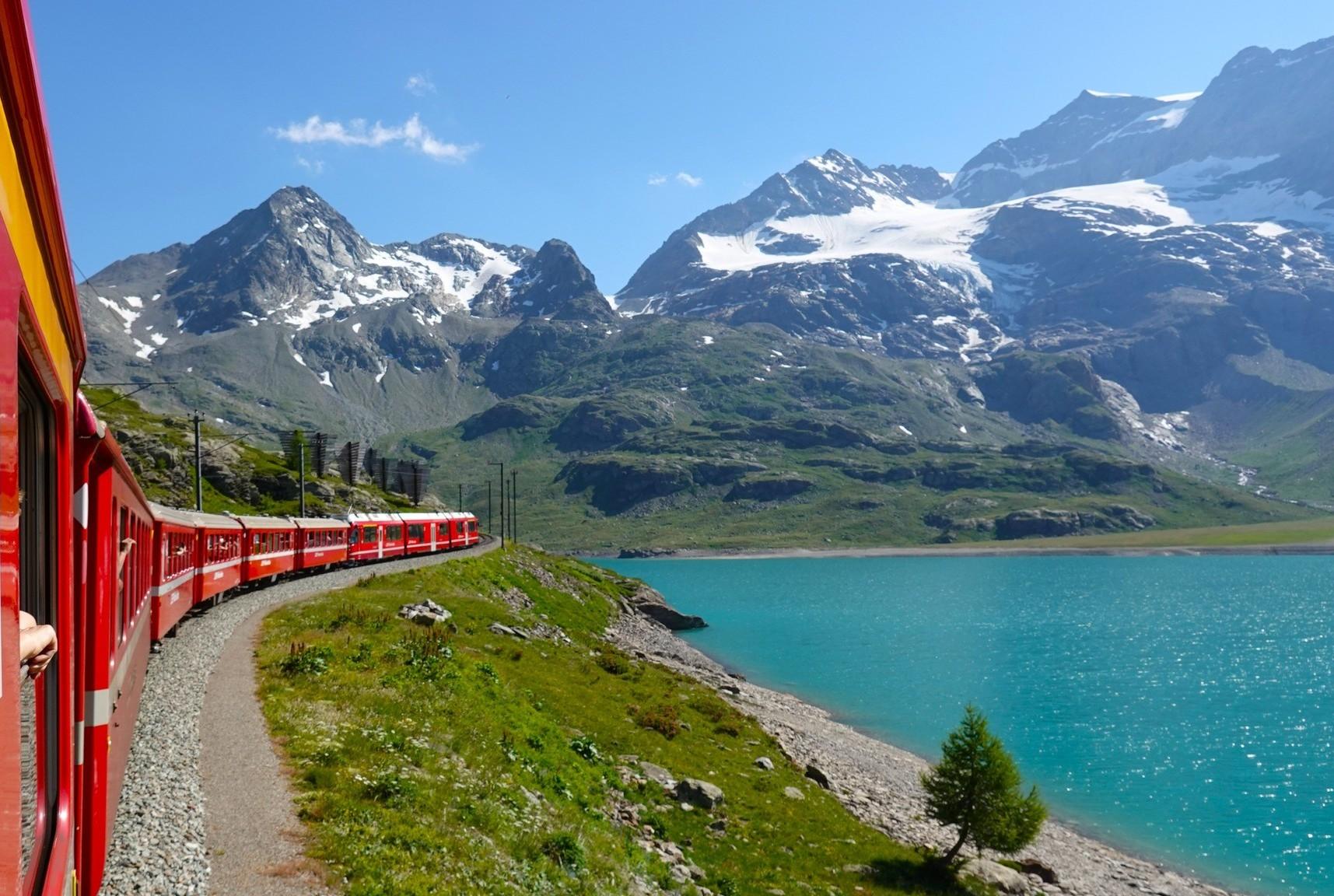
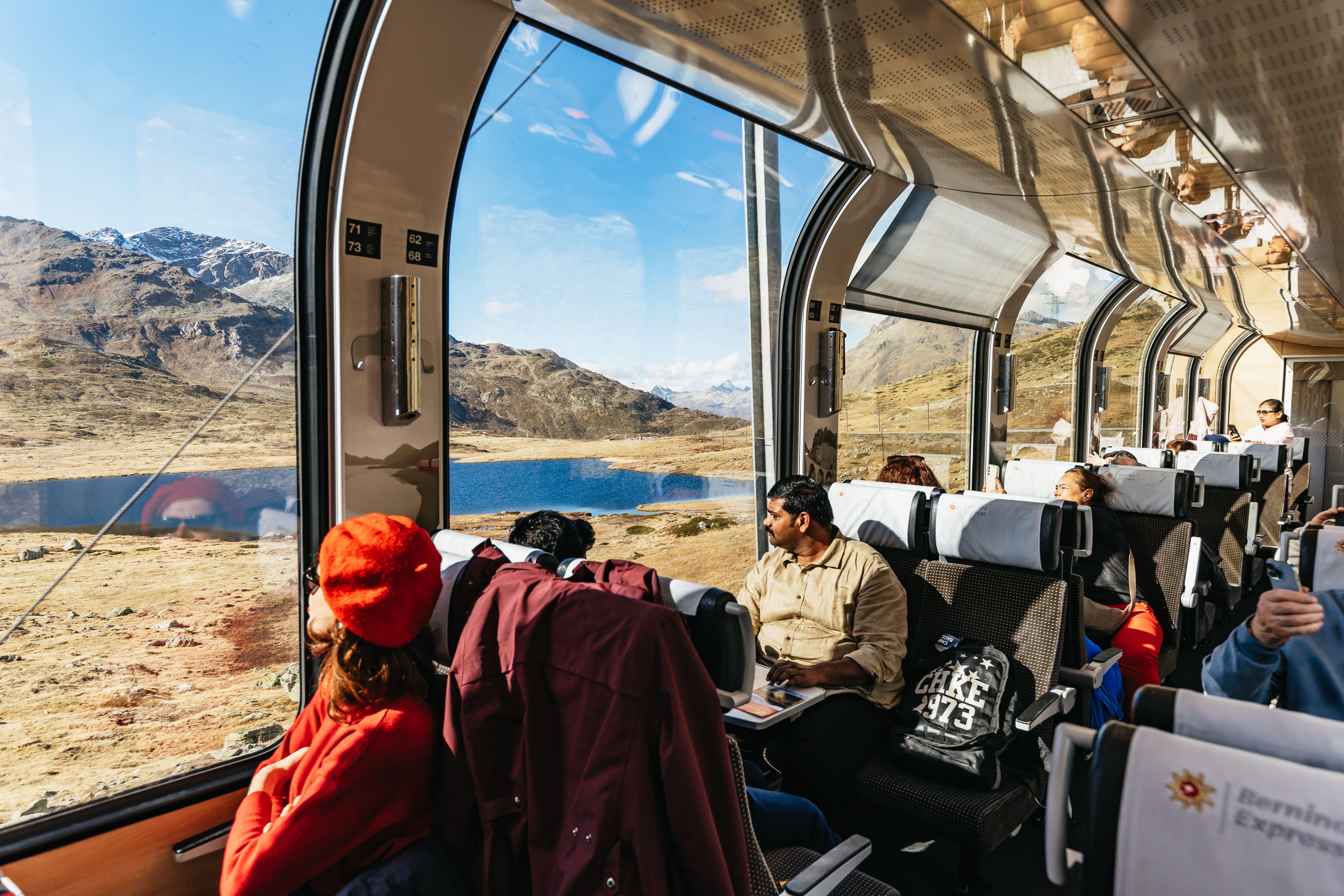
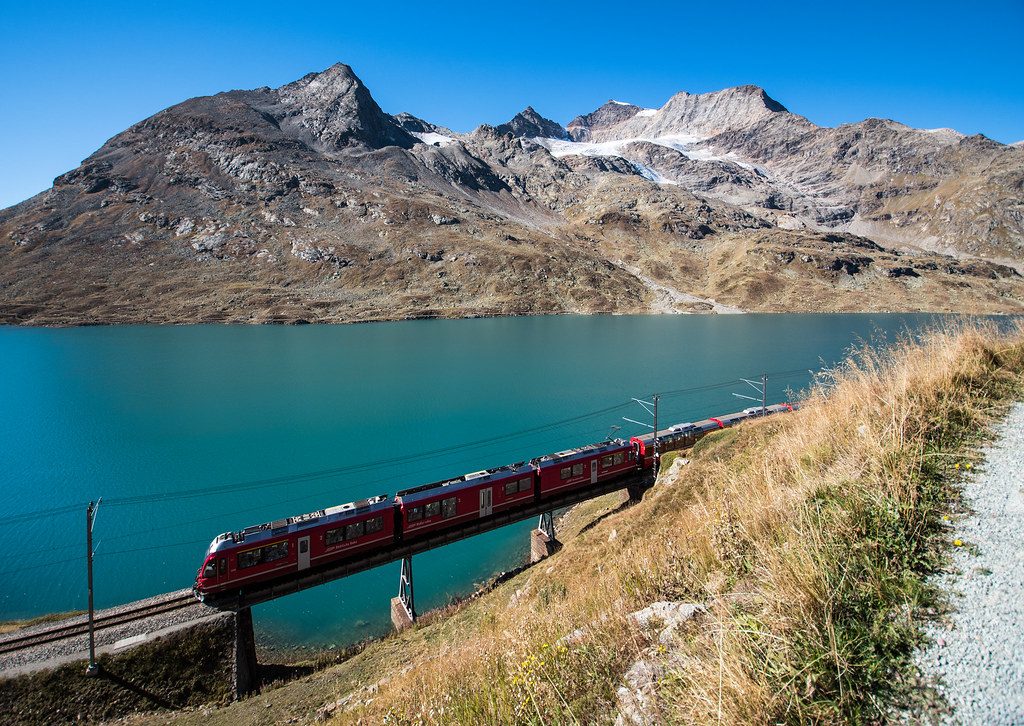
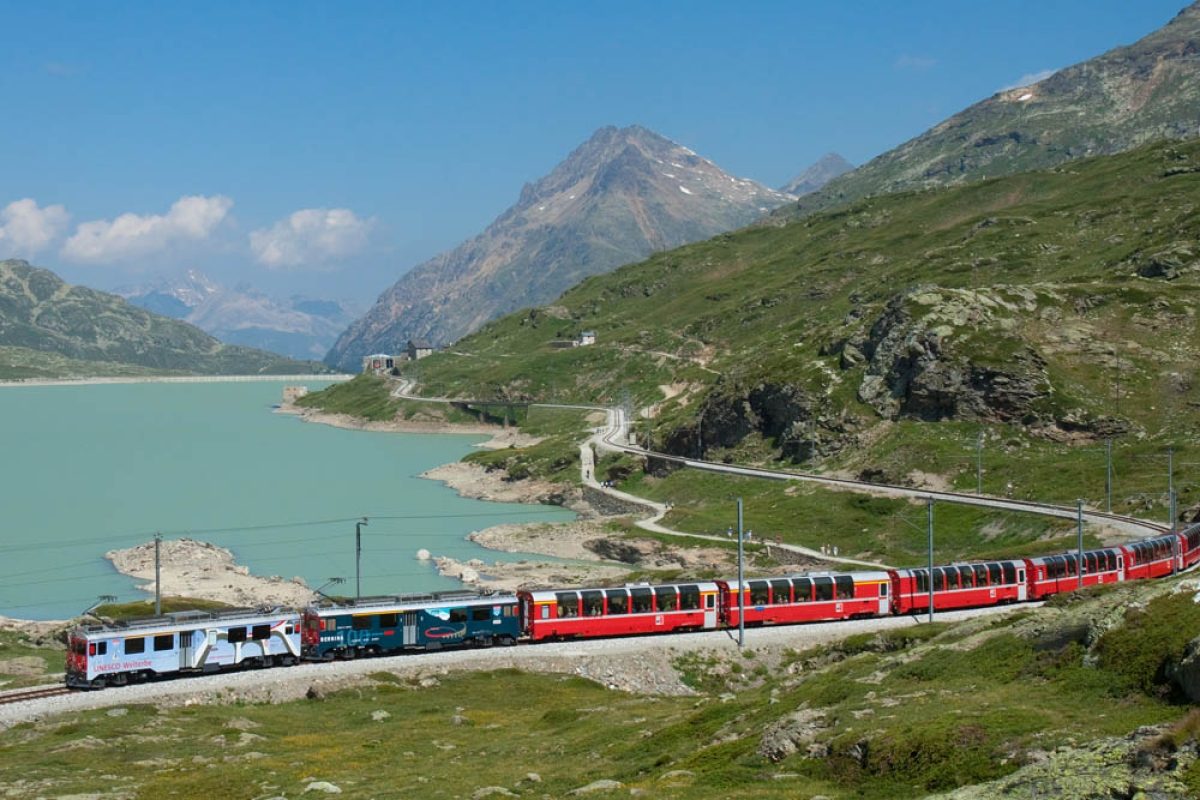
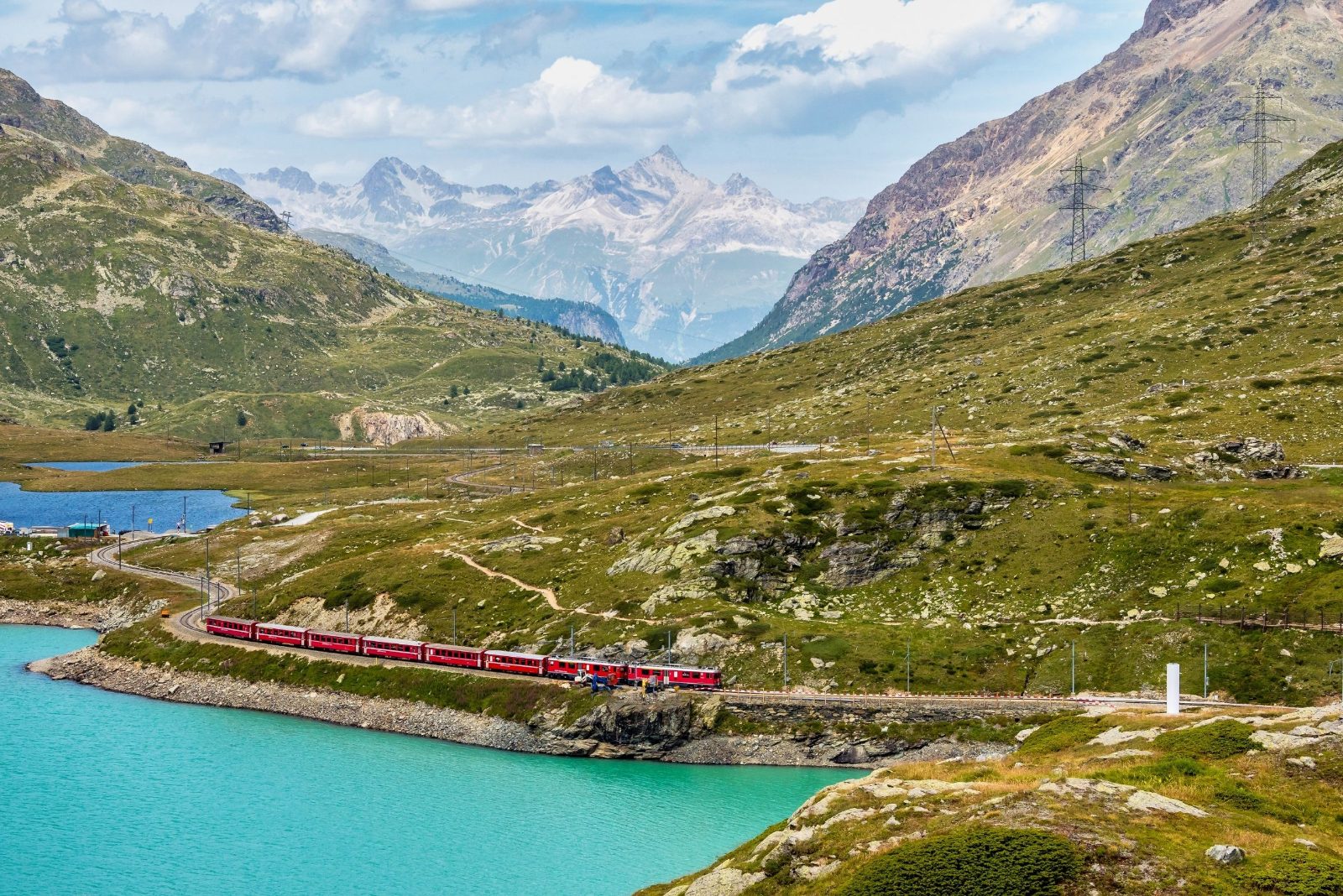
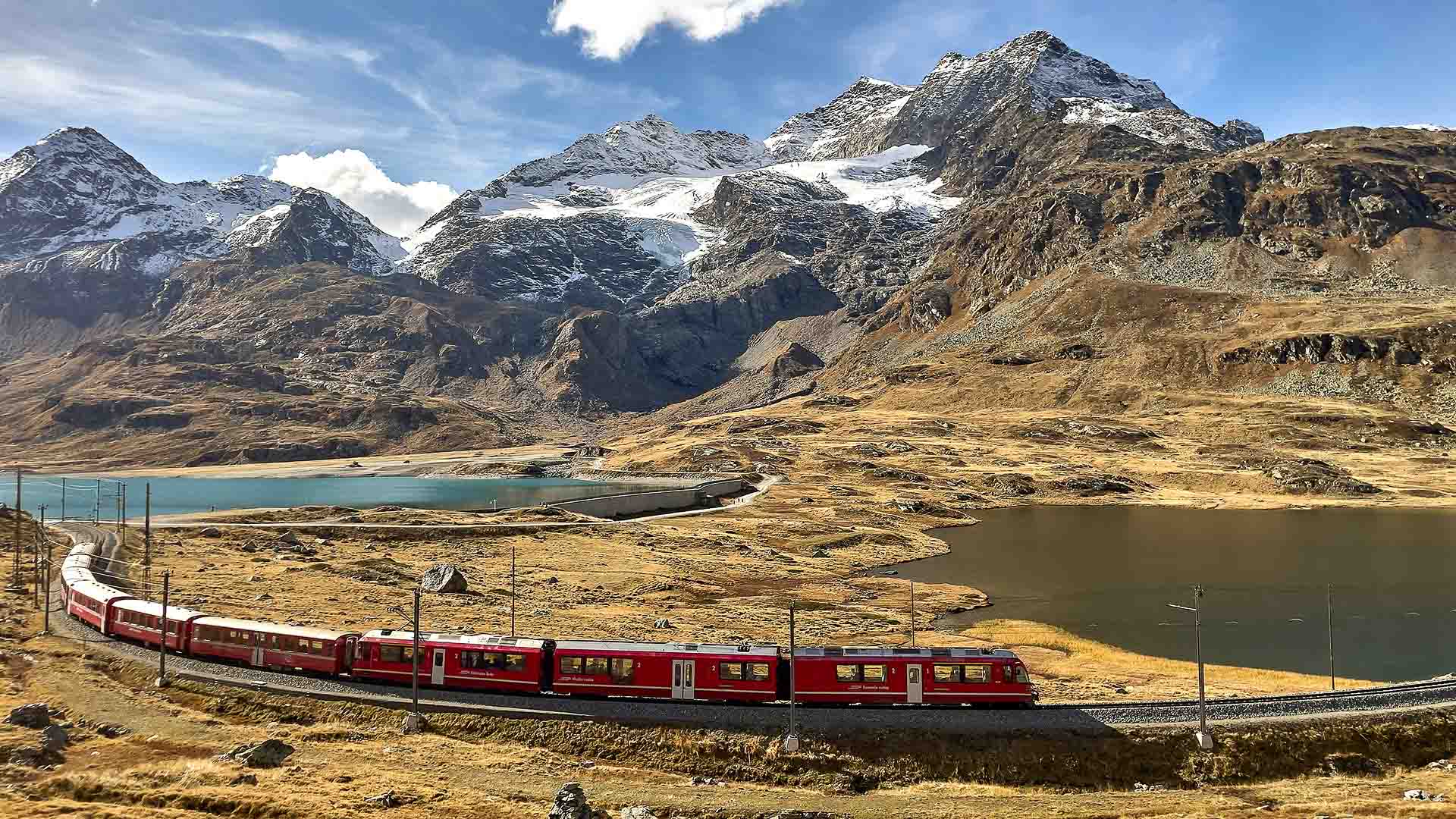
At roughly 2,253 metres above sea level, this lake marks the high-alpine heart of the trip. Its pale water and open surroundings make the Bernina Pass section feel very different from the lower valleys.
The Bernina Pass is the route’s dramatic summit zone and a major reason the journey is so well known. Snow can linger here well beyond the lowlands, so the scenery often changes sharply within the same trip.
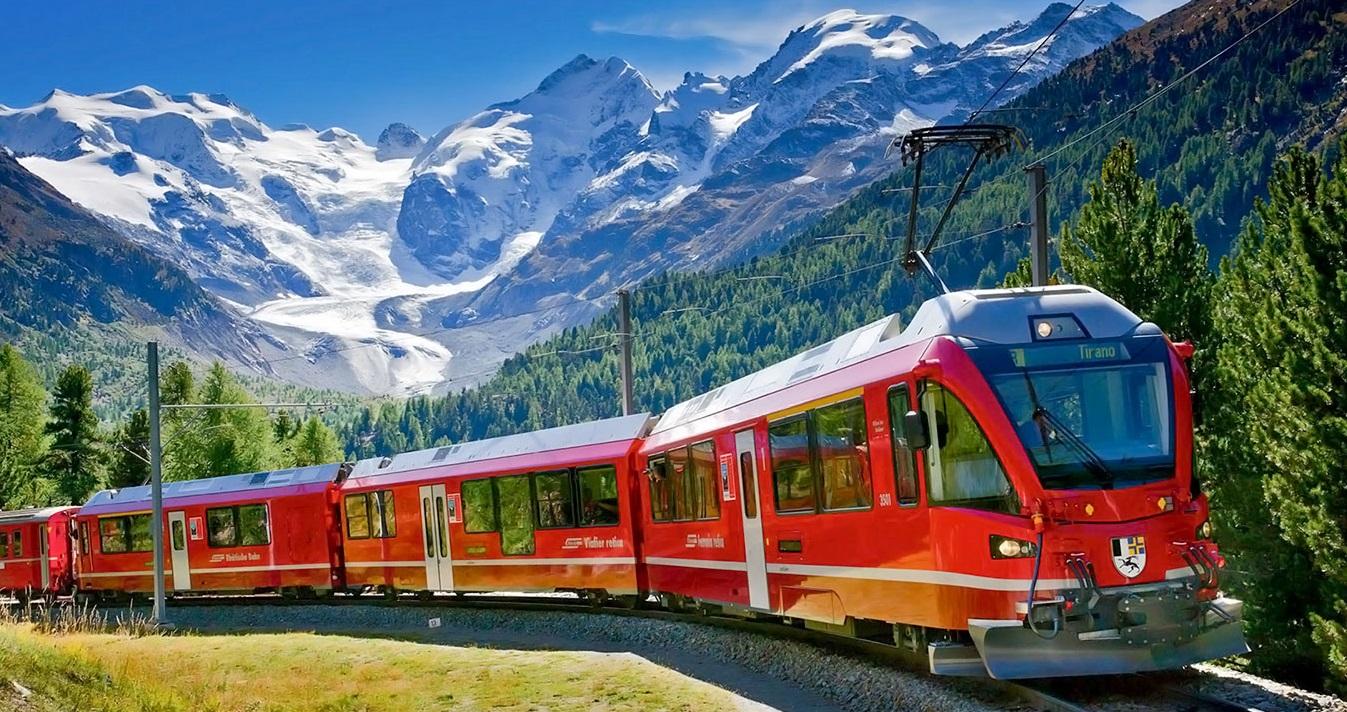
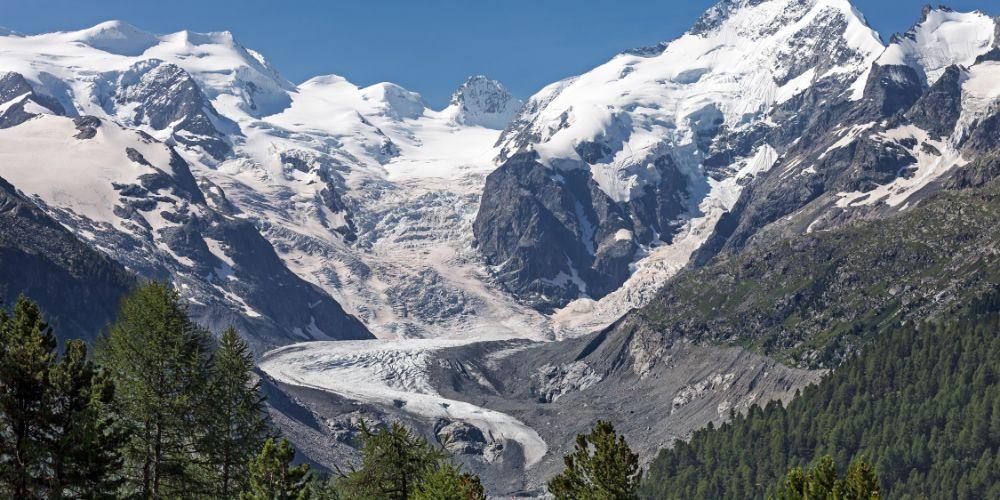
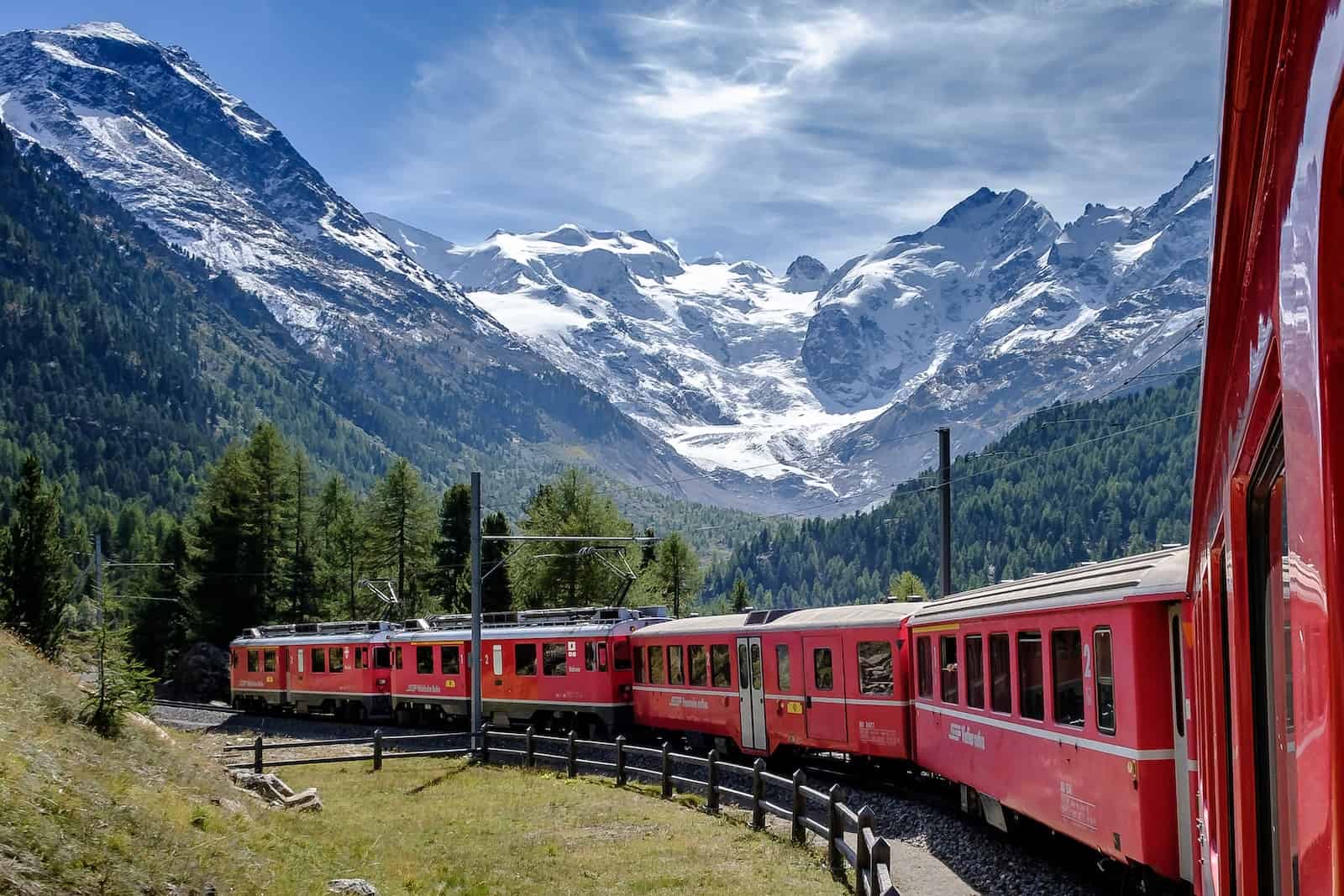
The Palü Glacier is one of the route’s glacier views and a key example of why the line is famous for contrast. It gives the journey a true high-mountain feel without needing a separate hike.
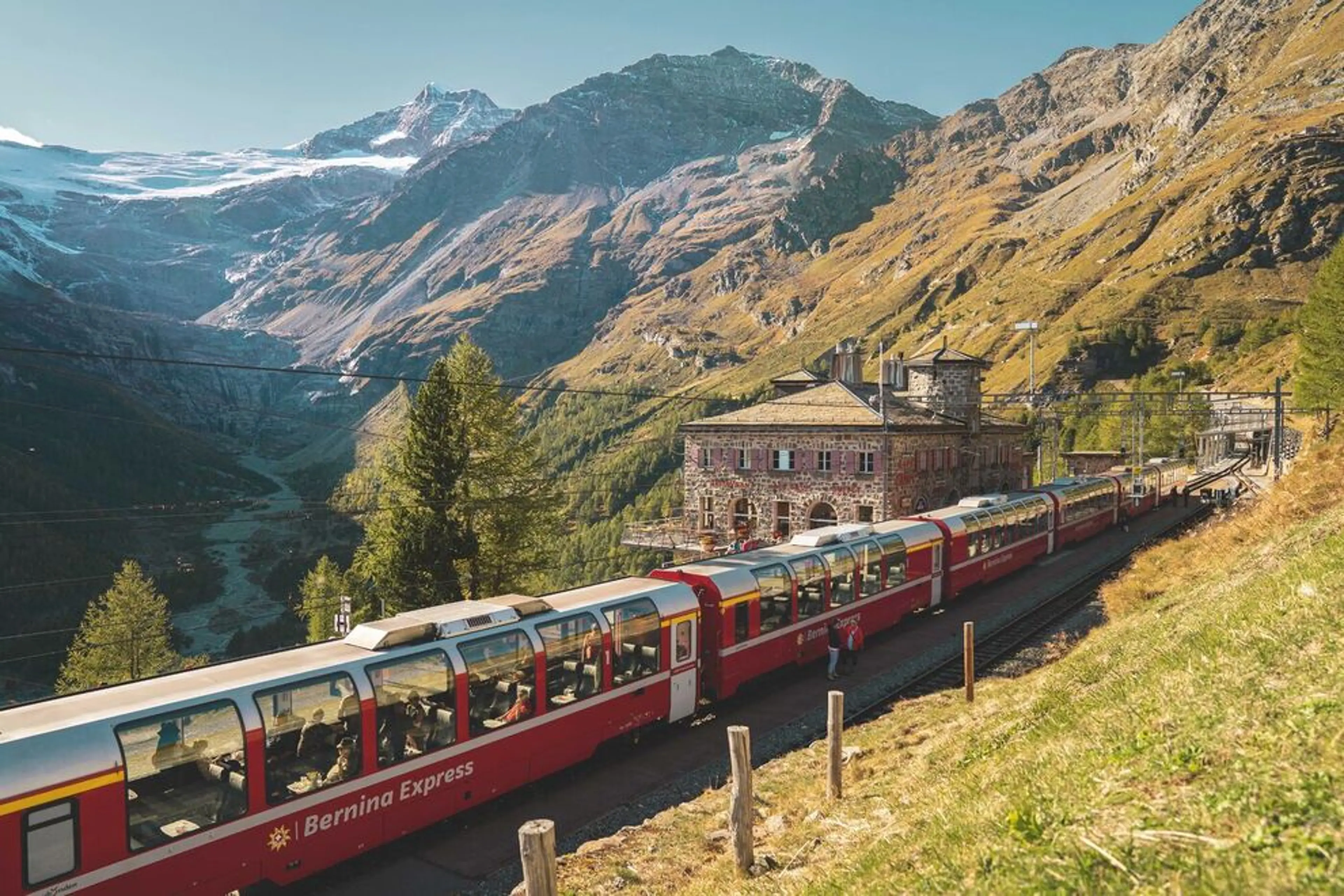
Alp Grüm is a classic overlook on the route and one of the best-known stops for dramatic valley views. It sits on a steep hillside above the Poschiavo Valley, where the rail line threads through layered Alpine terrain.
You leave Milan while the platforms are still cool, and the first stretch belongs to Lombardy: Lecco, then the eastern shore of Lake Como unspooling on your left, ferries barely awake on the water below the road.
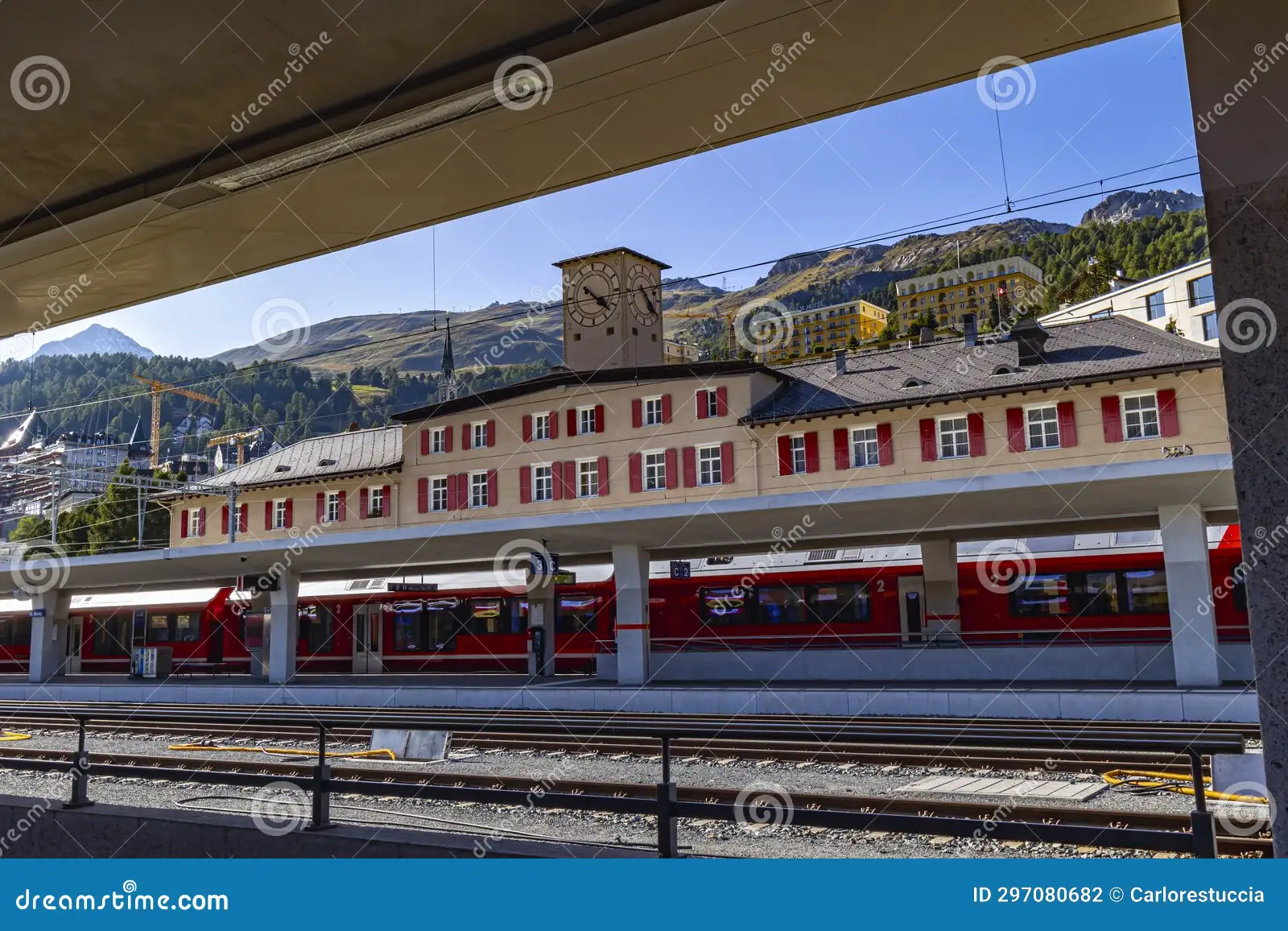
At Tirano you cross a small piazza to reach the Rhaetian platform, where a train the colour of postbox enamel stands in the open street with the level-crossing bells ringing.
You feel the gradient before you see it. The carriage leans into the Brusio circular viaduct, loops a full 360 degrees, and you watch the rear coaches slide beneath you through your own window. Chestnut thins into spruce. At Poschiavo the announcements switch language mid-sentence. At Alp Grüm you step down for a few minutes onto a platform pitched over the Palü glacier, take coffee standing, then climb again past Lago Bianco to the summit, where snow poles stand taller than the roofline.
St. Moritz arrives in thin, bright air. You walk a stretch of the lakeshore, hear Romansh on the promenade, and feel the altitude in your first flight of steps. The return runs the same rails in reverse, and a Milan to Swiss Alps day trip by train ends where it began, with the Valtellina turning gold outside the glass.
All the details about your upcoming adventure in one place
The Bernina line crosses the Alps at 2,253 metres without a rack rail, a cable, or a tunnel at the summit — the highest adhesion railway crossing on the continent, worked by wheel friction alone on curves tightening to a 45-metre radius.
That engineering restraint is what makes a Milan to Swiss Alps day trip by train possible in a single stretch of daylight: no change of traction, no cog, one continuous metre-gauge thread running from the vineyard terraces of the Valtellina to the larch forests of the Engadine.
The route a Milan to Swiss Alps day trip by train tour now follows opened in 1910 as a summer excursion line, electrified from its first day of service. UNESCO inscribed it in 2008, together with the neighbouring Albula section, as one of only a handful of railways on the World Heritage list. Italians call the service the trenino rosso del Bernina; the red livery came later, but the alignment has barely shifted in more than a century.
Its architecture is deliberately unmonumental. The Brusio circular viaduct spirals a single track through 360 degrees in the open air, shedding height where a lesser line would bore a tunnel. At Alp Grüm the platform is cantilevered above the Palü glacier. At Ospizio Bernina the rails skirt Lago Bianco, a lake whose meltwater divides between the Adriatic and the Black Sea. Below, Poschiavo keeps Italian street signs and a Protestant church on the same square, evidence that the Rhaetian Railway stitches together languages as much as valleys. Milan to Swiss Alps day trip by train tickets cover this metre-gauge section at 33 CHF in second class between St. Moritz and Tirano, the same rails used by the panoramic carriages that carry the Bernina Express name.
Milan lies outside Switzerland altogether, which is the quiet ambition of the exercise. Most Milan to Swiss Alps day trip by train tours therefore combine a Lombardy leg — north through Lecco and along the eastern shore of Lake Como to Tirano — with the Rhaetian climb beyond the border, then reverse the sequence before dark. Some pair St. Moritz with a boat on Como; others hold to the rails throughout. Either way, what a traveller reads through the window in one day is a compressed transect of the Alps: vine, chestnut, spruce, larch, moraine and ice, arranged in the order geography put them.
The line stitches together languages as much as valleys.
Dress for alpine conditions, not for Milan only. The Bernina Express climbs from low valleys to high mountain terrain, so layers, a warm outer shell, and closed shoes are practical even in summer. The route includes exposed, high-altitude sections such as the Bernina Pass and Lago Bianco.
Luggage can be taken on board the Bernina Express, and RhB also offers a baggage delivery service as an alternative for larger pieces. Space is limited, so keep bags compact and stow them where the crew directs. Valid travel documents are needed for the Italy border crossing.
Photography is allowed from the panoramic coaches, and the route is designed around wide landscape views. For safety, keep aisles clear and avoid leaning out of windows or opening anything beyond what the crew permits. Use the journey for moving landscape shots rather than expecting a dedicated stop at every landmark.
The Bernina Express works well for family day trips because the experience is seated, scenic, and simple to follow. Children under 6 travel free of charge, while children and teenagers from 6 to under 16 years pay half fare; the seat-reservation supplement is paid in full. Keep in mind that the trip crosses the border into Italy, so children need valid travel documents.
RhB says some Bernina Express seats are wheelchair-accessible, but they must be booked exclusively through Railservice. Boarding and alighting assistance must also be ordered in advance through the SBB Call Center Handicap. Wheelchair-accessible seats on the Bernina Express Bus are also handled by Railservice.
RhB serves snacks and drinks on board the Bernina Express, and only cashless payment is accepted. If you prefer, buy food before boarding in Chur or St. Moritz so you are not dependent on onboard service. The on-train offer is a complement to the trip, not a full restaurant car on standard services.
Opening hours
Mon–Sun 00:00 – 23:59
Address
Bernina Express, Rhätische Bahn AG, Bahnhofstrasse 25, 7001 Chur, Switzerland
Access
Some Bernina Express seats are wheelchair-accessible; book via Railservice
Best arrival window
00:00 – 23:59 — No fixed opening hours
Official site
https://www.rhb.ch/en/panoramic-journeys/bernina-express/
Public transport
From Milan, use a Switzerland-Italy rail connection that reaches Tirano, then continue on the Bernina Express toward St. Moritz or Chur. RhB’s service pages confirm the Bernina Express runs on the Chur/St. Moritz–Tirano axis, and the operator provides live departure information for stations.
Car
Drive only to your boarding station, not along the full alpine rail corridor. Chur station offers parking via SBB P+Rail, and RhB notes CHF 12.00 per day at Chur station parking.
Taxi
A taxi makes sense only for the last mile to Chur station or St. Moritz station. Use it to reduce transfer stress if your Milan arrival is late, then board the train with your reservation in hand.
Seat reservations on the Bernina Express must be purchased in addition to the ticket, and the supplement is tied to the train number. RhB states a fee of CHF 500.00 applies when changing the date of travel or rebooking an entire group from one Bernina Express train to another Bernina Express train.
Recommended time
Half a day
For a milan to swiss alps day trip by train, reserve most of the day rather than trying to squeeze it into a short outing. The core rail leg is long but comfortable, and the least rushed boarding window is usually the first departure you can make without a tight transfer, so you have more margin for platform changes and a calmer return. If you are connecting through a round-trip itinerary, add extra time for seat reservation checks, the stop in Tirano or Chur, and any missed-connection buffer. Crowds tend to feel heaviest around the most popular mid-morning and early-afternoon departures, while the edges of the day are usually easier to manage.
Crowd levels through the day
Weather · crowds · average price — dots go green to amber to red as each metric rises.
March to May can bring clearer light, snow patches, and quieter platforms, though mountain weather still changes quickly. For a milan to swiss alps day trip by train, spring offers a strong mix of snow and early green valleys.
June to August is the busiest season, with long daylight and the best chance of clear views across the Bernina Pass and Lago Bianco. Expect higher demand for a milan to swiss alps day trip by train and book early in peak weeks.
September to October often gives crisp air, larch color, and steadier visibility before the late-October service changes. It is a strong shoulder season for a milan to swiss alps day trip by train with fewer crowds than midsummer.
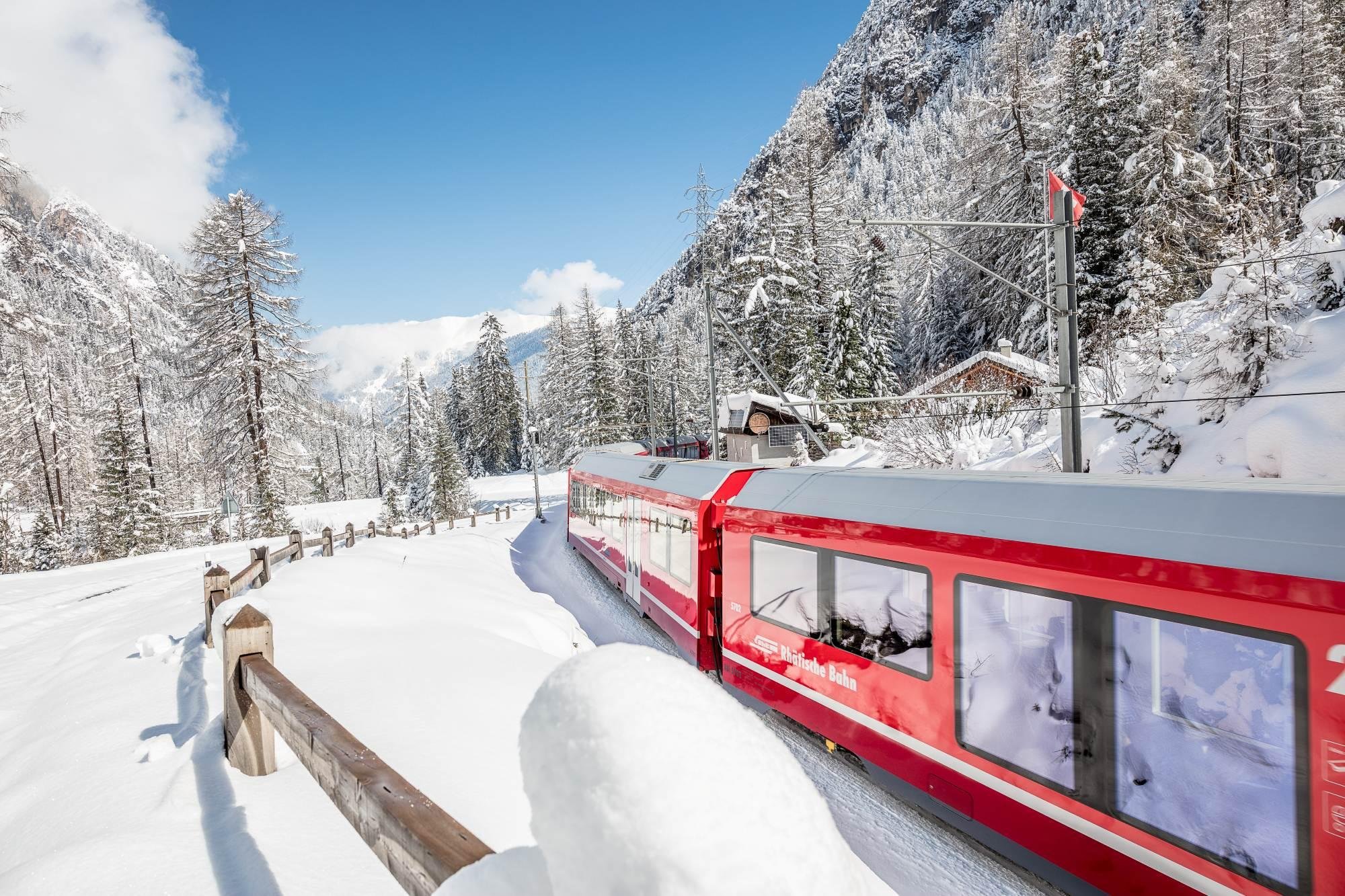
December to February brings the most snow-covered scenery and the strongest contrast between valley and high alpine sections. It is popular for a milan to swiss alps day trip by train, but schedules and daylight are tighter.
RhB requires a seat reservation for the Bernina Express, and the supplement is separate from the transport ticket. For a milan to swiss alps day trip by train, book early in peak summer and school-holiday periods.
The route crosses from Switzerland into Italy at Tirano, so valid travel documents matter even on a day trip. Keep them easy to reach for border checks.
RhB says only cashless payment is possible on the Bernina Express. Make sure your card or phone payment is ready before boarding.
RhB provides live departure times for its stations, which helps when connecting from Milan via regional rail. Check before leaving your hotel if you are making a tight same-day connection.
There is luggage capacity on board, but space is limited and larger items are better handled with RhB’s baggage service. Compact bags make boarding and aisle movement easier.
RhB states that trains 951 and 952 are diverted via Vereina from 29 October to 13 November 2026. If your travel date falls in that window, recheck the exact boarding and timing before departure.
Bahnhofstrasse 25, 7001 Chur, Switzerland
Main operator address and rail hub
Get directions
Bahnhofplatz, 7000 Chur, Switzerland
Useful starting point for departures
Get directions
St. Moritz, Switzerland
Alternative boarding point for the alpine section
Get directionsThe Bernina line began as a commercial gamble. In 1906 the Bernina-Bahn-Gesellschaft, a private company independent of the Rhaetian Railway, broke ground on a metre-gauge link between Sankt Moritz and the Italian border town of Tirano. The engineer Achille Bianchi drove the project. His decision was radical for the era: no rack rails, no cable haulage, only adhesion. Gradients reach 70 per mille. The line climbs to 2,253 metres at Ospizio Bernina, the highest adhesion crossing of the Alps, then falls more than 1,800 metres to the Valtellina floor. Anyone considering a milan to swiss alps day trip by train is riding an engineering argument that was settled in concrete and steel over a century ago. Construction was brutal. Avalanches struck the Bernina pass workings during the winters of 1907 and 1908; snow depths repeatedly buried the alignment. The section to Pontresina opened on 1 July 1908, and through service to Tirano followed on 5 July 1910. Near-collapse came almost immediately. Winter operation proved ruinously expensive, and the company fell into financial difficulty; the canton of Graubünden intervened, and in 1943 the Rhaetian Railway absorbed the line outright. Survival brought recognition. On 7 July 2008 UNESCO inscribed the Albula and Bernina lines on the World Heritage List, citing the Brusio circular viaduct of 1908, the Landwasser Viaduct, and the harmony between engineering and alpine landscape. The panoramic Bernina Express branding, with its glazed coaches, grew out of that heritage status and now anchors most bernina express tours from Lombardy. Today's operator, Rhätische Bahn AG at Bahnhofstrasse 25 in Chur, still runs Bianchi's original alignment: 55 tunnels, 196 bridges, and the Montebello curve above the Morteratsch glacier. The 33 CHF second-class fare between St. Moritz and Tirano buys passage over unaltered 1910 trackbed. That continuity is the point of a milan to swiss alps day trip by train — the route was never rebuilt, only maintained.
Concession granted for a metre-gauge railway across the Bernina pass to the Bernina-Bahn-Gesellschaft.
Construction begins under engineer Achille Bianchi, using pure adhesion rather than rack assistance.
The Brusio circular viaduct is completed and the first section between Pontresina and Morteratsch opens on 1 July.
Through running to Tirano starts on 5 July, completing the 61-kilometre crossing.
Year-round winter operation is attempted, exposing avalanche and snow-clearance costs that strain the company.
The Rhaetian Railway takes over the bankrupt Bernina line, ending independent operation.
Panoramic through services from Chur to Tirano are branded Bernina Express.
UNESCO inscribes the Albula and Bernina lines as World Heritage on 7 July.
Stand at the official Viaductplatz viewpoint near Filisur for the classic side-on shot of the 65-metre-high viaduct and train crossing it. This is one of the easiest named photo stops on the route, and it works well for a milan to swiss alps day trip by train because the landmark is directly tied to the Bernina corridor.
Shoot from the station area and terrace for wide valley views over the Poschiavo side, with trains curving past the cliff-edge stop. It is a well-known Bernina Express photo spot, so frame both the platform and the drop into the valley for the strongest composition.
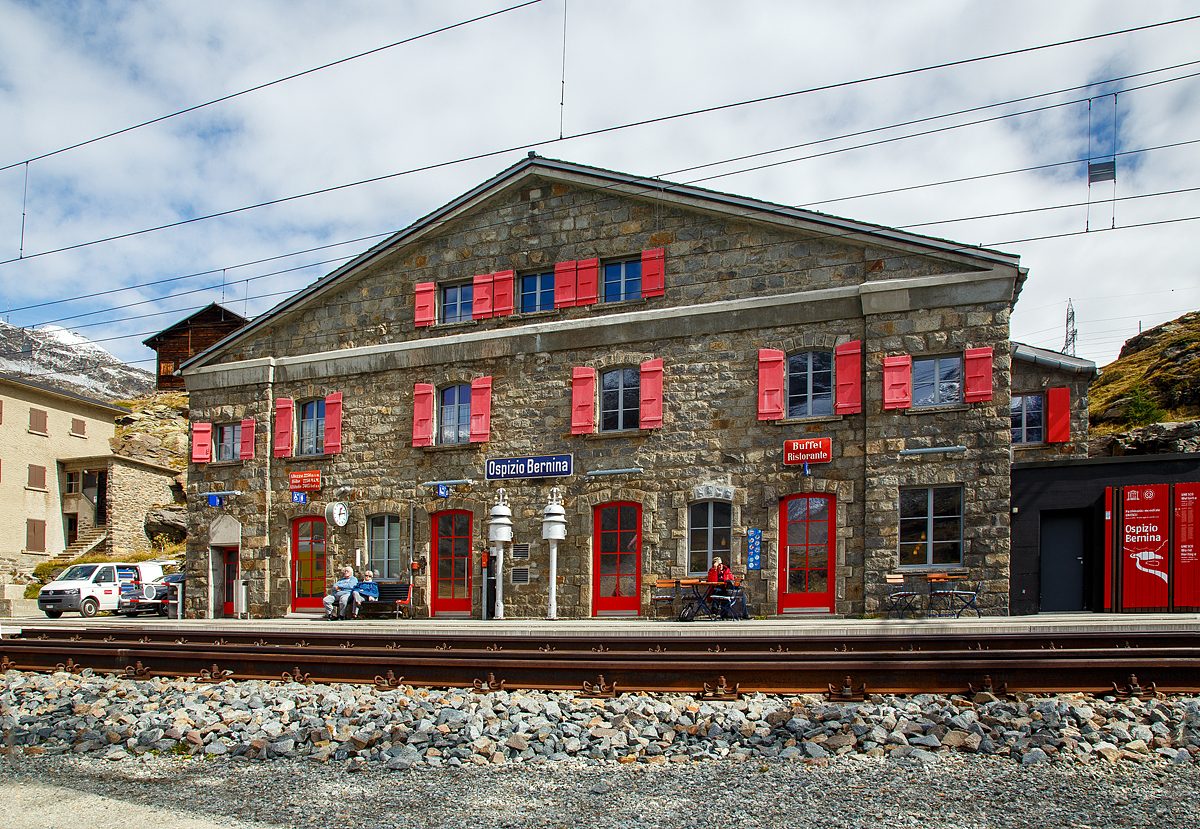
Use the station surroundings at Ospizio Bernina for high-alpine shots around the pass, especially when you want snowfields, rails, and open plateau scenery in one frame. The name is official and findable on RhB station pages, making it a practical stop for Bernina line photography.
Look for a roadside or hillside angle where the full spiral geometry reads cleanly, with the train wrapping the loop below you. The Brusio Circular Viaduct is a signature engineering subject on the Bernina Line, and it rewards a slightly elevated viewpoint more than a close platform shot.
If your connection or transfer includes the upper Bernina stretch, aim for glacier-facing views near the Morteratsch Glacier area for a broad alpine landscape shot. This is less about a single platform and more about the named glacier vista that photographers associate with the route.
The milan to swiss alps day trip by train works well with kids if you keep expectations simple: it is a scenic rail day with big views, not a full-service family attraction. On the Bernina Express, children under 6 travel free, and older kids usually do best with a reserved seat and a short, paced plan around the ride.
The Bernina Express is easiest with a compact stroller or carrier, since boarding and storing bags are simpler when the train is busy. If you need assistance or wheelchair-accessible seating, RhB says to book it in advance through Railservice.
For a milan to swiss alps day trip by train, the main food options are on the train, in station-side cafés, or in a few easy walk-up spots in Chur and on select Bernina stops. If you want the simplest plan, eat before departure or use the onboard service, then save a short stop for a quick lunch near the route.
Best for a seated snack or light meal while staying on schedule. Good when you want to keep the rail journey moving without leaving the panorama route.
A classic stop for the Bernina Express with a terrace and full lunch service. It suits travelers who want to break up the ride and eat with valley views, but it can be busy at midday.
Handy for a quick hot meal or drink at one of the highest points on the line. It is practical rather than leisurely, so it works well for a brief pause between trains.
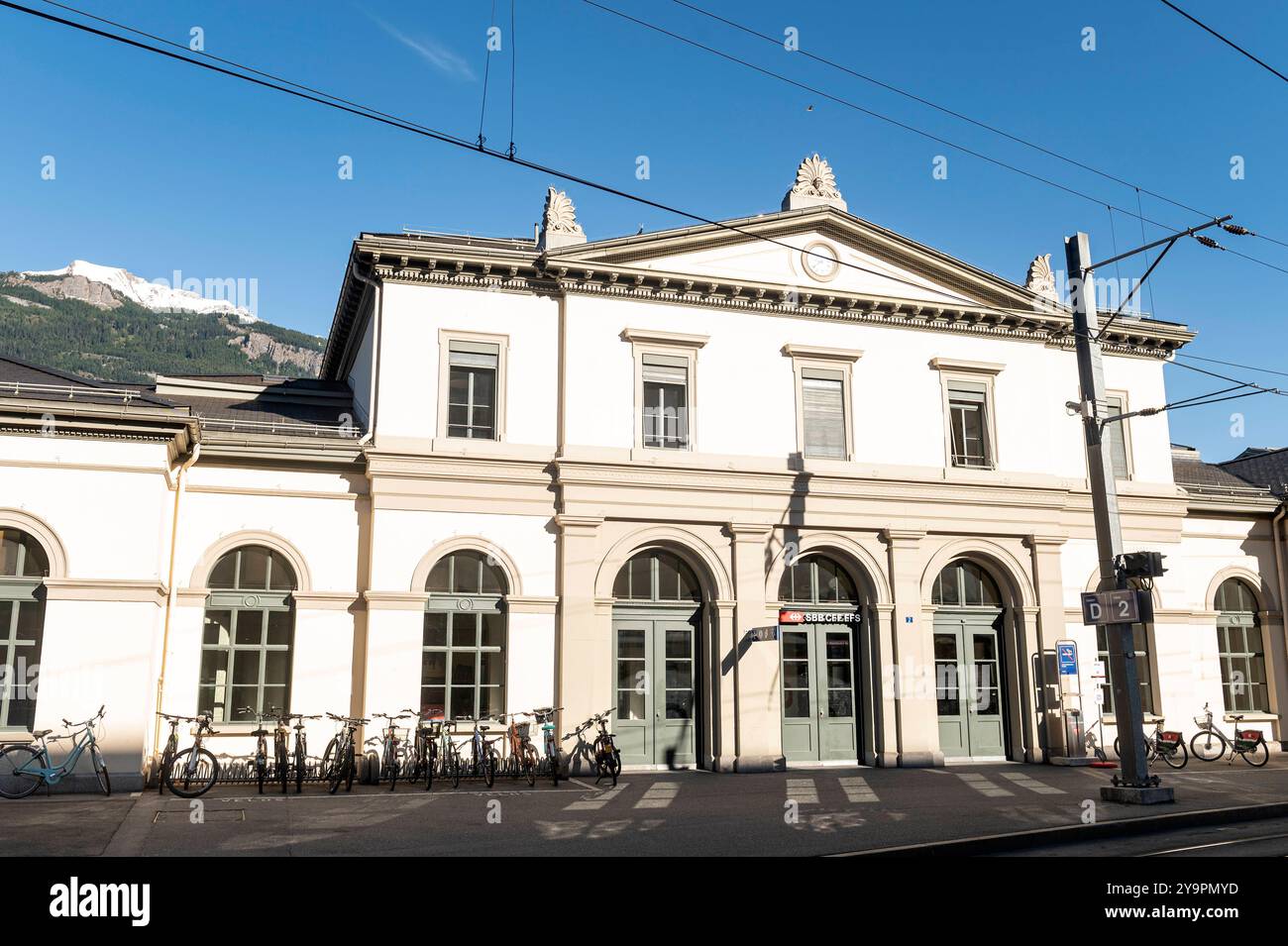
A convenient pre-departure or post-arrival stop in Chur for a proper sit-down meal. It is a better fit than a long lunch if you are connecting tightly to the timetable.
CHF 10-25
Everything you need to know for your journey
The Bernina Express itself has no fixed opening hours and runs according to the timetable. RhB lists the attraction as open daily, and the official site should be checked for the exact train on your date.
Yes. RhB states that a seat reservation is required and is purchased in addition to the ticket. For milan to swiss alps day trip by train tours, book early because the scenic coaches can sell out on peak days.
RhB’s 2026 fare sheet lists the 2nd class St. Moritz–Tirano fare at CHF 33.00. That is the official price reference for this section of the route.
RhB says some seats are wheelchair-accessible, and those seats must be booked through Railservice. Assistance for boarding and alighting must also be arranged in advance through the SBB Call Center Handicap.
Yes, luggage can be taken on board the Bernina Express. For larger pieces, RhB also offers a baggage delivery service as an alternative.
Yes. RhB serves snacks and drinks on board, and payment is cashless only. That makes the Bernina Express practical for a full-day ride without a full dining stop.
Yes, photography is allowed from the panoramic coaches and the route is built for views. Keep your bag and body clear of the aisle so you do not interfere with crew movement or other guests.
Layering is the safest choice because the trip crosses high Alpine terrain and can feel much cooler than Milan. Closed shoes and a warm outer layer are practical even in summer.
Yes. Children under 6 travel free of charge, and children and teenagers from 6 to under 16 years pay half fare. The seat-reservation supplement still applies in full.
RhB states that a fee of CHF 500.00 applies if you change the travel date or rebook an entire group from one Bernina Express train to another Bernina Express train. That makes it important to confirm your timetable before you lock in a booking.
The route is known for the Landwasser Viaduct, the Bernina Pass, Lago Bianco, the Palü Glacier, and the Brusio Circular Viaduct. Those are the signature highlights of a milan to swiss alps day trip by train.
One of the most famous structures on the route, the Landwasser Viaduct is 65 metres high and 142 metres long. It is a UNESCO World Heritage highlight on the Albula line and appears on many Bernina Express journeys.
The Brusio Circular Viaduct is the spiral stone loop near Brusio that the railway uses to change elevation smoothly. Switzerland Tourism notes it is part of the UNESCO World Heritage route and one of the line’s best-known engineering works.
This high-altitude lake sits around 2,253 metres above sea level on the Bernina route. It is one of the clearest indicators that the journey has entered true alpine terrain.
The Palü Glacier is one of the route’s most recognisable glacier views. RhB lists it among the highlights that passengers can see from the Bernina Express.
The line reaches the Bernina Pass, where the route climbs into high mountain country. The pass section is a core reason the trip feels so different from a lower-elevation rail day out.
A well-known luxury option in Pontresina for travelers who want to overnight near the alpine section of the line. It suits a rail trip focused on mountain scenery and an early departure.
A classic luxury hotel in St. Moritz that works well before or after a Bernina Express ride. Useful if your milan to swiss alps day trip by train turns into a longer stay.
A practical mid-range choice in Pontresina for visitors connecting to the Bernina route. Good for travelers who want to stay close to the station network.
If you want flexible same-day rail access, staying in Chur keeps you near the main Bernina Express departure point. This is a smart base for an early start or a late return.
Join thousands of happy travelers who have discovered this incredible experience
Book Your Experience Now