11 hr
Swiss Alps & Bernina Red Train Day Trip from Milan
- Expert local guide
- Small group
- Skip-the-line access
- Free cancellation
Milan to Swiss Alps Train Ride with Venice — Bernina Express Day Trips
Glaciers at the window by morning, lagoon light by evening.
Compare fares, pick the fit — all bookings are mobile-voucher and eligible for free cancellation where shown.
11 hr
12 hr
13 hr
When planning a milan to swiss alps train ride with venice, you must choose between the standard regional train and the panoramic express. Both options travel through the scenic UNESCO World Heritage landscapes of the Bernina Pass. Your preference for photo opportunities or reserved comfort will dictate which milan to swiss alps train ride with venice tour fits your itinerary.
| Regional Train Standard Coach |
Top pick Bernina Express (Panoramic Coach) |
|
|---|---|---|
| One-way cost | 33 CHF | 33 CHF plus seat reservation fee |
| Seat Reservation | Optional (5 CHF) | Mandatory (14 to 22 CHF) |
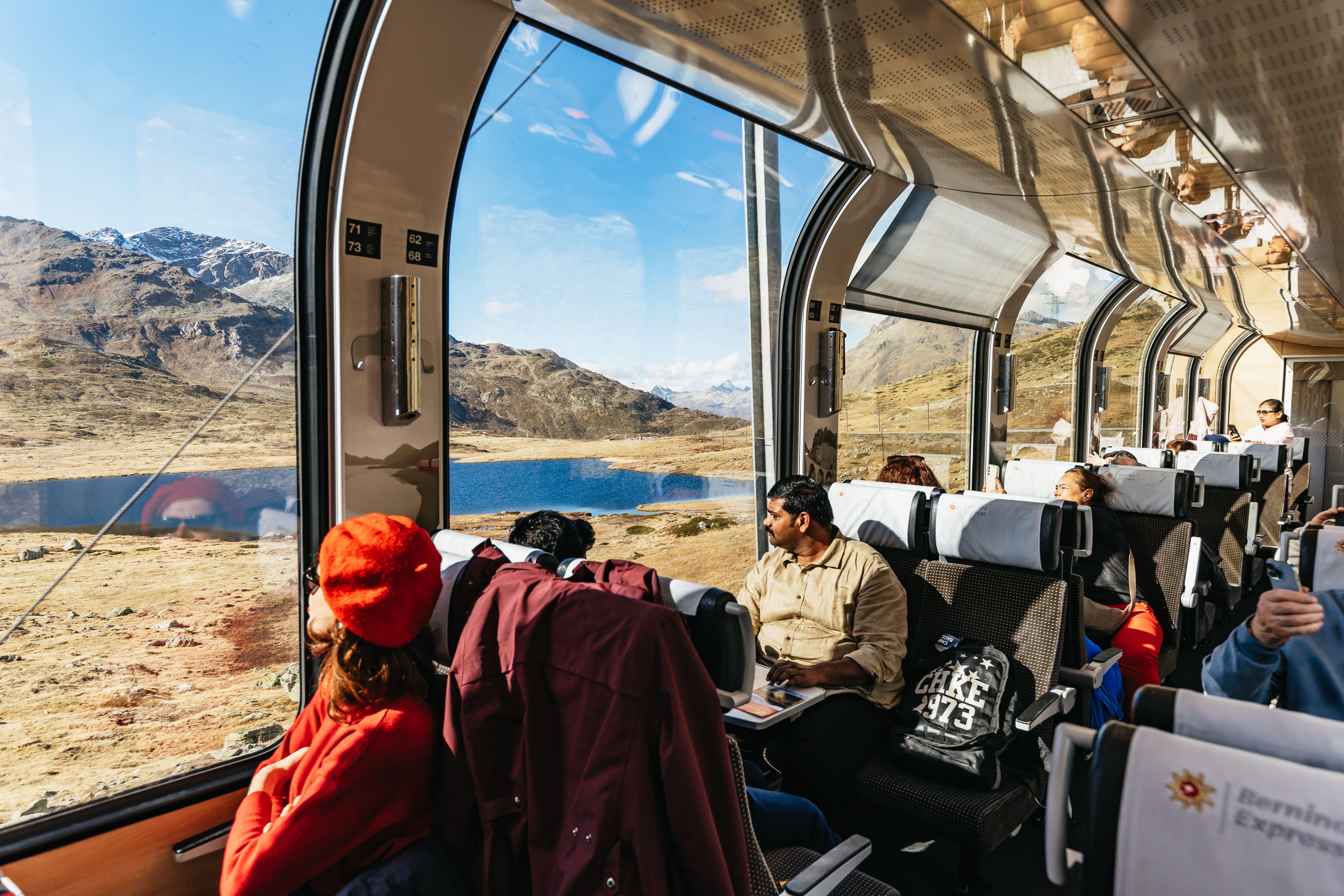
| Carriage windows | Can be opened for fresh air | Sealed panoramic glass |
| On-board catering | — | Minibar trolley service available |
| Photo opportunities | High (no glass reflection) | Good (via carriage door drop-down windows) |
| Train frequency | Runs roughly every hour | Runs 1 to 3 times daily |
| Best for | Budget and flexible travelers | First-time visitors seeking comfort |
| See tickets & prices |
Verdict: We recommend comparing the official milan to swiss alps train ride with venice tours to find the best option for your schedule. Traveling during the peak season requires early planning. Regardless of your choice, you should secure your milan to swiss alps train ride with venice tickets early to guarantee departure times.
Worth it for scenery-first travellers, not rushers
The rail leg itself is cheap: 33 CHF buys a one-way second class ticket from Tirano to St. Moritz, and that single fare covers the UNESCO-listed Albula/Bernina line — the Brusio circular viaduct, the Bernina Pass at 2,253 metres, Lago Bianco, the Landwasser approach. What you actually pay for on a milan to swiss alps train ride with venice booking is the coach transfer, the seat reservation and the guiding that turns a scattered logistics puzzle into one ticket. Across the five operators on this page — the Bernina Red Train day trips, the St. Moritz combinations, the Como departure — you are buying a long day with real dead hours on the road. It pays off if panoramic glass and high-alpine terrain are the point. Independent travellers already holding Swiss rail passes, or anyone allergic to 12-hour days, will find the guided milan to swiss alps train ride with venice tours poor value against a self-booked ticket.
Bottom line: Book the milan to swiss alps train ride with venice tour if the Bernina line is your destination rather than a box to tick — otherwise buy the 33 CHF ticket yourself and keep the change.
They serve different travel styles; most passengers prefer the regional train for photography but choose the express for comfort. Securing milan to swiss alps train ride with venice tickets in advance is key for peak travel periods on the Rhaetian Railway. The two lines run along the exact same tracks, passing the same alpine landmarks. However, regional routes are best suited for those organizing multi-stop milan to swiss alps train ride with venice tours.
|
Top pick Bernina Express |
Regional Red Train (RhB) | |
|---|---|---|
| Window flexibility | Fixed panoramic windows (cannot open) | Drop-down windows (open for photos) |
| Seat reservation requirement | Mandatory (CHF 32–44) | Optional (CHF 5 fee) |
| Booking flexibility | Fixed to specific train and time | Hop-on hop-off, valid all day |
| Ticket price | 33 CHF plus reservation fee | 33 CHF (no reservation fee) |
| On-board commentary | Audioguide provided via personal devices | No commentary provided |
| Visual scenery | Identical alpine views and routes | Identical alpine views and routes |
| See tickets & prices |
Verdict: Opt for the express if you want a curated milan to swiss alps train ride with venice tour, but choose the regional train to enjoy open windows and spontaneous stopovers.
Hand-picked experiences loved by thousands of travelers
12.5 hours
Free Cancellation
Journey through the Swiss Alps on the legendary Bernina Express and explore the luxury resort of St. Moritz.
12 hours
Free Cancellation
Journey from Como to St. Moritz and ride the iconic Bernina Express through breathtaking Alpine passes to Tirano.
13.5 hours
Free Cancellation
Board a train from Milan to explore the romantic streets of Verona and the historic canals of Venice in one day.
13 hours
Free Cancellation
Experience the Swiss Alps on the iconic Bernina Red Train and explore the chic resort of St. Moritz.
10 hours
Free Cancellation
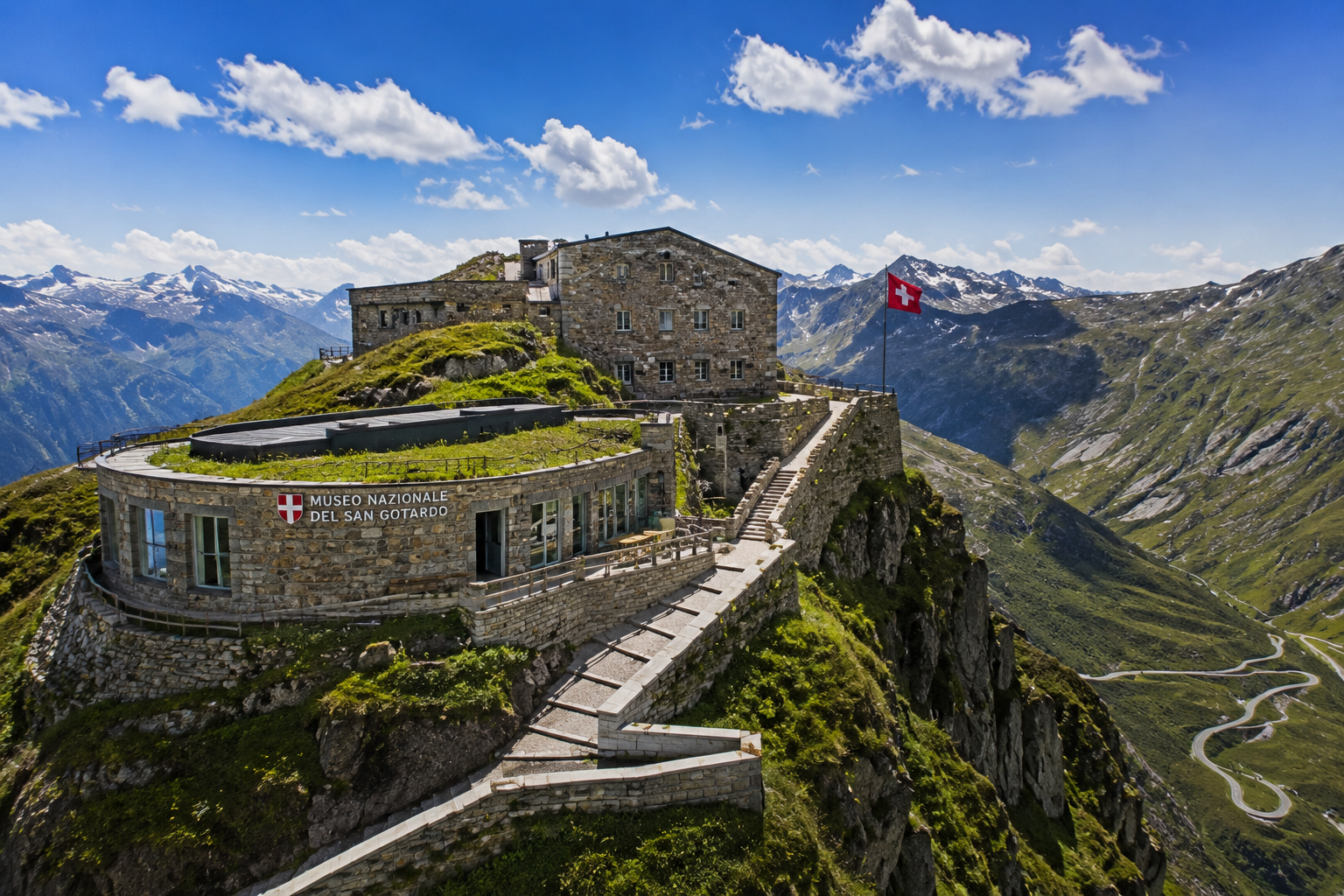
Journey through the scenic Gotthard Pass to explore a secret mountain fortress and walk the historic Devil's Bridge.
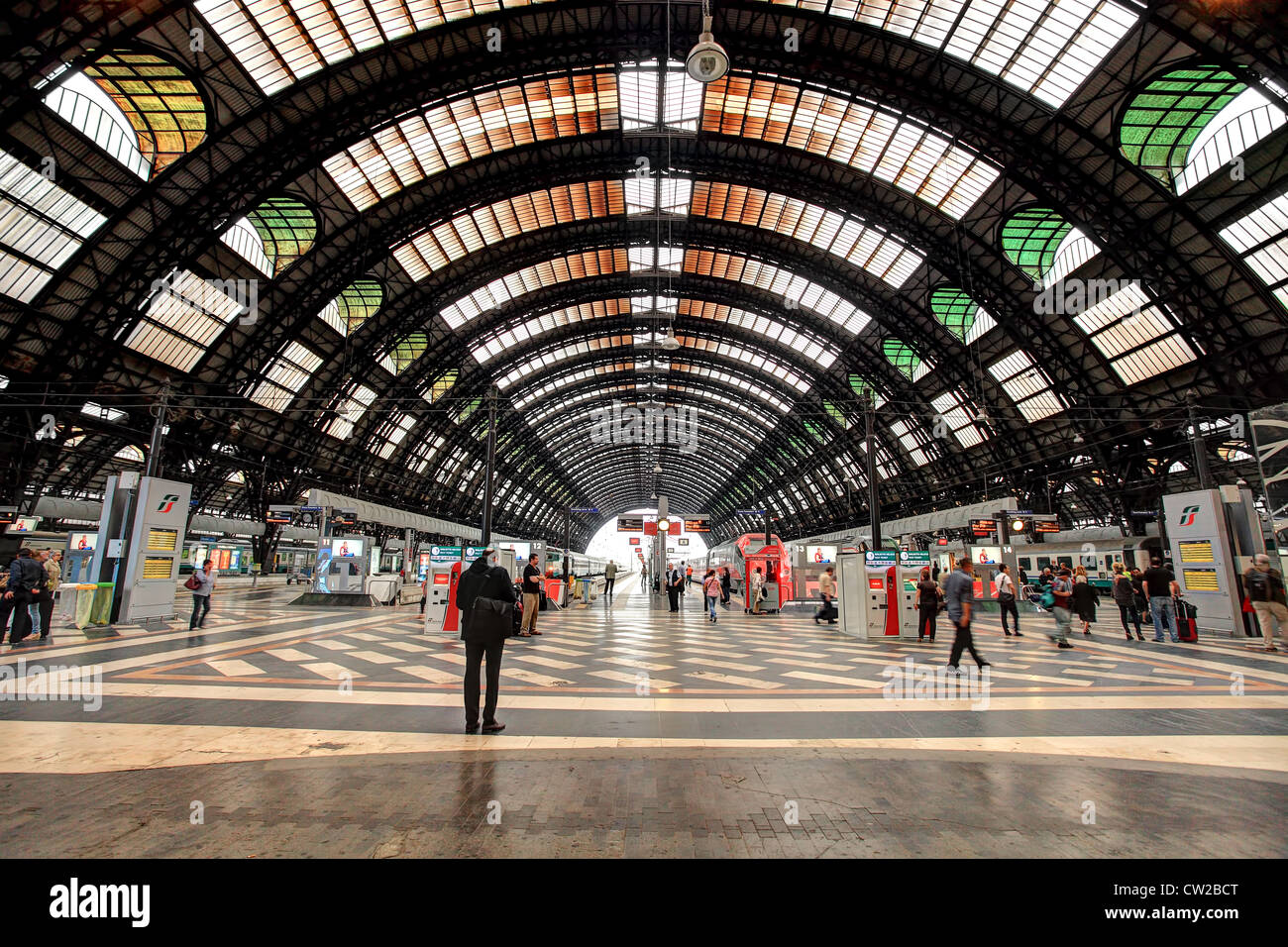
Begin by boarding a regional train from Milan Central Station to Tirano, which serves as the Italian gateway for the Milan to Swiss Alps train ride with Venice.
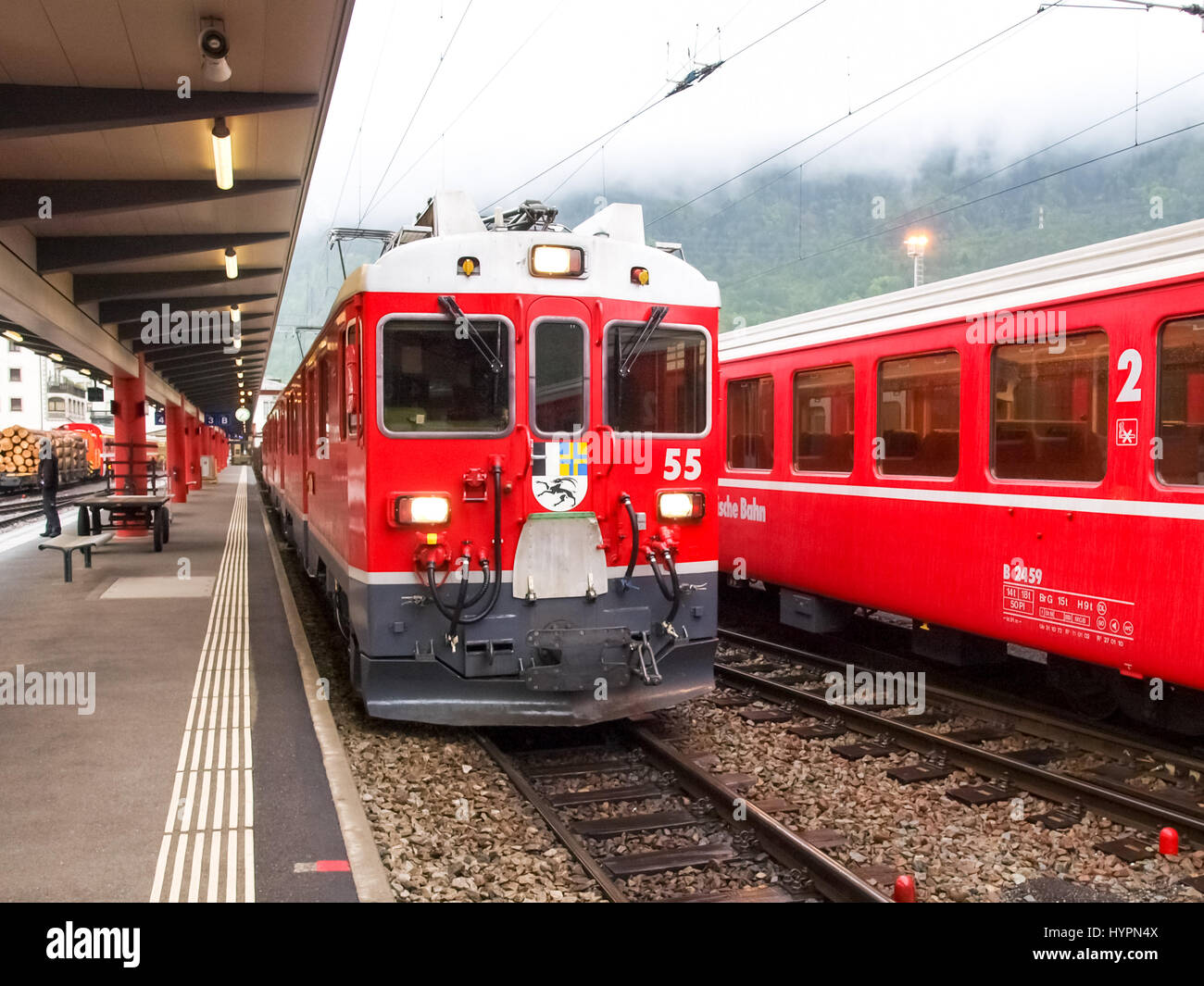
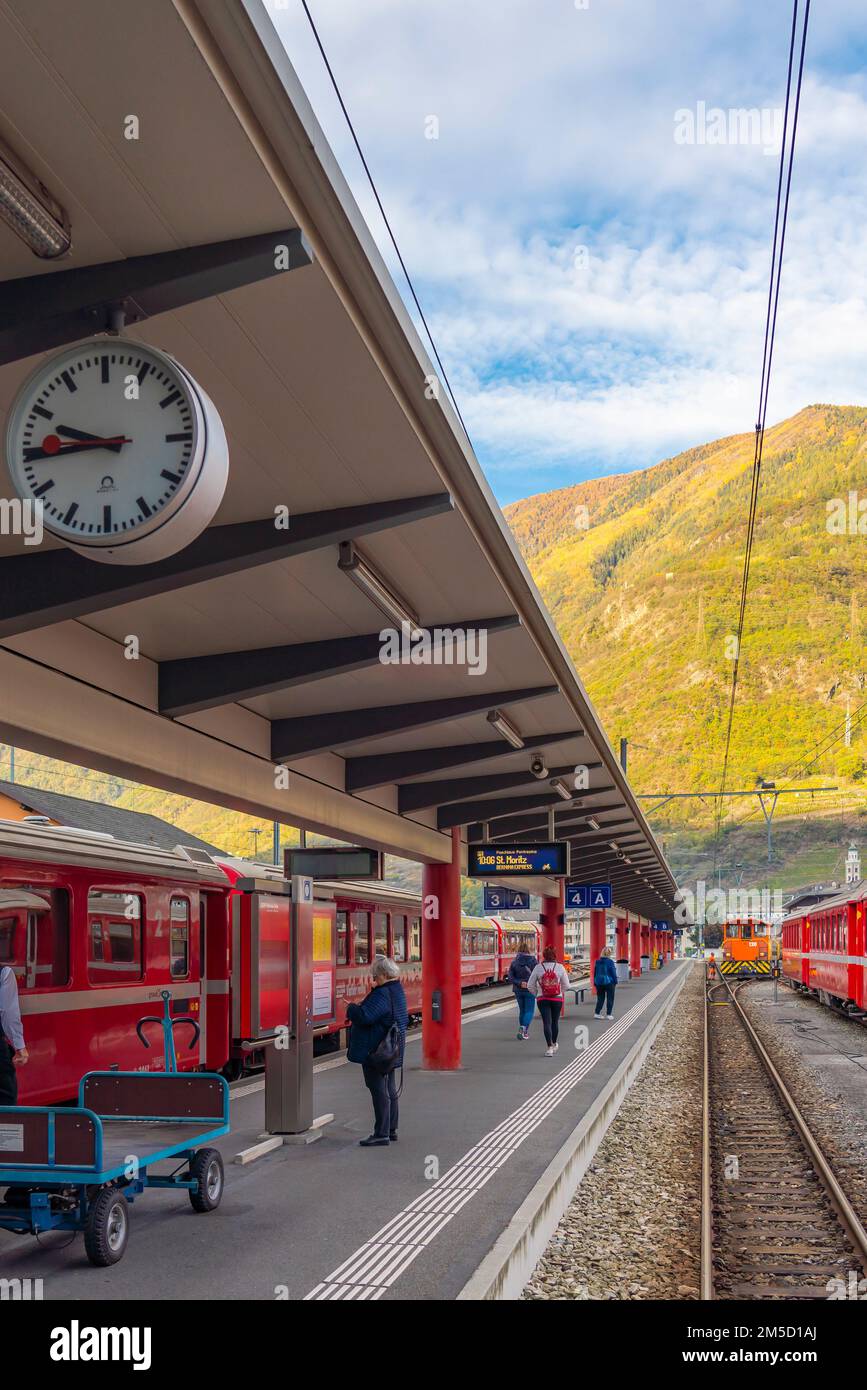
Cross the station square to the Rhaetian Railway terminal to board the red panoramic train climbing towards the Swiss Alps.
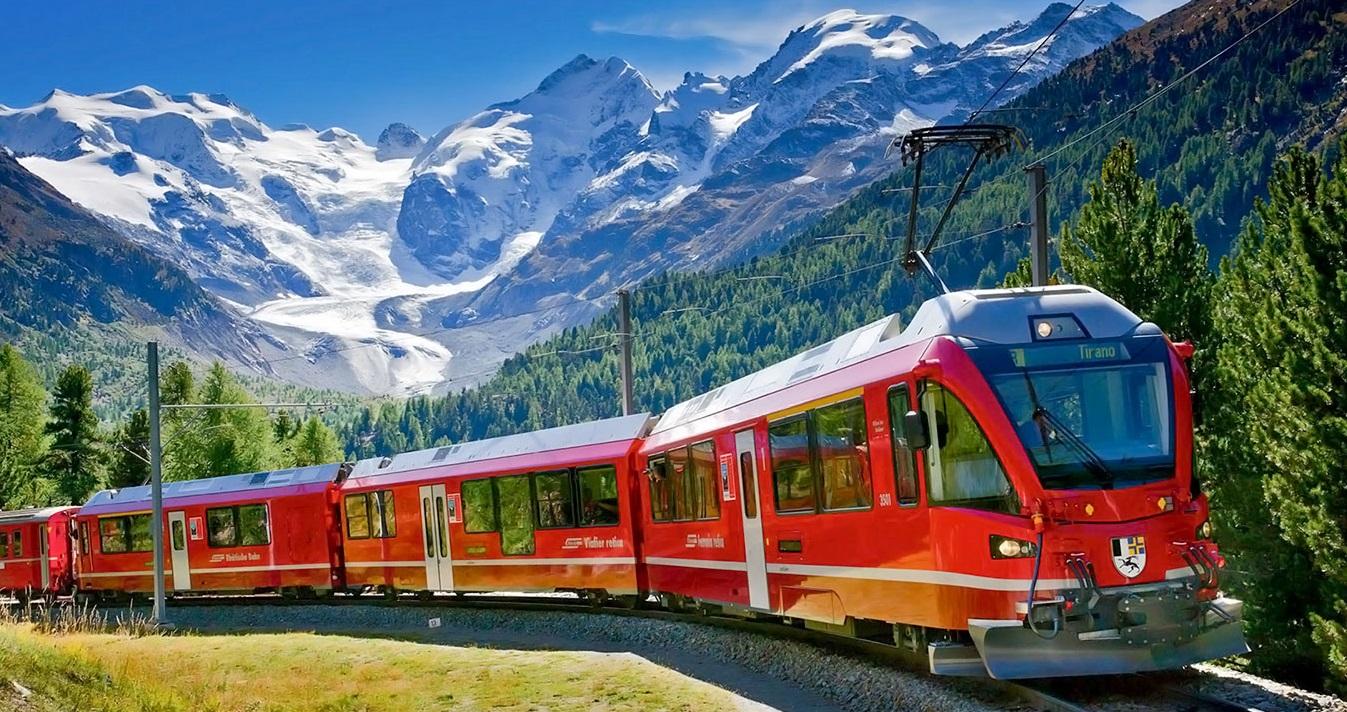
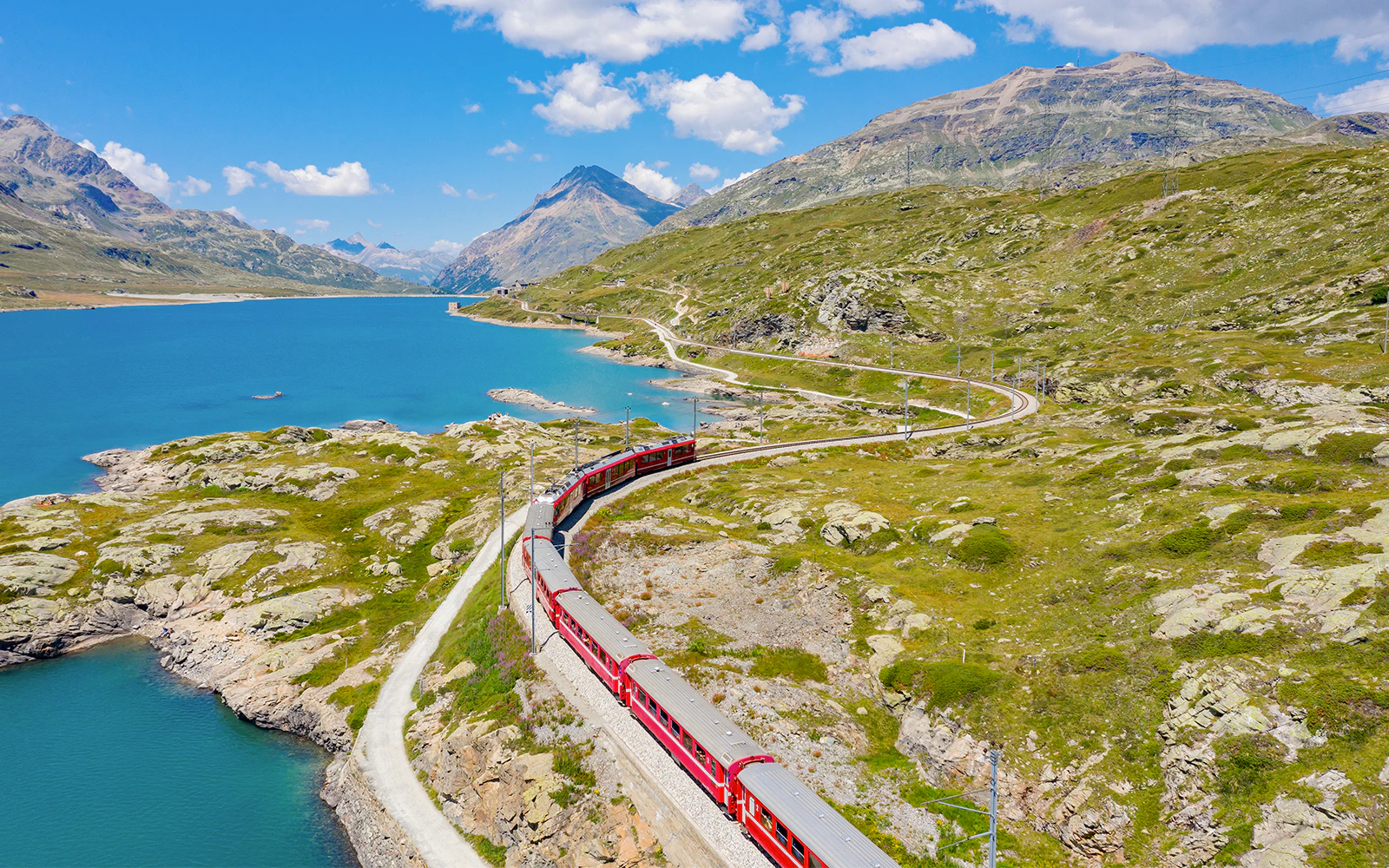
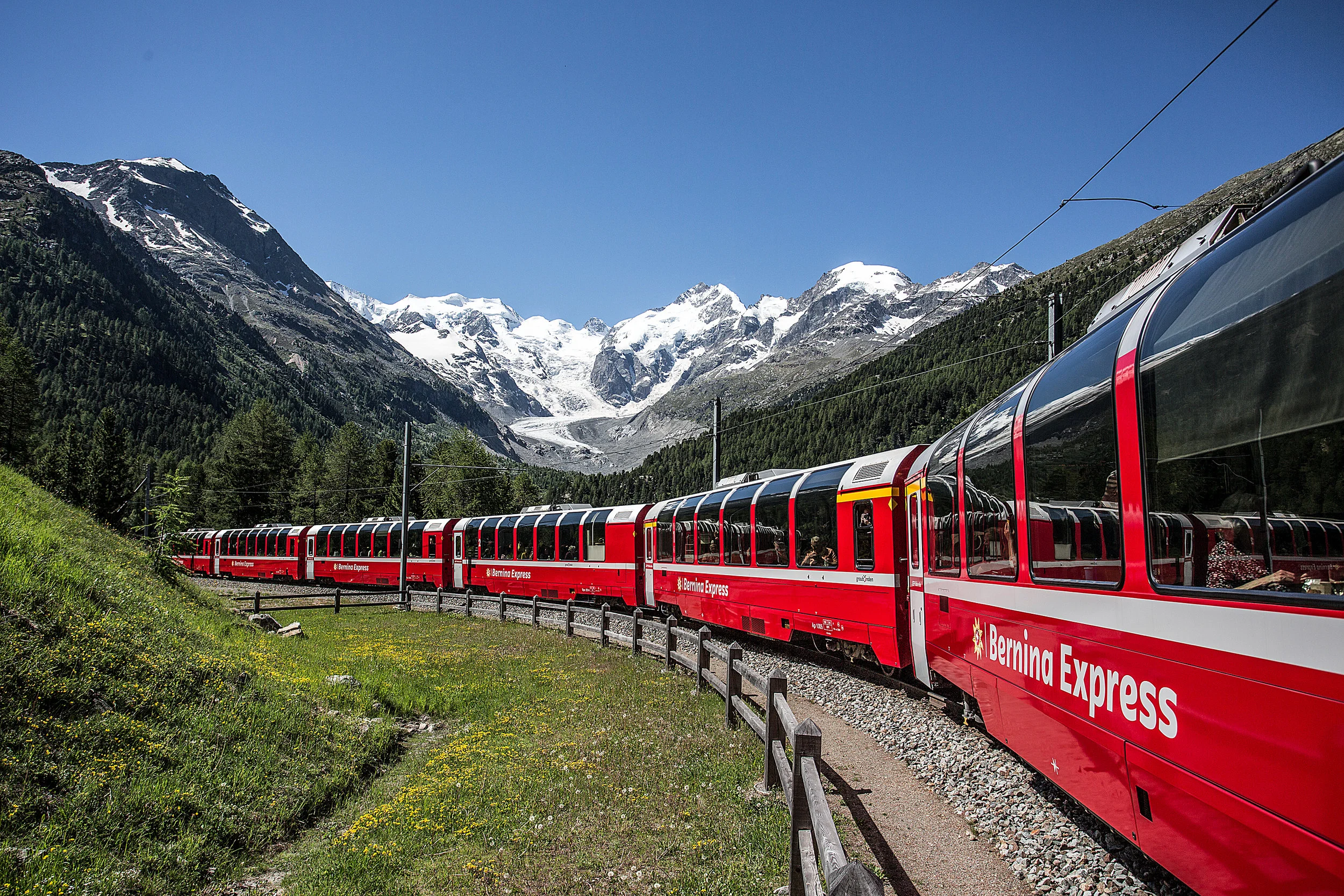
Travel past alpine lakes and glaciers, ascending to the route's highest point at Ospizio Bernina before descending to St. Moritz.
Disembark in the glamorous resort town of St. Moritz to explore the lake and mountain scenery before returning.
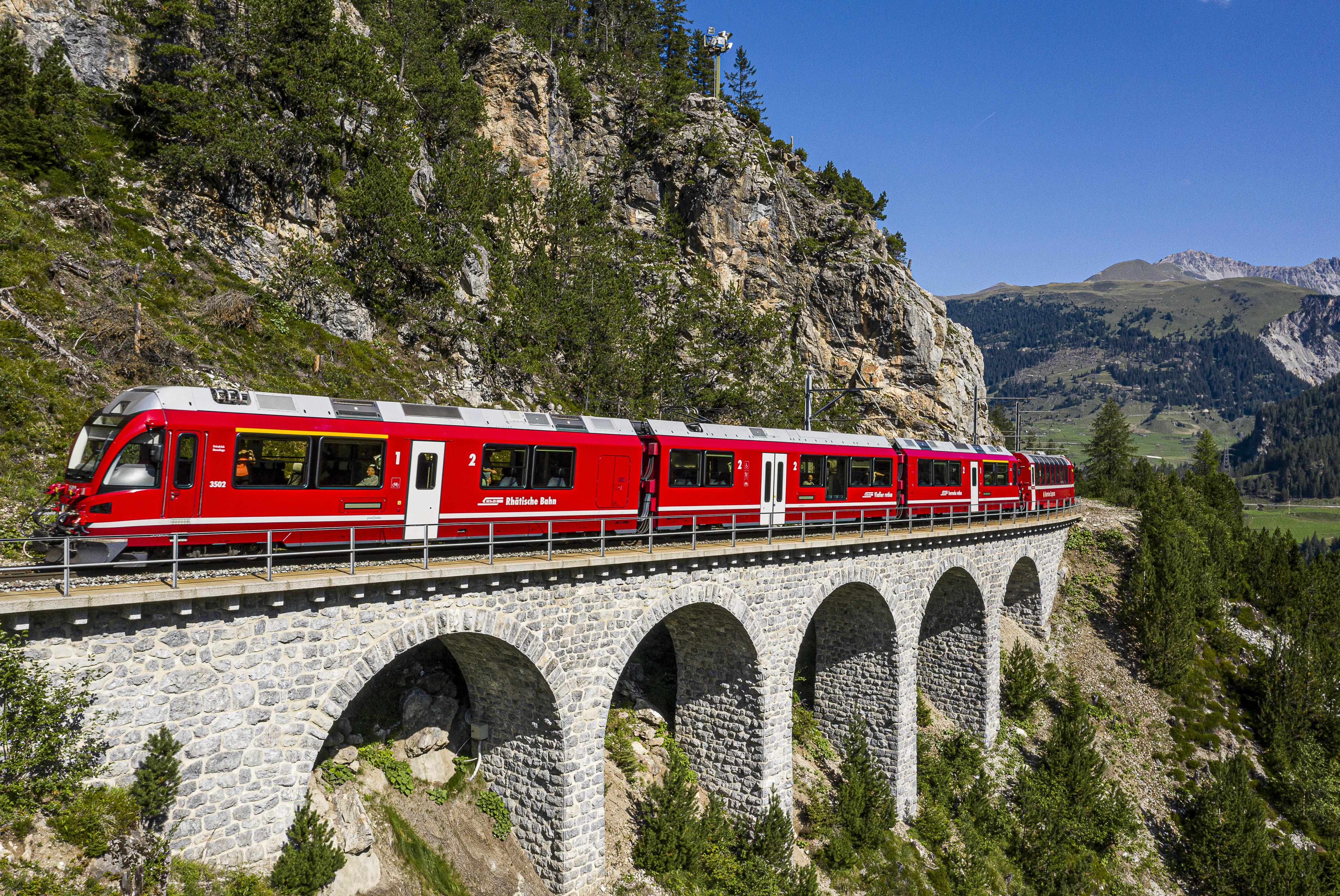
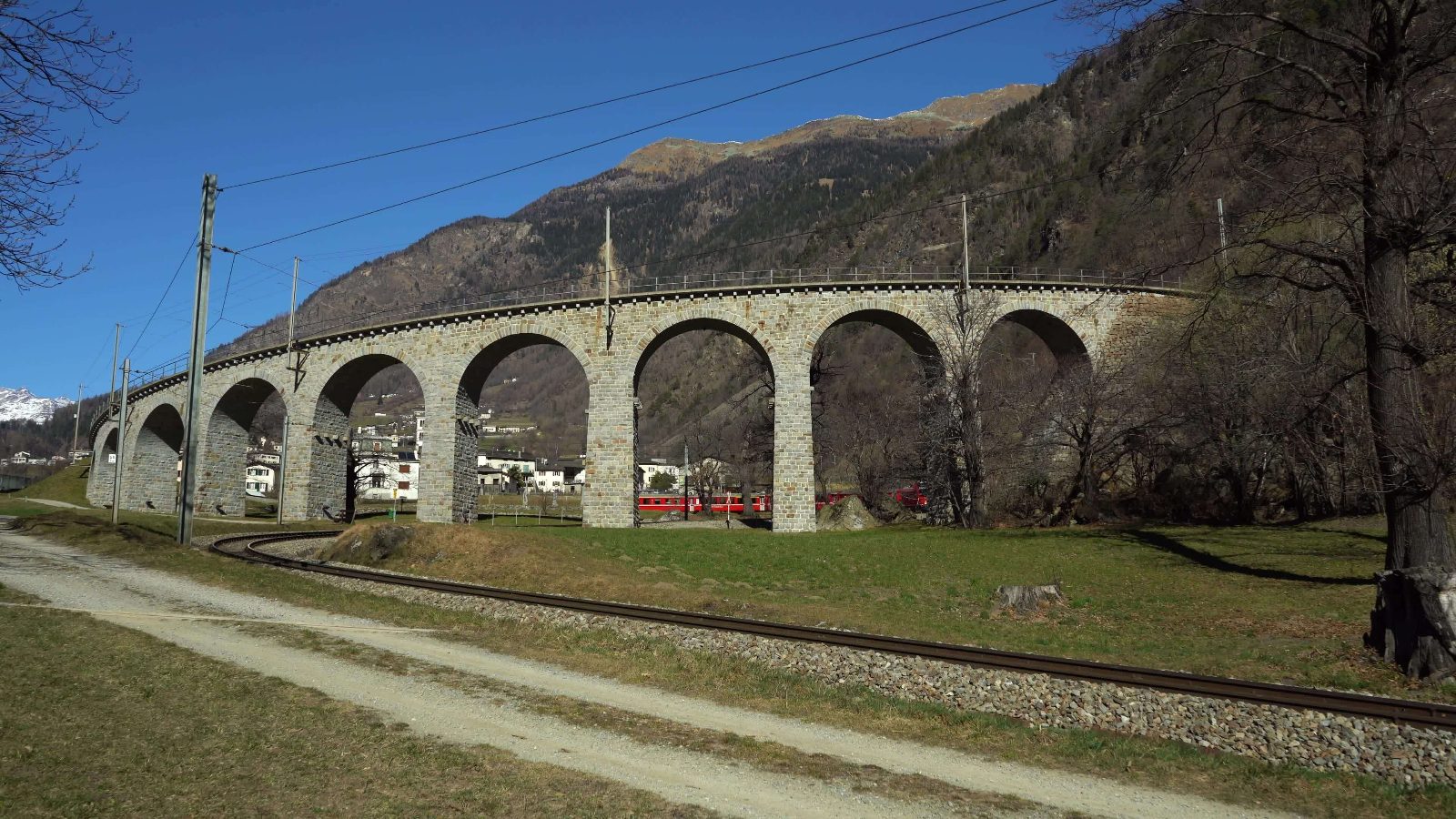
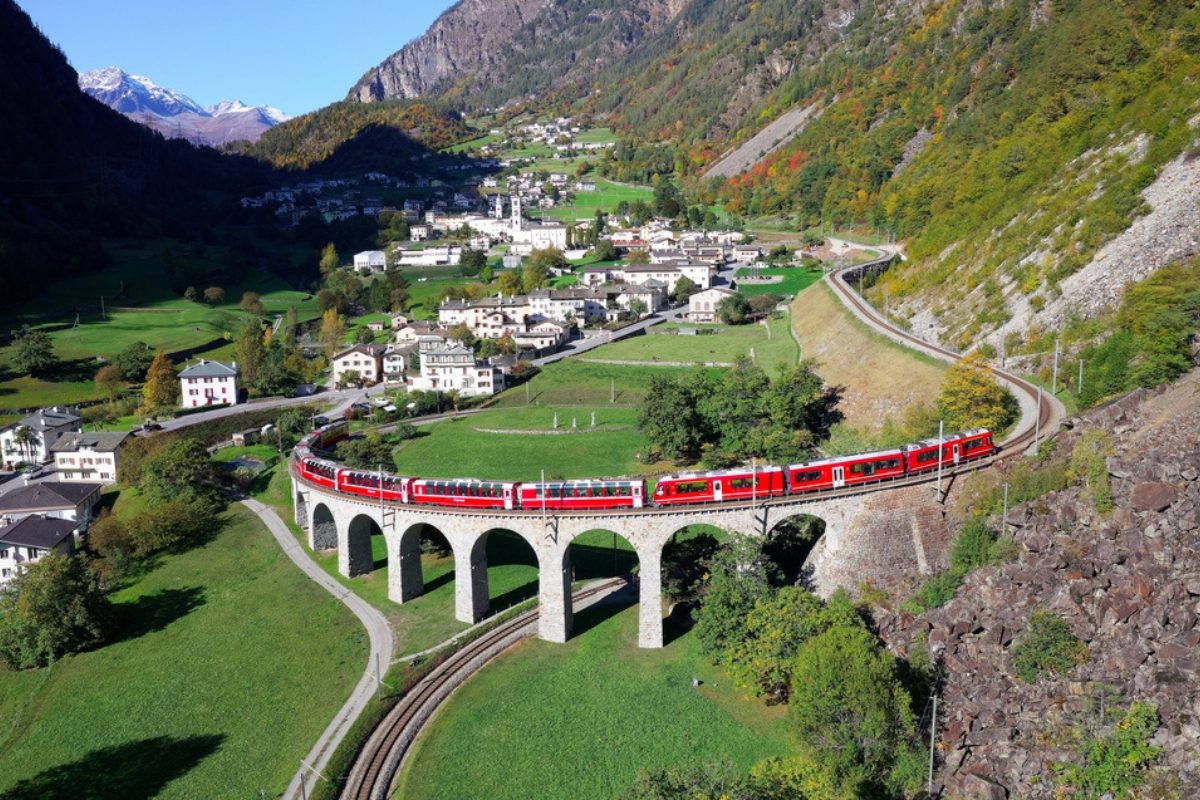
This single-track stone viaduct features nine arches, each spanning 10 meters, to negotiate a 70-meter radius curve. It allows the train to drop or climb 20 meters of elevation in a tight space without risk of slipping on the 7% gradient.
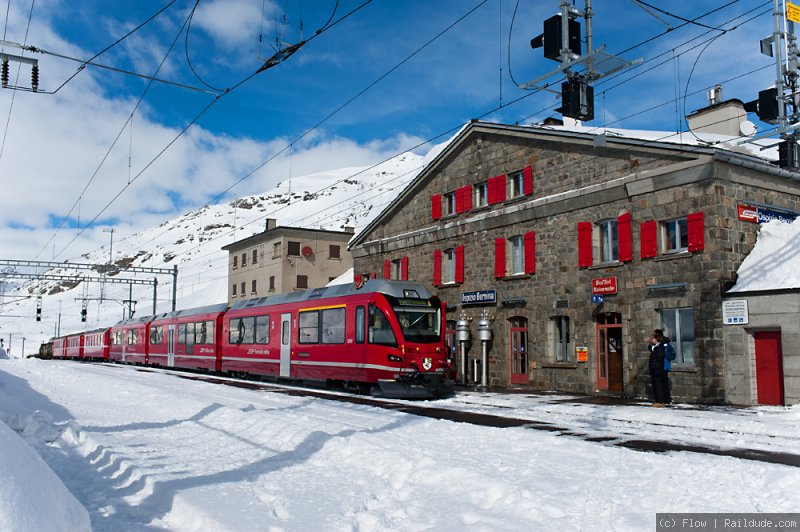
At 2,253 meters above sea level, this is the highest station and highest point on the entire Rhaetian Railway network. Trains run hourly through this high-altitude alpine pass throughout the year, even during extreme winter snows.
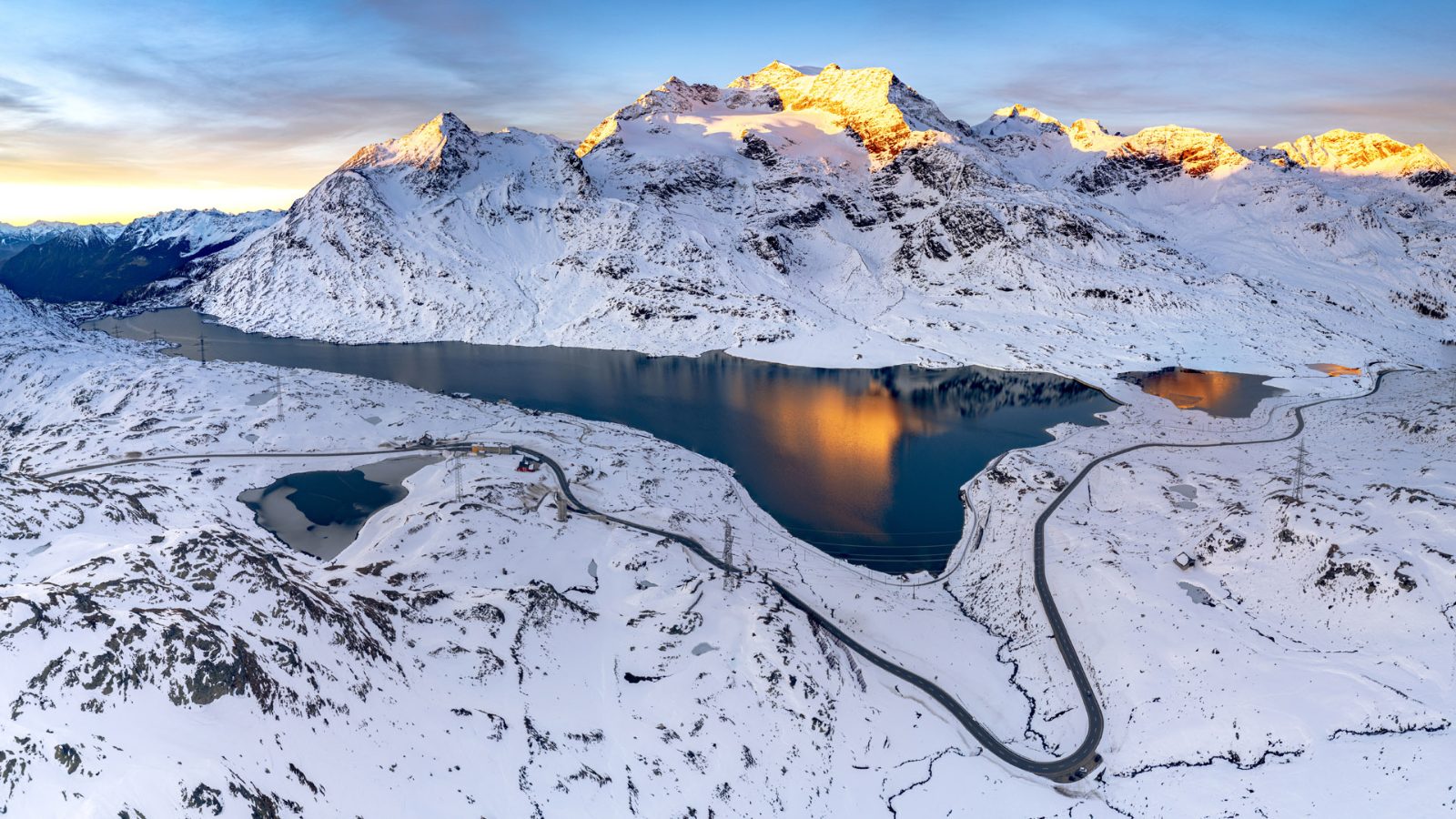
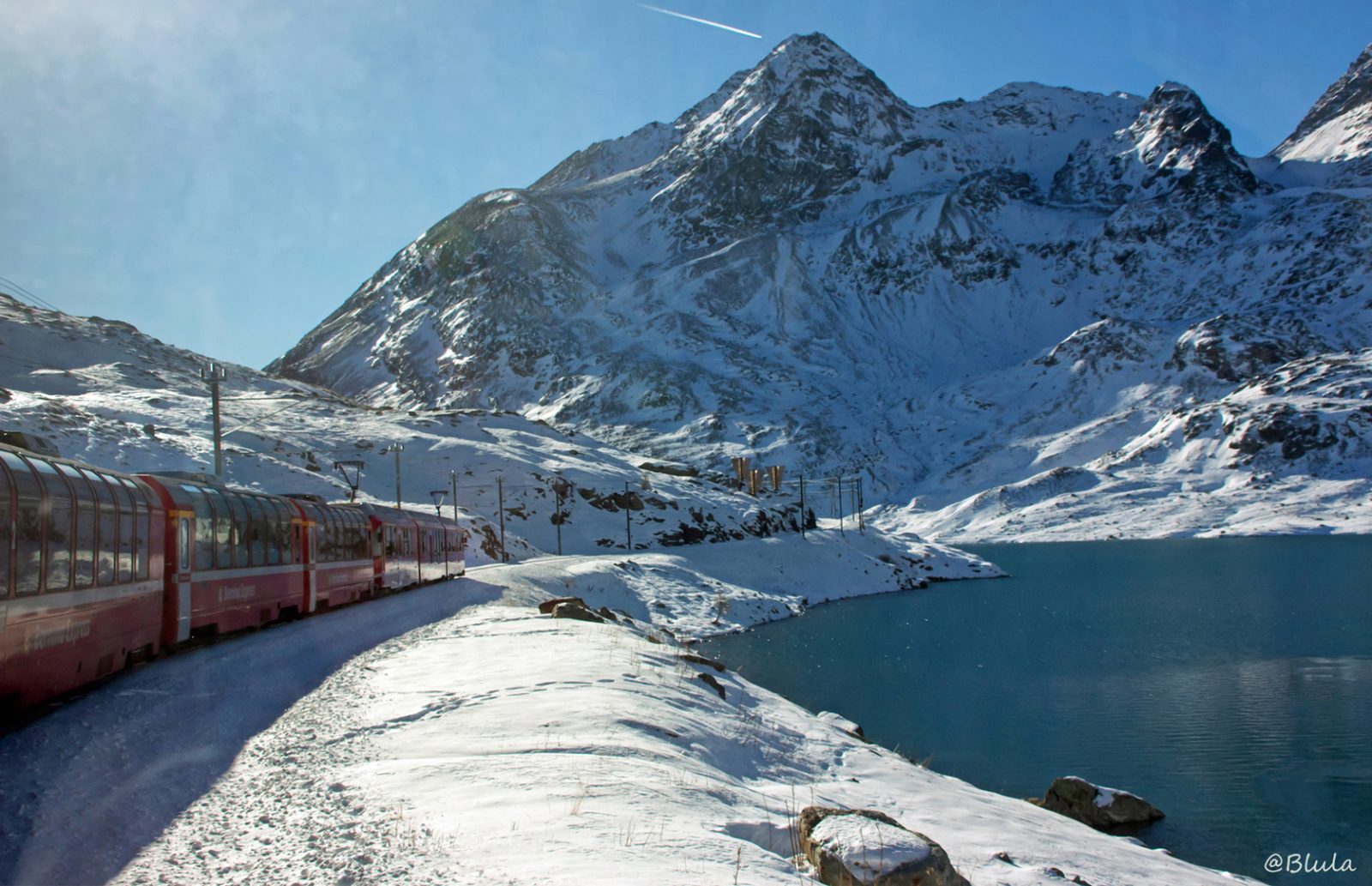
This reservoir sits at an elevation of 2,234 meters and is named for its milky turquoise color, which comes from glacial meltwater. The lake acts as a watershed divide, with the northern side draining to the Adriatic Sea and the southern side feeding the Po River.
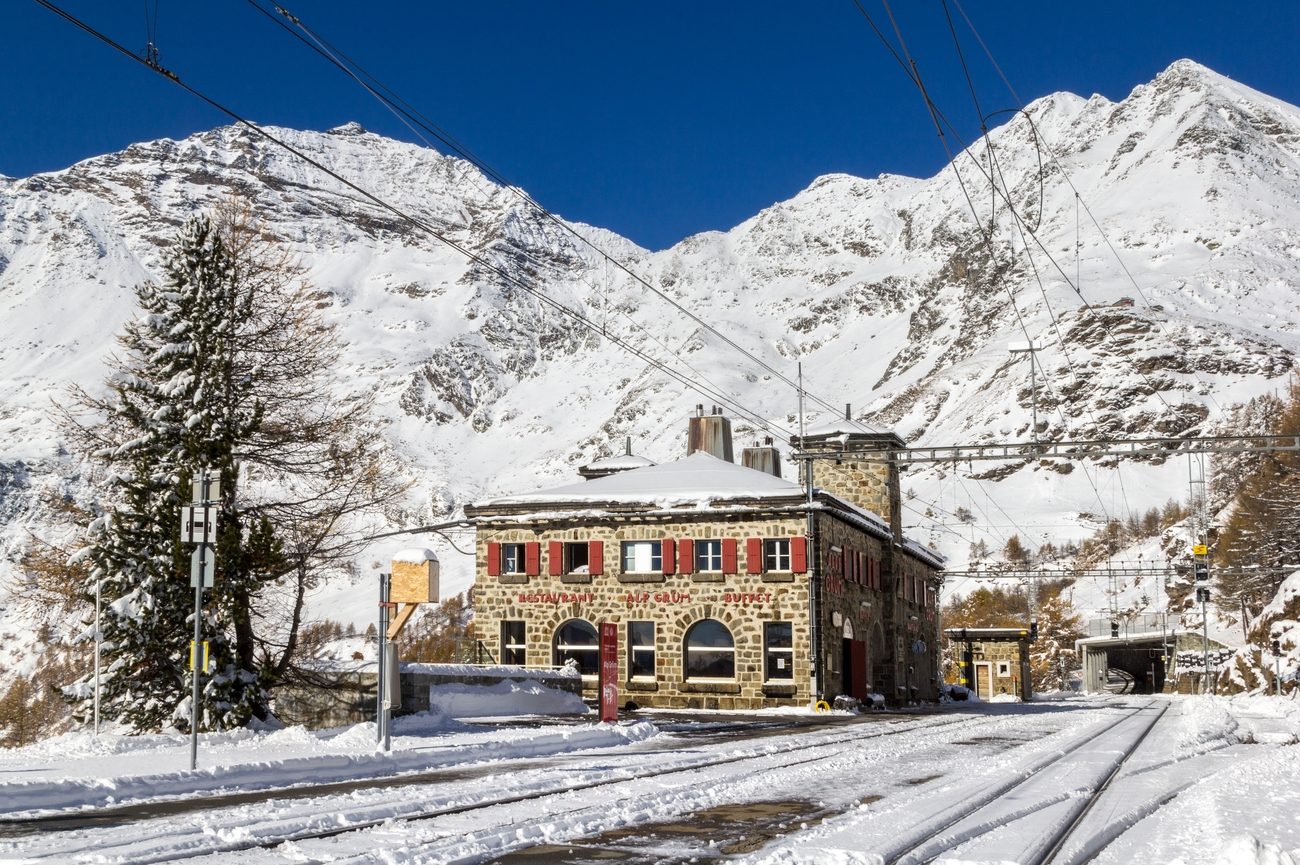
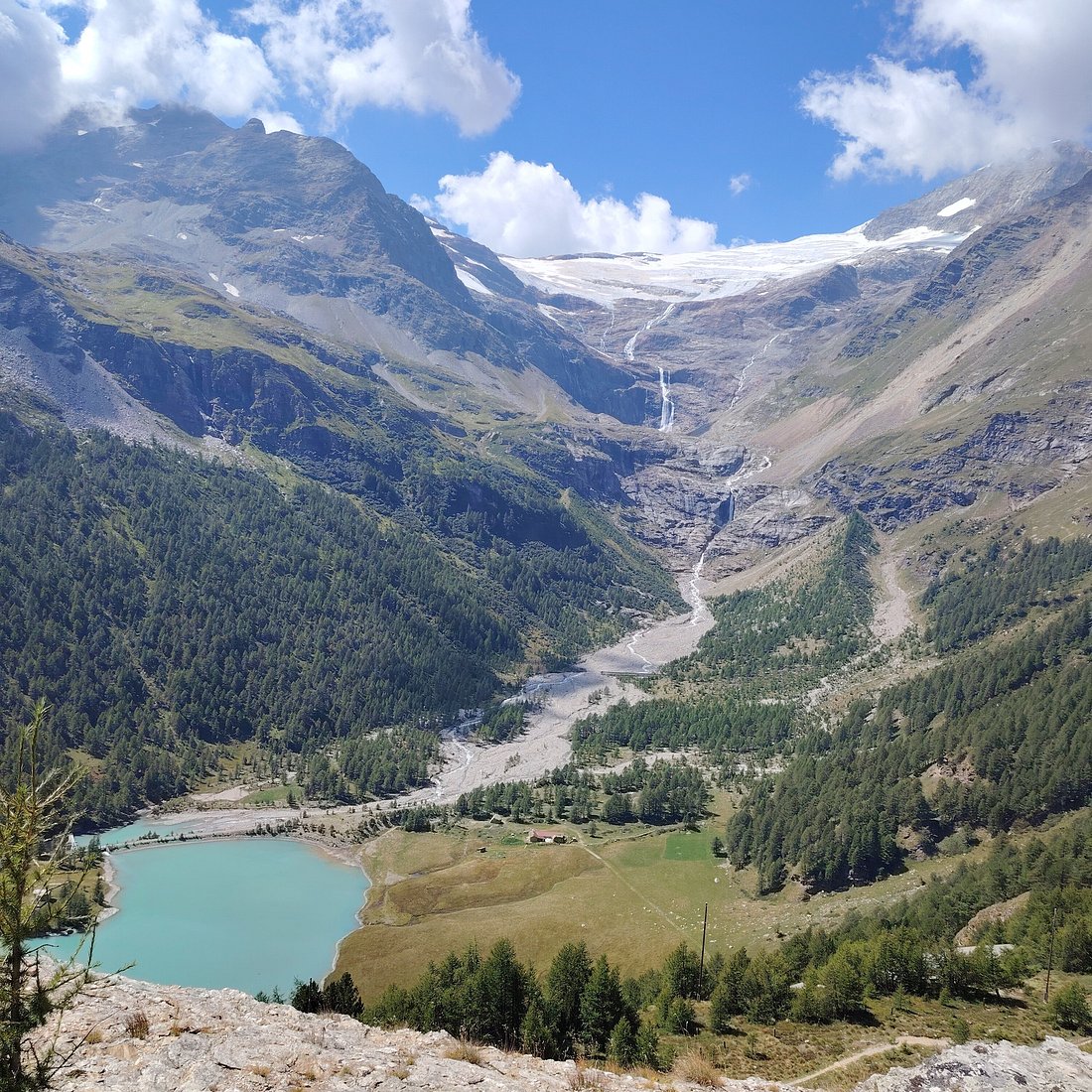
This isolated railway station sits on a narrow mountain ledge at 2,091 meters above sea level. It has no road access and can only be reached by train or on foot, offering views of the Palü Glacier and the Valposchiavo valley.
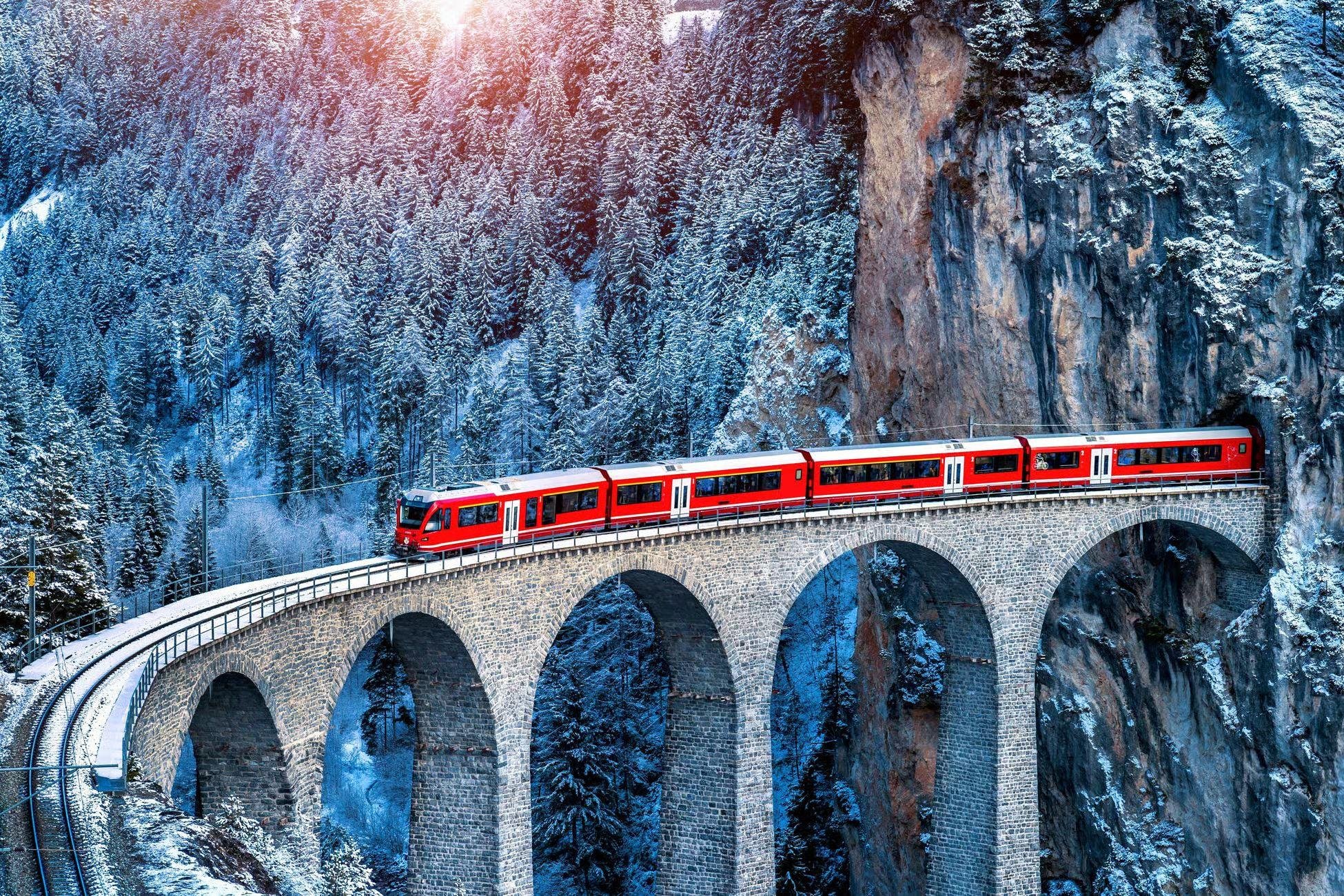
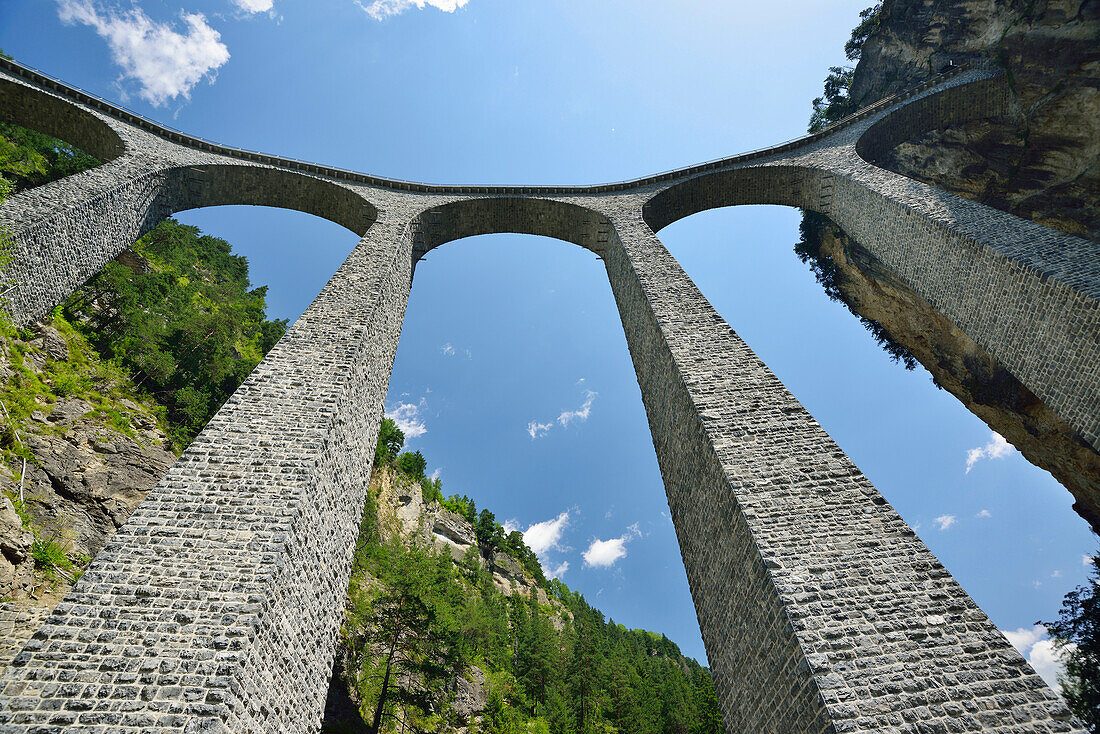
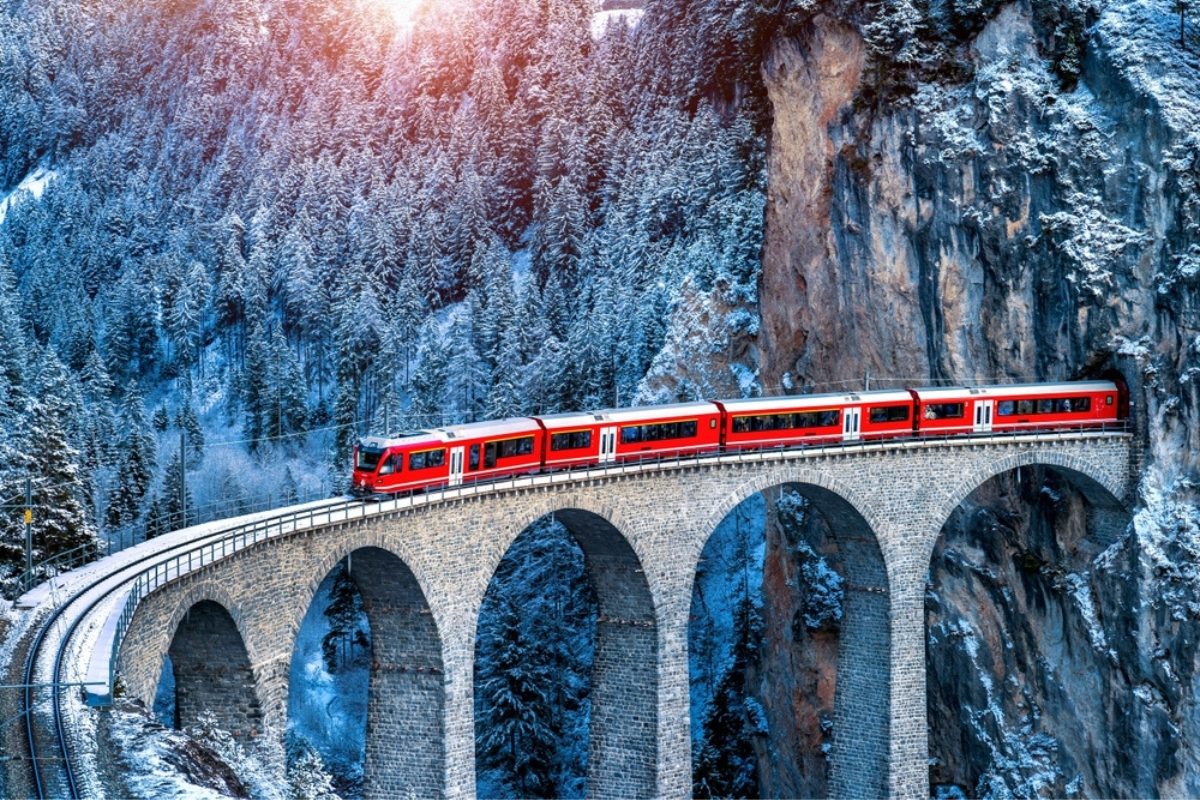
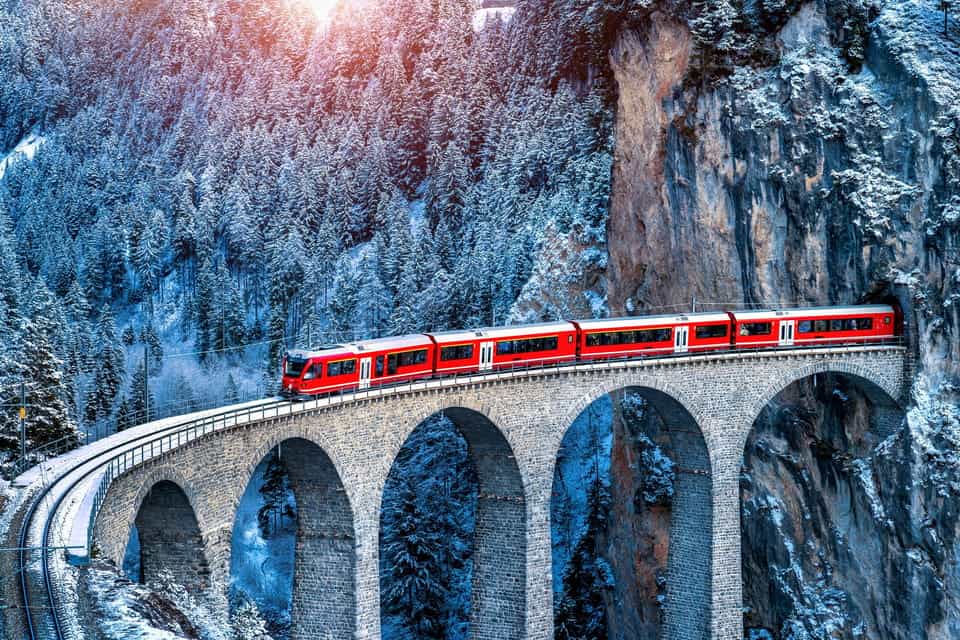
This curved limestone viaduct stands 65 meters high and spans 136 meters across the Landwasser Valley. The train travels along its single track and plunges directly into a tunnel built into the sheer cliff face.
You reach Piazza delle Stazioni 22 in Tirano between 07:30 and 10:00, while the platform still smells of espresso and diesel. The station operates 07:00–19:00, and the red carriages stand outside on the street, close enough to touch.
You climb in, take a window on the right, and watch Tirano's vineyards drop away almost at once.
Then the circle: the train swings onto the Brusio spiral viaduct and turns under itself, and you see the carriage ahead of you passing below your own window. You count the arches — nine. By Poschiavo the shop signs have changed language; by Alp Grüm you are at 2,091 metres, stepping onto a platform where the air is noticeably colder than the one you left.
The descent into the Engadine flattens out. You pass Lej Nair and Lej Pitschen, two dark lakes lying beneath the Morteratsch ice, then reach St. Moritz with a full camera roll and cold hands. A Milan to Swiss Alps Train Ride with Venice tour hands the return leg to a coach, so the last stretch belongs to the lake, the larches and whatever the Engadine light is doing at that hour.
All the details about your upcoming adventure in one place
The Bernina line rises from 429 metres at Tirano to 2,253 metres at Ospizio Bernina without a rack rail, cog or cable — the steepest adhesion railway in the world. Its engineers solved gradient with geometry rather than teeth.
The Brusio spiral viaduct, nine stone arches curled into a full circle on open ground, exists for no reason other than to shed altitude gracefully. Understanding that structure explains why a Milan to Swiss Alps Train Ride with Venice is sold as scenery first and transport second.
The route opened in stages between 1908 and 1910, built to carry summer visitors to the spa hotels of St. Moritz. UNESCO inscribed it alongside the Albula section as World Heritage in 2008. It has never become a museum piece: freight wagons, commuters and postal traffic still share the track. Milan to Swiss Alps Train Ride with Venice tickets today cover the same metre-gauge crossing, whose standard rail fare is 33 CHF one-way in second class between Tirano and St. Moritz.
The Rhaetian Railway's signature is restraint. Viaducts are faced in local stone rather than riveted steel, so the arches settle into the topography instead of overriding it. Panoramic carriages, glazed to the roofline, arrived generations later; the engineering beneath them remains Edwardian. Between Poschiavo and Alp Grüm the line crosses four climate zones in roughly ninety minutes — chestnut and vine below, larch forest above, then the bare moraine fields left by the retreating Morteratsch glacier.
Contemporary Milan to Swiss Alps Train Ride with Venice tours graft that alpine crossing onto a wider circuit of Lombard and Swiss landmarks, while the Trenino Rosso del Bernina — the line's Italian name — carries a following of its own among rail travellers who never set foot in a lagoon city. Departure is from Piazza delle Stazioni 22 in Tirano, where Italian and Swiss networks meet at street level and the red carriages roll through ordinary town traffic like a tram. Few international borders are crossed so quietly. That understatement, more than the altitude, is what the journey is remembered for.
Its engineers solved gradient with geometry rather than teeth.
Dress in layers. The temperature shifts significantly between the warm valleys in Tirano and the high-altitude mountain stops like Ospizio Bernina.
There are no strict baggage limits or security screenings at the platforms. You must carry and manage your own luggage, storing it in the overhead racks or designated end-of-carriage spaces.
Photography is allowed throughout the journey. To minimize window glare in the panoramic carriages, place your camera lens close to the glass or use a polarizing filter.
For families planning a Milan to Swiss Alps train ride with Venice, children under 6 travel free without a seat reservation.
Boarding assistance for passengers in wheelchairs is available at major stations like Tirano, St. Moritz, and Chur, but must be requested at least 24 hours in advance. Not all historic carriages are fully wheelchair-accessible without assistance.
Passengers are permitted to bring their own food and non-alcoholic drinks on board the train. A mobile catering trolley operates during the journey, offering regional snacks, soft drinks, and coffee for purchase.
Quietest departure window is early morning.
Regular service runs daily.
Midweek travel has lighter crowds.
Regular service runs daily.
Weekend trains can be busy.
Opening Hours
Monday–Sunday: 07:00–19:00
Address
Piazza delle Stazioni 22, 23037 Tirano SO, Italy
Best Arrival Window
07:30–10:00 — Board the morning train to maximize daylight and catch the best alpine views.
Ticket Price
33 CHF (One-way second class ticket from Tirano to St. Moritz)
Accessibility
Step-free boarding assistance available upon advance request
Public transport · 2h 30m · 12 EUR
Take the Trenord regional train from Milano Centrale directly to Tirano. At Tirano, cross the square to board the Bernina Express.
Car · 2h 15m · Fuel and toll costs
Drive north from Milan along the SS36 highway past Lake Como, then take the SS38 through Valtellina to reach the parking areas in Tirano.
Seat reservations are non-refundable, while the base ticket (such as the 33 CHF one-way fare) may be refunded or exchanged up to 24 hours before departure depending on the ticket class.
Recommended time
2.5 hours (one-way milan to swiss alps train ride with venice tour)
Taking a milan to swiss alps train ride with venice gives travelers a front-row seat to spectacular mountain vistas along the historic Rhaetian Railway, starting from the station at Piazza delle Stazioni 22 in Tirano where the panoramic carriages begin their steep climb. The journey takes you past the famous Brusio spiral viaduct and up toward the high-altitude Bernina Pass before concluding in St. Moritz, meaning you will need to plan for a return trip or onward alpine travel. Many tourists opt for organized milan to swiss alps train ride with venice tours, which typically package the rail ticket with connecting coach transfers and expert guide assistance to ensure a seamless crossing between Italy and Switzerland. Arriving at the platform early during the recommended morning window is essential for finding your carriage, as boarding begins promptly and the trains operate on a precise Swiss timetable that leaves no room for late arrivals.
Crowd levels through the day
Weather · crowds · average price — dots go green to amber to red as each metric rises.
Summer is ideal for a Milan to Swiss Alps train ride with Venice because the long daylight hours give you maximum visibility of the alpine lakes. Temperatures in the valley average 25°C, though high mountain passes remain cool.
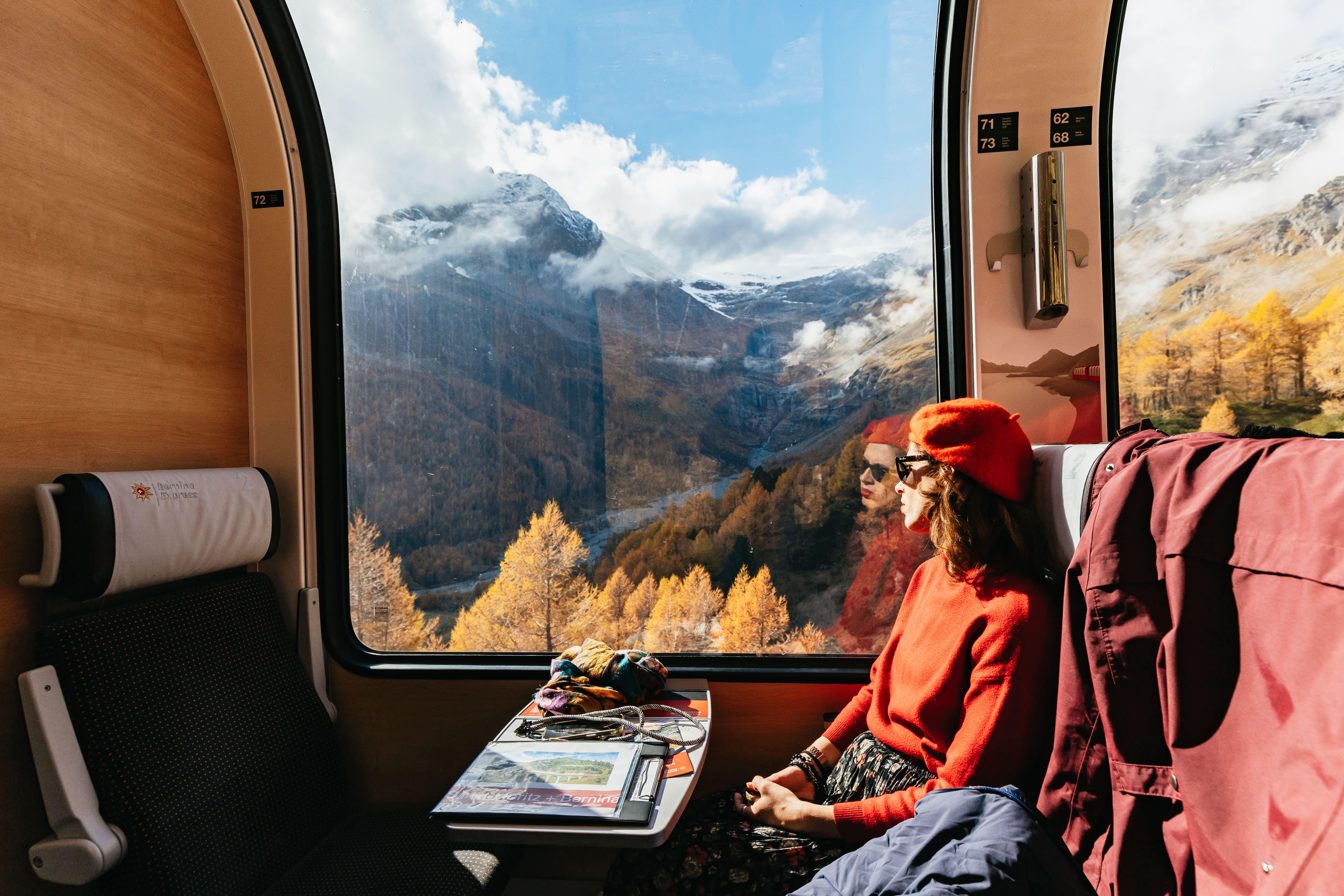
During autumn, the larch forests in the Engadin Valley turn brilliant shades of gold. The crowds thin out after mid-September, offering a quieter carriage experience and crisp, clear vistas.
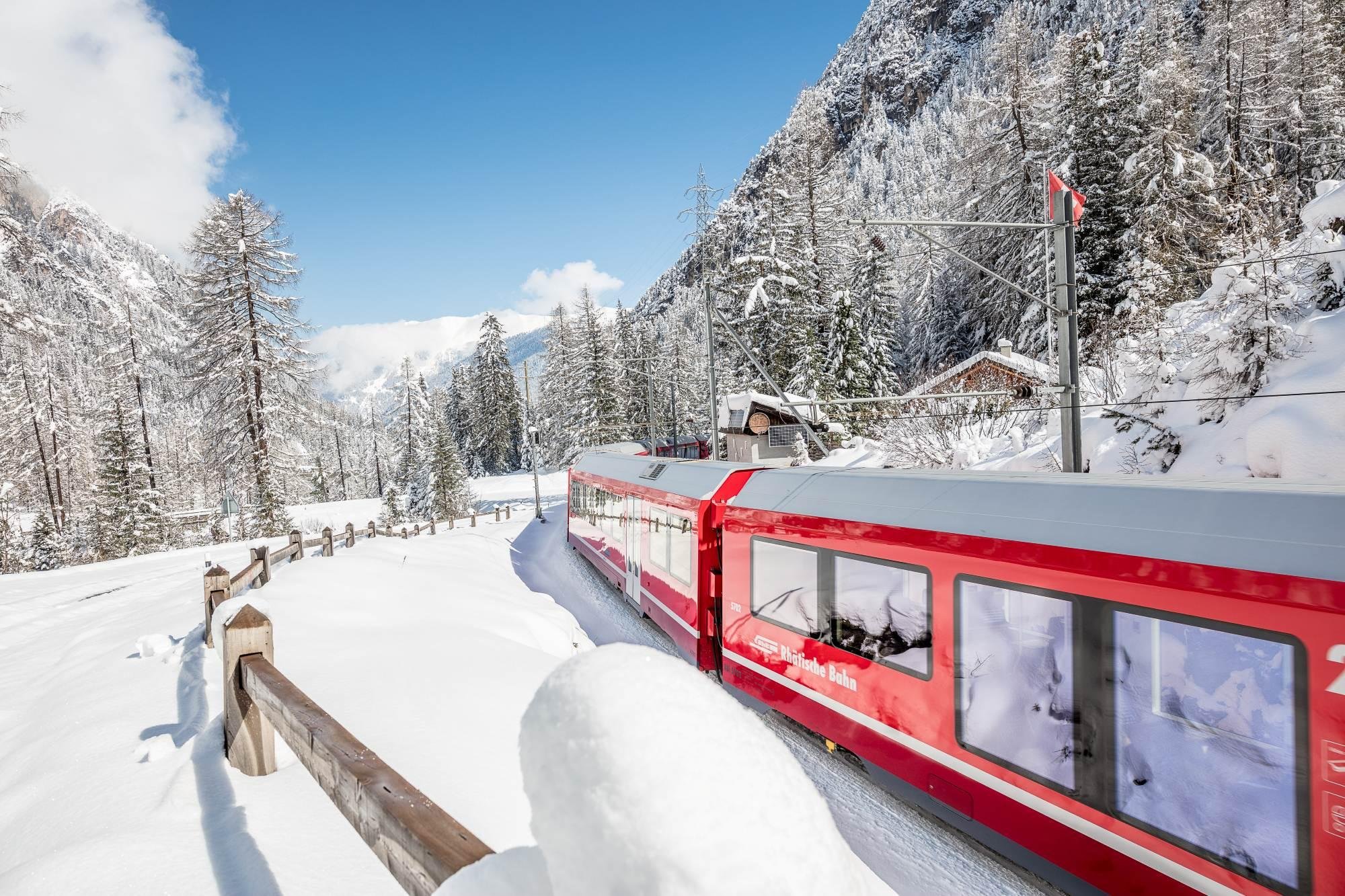
Snow blankets the entire route in winter, turning the alpine peaks into a silent wonderland. The Lago Bianco freezes over completely, and the contrast between snowy Switzerland and sunny Italy is most pronounced.
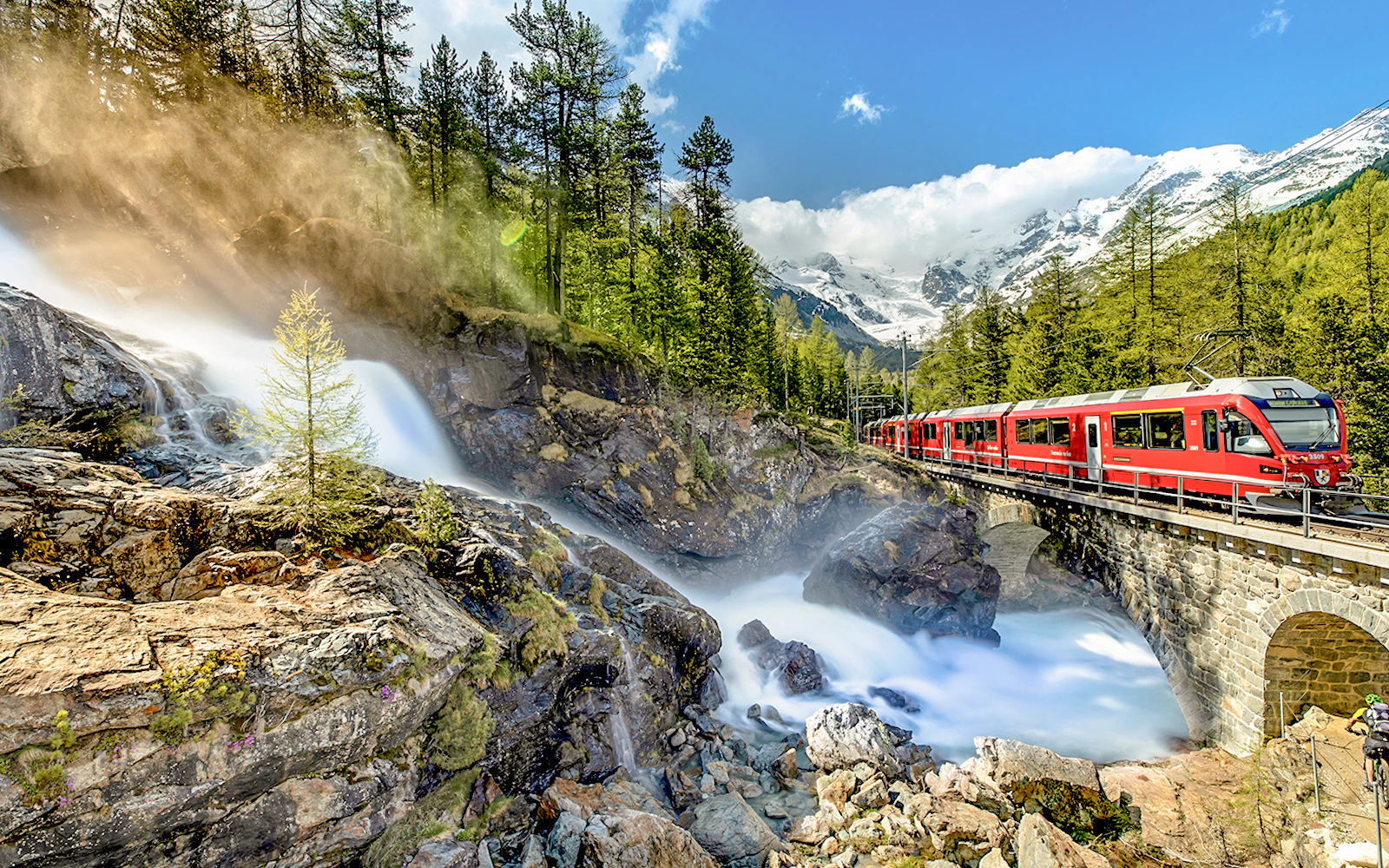
Spring showcases dramatic contrasts as wildflowers bloom in the lower Italian valleys while snow still covers the high Swiss passes. The melting snow feeds cascading waterfalls along the rocky cliffs.
Booking a Milan to Swiss Alps train ride with Venice tour requires careful alignment of Italian Trenitalia and Swiss Rhaetian Railway schedules.
Panoramic carriages require a mandatory seat reservation fee alongside the base ticket. Book months in advance, especially during the peak summer and winter holiday seasons.
Those embarking on a Milan to Swiss Alps train ride with Venice tours program should validate their paper tickets before boarding any Italian regional trains to avoid steep fines.
While Euros are widely accepted in Tirano and on the train, Switzerland uses Swiss Francs, which are preferred for small purchases at stations like Ospizio Bernina.
When departing north from Tirano, sitting on the right side of the carriage provides the best initial views of the Brusio spiral viaduct and alpine valleys.
If panoramic carriages are sold out, standard regional trains run on the exact same tracks, allow windows to open for glare-free photography, and do not require seat reservations.
Piazza delle Stazioni 22, 23037 Tirano SO, Italy
Ensure you arrive at least 30 minutes before your departure time to clear ticket validation.
Get directionsThe Bernina line began as a private venture. In 1906 the Bernina-Bahn-Gesellschaft was granted its concession, and construction started that same year under engineer Achille Bianchi. The route from Tirano to St. Moritz had to climb roughly 1,800 metres. Cog rails were rejected. Instead the surveyors chose pure adhesion, forcing gradients of 70 per mille and curves as tight as 45 metres. This decision still defines any milan to swiss alps train ride with venice itinerary that crosses the pass today. The older half of the network came first. The Rhaetian Railway opened the Landquart–Davos line in 1889, and by 1896 had reorganised as a cantonal enterprise, extending metre-gauge track through the Albula valley. The Albula section, completed in 1904, required 39 bridges and 55 tunnels, among them the helical Brusio circular viaduct's northern cousins. Work on the Bernina proper ran from 1908 to 1910. Italian and Swiss labourers, many of them seasonal masons from Valtellina, cut the Bernina Pass alignment by hand at 2,253 metres, the highest adhesion crossing in Europe. Avalanches killed workers during the winters of 1908 and 1909, and the line closed each cold season until snow-clearing rotary ploughs proved themselves after 1913. Electrification was pioneering rather than incidental. The Bernina opened in 1910 already electrified at 750 volts direct current, an early high-altitude experiment when most Alpine lines still burned coal. Financial strain followed: the company failed in 1943 and the Rhaetian Railway absorbed it, unifying the corridor that Bernina Express tours now traverse. UNESCO inscribed the Albula and Bernina lines as World Heritage in 2008, citing the Landwasser Viaduct and the Brusio spiral. Nearly all of it survives in daily use — original 1904 masonry, the open Bernina alignment, the same 1,000 mm gauge. Passengers buying milan to swiss alps train ride with venice tickets ride functioning heritage, not a museum piece, and a Swiss Alps rail tour follows track laid before the First World War. Booking a milan to swiss alps train ride with venice tour means boarding that engineering directly.
The Landquart–Davos narrow-gauge line opens, the first section of what becomes the Rhaetian Railway.
The company reorganises as a cantonal enterprise and begins extending metre-gauge track through Graubünden.
The Albula line reaches St. Moritz after boring 55 tunnels and raising 39 bridges.
The Bernina-Bahn-Gesellschaft receives its concession and starts work on the Tirano ascent.
Crews cut the adhesion-only alignment over the 2,253-metre Bernina Pass, working without cog rails.
The Bernina line opens fully electrified at 750 volts direct current, an early high-altitude installation.
The bankrupt Bernina company is absorbed by the Rhaetian Railway, unifying the corridor.
UNESCO inscribes the Albula and Bernina lines as a World Heritage Site.
Shoot the train as it curves 360 degrees around this stone engineering masterpiece. Travelers embarking on a milan to swiss alps train ride with venice should have their cameras ready at the window as the carriages descend toward Italy.
Capture the panoramic views of the Palü Glacier and the Poschiavo valley from the station terrace. Having your milan to swiss alps train ride with venice tickets ready allows you to disembark and photograph this high-altitude vista.
Photograph the milky-turquoise waters of the reservoir against the backdrop of snow-capped mountains. This highlights the alpine portion of the milan to swiss alps train ride with venice tour, showing the red coaches contrasting against the glacial waters.
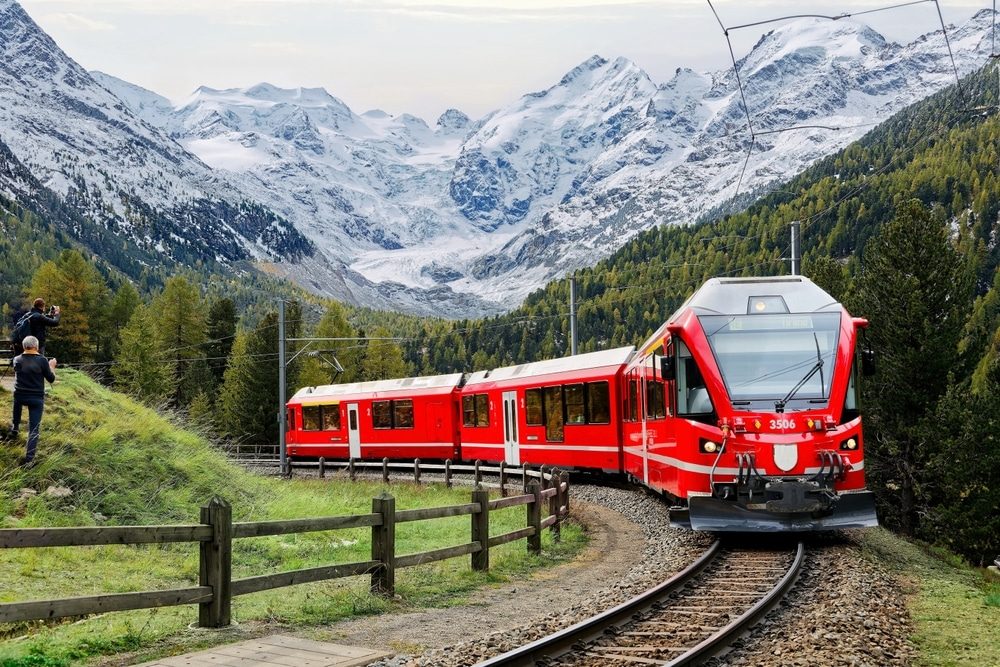
This sweeping horseshoe bend offers a view of the Morteratsch Glacier. It is a favorite highlight on milan to swiss alps train ride with venice tours, where the train snakes around a curve with high peaks framing the shot.
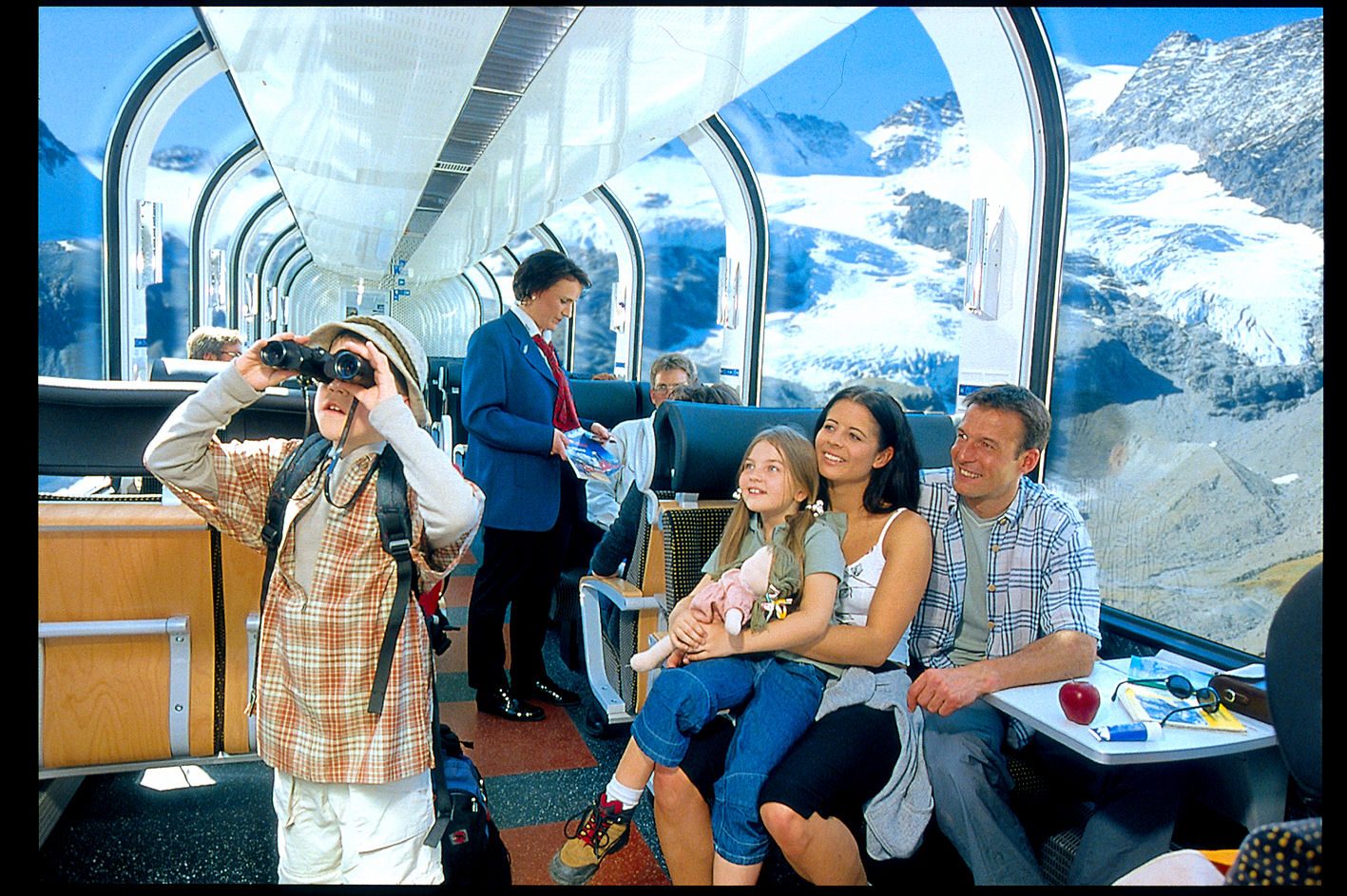
Taking a milan to swiss alps train ride with venice is a rewarding journey for families, offering large panoramic windows with views that keep children engaged. With a bit of planning, navigating this scenic rail route with kids is straightforward.
This alpine route is ideal for school-age children who will appreciate the engineering marvels like the Landwasser Viaduct. For parents comparing different milan to swiss alps train ride with venice tours, booking a shorter regional segment is often best to keep younger toddlers from getting restless.
Bringing a compact folding stroller makes navigating the train platforms and narrow carriage corridors much easier. When booking your milan to swiss alps train ride with venice tour, note that prams must be collapsed and stored in the designated vestibule areas during the ride.
Children under six ride for free if they sit on an adult's lap, but securing a separate seat requires a paid reservation. You can easily purchase milan to swiss alps train ride with venice tickets online, and remember to request a complimentary Swiss Family Card for kids up to age fifteen.
Restrooms are available in every carriage, though they lack dedicated baby-change tables, so bringing a portable changing pad is highly recommended. Booking a Bernina Express family tour on the modern Allegra units provides wider doorways and accessible restrooms for added convenience.
Dining options on the milan to swiss alps train ride with venice range from a quick bite on-board to traditional sit-down meals in Tirano or St. Moritz.
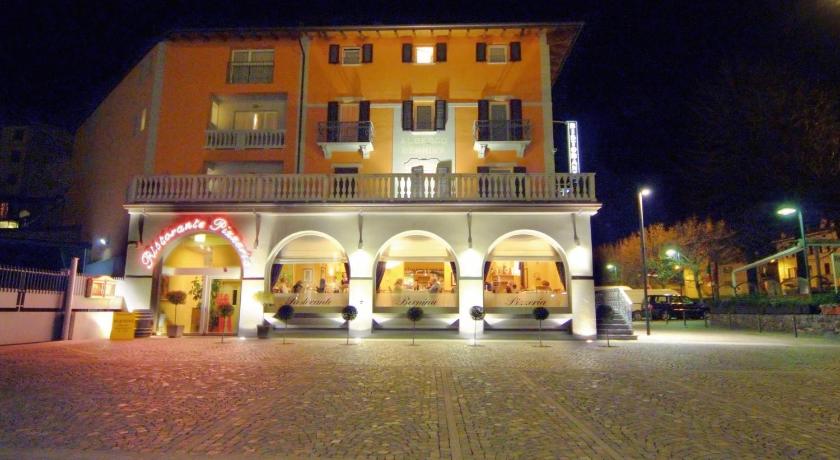
Located just steps from the station in Tirano, this Liberty-style spot serves authentic Valtellina cuisine like buckwheat pizzoccheri pasta. It is ideal for a fast lunch before boarding your afternoon journey. Visitors exploring milan to swiss alps train ride with venice tours frequently stop here for a pre-train meal.
Located in the center of St. Moritz, this family-run venue is famous for its homemade Engadin nut torte and local specialities. It's a popular choice for tourists seeking a warm meal after finishing their milan to swiss alps train ride with venice tour.
A service cart rolls through the panoramic carriages offering drinks, Swiss chocolates, and light savory snacks. If you book milan to swiss alps train ride with venice tickets, note that there is no full dining car, so bringing your own food is highly recommended.
Everything you need to know for your journey
You can book tickets through the official Rhaetian Railway website or regional operators. Standard tickets for the Bernina Express from Tirano to St. Moritz cost 33 CHF.
Prices depend on the travel class and route selected. A standard second-class ticket for the Bernina Express from Tirano to St. Moritz is 33 CHF, excluding connections to Venice.
There are no strict luggage limits on the Bernina Express, but you must be able to carry and store your bags in the racks provided at the end of each carriage.
There is no formal dress code, but layering is recommended. Temperatures drop significantly as the train climbs the Bernina Pass.
Seat reservations are mandatory for the panoramic carriages of the Bernina Express. However, regular regional trains on the same route do not require reservations.
Seat reservations for the Bernina Express are non-refundable. Base tickets may be refunded up to 24 hours prior to departure depending on the ticket class.
The journey begins in Tirano at the Rhaetian Railway station located at Piazza delle Stazioni 22. Regional trains connect Tirano to Milan and Venice.
Travelers typically take a Trenitalia train from Venice to Milan, then connect to Tirano where they board the Bernina Express to cross into Switzerland.
While physically possible, combining the entire journey in one day is highly rushed. Spending a night in Tirano or St. Moritz is recommended to enjoy the route.
Yes, boarding assistance is available at major stations for the Bernina Express, but wheelchair spaces must be reserved at least 24 hours in advance.
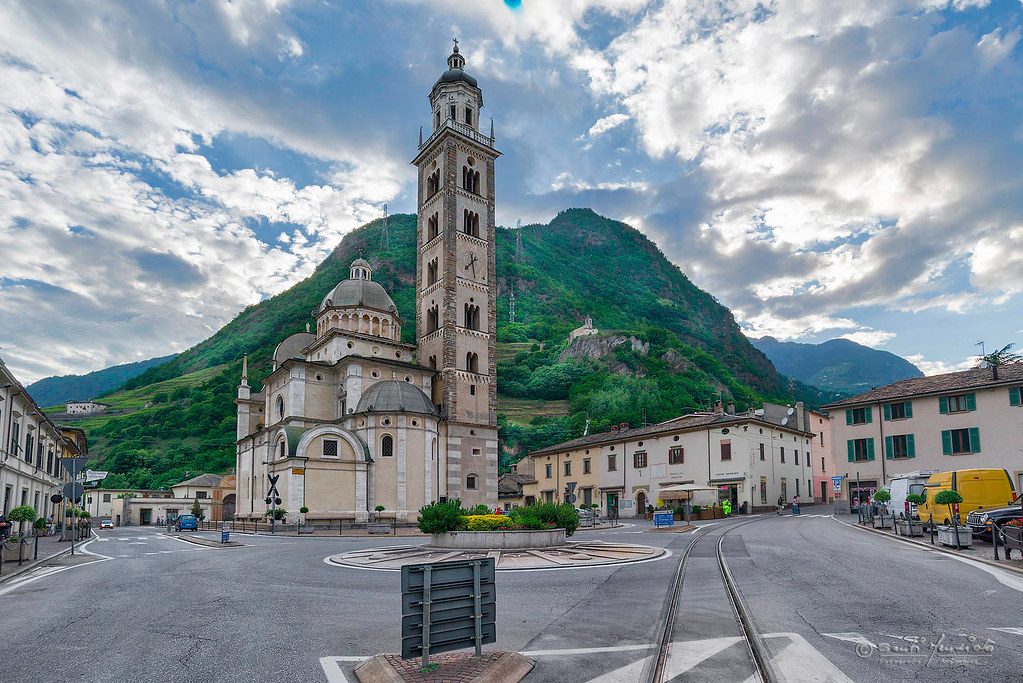
A sixteenth-century Catholic basilica displaying a richly decorated baroque interior and a massive pipe organ. It stands in the square where the train tracks cross the road.
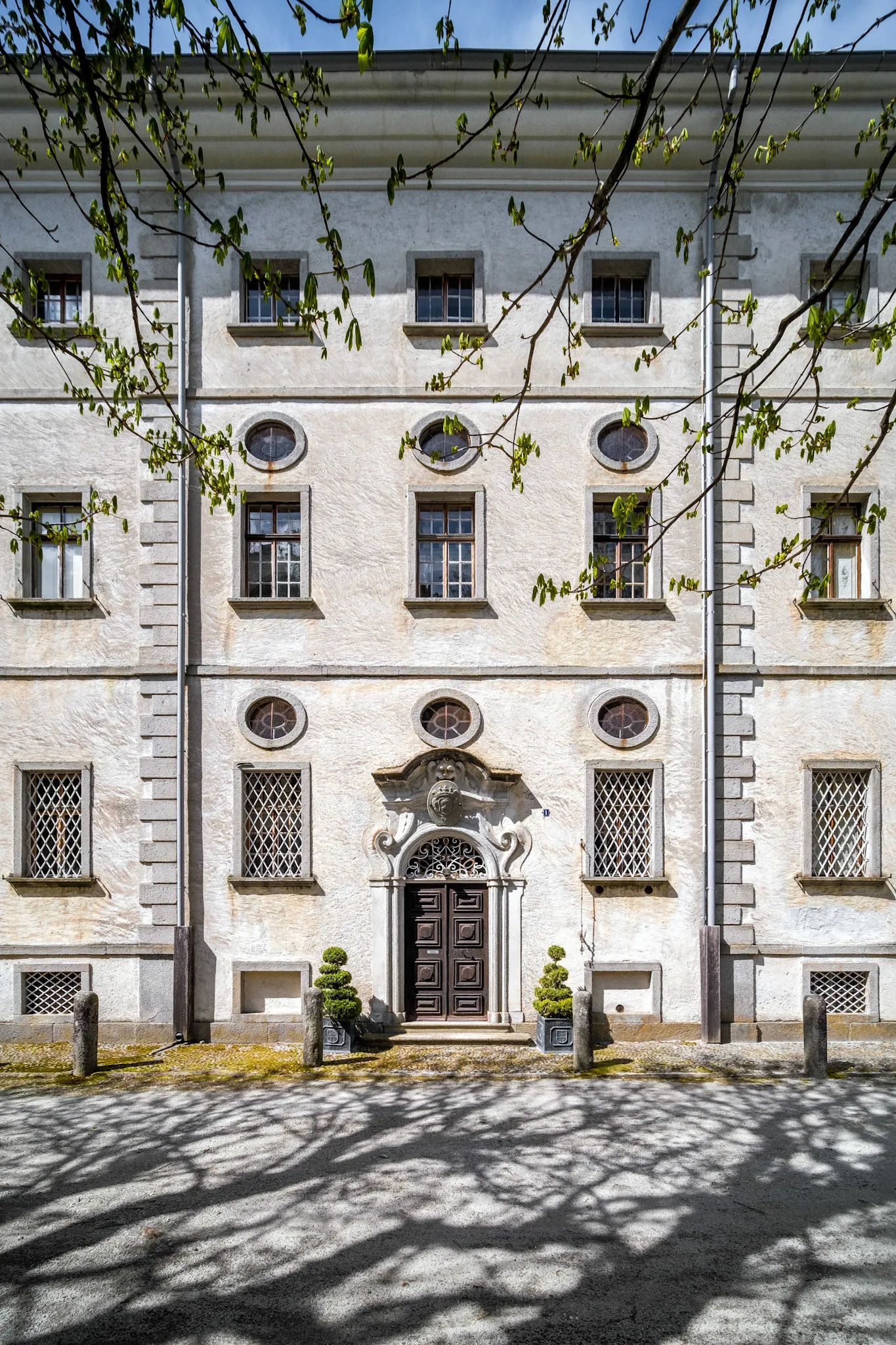
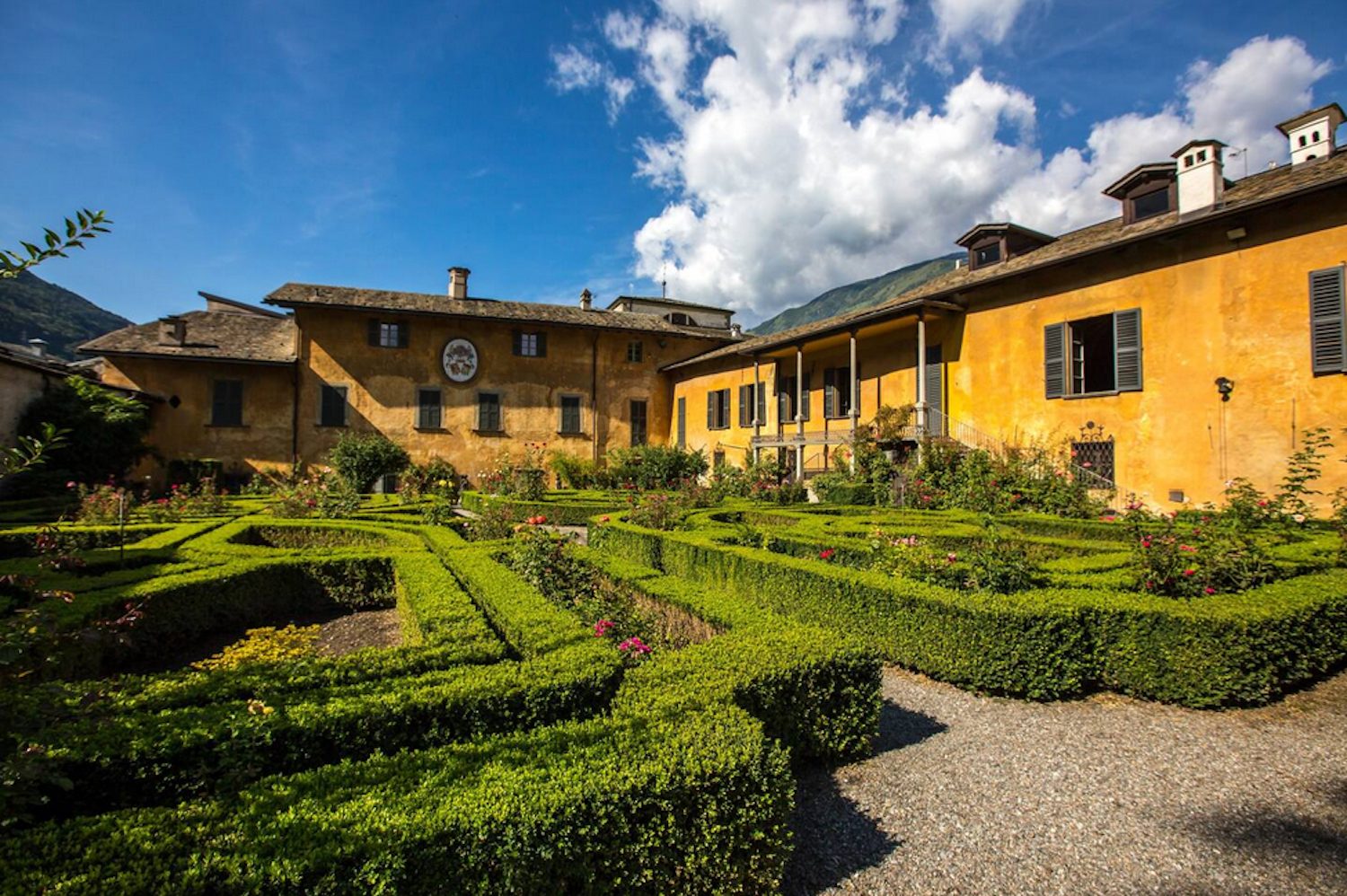
A seventeenth-century noble palace featuring frescoed rooms, a historical museum circuit, and an Italian-style garden hidden behind stone walls.
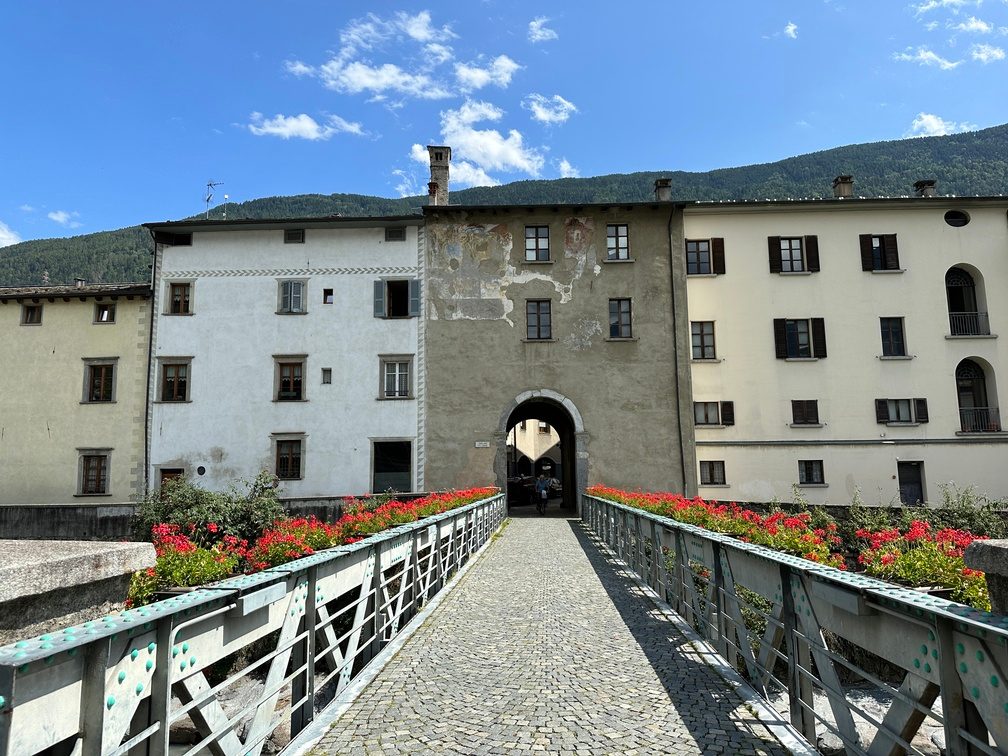
A historic stone gate in Tirano's medieval walls showing original Renaissance frescoes and bridging the historic center across the Adda River.
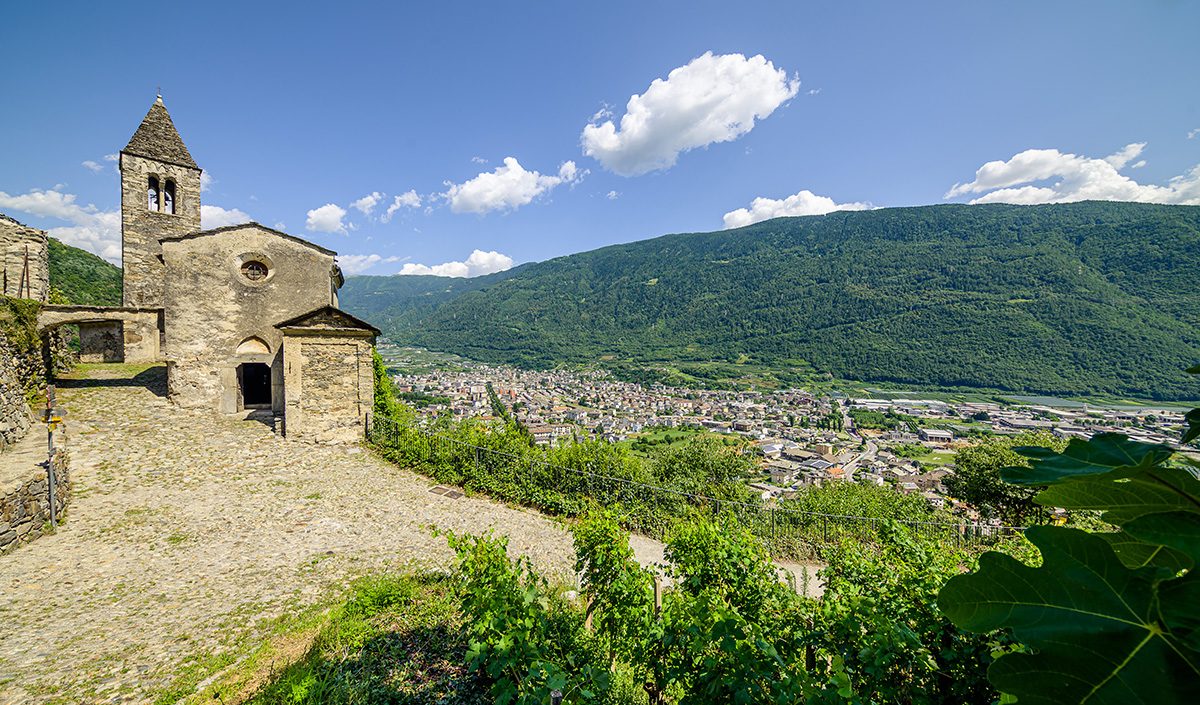
A small medieval church perched on the hillsides overlooking Tirano, featuring ancient frescoes and offering panoramic views of the valley.
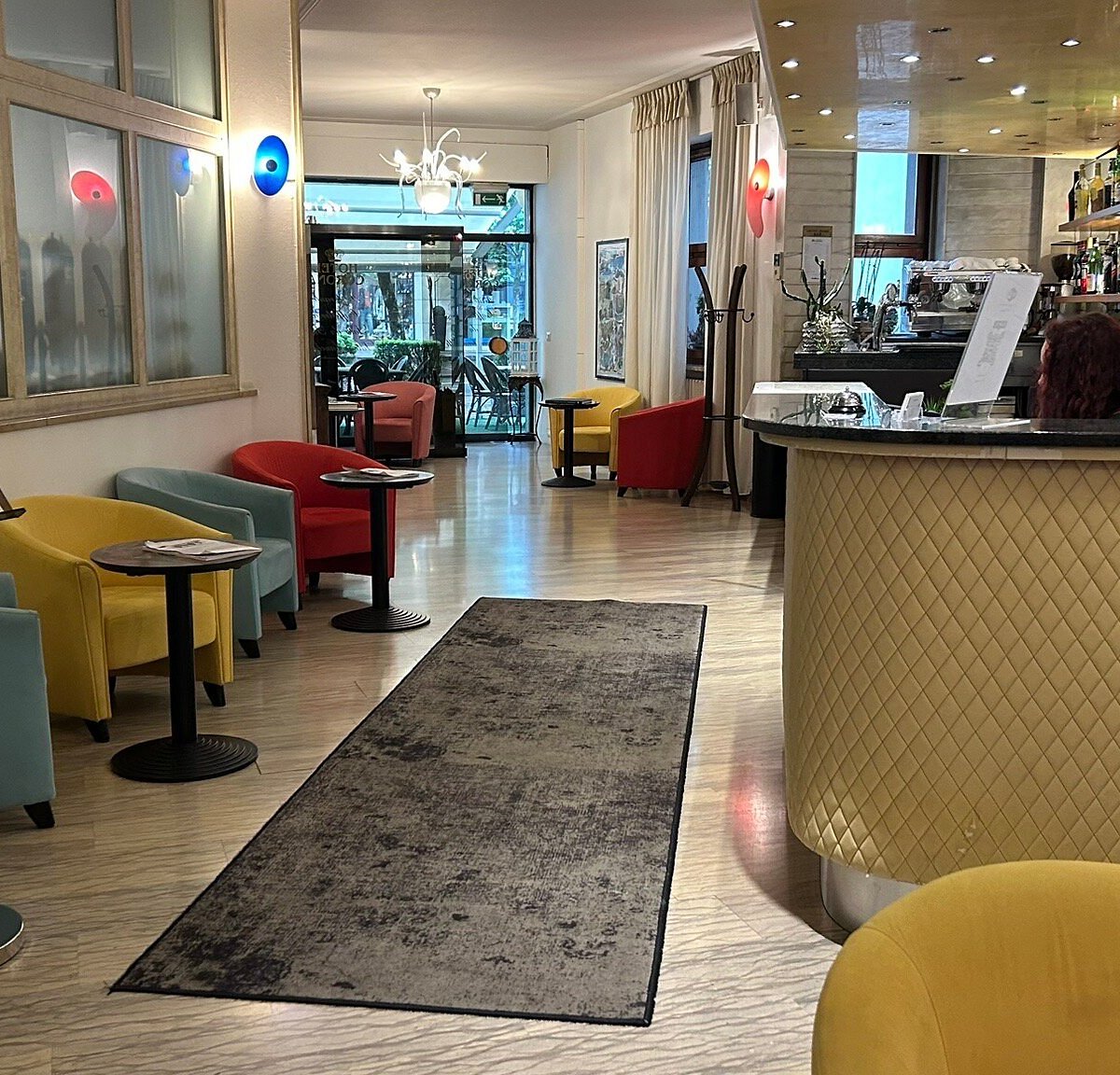
Located directly opposite the station, this hotel offers comfortable rooms and a traditional Valtellinese restaurant serving local pizzoccheri pasta.
Set inside the historic Palazzo Salis, this elegant bed and breakfast offers frescoed rooms and access to the palace's private Italian gardens.
A convenient lodging option located steps from the train platform, featuring simple rooms and a pizzeria.
Join thousands of happy travelers who have discovered this incredible experience
Book Your Experience Now