13 hr
Lake Como Cruise, St. Moritz & Bernina Red Train from Milan
- Expert local guide
- Small group
- Skip-the-line access
- Free cancellation
Bernina Train From Milan To Swiss Alps — Red Train Day Trips & Panoramic Seats
Palm trees at breakfast, glacier light by afternoon.
Compare fares, pick the fit — all bookings are mobile-voucher and eligible for free cancellation where shown.
13 hr
11 hr
12 hr
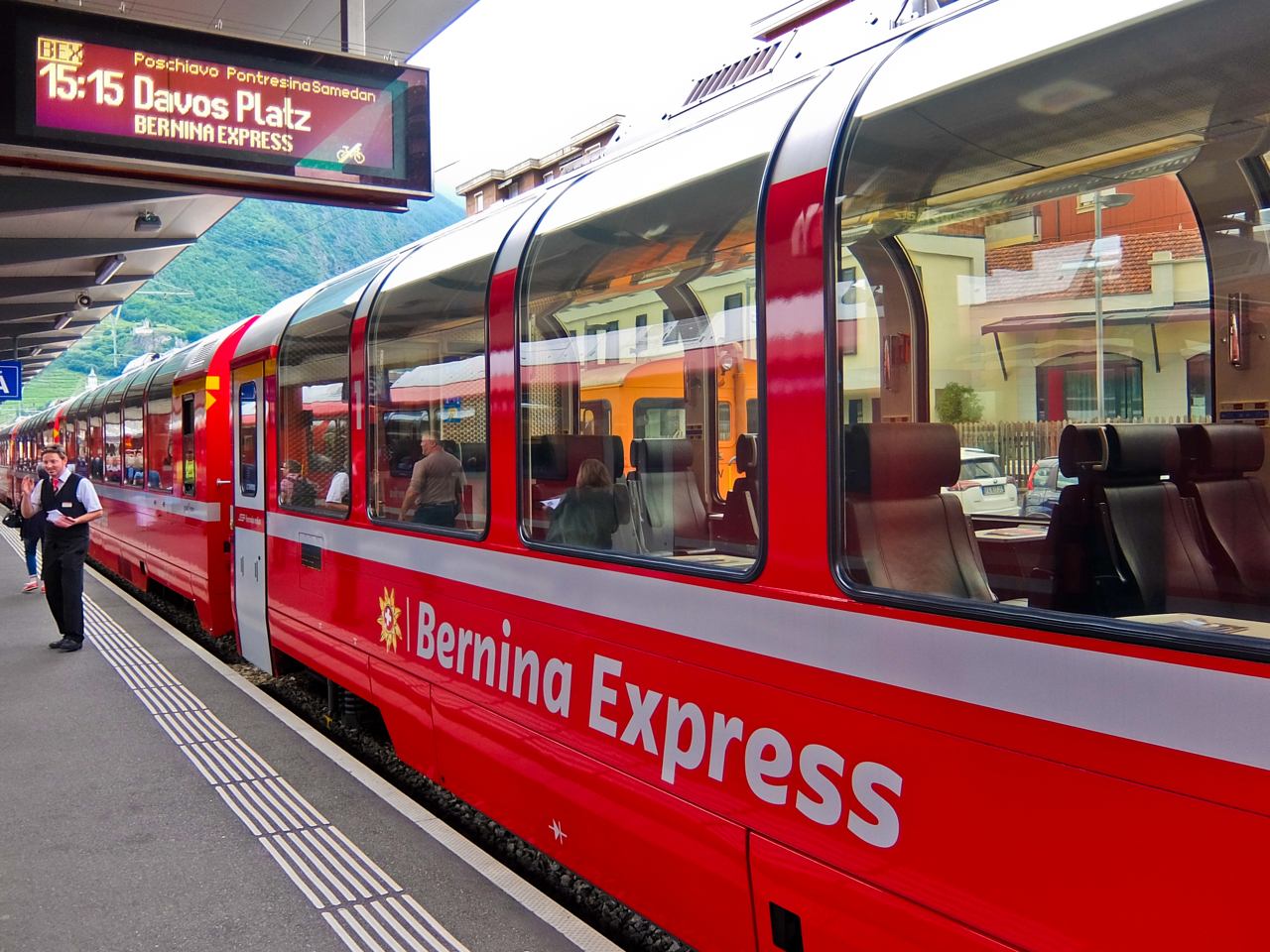
For the bernina train from milan to swiss alps, the key choice is not a gate entry ticket but the official travel product and seat-reservation setup. Most first-time riders book the standard Bernina Express seat, while some itineraries add the Tirano–Lugano Bernina Express Bus or upgrade to Pullman Class for a more curated experience.
|
Top pick Bernina Express Seat Standard panoramic train |
Bernina Express Bus Add-On Tirano–Lugano coach link | Pullman Class Premium scenic carriage | |
|---|---|---|---|
| Product type | Train seat reservation | Bus connection add-on | Premium travel class |
| Route covered | Bernina Line rail route | Tirano to Lugano by coach | Tirano or St. Moritz rail |
| Seat reservation | Required | Required | Required |
| Class/comfort | 1st or 2nd class | Coach seating | 32-seat vintage carriage |
| Catering/service | Standard onboard service | No train catering | Personal service, selected cuisine |
| Who it suits | First-time rail visitors | Mixed rail-bus itineraries | Comfort-focused travelers |
| Best for | Most first-timers | Route planners needing Lugano | Small-group premium travelers |
| See tickets & prices |
Verdict: Choose the standard Bernina Express seat for the classic rail ride, add the bus only if your plan continues Tirano to Lugano, and pick Pullman Class if you want the most exclusive bernina train from milan to swiss alps tour with extra service and fewer seats.
Worth it for scenery lovers, not sightseers
The bernina train from milan to swiss alps is a full-day commitment where the ride itself is the product, not the destination. Packages sold here bundle coach transfer to Tirano with a seat-reserved panoramic carriage over the Bernina Pass, plus a short window in St. Moritz; the Lake Como cruise version adds a second landscape to the same day. What you get is roughly four hours inside a UNESCO World Heritage rail corridor — the Brusio spiral viaduct, Alp Grüm, the Morteratsch glacier, Lago Bianco at 2,253 metres — from a reserved window seat rather than a coach window. Bernina train from milan to swiss alps tickets pay off for anyone who treats a railway as the attraction. They disappoint travellers expecting a proper Engadine town visit: St. Moritz gets a brief stop, and the return leg is largely motorway. There is no gate fee anywhere on the route — 0 CHF — so your entire spend is the ticketed rail and transfer product.
Bottom line: Book a bernina train from milan to swiss alps tour if the railway is your reason for going — and skip it if St. Moritz is.
They complement each other, but most day-trippers find the Bernina Express more polished and the Bernina Red Train more flexible. For the bernina train from milan to swiss alps, the choice is really panoramic coaches and service versus openable windows and freer rail-trip pacing.
|
Top pick Bernina Express |
Bernina Red Train | |
|---|---|---|
| Panoramic coaches | Modern panoramic cars | Standard regional coaches |
| Windows and photo flexibility | Fixed glass, no opening | Openable windows |
| Onboard services | Catering and InfoT(r)ainment | No catering, no infotainment |
| Reservation need | Mandatory seat reservation | Recommended, not required |
| Route scenery | UNESCO route, same views | UNESCO route, same views |
| Best fit for day trips from Milan | Polished one-seat ride | Flexible stops and photos |
| See tickets & prices |
Verdict: If you want the most streamlined bernina train from milan to swiss alps tours experience, choose the Bernina Express; if you want more photo control and fewer constraints, the Bernina Red Train is the better Bernina train from milan to swiss alps tour, while bernina train from milan to swiss alps tickets are easier to use on the regional service.
Hand-picked experiences loved by thousands of travelers
12 - 13 hours
Free Cancellation
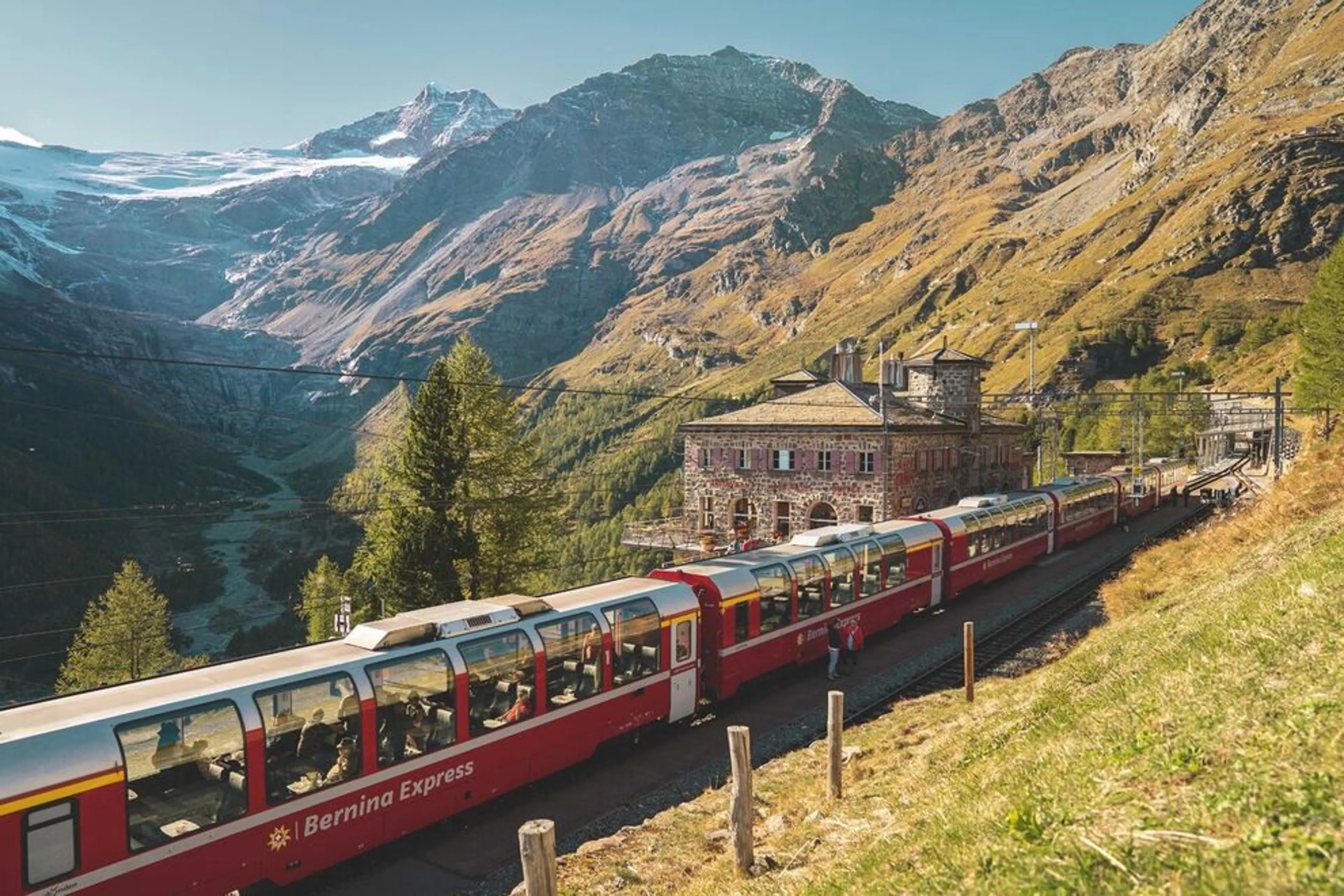
Ride the legendary Bernina Express from Milan to glamorous St. Moritz and historic Tirano.
12.5 hours
Free Cancellation
Full-day guided trip from Milan aboard the iconic Bernina Express, with free time in St. Moritz.
12 hours
Full-day Alpine adventure by coach and panoramic train from Como to St. Moritz and Tirano.
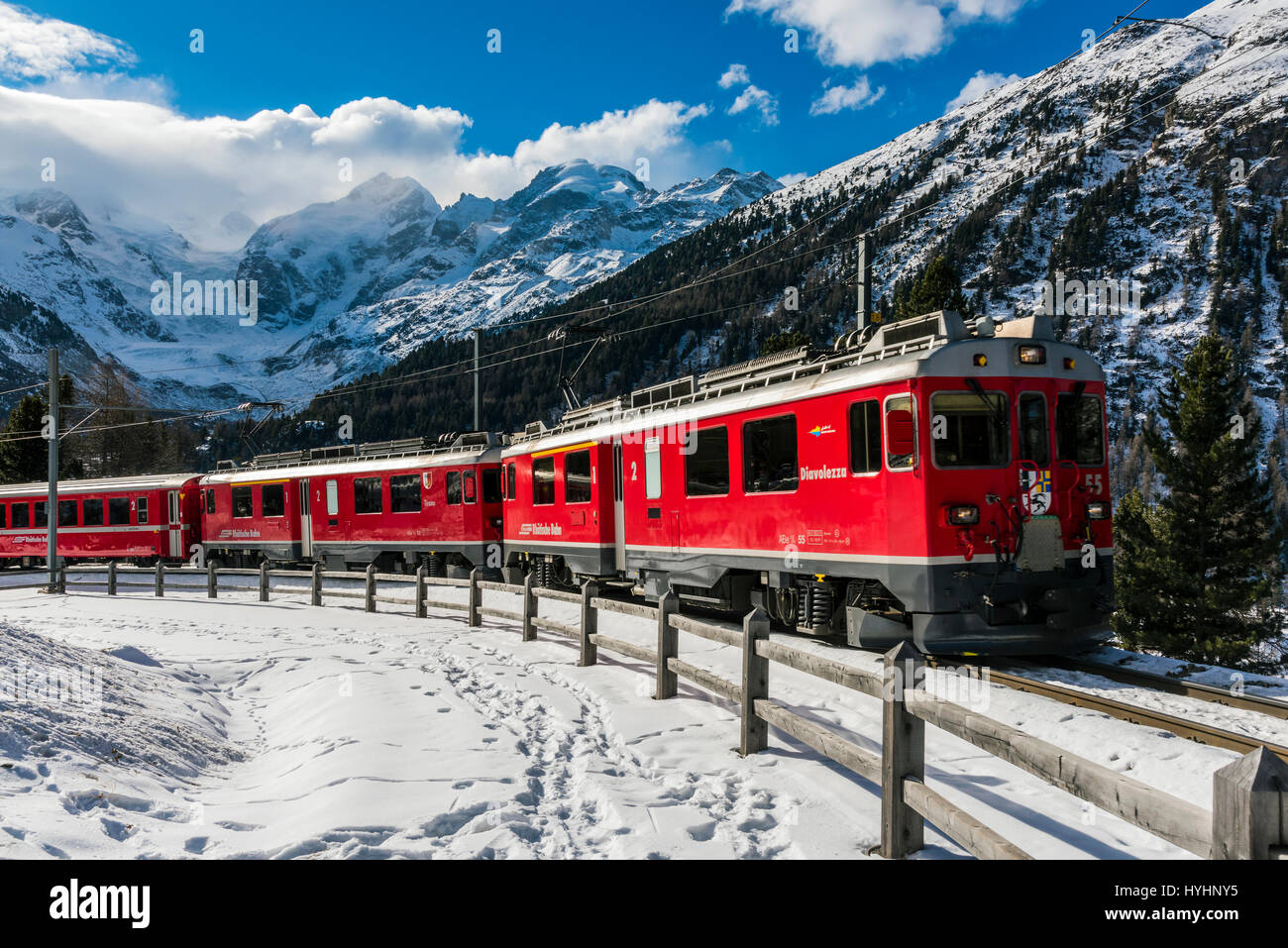
Full-day escape from Milan aboard the open-window Bernina Red Train to St. Moritz.
12 hours
Free Cancellation
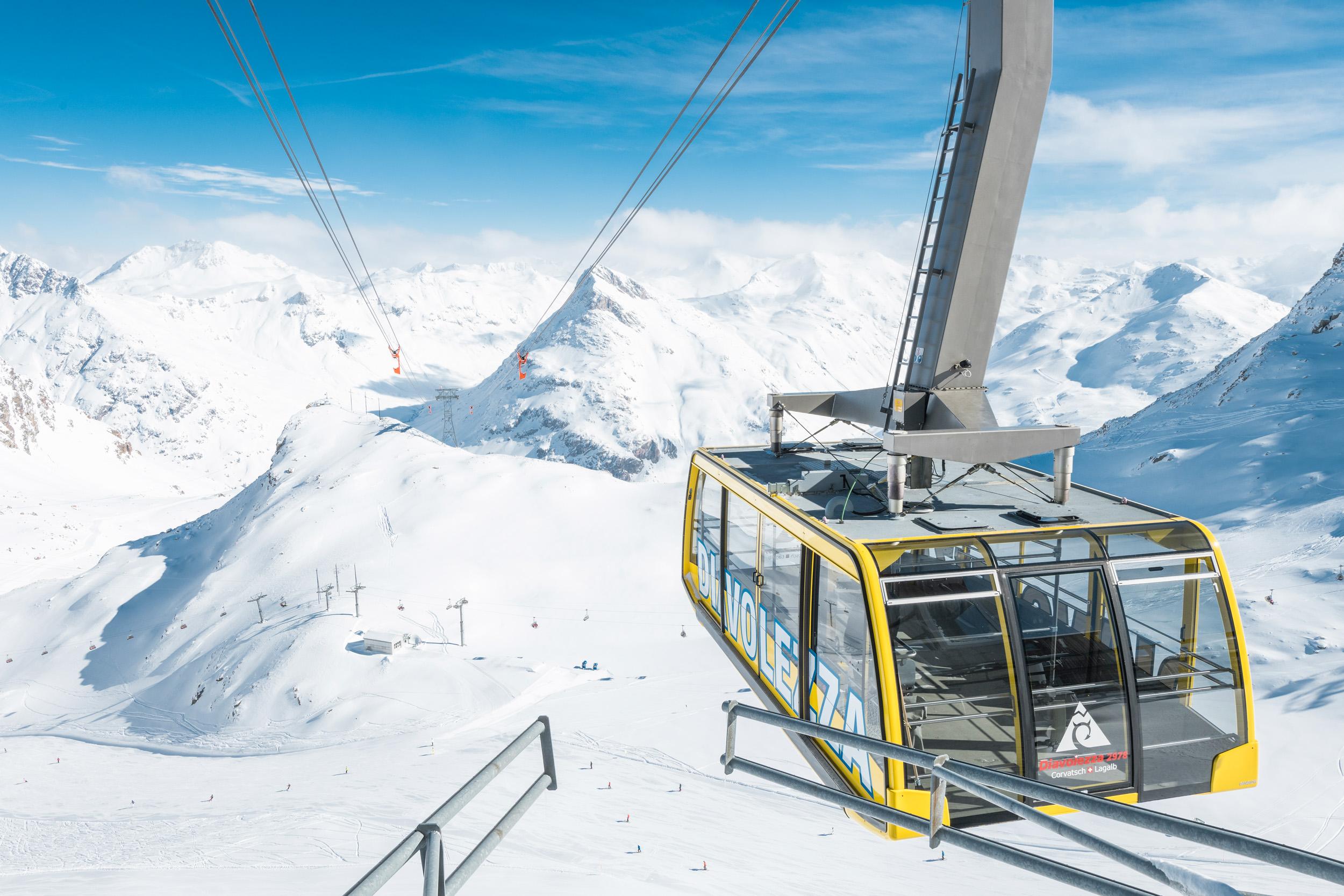
Full-day trip from Milan: cable car to a 2,978m glacier lodge, alpine lunch, and the iconic Bernina train.
Arrive with enough time to find your carriage, confirm your seat reservation, and settle luggage before departure.
Watch the route rise toward the Bernina Pass, passing glaciers, viaducts, and alpine lakes on the way to the highest point of the line.
Use the Tirano arrival to connect with onward travel or to explore the station area before returning or continuing your trip.
Choose the same scenic route back, continue by regional rail, or add the Bernina Express Bus where available.
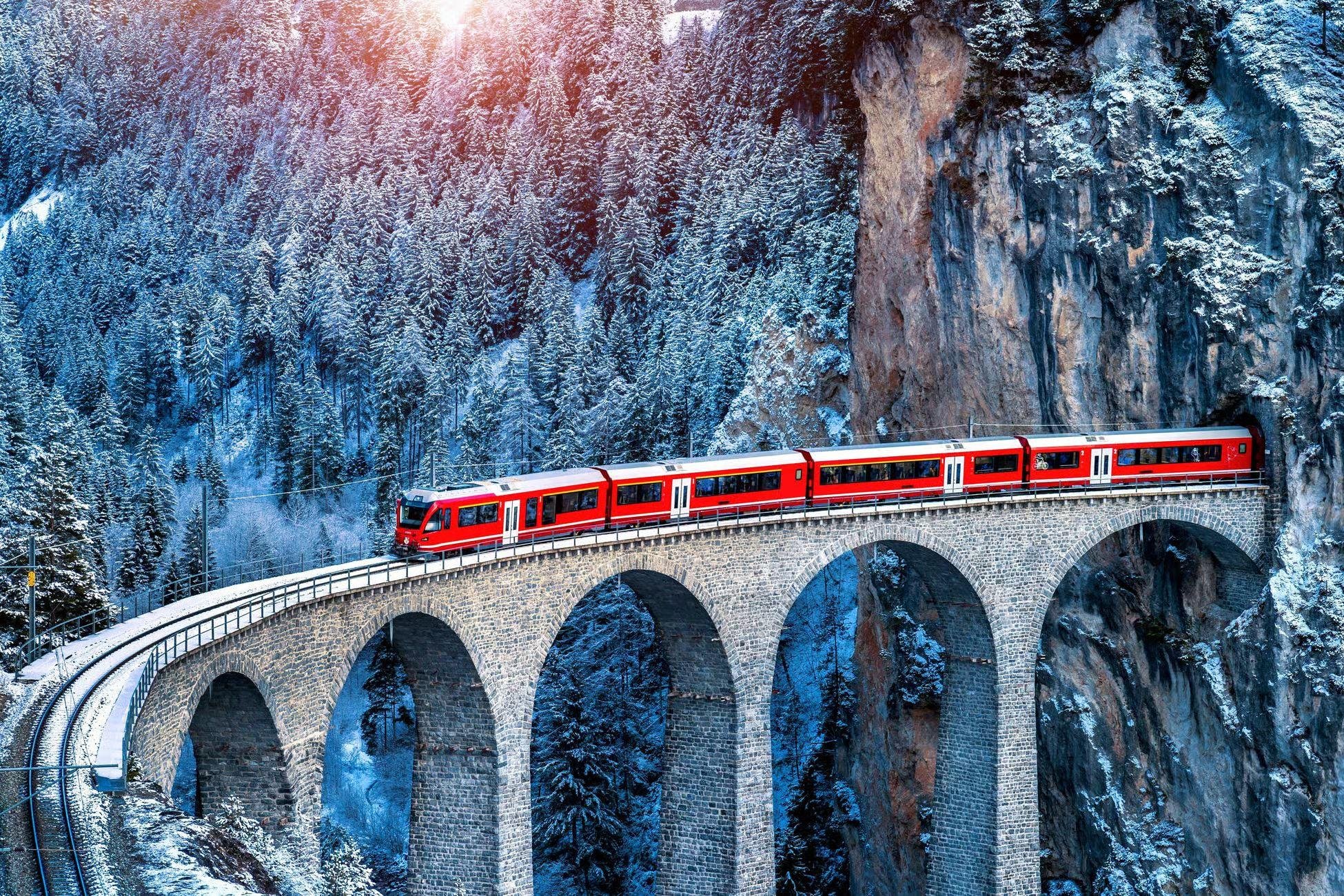
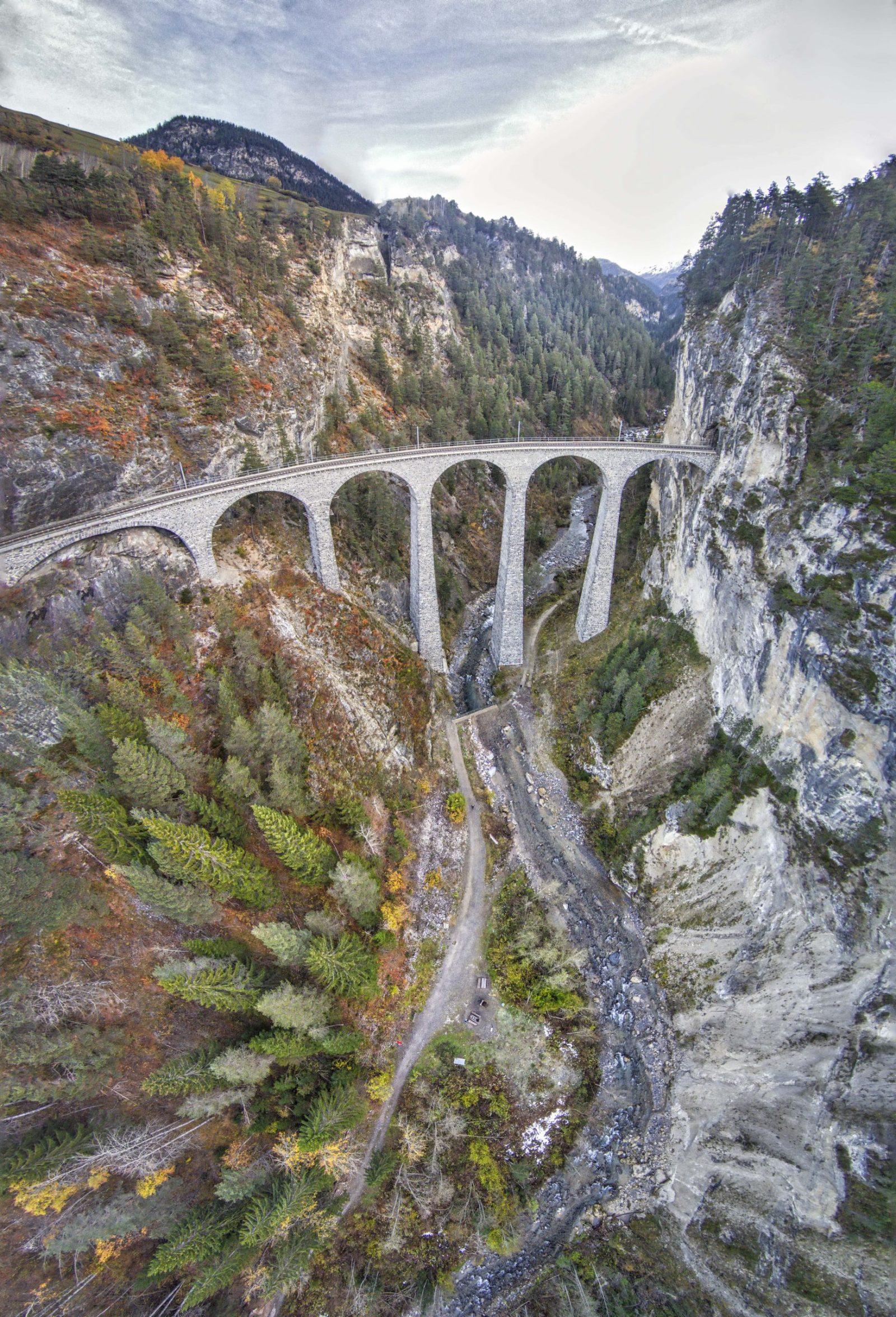
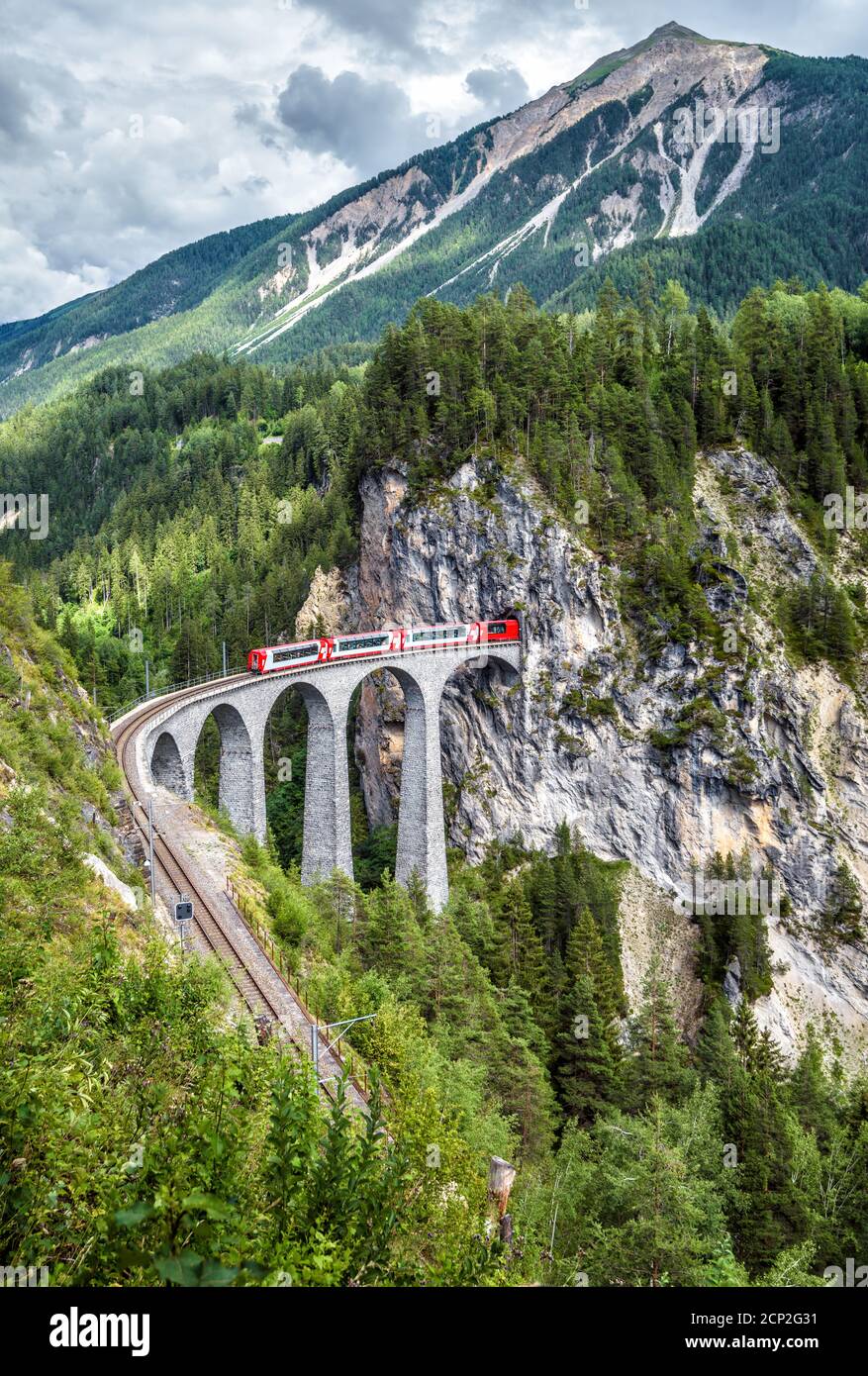
This 65-metre-high viaduct is one of the RhB network’s most famous structures and a major symbol of the UNESCO rail landscape. It is a bridge, not a station, and it shows how the Bernina experience fits into a wider mountain-rail system.
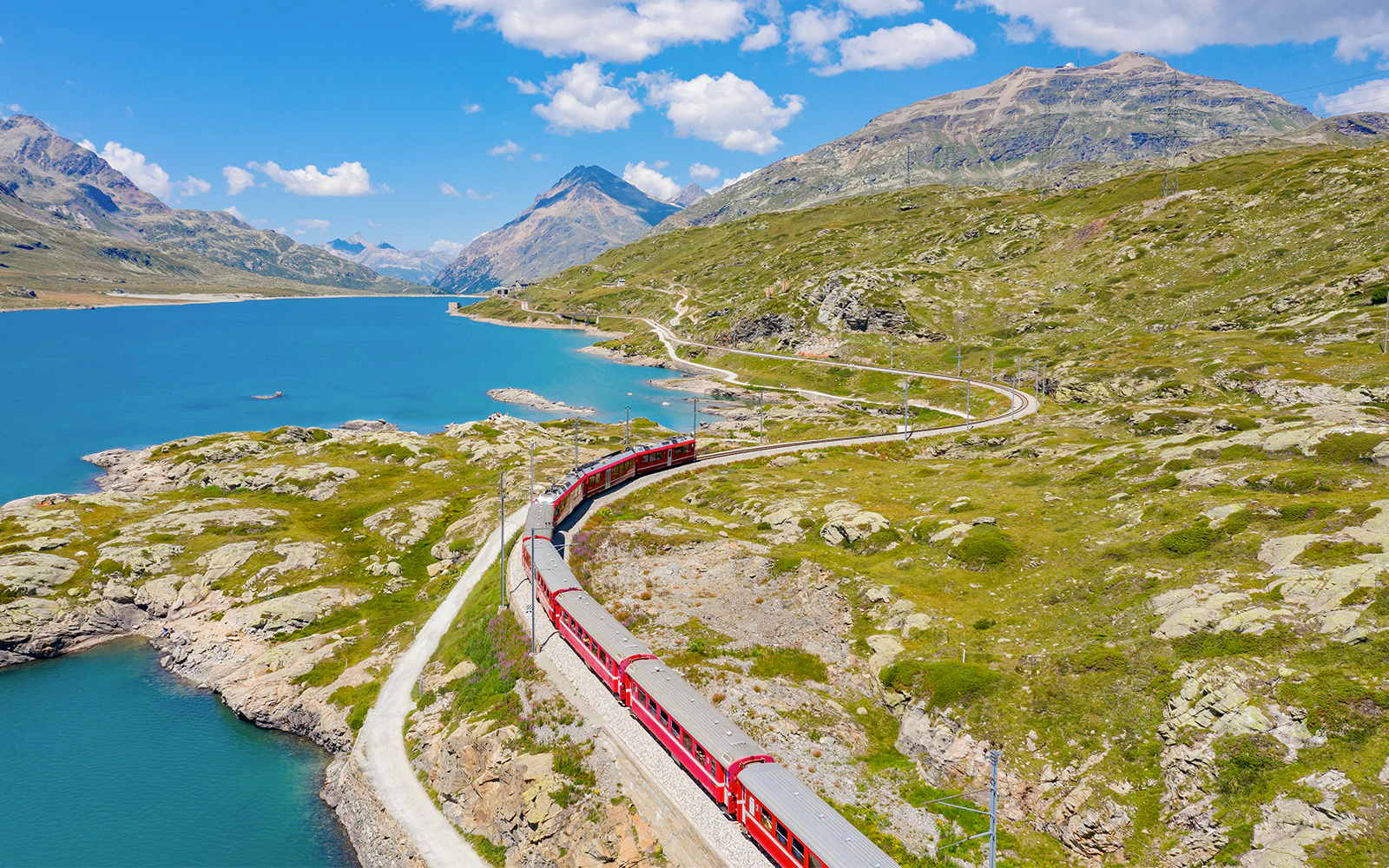
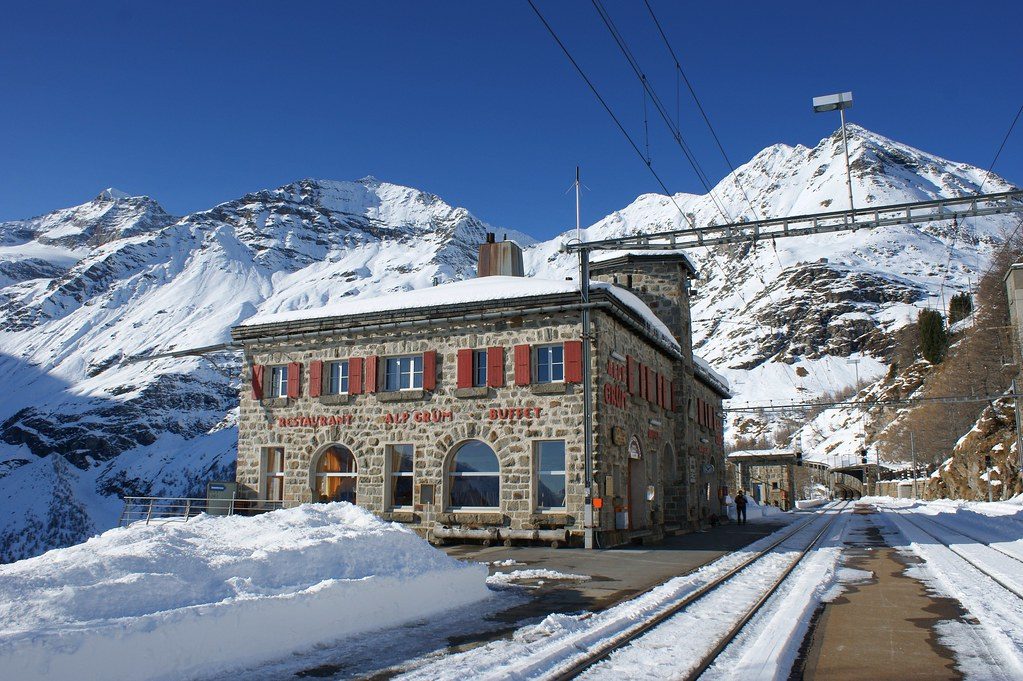
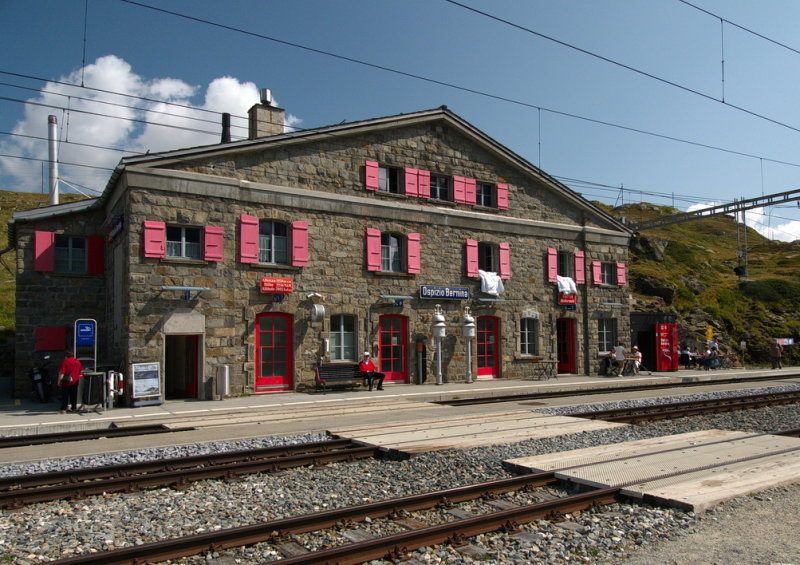
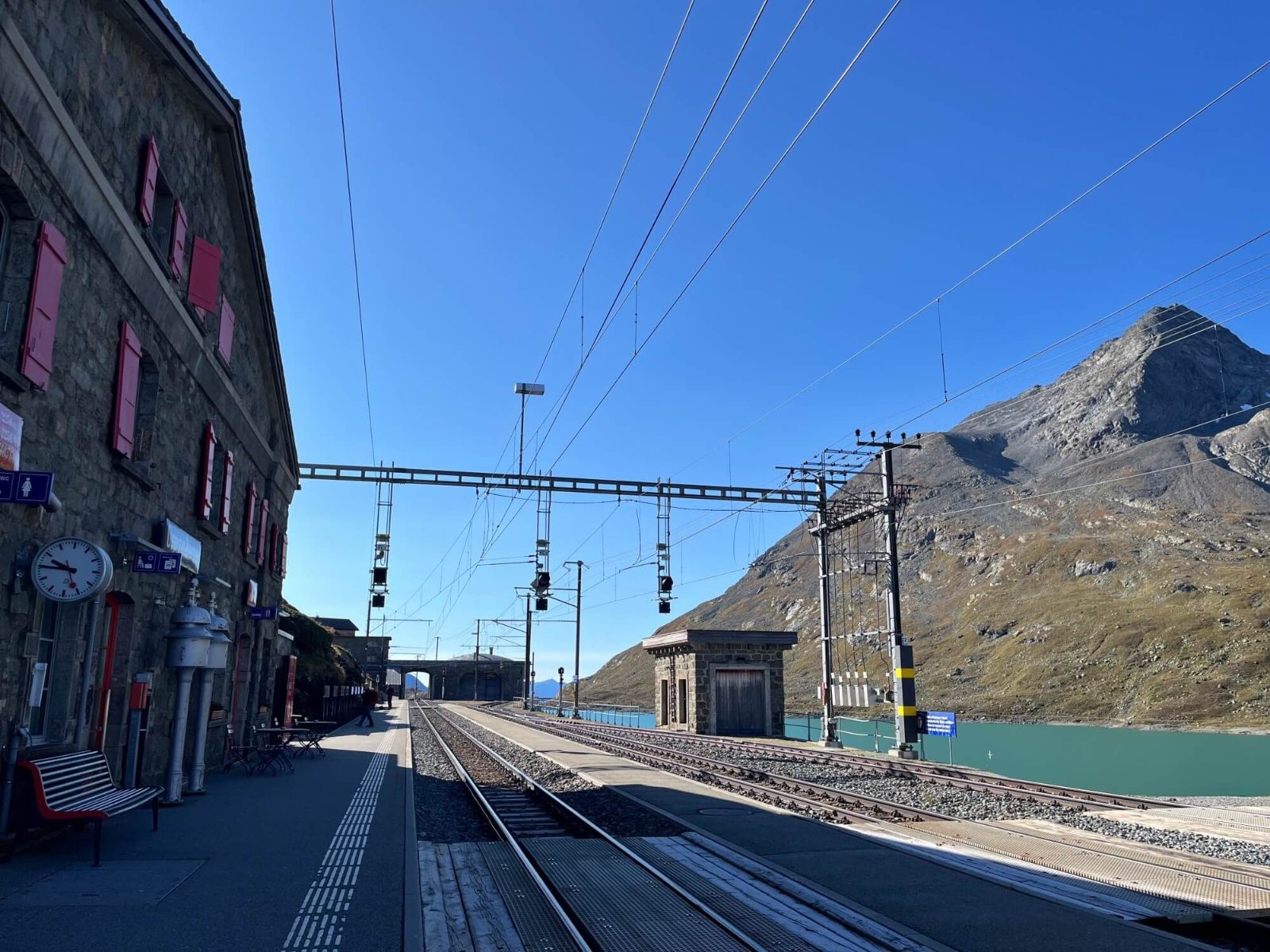
The highest point on the Bernina line gives the route its summit identity. Thin air, snowfields, and a broad high-alpine horizon make it a useful reference point for understanding the climb.
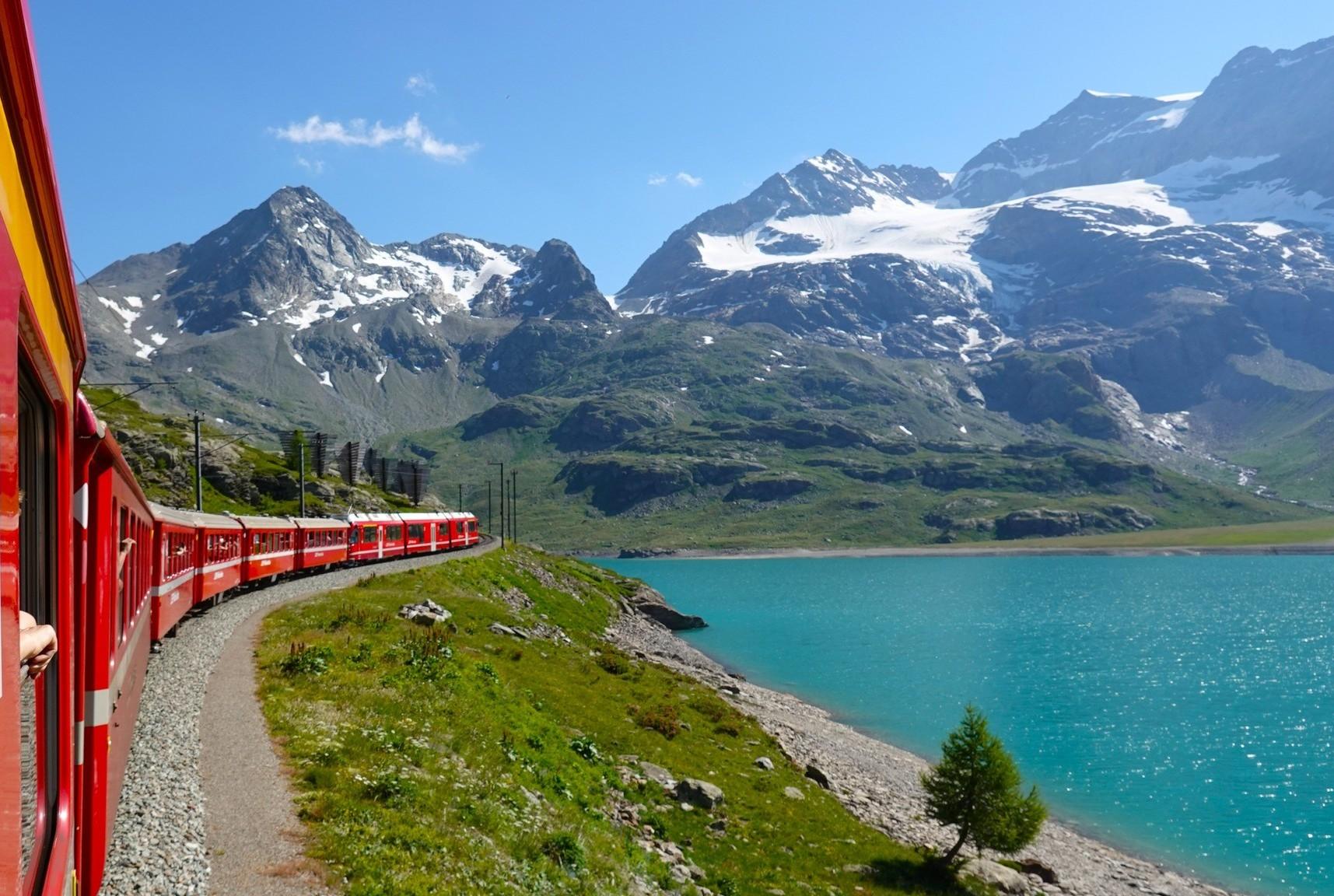
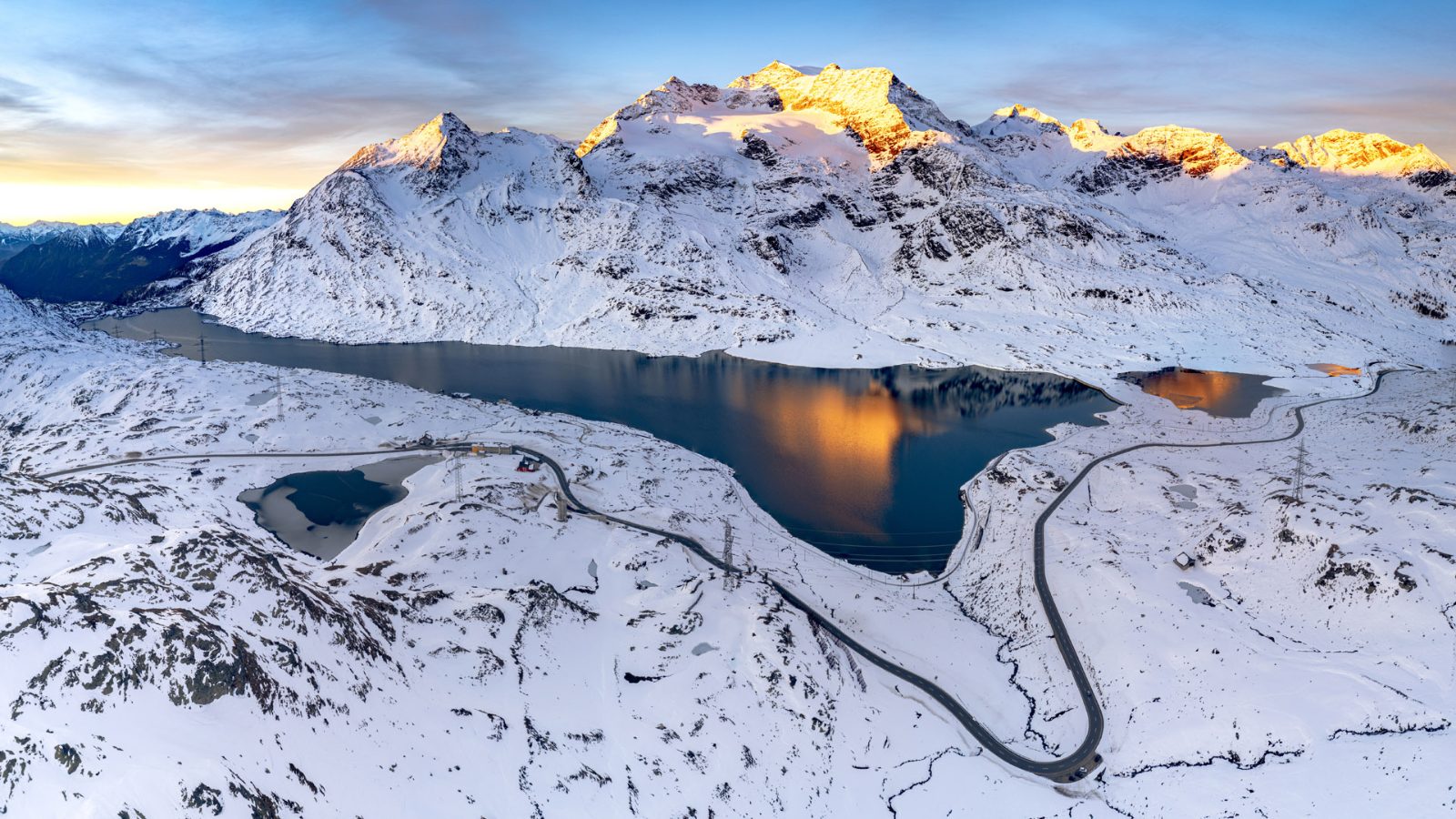
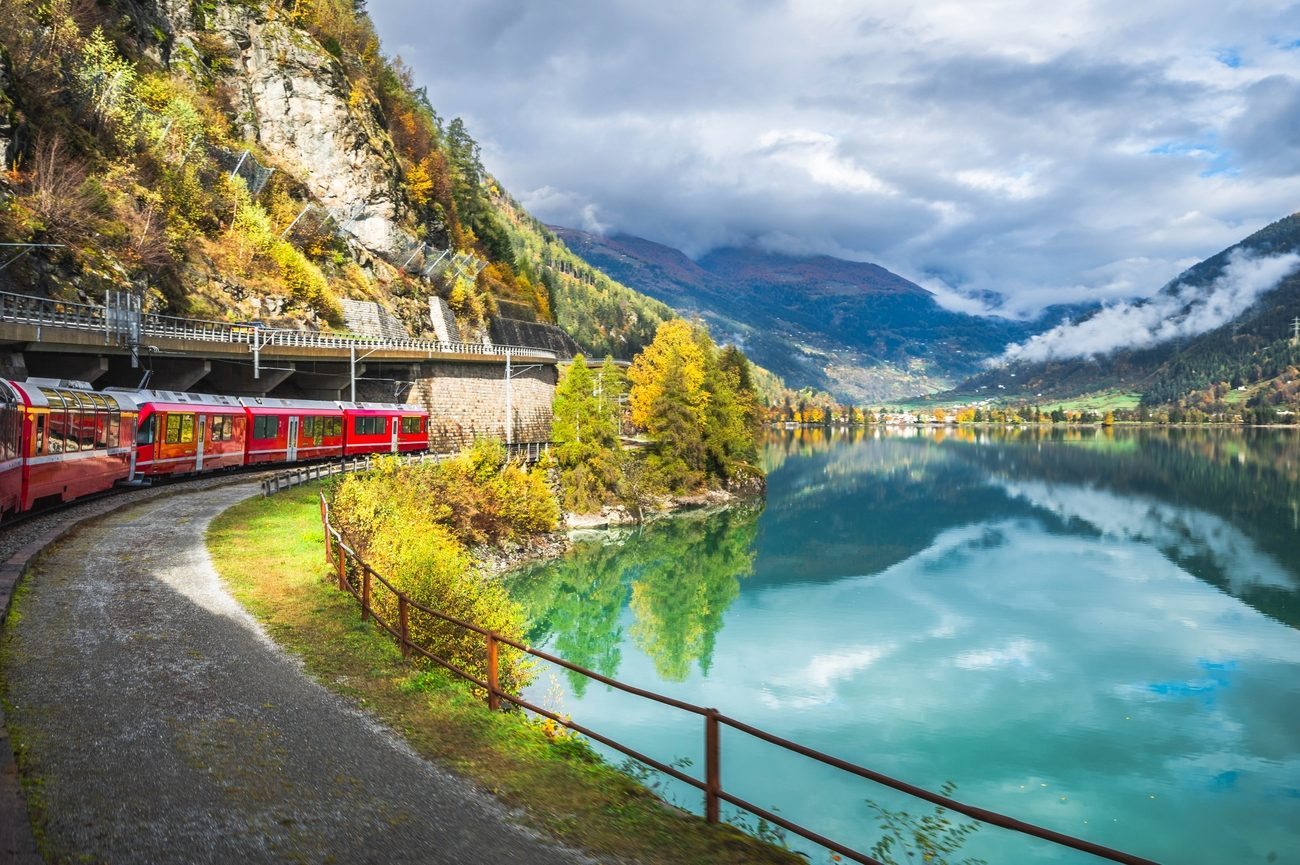
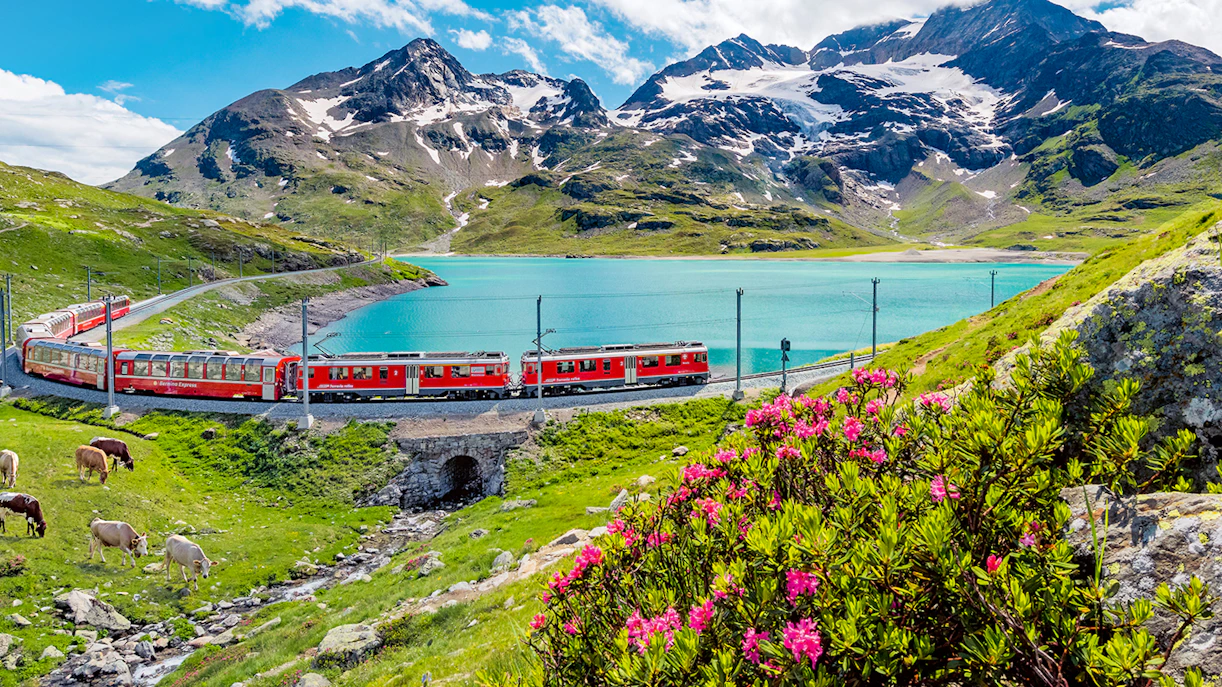
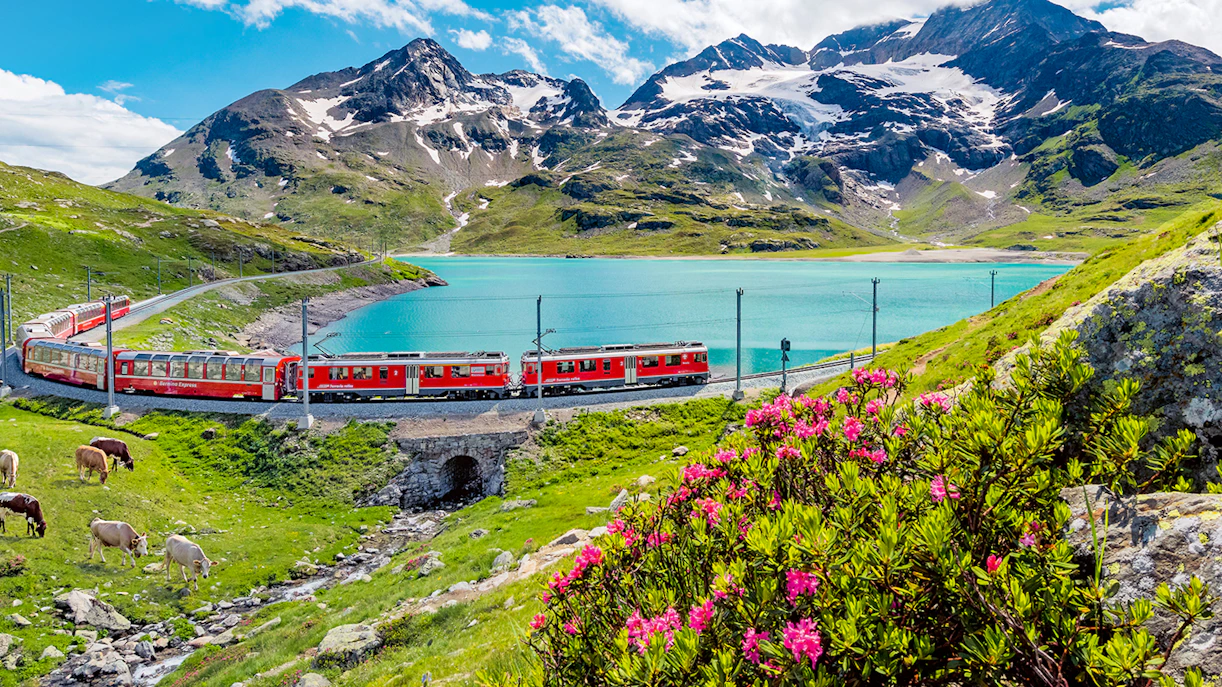
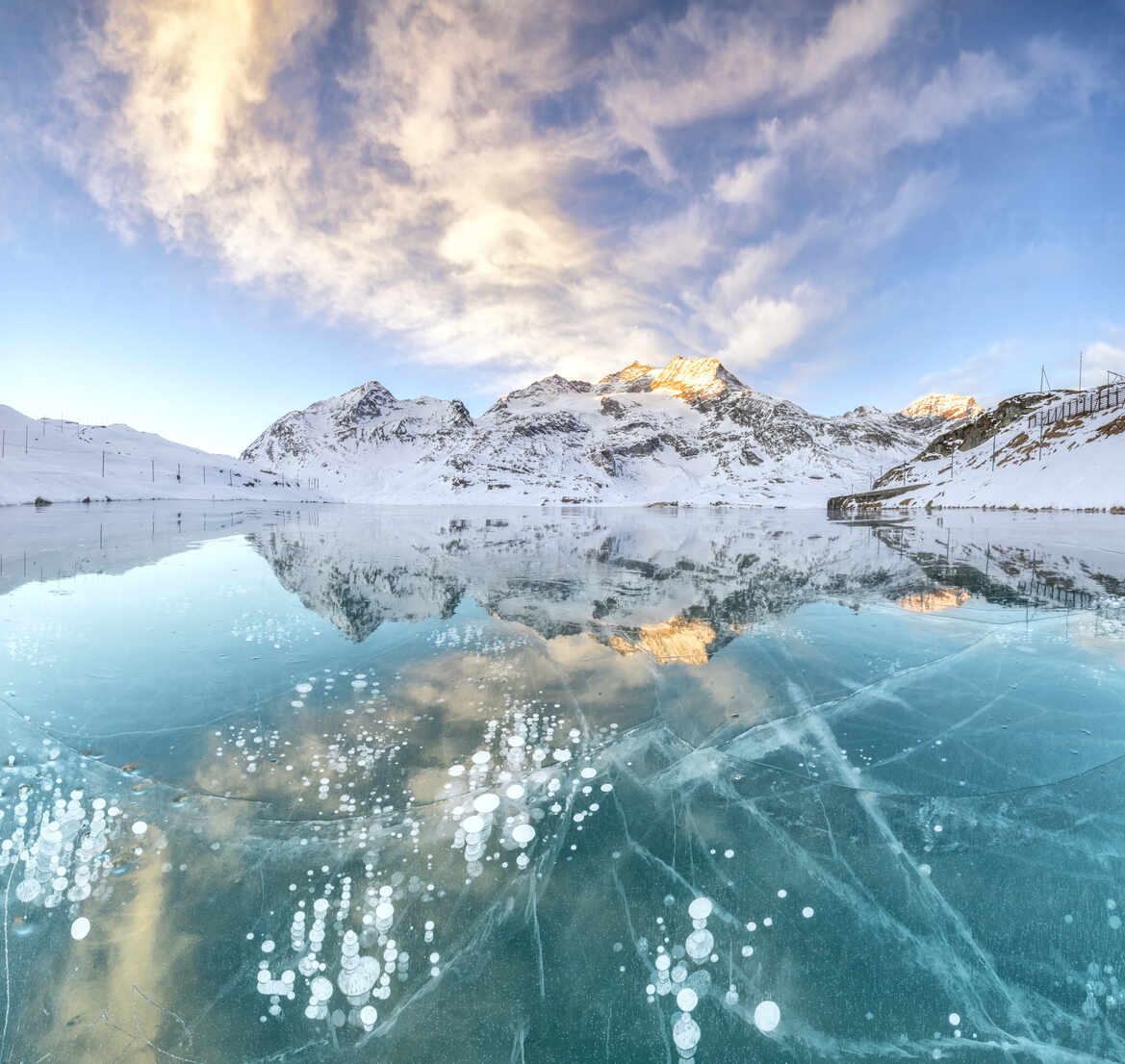
This pale alpine lake sits near the pass and adds a bright reflective surface to the journey. Its contrast with the dark rock and snow gives the route some of its clearest seasonal color changes.
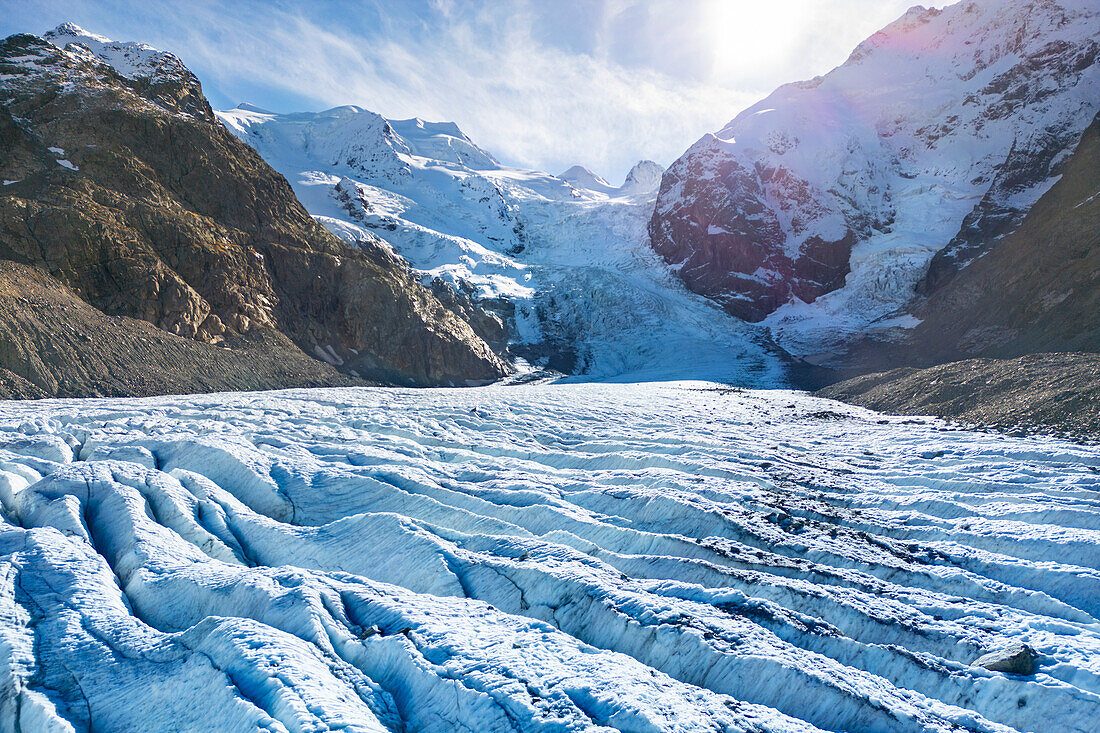
The glacier is one of the most recognizable natural landmarks visible from the Bernina corridor. It anchors the route’s glacial scenery and makes the line feel distinctly high alpine rather than simply scenic.
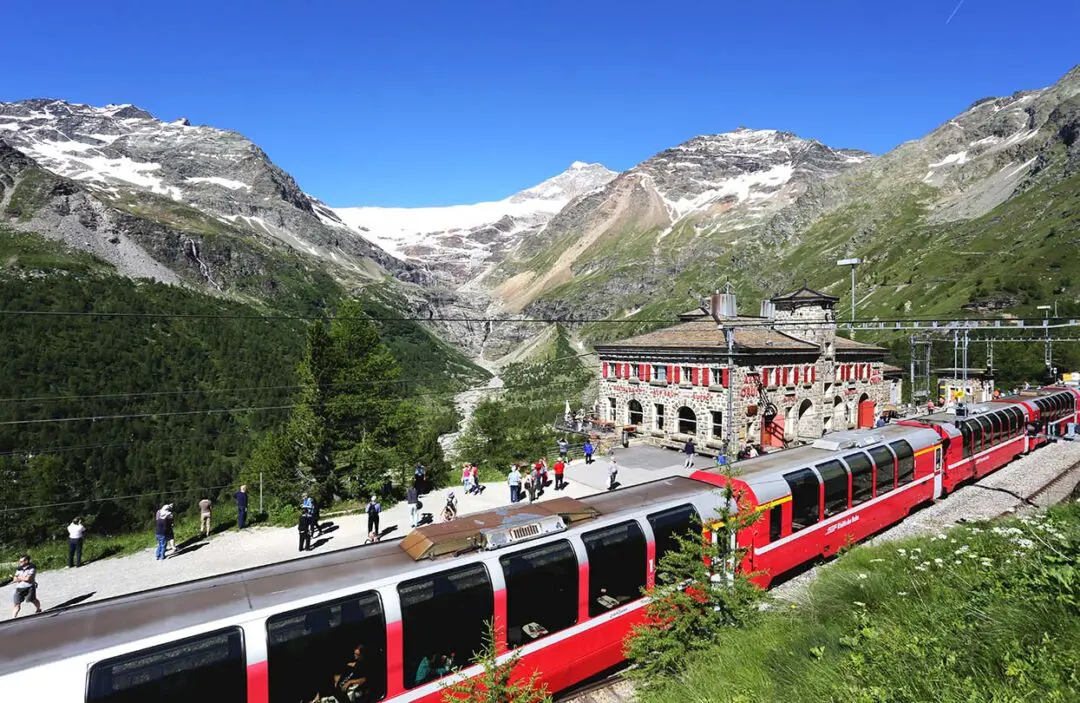
This stop is known for its dramatic overlook into Valposchiavo and the railway’s steep descent. It is a strong example of how the Bernina line combines engineering, topography, and open landscape in one frame.
The descent into Valposchiavo shifts the scenery from ice and rock to a milder valley landscape. The change in elevation is part of what makes the Bernina route feel so varied over a relatively short distance.
You board in central Milan early, before the city has fully woken, and settle in for the run north through Lecco and the Valtellina valley. Vineyard terraces stack up the slopes on your right.
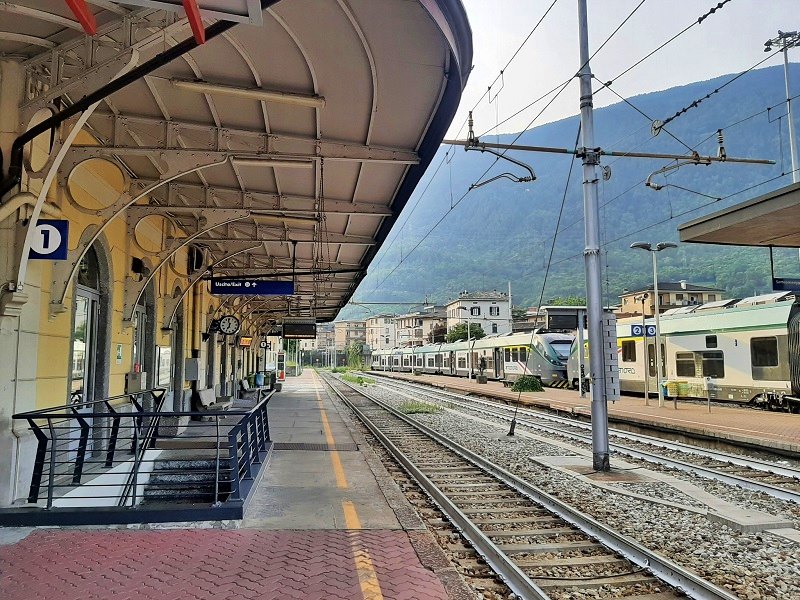
By late morning you reach Tirano, where the Italian station and the Swiss narrow-gauge platform sit side by side, and border formalities amount to little more than a passport in your pocket.
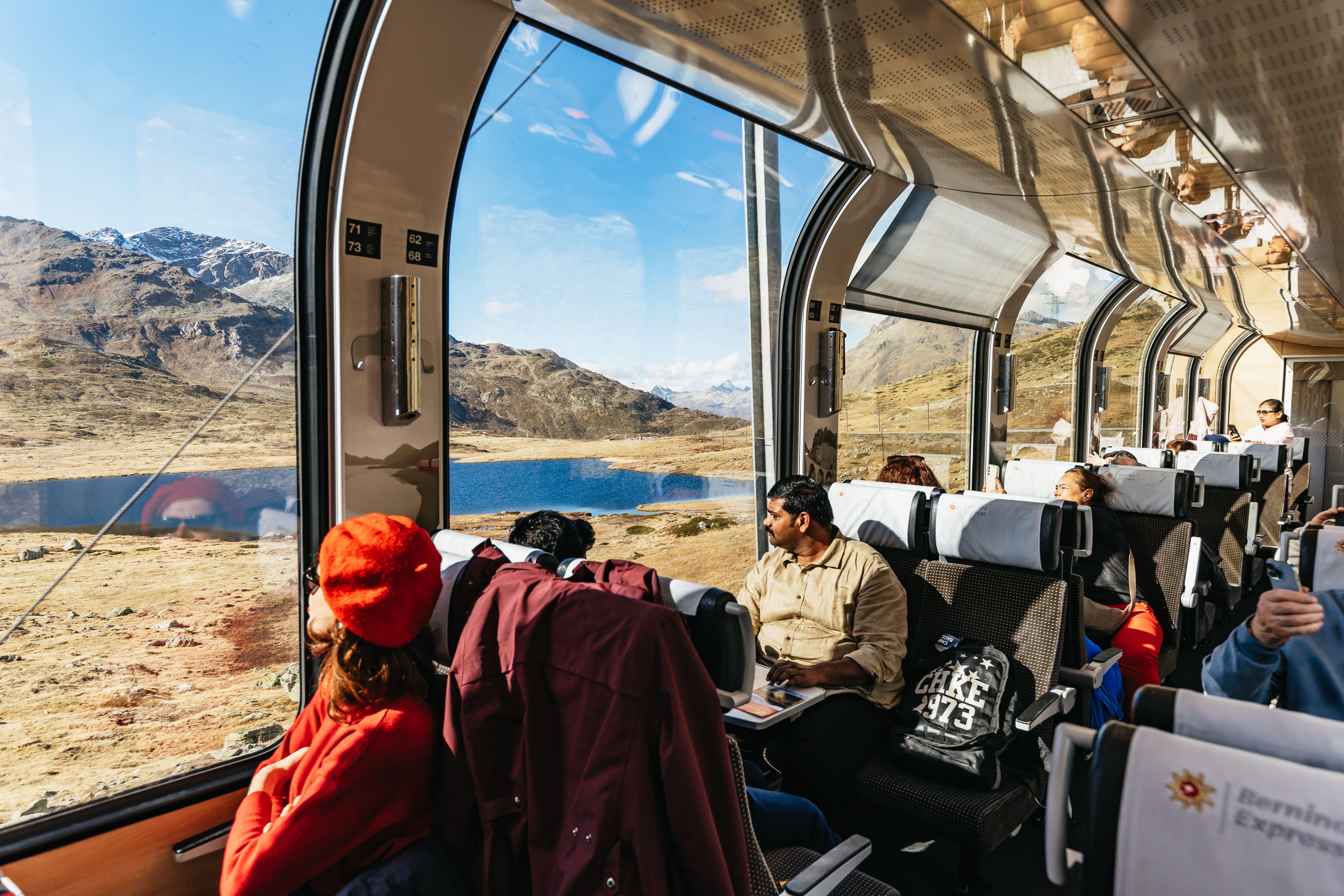
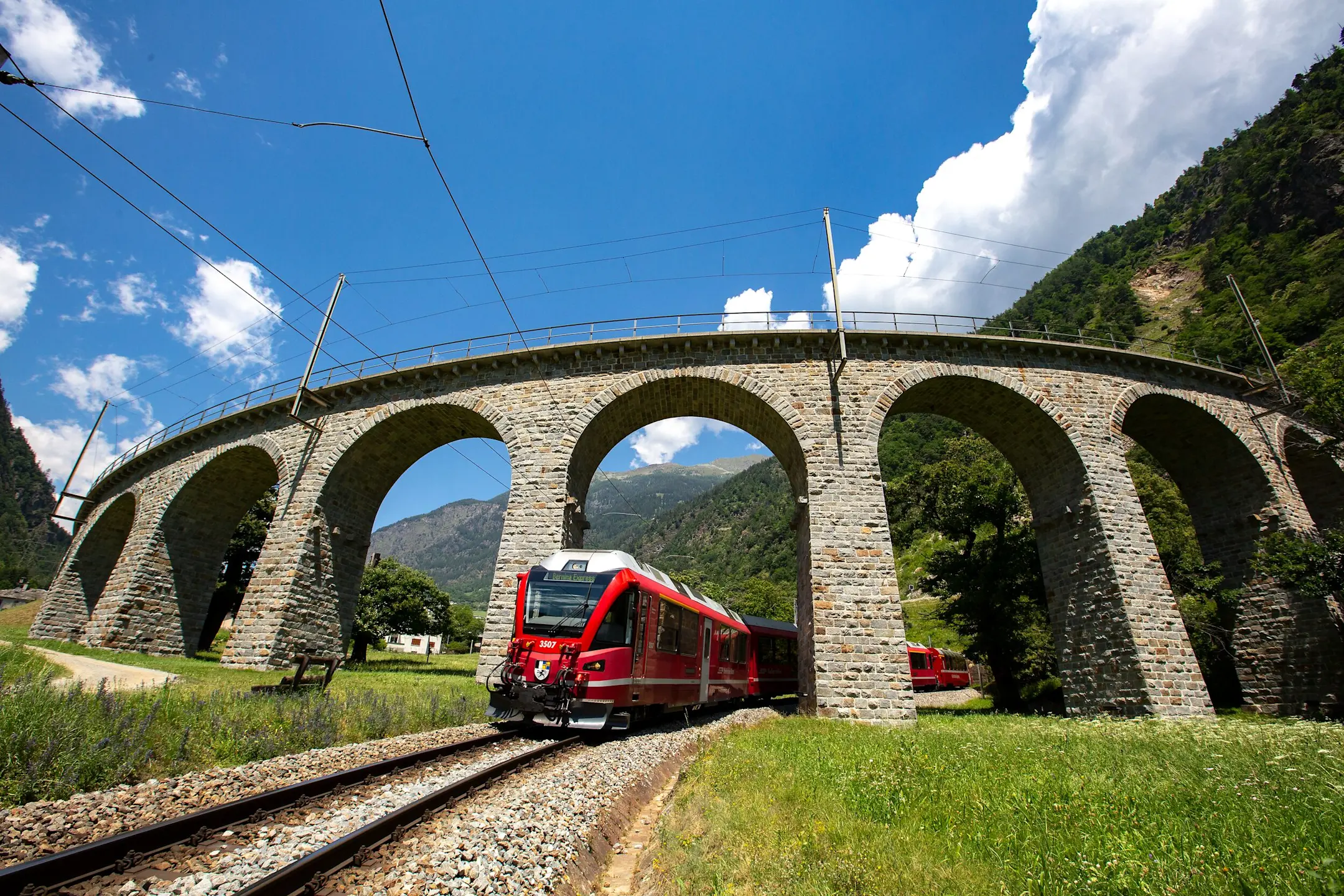
Then the climb begins. You watch the train swing onto the Brusio spiral viaduct and cross above its own tracks, and you keep your camera ready — the loop is over in under a minute. Ospizio Bernina arrives at 2,253 metres, where Lago Bianco lies milk-pale against dark scree even in August. Alp Grüm gives you the Palü Glacier straight ahead through curved glass.
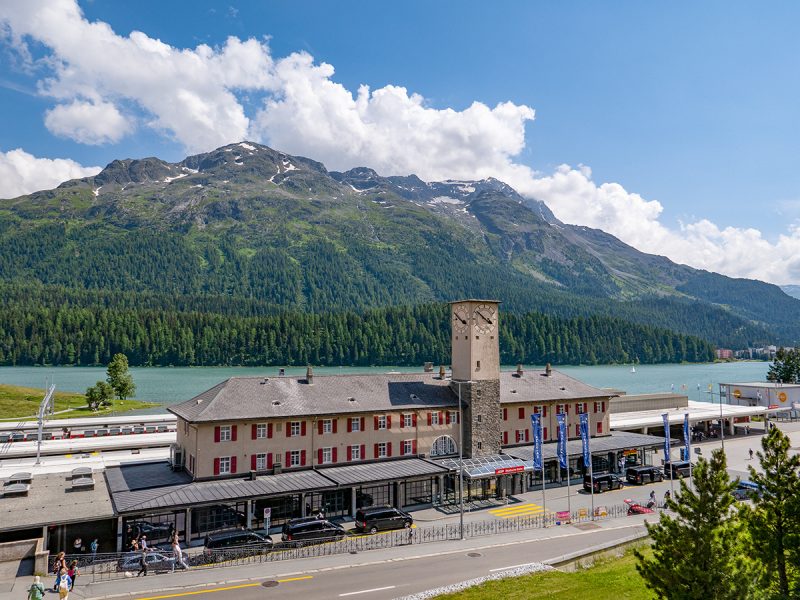
Descending into the Engadin, you step out at St. Moritz with free time to walk the lakefront, take the funicular, or sit with a coffee among the hotel facades. Some itineraries add a Lake Como cruise on the return leg; others turn straight for Milan, arriving back in the evening. Whichever bernina train from milan to swiss alps tickets you hold, the day runs long — pack a layer, since the summit stops sit twenty degrees cooler than the Lombard plain you left at dawn.
All the details about your upcoming adventure in one place
The Rhaetian Railway climbs from 429 metres at Tirano to 2,253 metres at Ospizio Bernina without a single rack rail, using adhesion alone on gradients touching seven percent. That engineering stubbornness is the reason the line exists as it does.
Opened in 1910 after four years of construction, the Bernina line was conceived as a tourist railway from the outset, not a freight corridor, and its narrow metre gauge was chosen so the track could curl around mountain shoulders rather than tunnel through them. In 2008 UNESCO inscribed the Albula and Bernina lines as a World Heritage Site, one of only three railways to hold that status.
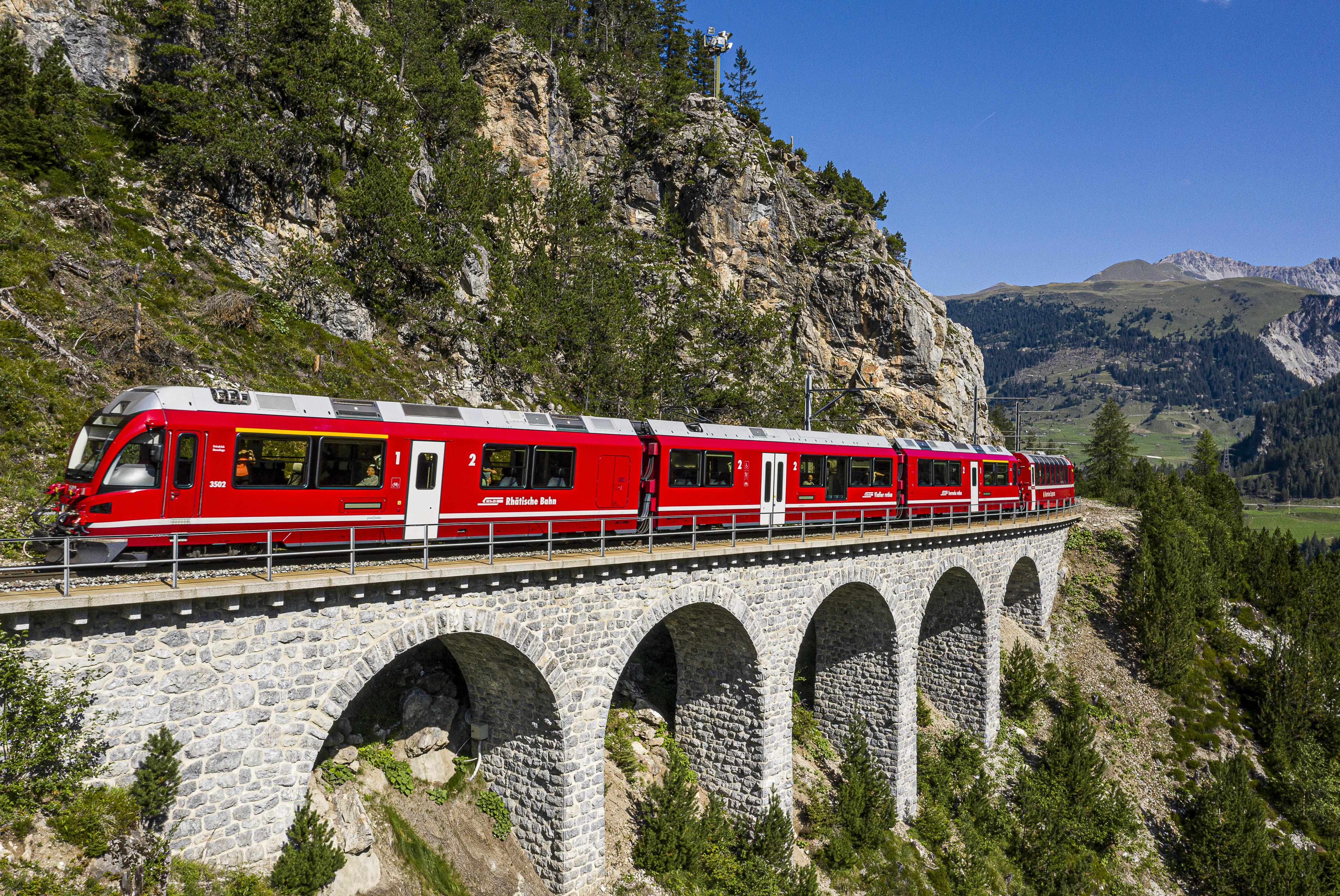
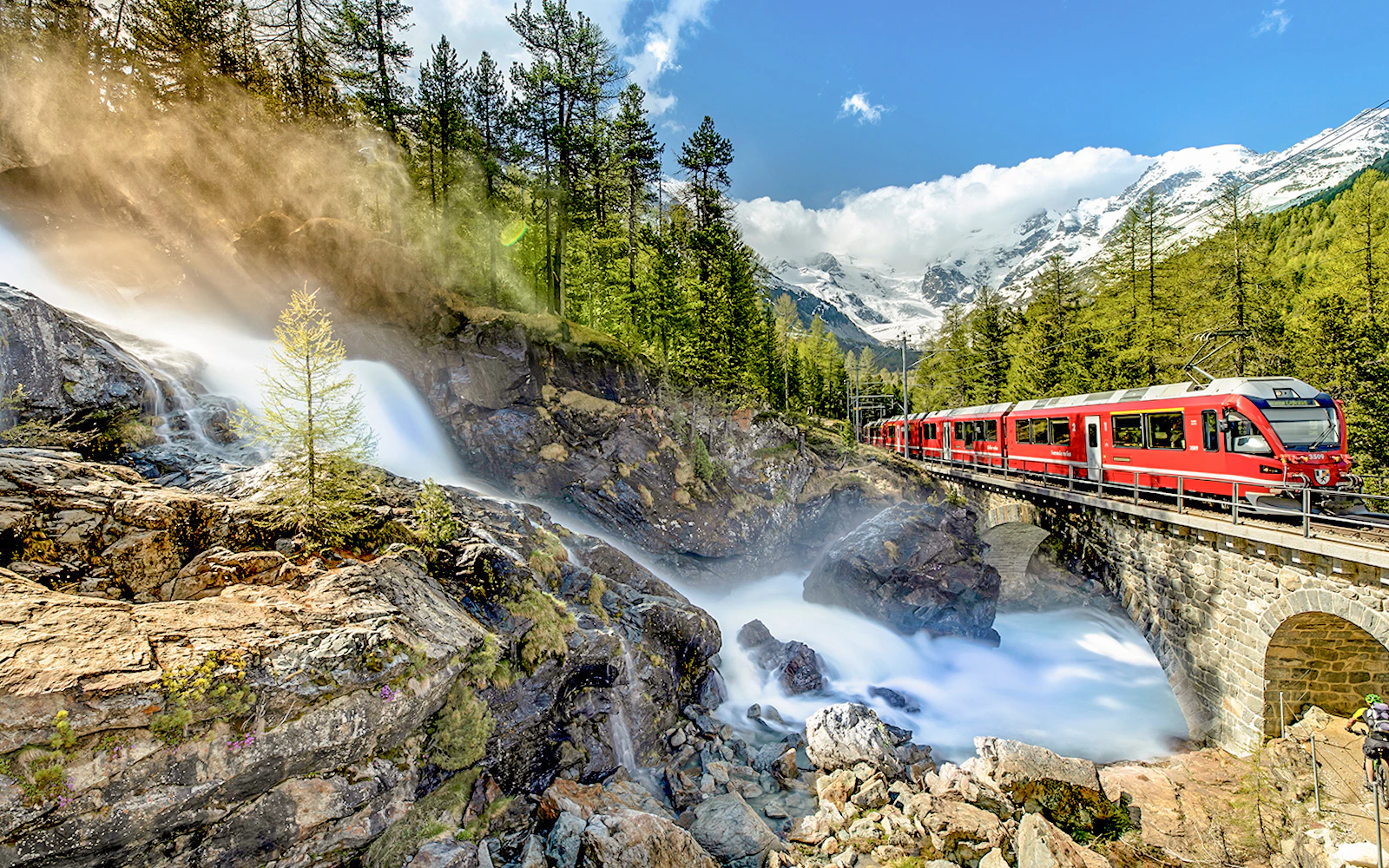
What makes the bernina train from milan to swiss alps distinctive today is compression. Few journeys on earth cross so many climatic bands in so few hours. Passengers leaving Italian vineyard terraces at Brusio reach glacial moraine within ninety minutes. The Brusio circular viaduct, a nine-arch stone spiral built in 1908, lets the train lose altitude in a single open loop rather than a tunnel, and remains the most photographed structure on the route. Above it, the Alp Grüm terrace looks directly onto the Palü Glacier, a working sightline that has narrowed measurably over the past century as the ice retreats.
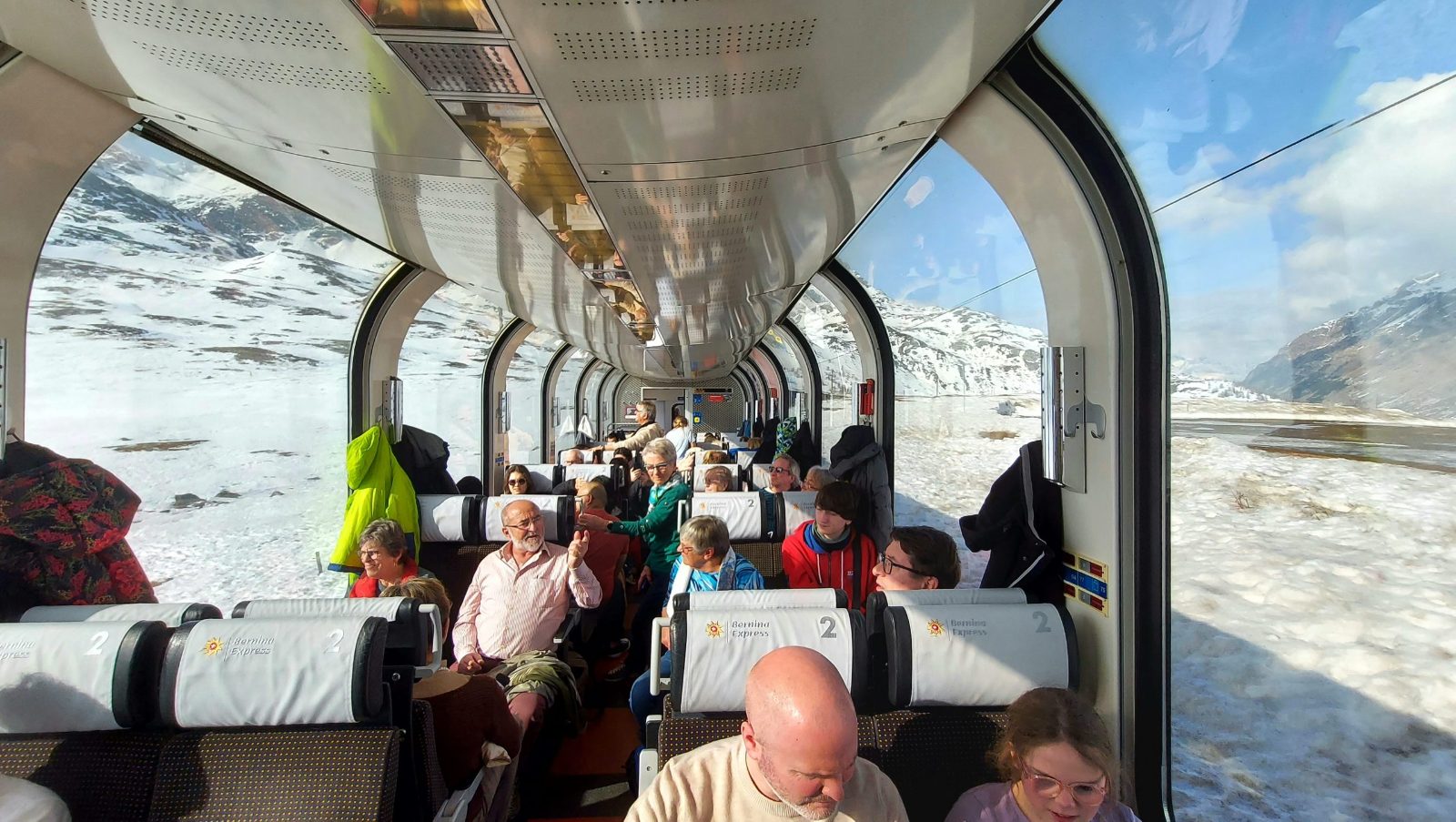
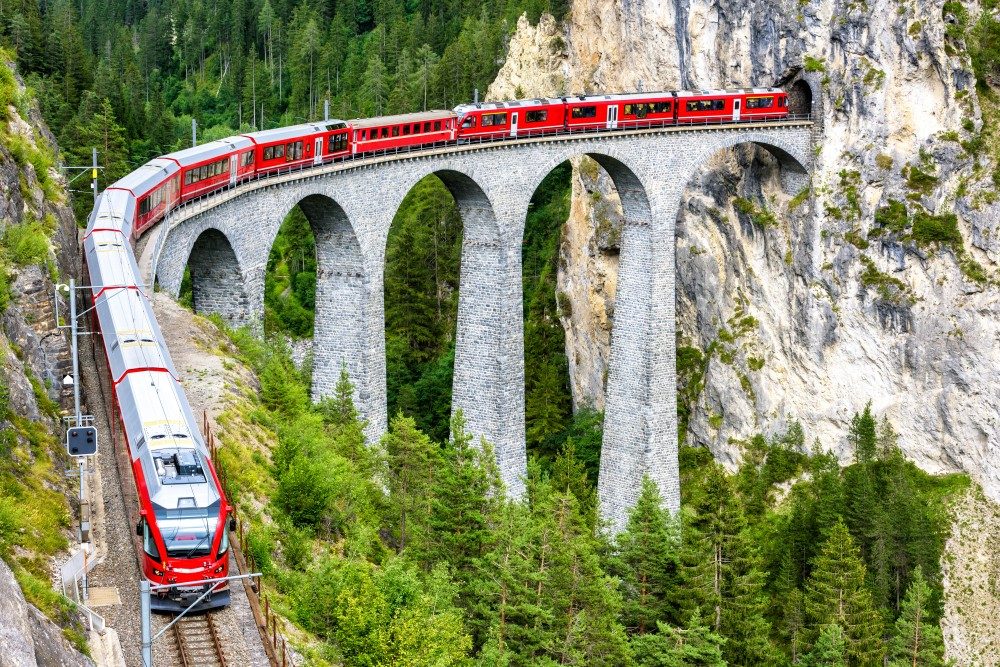
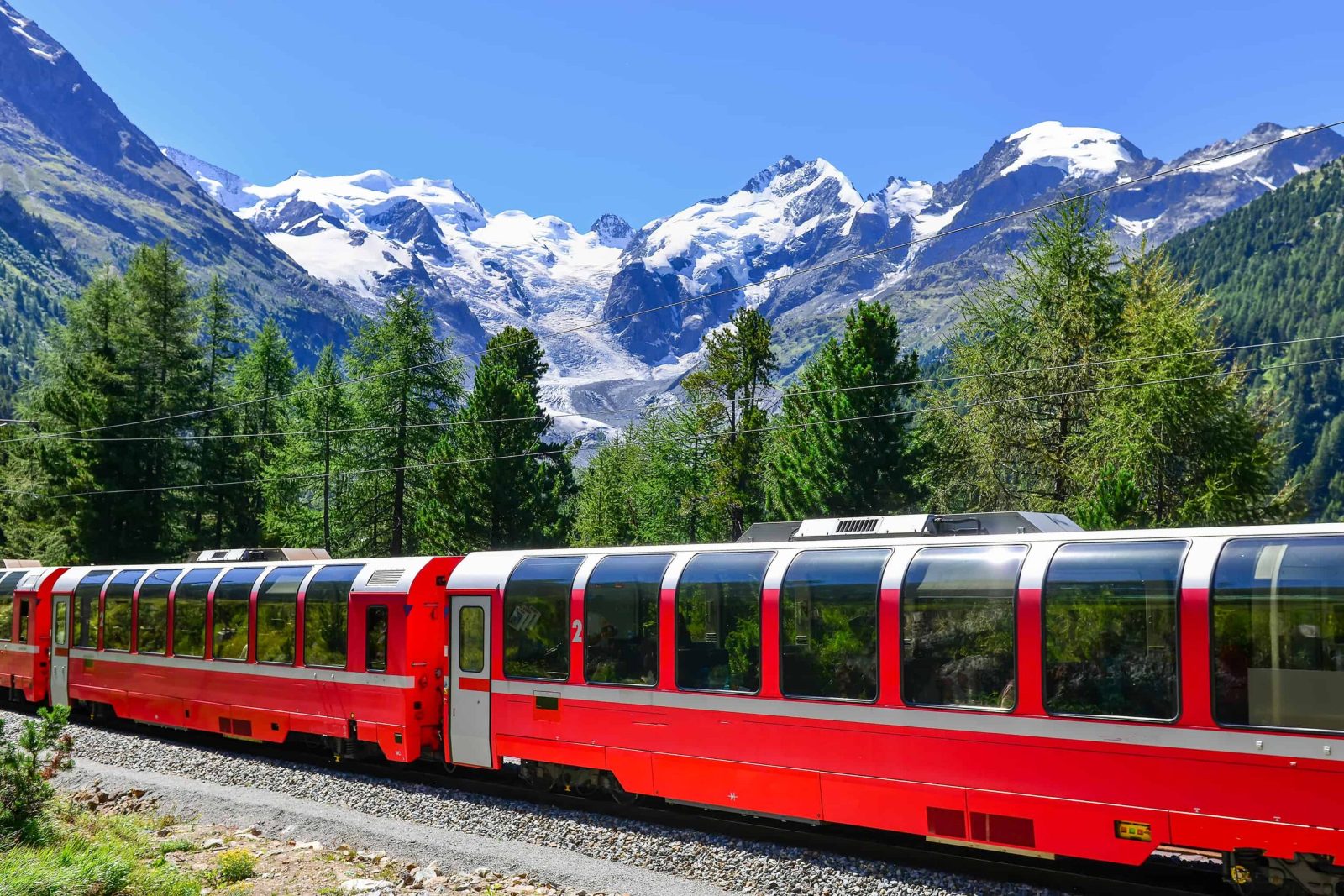
The architecture is deliberately unshowy. Granite viaducts, dry-stone retaining walls, and 196 bridges were faced in local stone so the works would weather into the landscape rather than announce themselves. The Landwasser Viaduct on the connecting Albula stretch, 65 metres high and curving into a rock face, was raised in 1902 without scaffolding. Rolling stock, by contrast, is emphatically modern: the panoramic coaches carry glazing that curves overhead, so the summit ridges stay in frame while the train leans through curves. Reserved panoramic seating is separate from the rail fare itself, which is why most bernina train from milan to swiss alps tours are sold as packaged day trips rather than plain rail tickets.
Milan sits roughly two and a half hours south of Tirano by road, and the northbound leg through Valtellina is part of the story rather than dead time. The vineyards of Sassella and Grumello, terraced since Roman occupation, line the valley floor. Several operators fold in Lake Como, joining a lake cruise to the rail segment in one outing, while others run direct to St. Moritz, a resort that has hosted two Winter Olympics and where the Engadin light draws painters as reliably as it draws skiers.
Seen whole, the route is less a transport link than a sustained argument about altitude — Mediterranean palms, larch forest, treeline, then bare rock and meltwater, arranged in sequence over a single afternoon. Independent travellers and those on a guided bernina train from milan to swiss alps tour cover identical ground; only the arrangements differ.
Few journeys on earth cross so many climatic bands in so few hours.
Layered clothing is the practical choice on the Bernina train from Milan to Swiss Alps because the route climbs from valley weather to high-alpine conditions. Bring a warm layer even in summer, especially for exposed sections near the Bernina Pass and Ospizio Bernina.
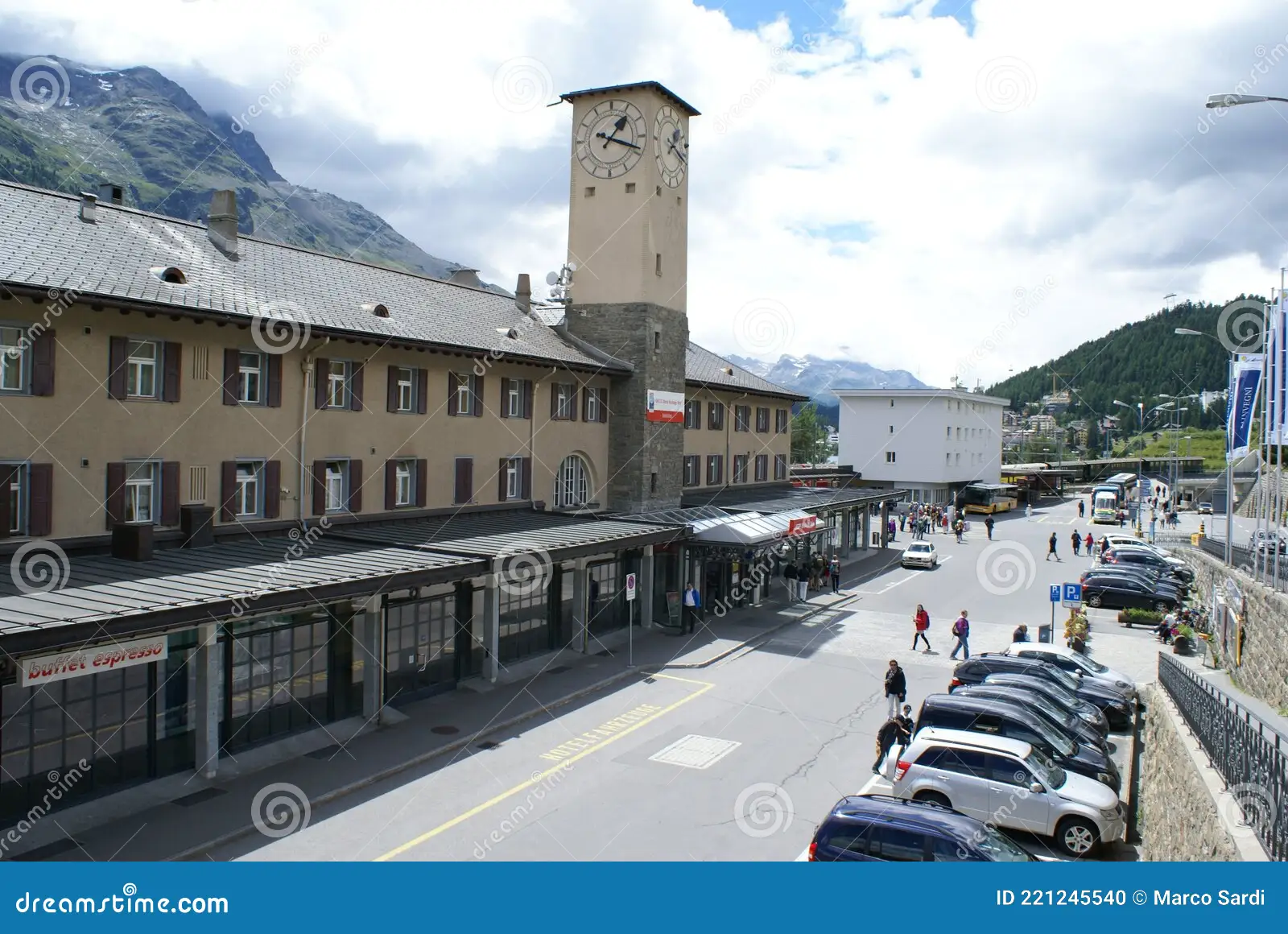
Luggage racks are available, but space is limited on the Bernina train from Milan to Swiss Alps. RhB also offers baggage delivery as an alternative for large items, so oversized suitcases are easier to handle if sent ahead.
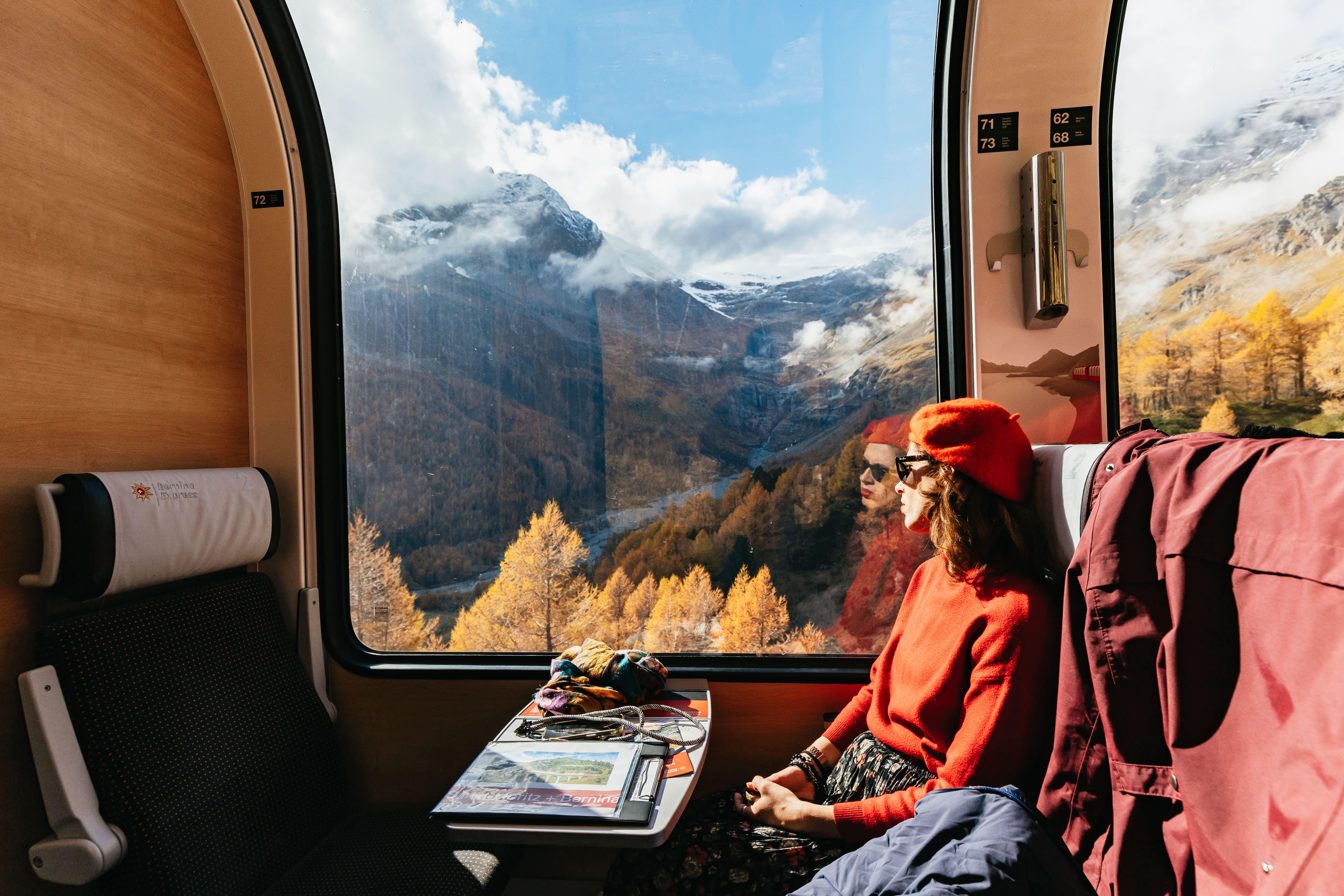
Photography is permitted from the train, and the panoramic windows are designed for views along the route. Onboard reflections can be strong in the glass coaches, so a seat away from direct light helps if you want cleaner shots of Lago Bianco, the Morteratsch Glacier, or the Landwasser Viaduct.
Children under 6 travel free of charge, while children from 6 until the day before their 16th birthday pay half fare; the seat reservation supplement is charged in full. That makes the Bernina train from Milan to Swiss Alps workable for families, but long scenic segments mean snacks and quiet activities help.
Some seats are wheelchair-accessible on the Bernina Express, but they must be booked through RhB Railservice. Boarding and alighting assistance must be arranged in advance through the SBB Call Center Handicap, and the Bernina Express Bus also has wheelchair-accessible seating by prior booking.
Food and drinks are served at seats on the Bernina Express, and on-board catering is part of the experience. RhB notes that onboard payments are cashless, so card or contactless payment is the safer choice for the Bernina train from Milan to Swiss Alps.
Always open
Always open
Always open
Always open
Always open
Always open
Always open
Opening hours
Mon–Sun: 00:00–23:59
Address
Bernina Express route, Rhaetian Railway, Switzerland to Tirano, Italy
Access
Wheelchair-accessible seats are available on request via Railservice
Best arrival window
07:30–08:15 — to catch the first main departure and avoid crowds
Entry fee
0 CHF (ticketed train, no gate fee)
Public transport · Varies by route · From CHF 0 extra if already ticketed
From Milan, connect to Tirano by regional rail and continue on the RhB Bernina line toward St. Moritz or Chur. Trenitalia publishes the Milan timetable online, and Tirano station is served every day with RhB customer service and luggage desks.
Car · About 75 spaces · Station parking fees vary
Drive to Tirano station if you are arriving from Italy, but parking is limited to station facilities rather than a dedicated RhB lot. SBB’s Tirano station page lists P+Rail parking with 75 spaces, useful if you are transferring to the train.
Taxi · 10–15 min local transfer · Local fare
A taxi is the simplest way to handle the final approach in Tirano if you are carrying bulky bags or arriving late. It is best for short station transfers rather than a full Milan-to-Alps journey.
Seat reservations for the Bernina Express are separate from the train ticket and can be changed only under the operator’s terms. RhB’s conditions state a CHF 500.00 fee for changing the travel date or rebooking an entire group from one Bernina Express train to another Bernina Express train.
Recommended time
Half a day
For bernina train from milan to swiss alps, plan about 4 to 5 hours for the core rail experience if you are riding the full Bernina section from Chur to Tirano; the official trip time is about 4 hours, while St. Moritz to Tirano takes about 2 hours 15 minutes. Add extra time if you are connecting from Milan, changing trains, or want a more relaxed transfer buffer. Morning departures are the easiest to board with less pressure, and the first main run is the best bet for steadier queues and calmer platforms. The Bernina Express starts early enough that a same-day round-trip style package can still fit neatly into a full travel day.
Crowd levels through the day
Weather · crowds · average price — dots go green to amber to red as each metric rises.
April and May usually bring clearer alpine air, lingering snow, and lighter crowds than peak summer. This is a good balance if you want bright scenery without the busiest trains on the Bernina train from Milan to Swiss Alps.
June through August is the busiest season, with the fullest scenery around alpine meadows and lakes. RhB’s summer timetable applies from 2 May to 25 October 2026, so expect more departures and stronger demand on the Bernina train from Milan to Swiss Alps.
September and October often offer calmer platforms and sharper visibility across the mountains. The shoulders of the summer season can be especially good for the Bernina train from Milan to Swiss Alps if you prefer fewer people.
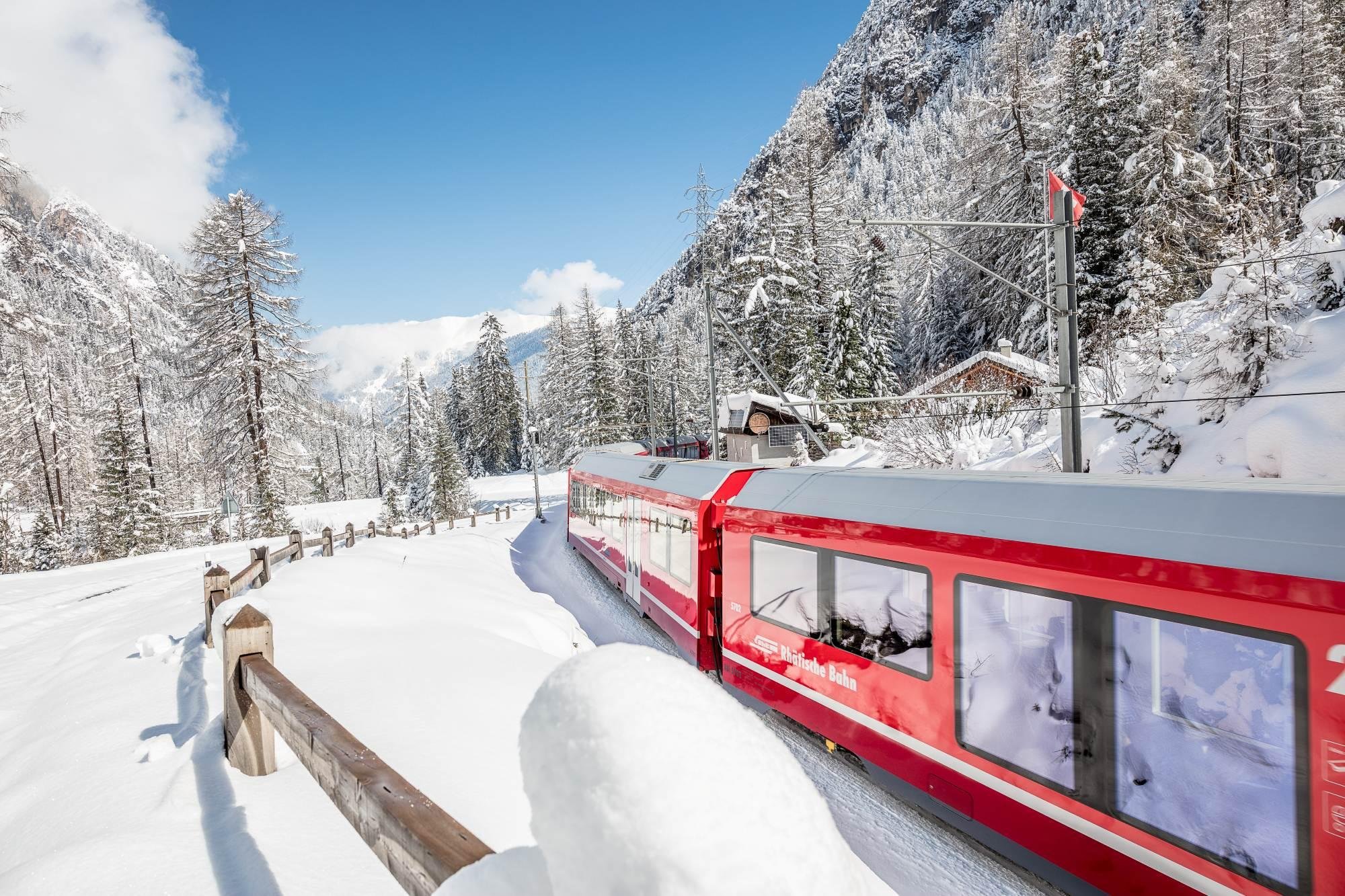
December through February brings snow-covered viaducts and a much colder ride at altitude. Daylight is shorter, so the Bernina train from Milan to Swiss Alps feels more dramatic but requires warmer clothing and more planning.
The Bernina train from Milan to Swiss Alps is popular in high season, and seat reservations can sell out before the most photogenic departures. Booking ahead is especially important for summer weekends and school-holiday periods.
RhB’s official timetable shows the current seasonal departures and any engineering diversions on the Bernina line. Check it before traveling, because work-related reroutes can change the best connection from Milan.
Because luggage space is limited on board, smaller bags are easier to store and move between cars. If you have large suitcases, RhB’s baggage delivery option is the more comfortable choice.
The line crosses into Italy at Tirano, so carry the passport or ID you would normally use for cross-border travel. This is especially important if you are traveling with children or pets.
The route is about long-distance views, viaducts, and glacier scenery, so visibility matters more than almost anything else. A bright day usually produces better mountain views than a cloudy one.
Onboard catering accepts cashless payment only, so make sure your card or phone wallet works before boarding. That avoids a surprise if you want a drink or snack during the ride.
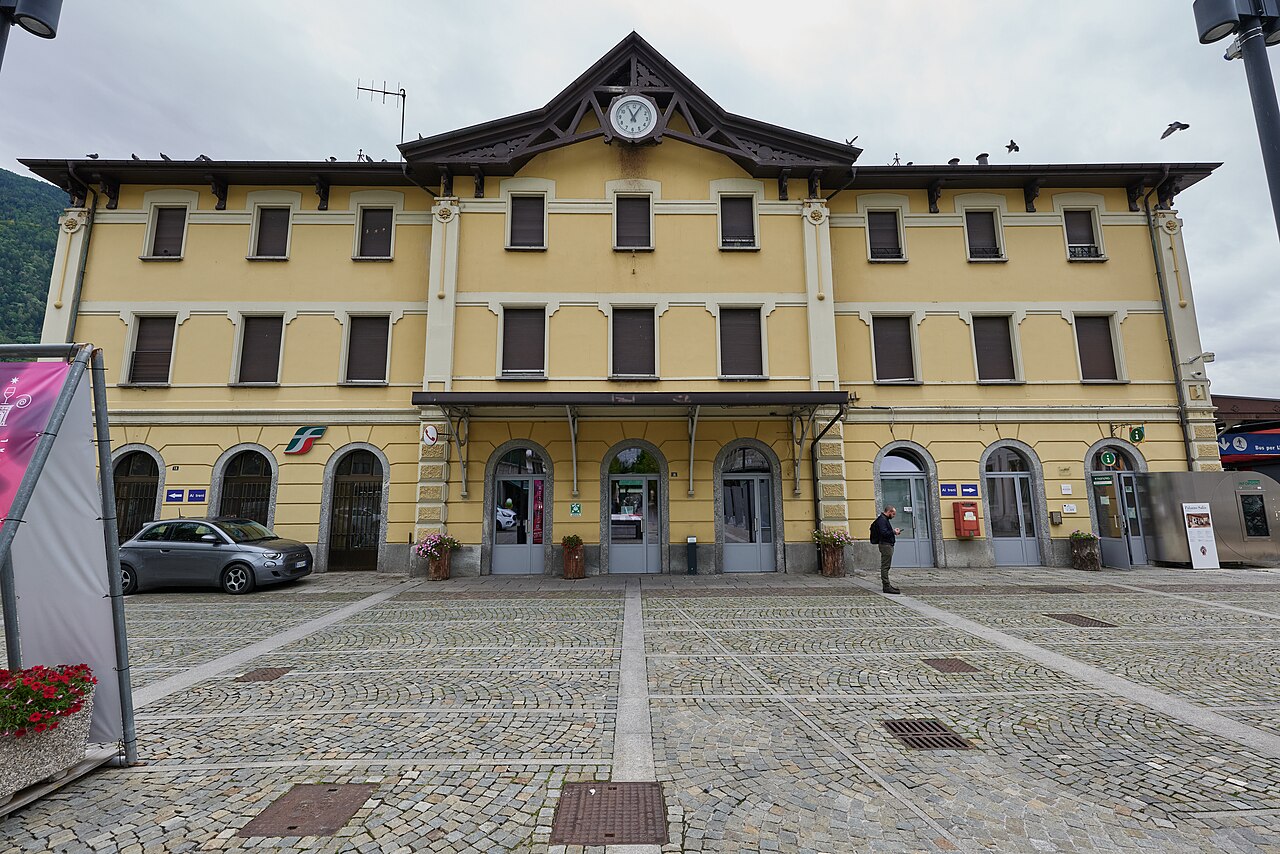
Piazzale della Stazione, 23037 Tirano SO, Italy
Main cross-border arrival and departure point for the Bernina route.
Get directions
Via da la Staziun, 7500 St. Moritz, Switzerland
Common northern terminus for the Bernina Express scenic run.
Get directions
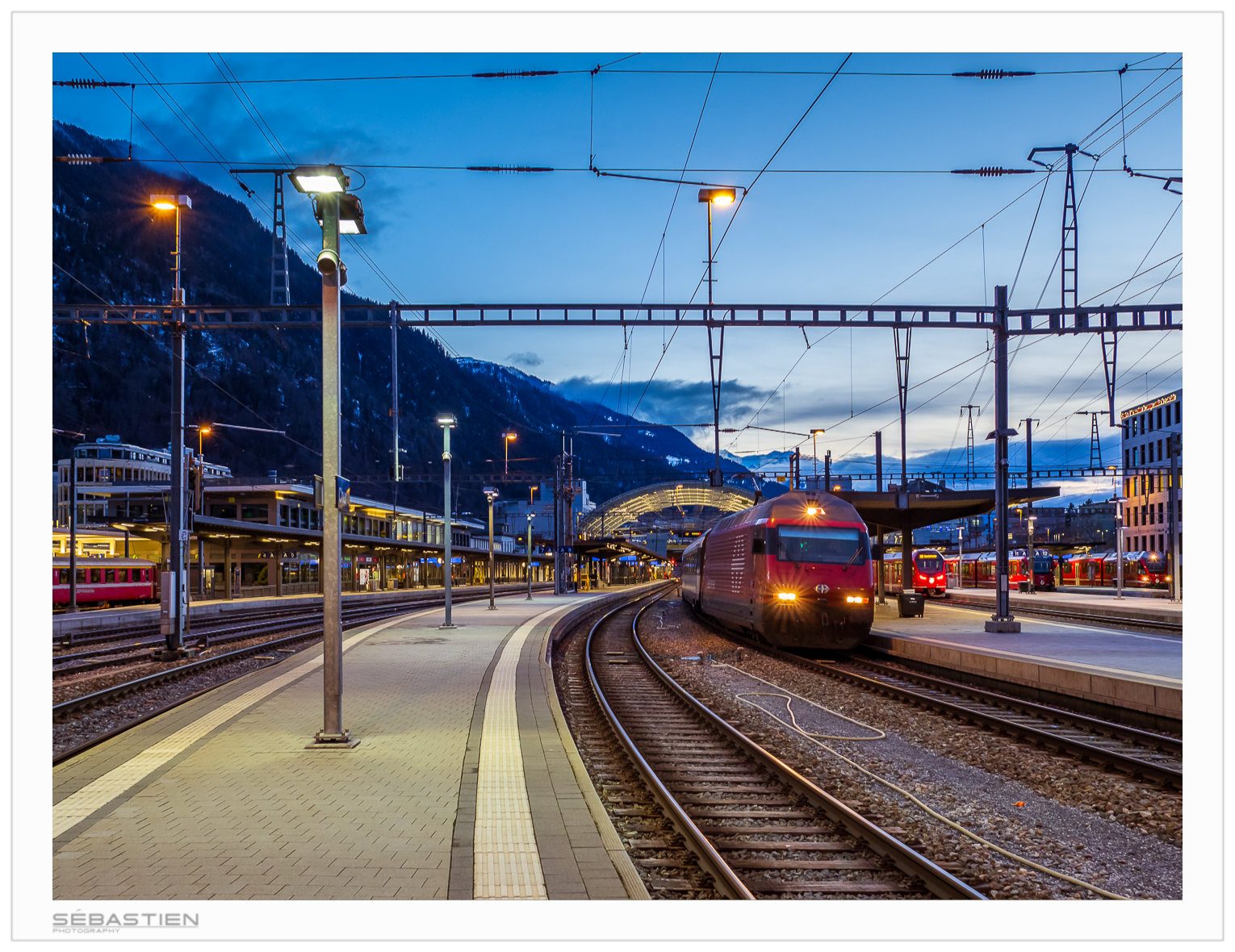
Bahnhofstrasse, 7000 Chur, Switzerland
Major RhB departure point for the longer Bernina Express itinerary.
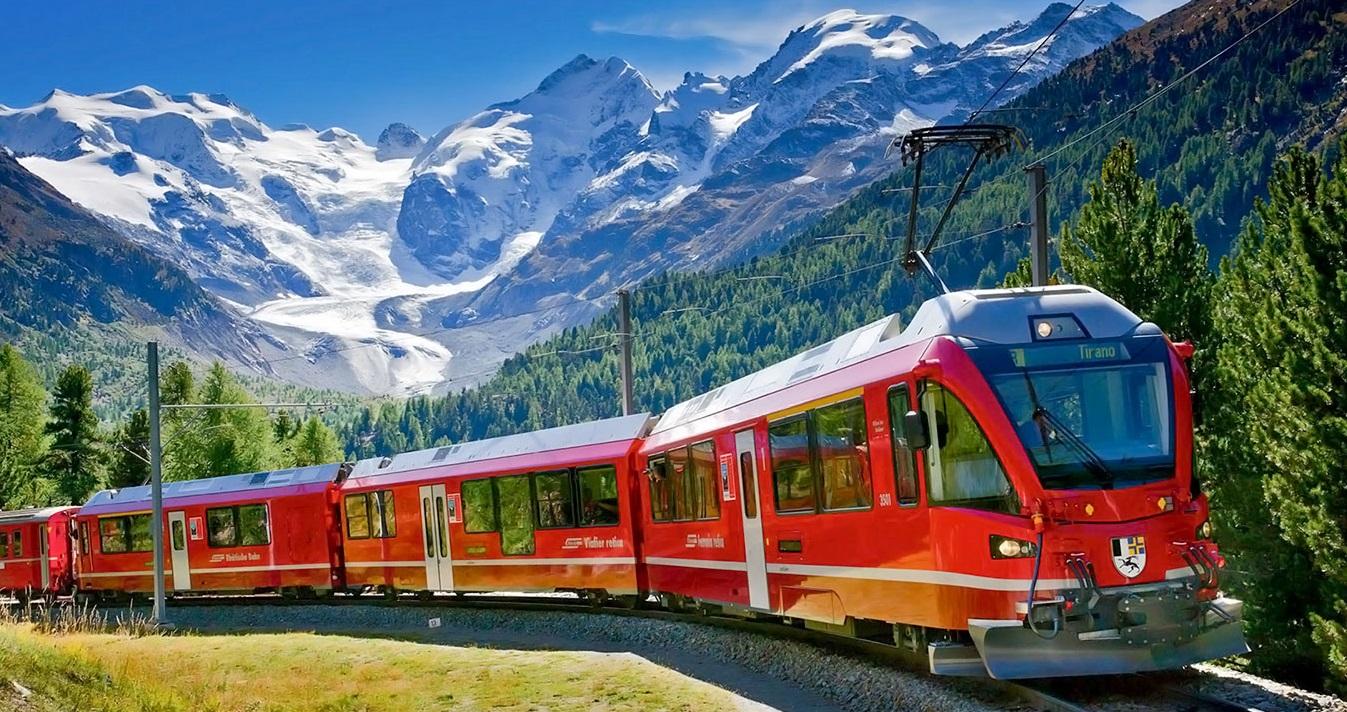
Get directionsThe Bernina line began as a private venture. The Bernina-Bahn-Gesellschaft was founded in 1906, and construction started that same year under engineer Peter Saluz. The section from St. Moritz to Pontresina opened on 1 July 1908. The full run to Tirano followed on 5 July 1910. It was built as a narrow-gauge electric railway from the outset, powered originally by direct current, and it refused rack assistance entirely. Every gradient is worked by adhesion alone, up to 70 per mille — the reason the modern bernina train from milan to swiss alps still climbs in long, patient spirals rather than straight lines. The engineering is visible from the window. The Brusio circular viaduct, a spiral of nine stone arches completed in 1908, exists to shed altitude in a valley too narrow for switchbacks. Ospizio Bernina, at 2,253 metres, remains the highest point crossed by any Alpine railway without a tunnel summit. Early winters nearly ended the enterprise: snow closed the pass repeatedly, the company operated only seasonally at first, and financial collapse forced the Rhaetian Railway to absorb the line in 1943. Year-round service came in 1913, sustained by rotary snow clearance. Branding arrived later. The name Bernina Express was applied in 1973 to a through service linking Chur with Tirano, and panoramic cars with curved glass followed in the 1990s. The decisive turn came on 7 July 2008, when UNESCO inscribed the Albula and Bernina lines as a World Heritage Site — one of only three railways so listed. That designation protects the original masonry viaducts, the Landwasser structure on the Albula section, and the unaltered alignment through the Val Poschiavo. Most bernina train from milan to swiss alps tours now sell the route as heritage rather than transport. What survives is unusually complete. The 1910 trackbed, the stone bridges, the Rhaetian Railway livery in Bernina red. Operators bundling bernina train from milan to swiss alps tickets depart northward from Lombardy, reversing the historic direction. A Bernina red train tour from Milan therefore ends where the builders began, at the glacier line above Poschiavo — the same view a bernina train from milan to swiss alps tour offered its first passengers in 1910.
The Bernina-Bahn-Gesellschaft is founded and construction of the narrow-gauge line begins.
The St. Moritz–Pontresina section opens on 1 July and the Brusio circular viaduct is completed.
The full route to Tirano opens on 5 July, crossing the Bernina Pass by adhesion alone.
Year-round operation replaces seasonal closure after snow clearance methods improve.
Financial difficulty forces the Rhaetian Railway to absorb the independent Bernina company.
The Bernina Express name is introduced for the through service between Chur and Tirano.
Panoramic carriages with curved observation glass enter regular service on the route.
UNESCO inscribes the Albula and Bernina lines as a World Heritage Site on 7 July.
This is the classic framing for the Bernina train from Milan to Swiss Alps, where the viaduct fills the valley in a wide side-on shot. Stand at the official viewpoint near Filisur for a clean look at the arches and try to keep the train centered as it crosses.
Alp Grüm is the best stop for a dramatic cliffside panorama, with the railway curling along the mountain above Valposchiavo. Step out on the station side platforms and shoot toward the valley; the platform edge gives the strongest sense of height.
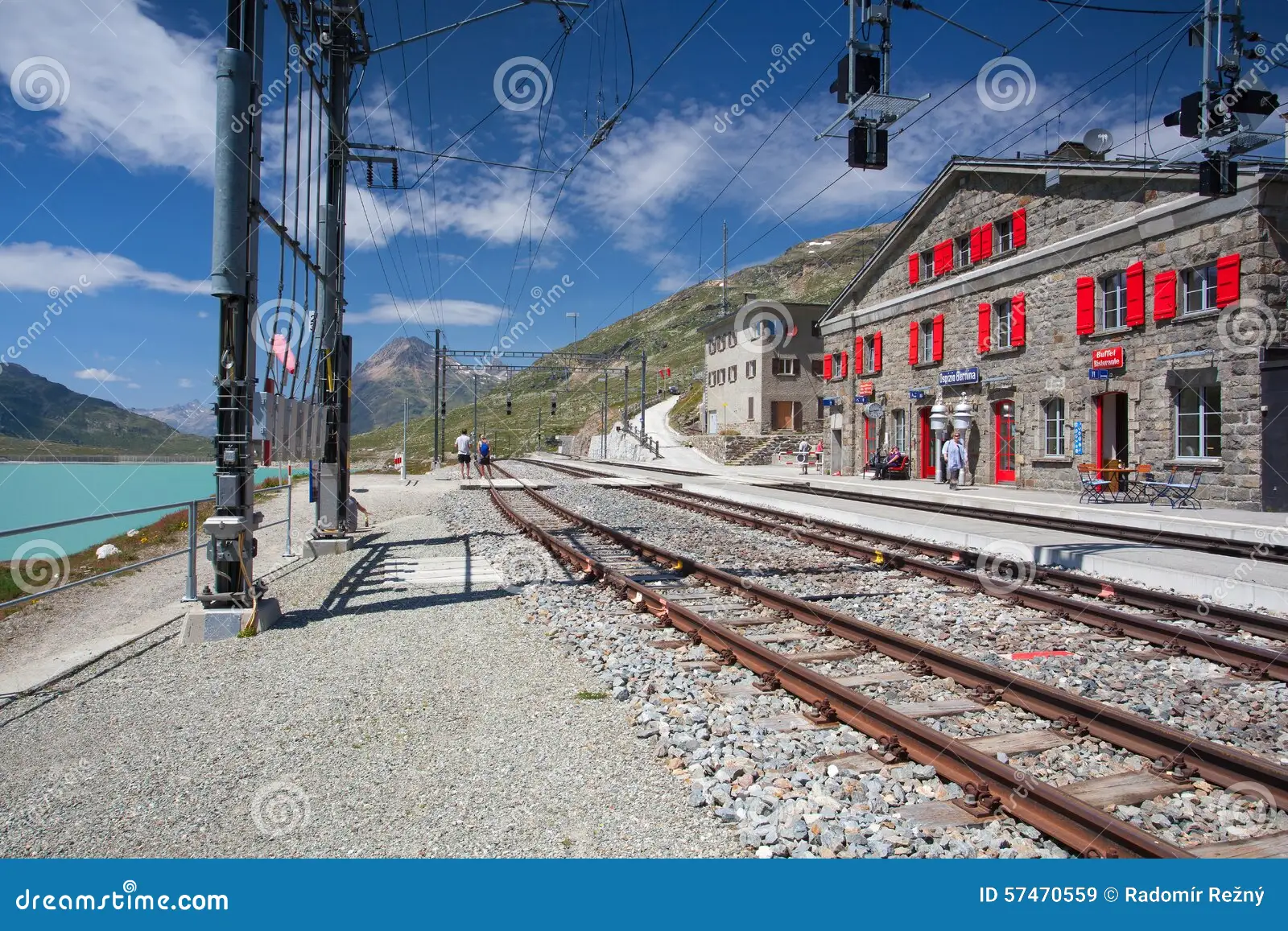
At Ospizio Bernina, the line crests the Bernina Pass and opens onto a high-alpine lake-and-snow landscape. Use the platform or carriage window for a broad sweep of the pass, and expect reflections on panoramic glass when the sun is high.
The Brusio Circular Viaduct is the signature spiral shot on the descent toward Italy, best captured from the hillside just above the curve or from an adjacent field path. The train’s full loop is easier to read from a little distance than from onboard.
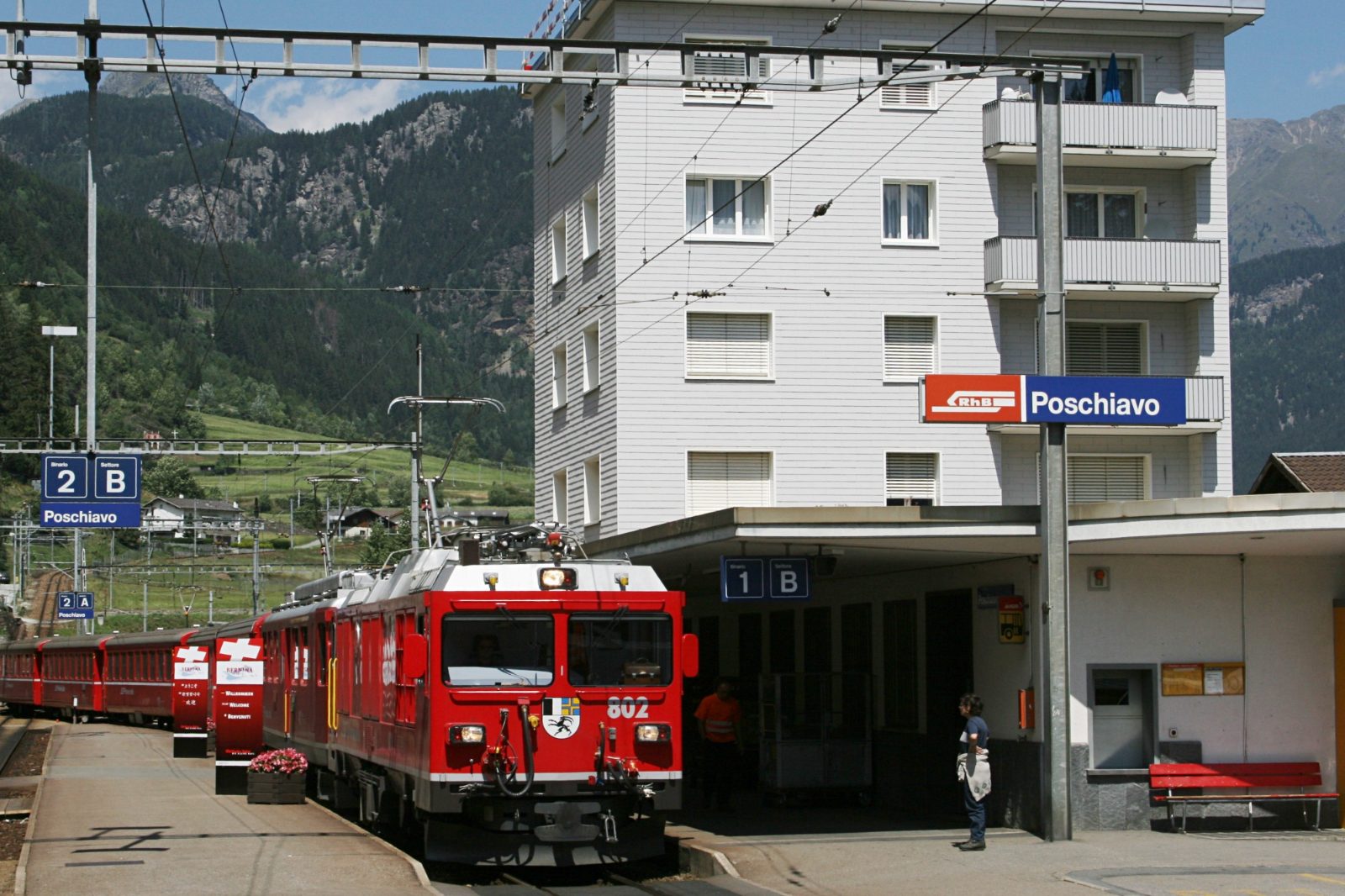
Poschiavo offers a calmer village-and-lake contrast after the high mountains, with church towers, stone streets, and the valley floor in one frame. Stand near the station area or along the approach for a wider composition that shows the train entering the town.
The Tirano approach gives the sharpest change from alpine rail to Mediterranean border-town scenery, with palms, terraces, and the final tracks into Italy. Window seats work well here because the train moves slowly and the views alternate between town streets and the river corridor.
Travelling on the bernina train from milan to swiss alps is easy with kids if you plan around reservations and luggage. The ride is scenic and seated, so the main family task is keeping everyone settled for the climb over the Alps and the transfer in Tirano.
RhB confirms barrier-free support on some Bernina Express services, but not every station or seat setup is equally simple. If you’re bringing a stroller, foldable is the safest choice and you should check the exact connection before booking.
Children under 6 travel free, and ages 6 until the day before 16 pay half fare; the seat reservation is still paid in full. For families, that makes the bernina train from milan to swiss alps tickets easier to budget than many private-day tours.
For family logistics, treat the train as a rail journey rather than a sightseeing bus: pack snacks, wipes, and anything a child needs during the ride. RhB’s official help line is +41 81 288 65 65 if you need to confirm assistance or seating.
Keep the day simple with one main rail segment and a short buffer in Tirano, because the transfer is the part most likely to feel rushed with children. The bernina train from milan to swiss alps tour works best when you avoid stacking extra activities before the departure.
This route is strongest for families who enjoy moving scenery, viaducts, and alpine views from a reserved seat. If you are comparing bernina train from milan to swiss alps tours, choose the option with the fewest changes and the clearest meeting point for kids.
For the bernina train from milan to swiss alps, most visitors eat in Tirano, right by the station, where there are casual pizzerias, wine bars, and a few sit-down trattorie. If you are timing the bernina train from milan to swiss alps tours or checking bernina train from milan to swiss alps tickets, these nearby spots are the easiest lunch or early-dinner stops before boarding.
Refined but still practical for a train-day meal, with regional pasta, wine, and quicker lunch service if you arrive early. It is a strong choice when you want a proper sit-down break without straying far from the station.
Very close to the station and often cited as a smart stop for a compact meal between arrivals and departures. Order local plates or a simple risotto; the room is small, so it works best if you are not rushing.
Handy for travelers staying near the platform, with pizza and relaxed service. It suits an easy, no-detour meal before the Bernina Express, especially if you want food close to the tracks.
A dependable option for pizza and Valtellina specialties, with a view that many rail visitors mention. Go here if you have a little extra time and want a fuller meal rather than a quick snack.
Everything you need to know for your journey
The Bernina train from Milan to Swiss Alps is treated as always open in this listing, with hours set to 00:00–23:59 every day. The attraction itself is a ticketed train, so there is no gate-style entry time. Yes. The weekly hours are identical from Monday through Sunday, so there is no weekly closure shown here for the Bernina train from Milan to Swiss Alps. Entrance is 0 CHF because this is a ticketed train rather than a gated attraction. Seat reservations and transport tickets are separate, so the journey cost depends on the exact itinerary you buy. The best arrival window is 07:30–08:15, which is late enough to respect the listed opening hours and early enough to catch the first main departure. That timing also helps avoid the heaviest crowds. Yes, but access must be arranged through RhB Railservice. Some seats are wheelchair-accessible, and boarding assistance needs advance coordination with the SBB Call Center Handicap. Yes. Luggage racks are on board, but space is limited, so smaller bags are easier to manage. For large items, RhB provides a baggage delivery service as an alternative. Yes. Food and drinks are served at seats, and RhB says onboard payments are cashless. That makes cards or contactless payments the safest option for the Bernina train from Milan to Swiss Alps. Yes. Small dogs up to 30 cm shoulder height travel free in a transport box, while larger dogs need a valid dog ticket. Because the route crosses the border, carry the documents needed for international travel. Seat reservations for Bernina Express services are separate from the rail ticket, and RhB states a CHF 500.00 fee for changing the travel date or rebooking an entire group from one Bernina Express train to another Bernina Express train. That makes it important to confirm details before purchase. Children under 6 travel free, and children from 6 until the day before their 16th birthday pay half fare. The seat reservation supplement is charged in full for everyone, so family trips should be booked with that in mind. You can combine the ride with Tirano, St. Moritz, Chur, Pontresina, or Poschiavo depending on your route. The wider Bernina landscape also connects to the Landwasser Viaduct and the UNESCO-listed RhB mountain rail scenery.
Please contact us for more information.
One of Switzerland’s most recognizable rail landmarks, this 65-metre-high viaduct is part of the RhB UNESCO World Heritage landscape. It is not on the Milan-to-Tirano end of the route, but it is central to the wider Bernina experience.
This high-alpine lake sits near the Bernina Pass and gives the route its bright, open mountain character. The stark water and surrounding snowfields are among the most photographed parts of the line.
The glacier is one of the signature natural scenes seen from the Bernina corridor. It gives the journey its high-alpine scale and is especially striking in clear summer weather.
The highest point on the Bernina line sits on the railway itself, making it a key summit reference for the trip. The station area is known for thin air, snow, and wide views over the pass.
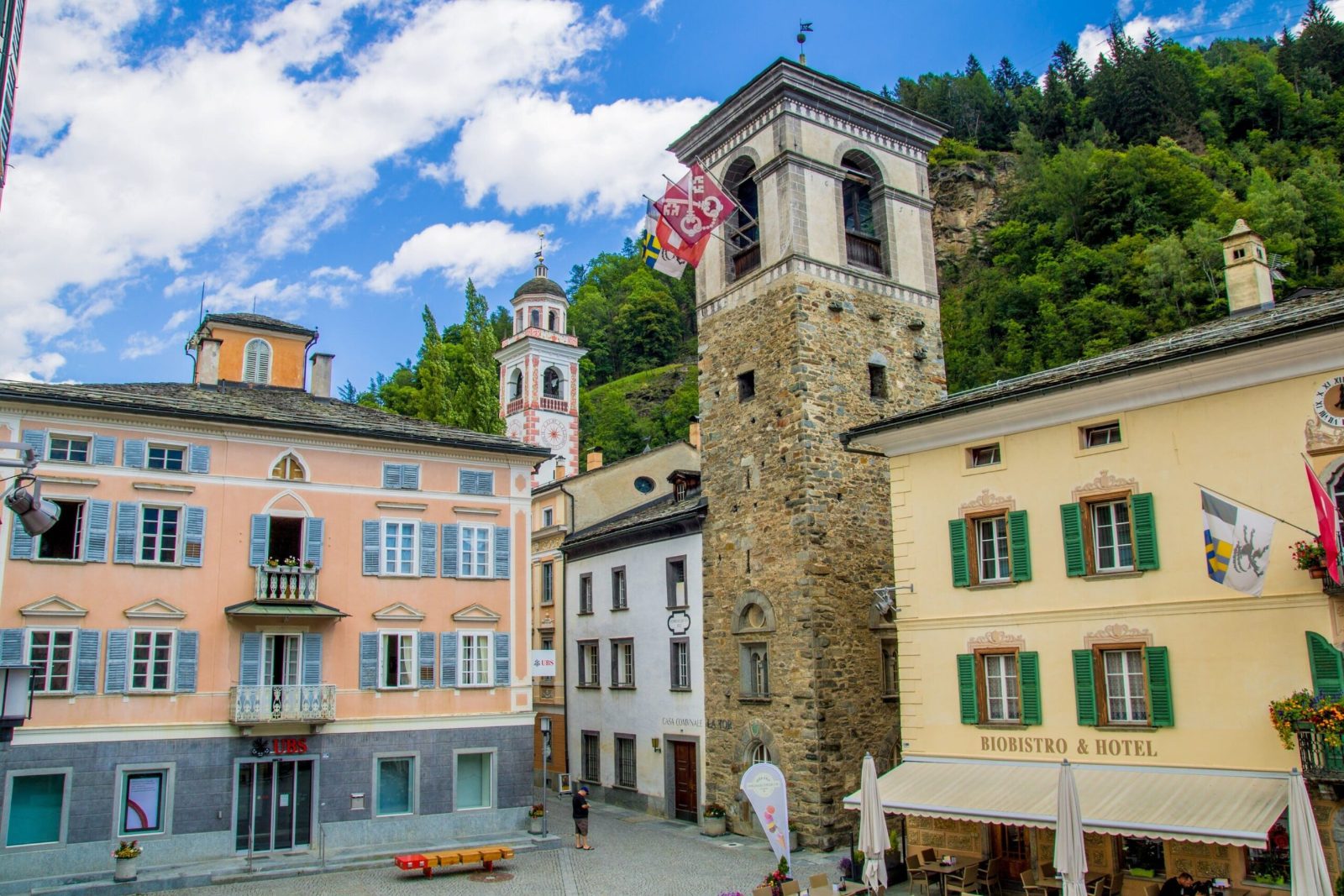
A compact Valposchiavo town center that gives a contrasting lower-valley atmosphere after the alpine section. The streets and architecture are useful for a brief stop if you are extending the route south.
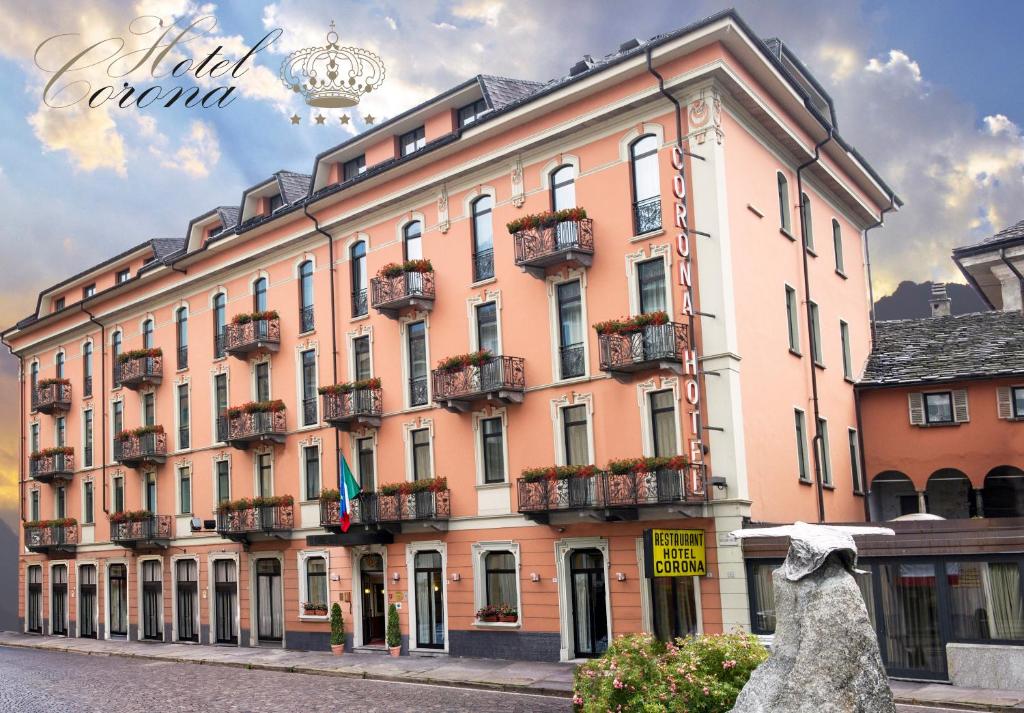
A practical station-area stay in Tirano for travelers connecting to the Bernina route. Good for early departures and simple overnight logistics.
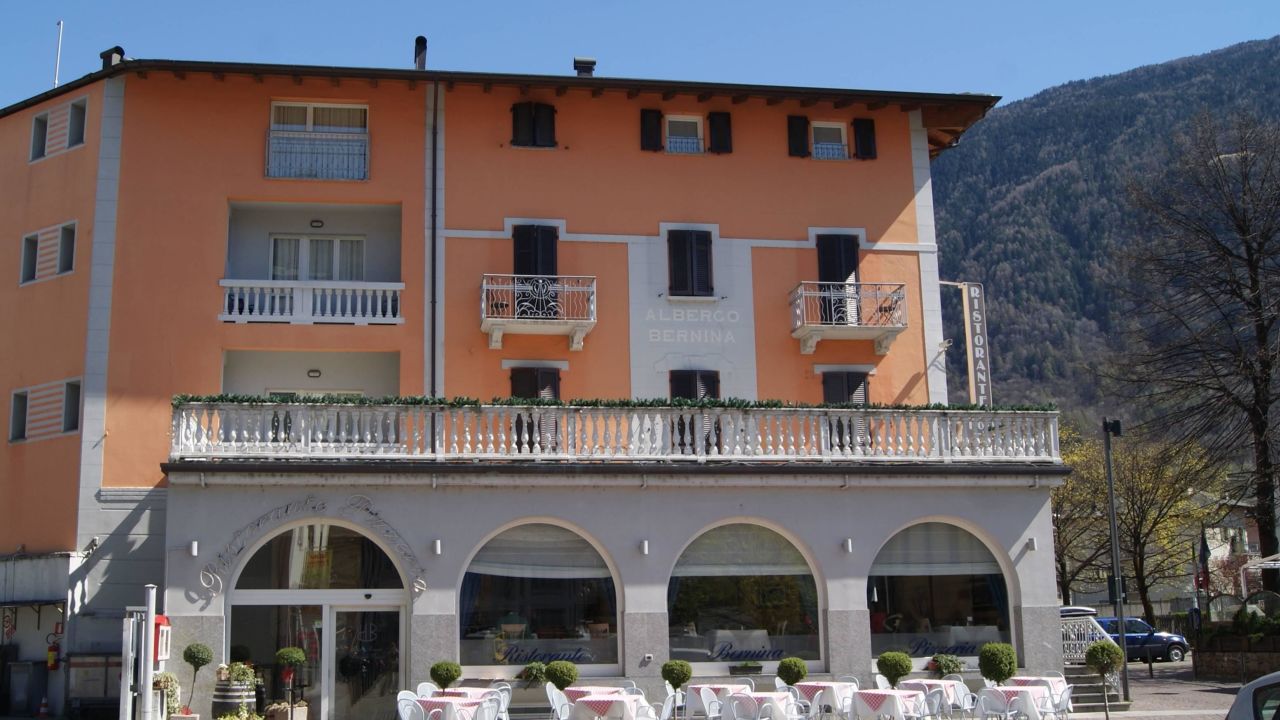
A smaller hotel option near the center of Tirano, useful if you want a more traditional stay before or after the train ride. The location works well for walking to the station.
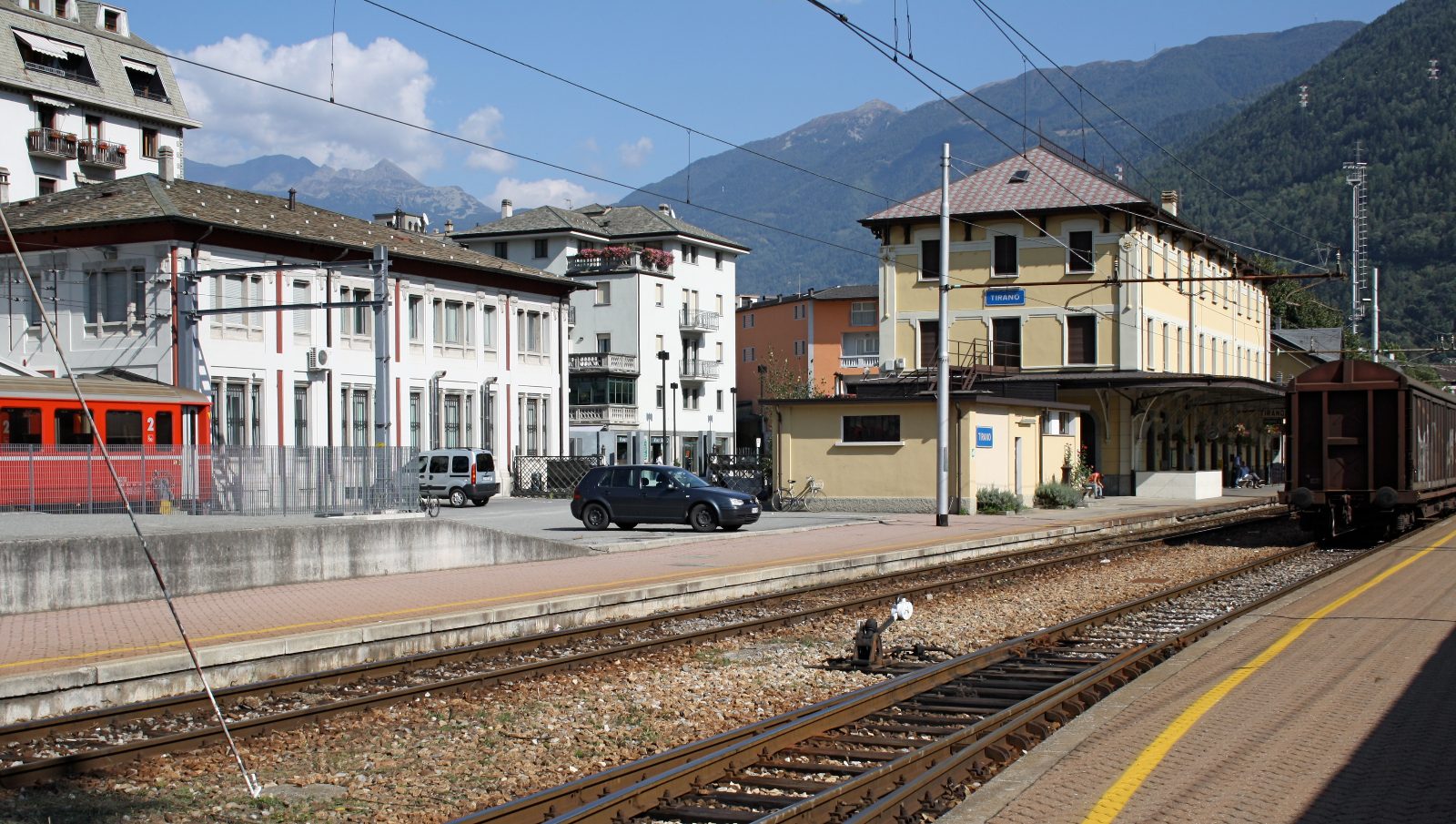
Best for travelers who want the shortest possible transfer to the Bernina departure point. It is the simplest choice if your schedule is tightly tied to the train.
Useful for travelers starting the route in Switzerland and wanting easy access to the platform. The area also gives quick access to onward rail connections.
Join thousands of happy travelers who have discovered this incredible experience
Book Your Experience Now