Quick answer
Yes — but only on clear days, and what you see is the southern edge of the range rather than the high Swiss interior. The Po Valley haze hides the horizon for much of the year. Travellers who want the peaks up close ride north instead: the Bernina Express departs from Chur, where the station ticket counters open at 07:00 on weekdays.
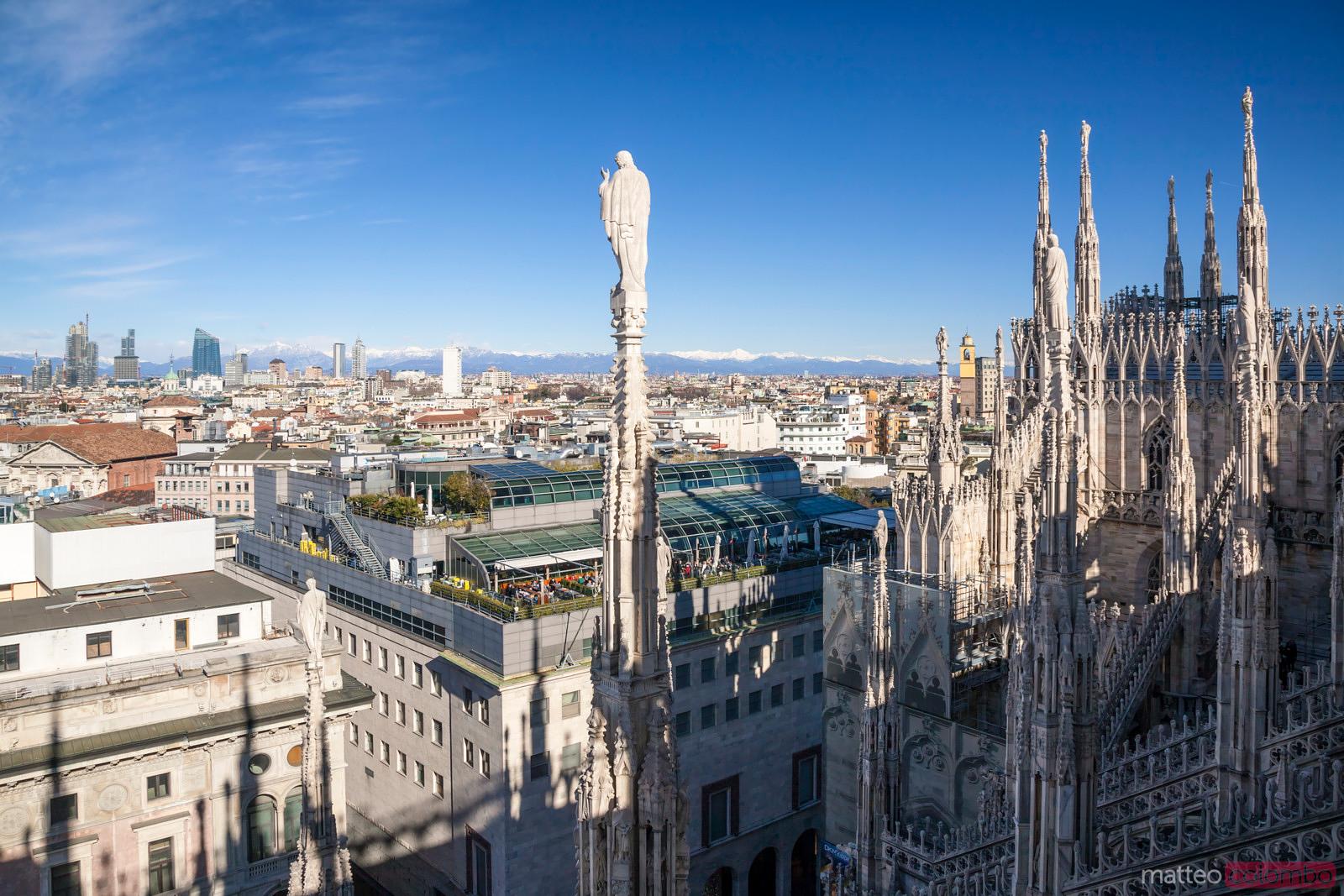
The Duomo's roof terraces were designed for prayer, not panoramas, yet on a scoured winter morning they offer one of Italy's longest sightlines. Monte Rosa, the second-highest massif in the Alps, stands about 90 kilometres northwest of the cathedral. That is the honest scale of the question can you see the swiss alps from milan: the mountains are genuinely there, geographically speaking, but the Po Valley sits under an inversion layer for much of the year, and humidity smears the horizon into grey. Visibility, not distance, is the limiting factor. What the city offers is a silhouette. What travellers usually want is the range itself — glaciers, viaducts, snow at eye level. This is where the Rhaetian Railway enters the picture. The Bernina Express runs from Chur through the Albula and Bernina lines, a UNESCO World Heritage stretch of engineering that includes the Landwasser Viaduct and the Brusio spiral viaduct, climbing to 2,253 metres at Ospizio Bernina before dropping into the Italian-speaking Valposchiavo. It is the highest transalpine railway crossing without a summit tunnel, which means the scenery is not glimpsed but travelled through. The practical geography matters here. Tirano, the Italian terminus, sits at the southern end of the line and is reachable from Milano Centrale on regional services, which is why so many Milan-based itineraries treat the panoramic journey as a day trip rather than a separate holiday. The Chur station office at Bahnhofplatz 1 answers on +41 81 288 65 65 and keeps 07:00–19:00 hours Monday to Friday, 07:30–18:00 on Saturday and Sunday. There is no entrance fee to the railway — 0 CHF — though a train ticket and a seat reservation are both required to ride, and the panoramic carriages fill quickly in summer. The answer to can you see the swiss alps from milan therefore splits in two directions. Readers planning around the city skyline should treat any alpine sighting as a bonus of atmospheric luck. Readers planning around the mountains themselves should treat Milan as a staging post and build the day around the northbound departure, arriving between 08:00 and 10:00 for the clearest light and the sharpest views of the peaks. Milan landmarks reward a slow afternoon; the Alps reward an early start. Most Swiss Alps day trip itineraries from Milan fail on the second point rather than the first.
“The mountains are genuinely there — visibility, not distance, is the limiting factor.”
Can You See the Swiss Alps from Milan? Myths vs. Reality
Many visitors arrive in Milan believing the snow-capped summits visible on the horizon are the deep Swiss Alps. In reality, geography and urban layout hide these distant ranges, making a trip toward the border necessary to view them.
MythThe Swiss Alps are visible from any street in Milan.
FactDense urban infrastructure blocks the northern horizon at ground level. You must visit elevated structures to catch a distant glimpse of the Monte Rosa massif on the Swiss-Italian border.
MythEvery peak visible from Milan belongs to Switzerland.
FactThe mountains lining the northern horizon are primarily the Italian pre-Alps and the Swiss-Italian border peaks. The deep Swiss Alps are located much further north and are physically blocked by these front ranges.
MythYou can view the Bernina Express route from the city center.
FactThe Bernina Pass and its surrounding glaciers sit deep in the Swiss Alps, completely out of sight from Milan. You must travel to Tirano to board the train and access these high-altitude vistas.
MythYou must cross the border to Switzerland to see any alpine peaks.
FactYou can see the Italian pre-Alps and the Monte Rosa massif without leaving Italy. However, experiencing the famous Swiss glaciers requires traveling north by train or road.
Best Viewpoints: Where Can You See the Swiss Alps from Milan?
Duomo Terraces (Terrazze del Duomo)
Position your camera near the northern spires to frame the distant snowy peaks of the Alps behind the cathedral's Gothic details. Access requires a ticket via lift or stairs.
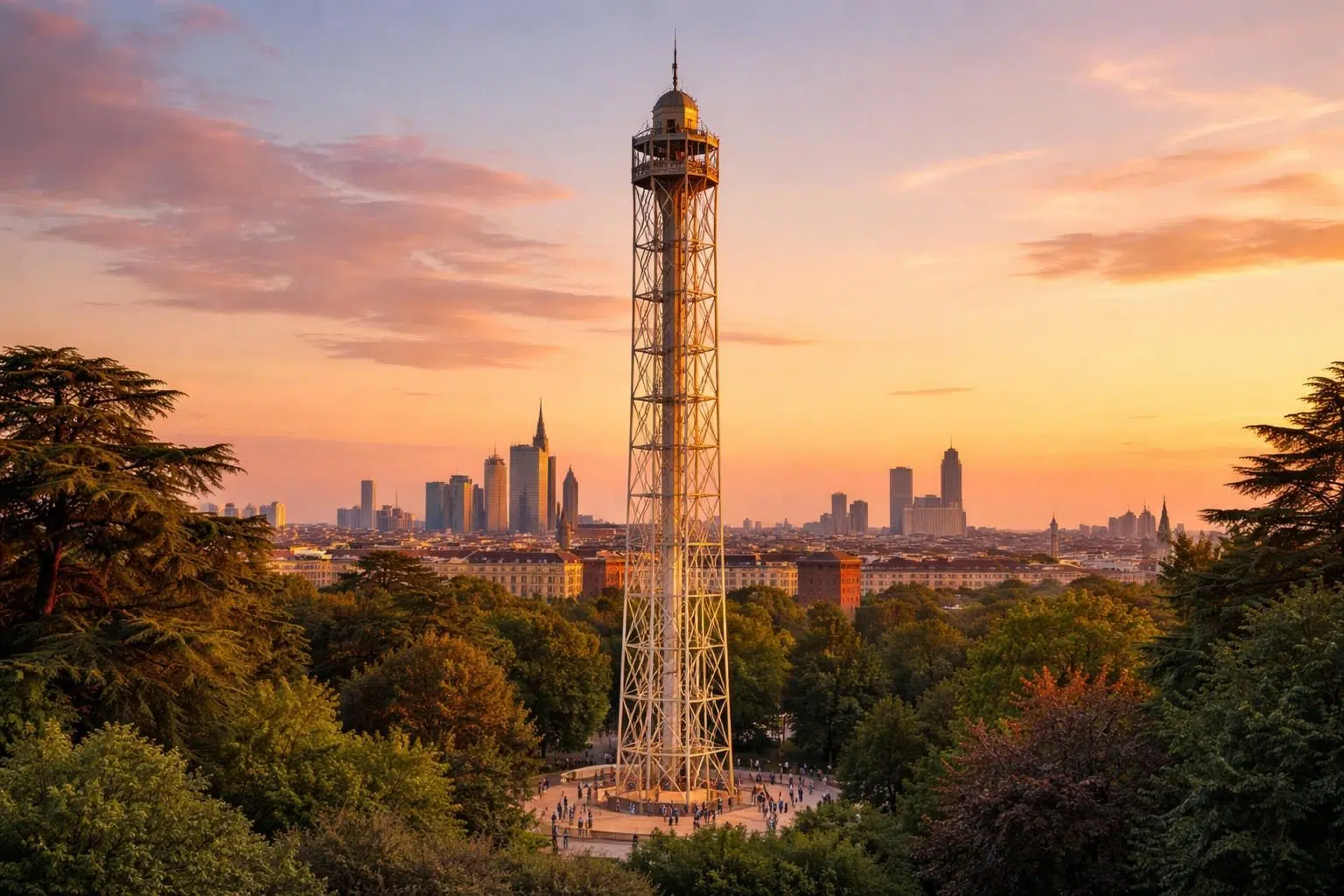
Torre Branca
Head to the top of this 108-meter steel structure in Parco Sempione for an elevated view looking north toward the Alps. A timed ticket grants elevator access to the observation deck.
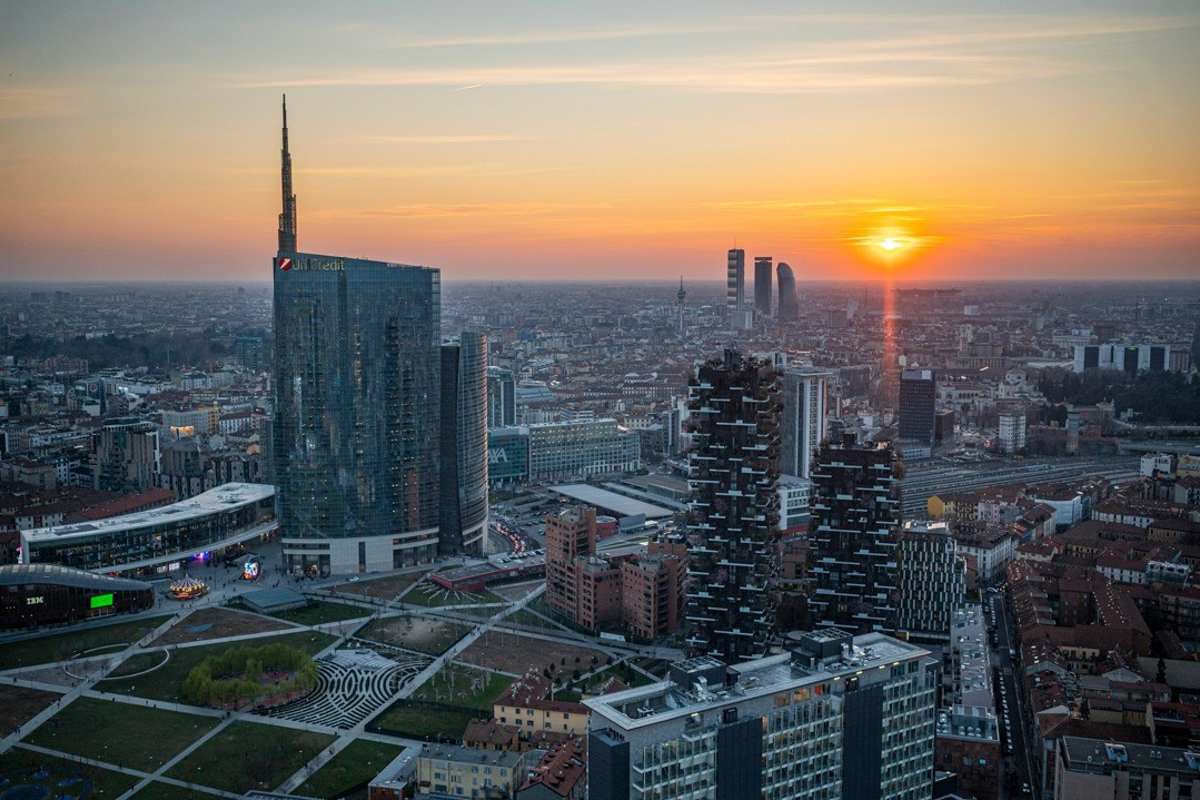
Palazzo Lombardia Belvedere
Capture panoramas of the city and the northern mountains from this 39th-floor observation gallery. Access is limited to specific open days or scheduled weekend slots.
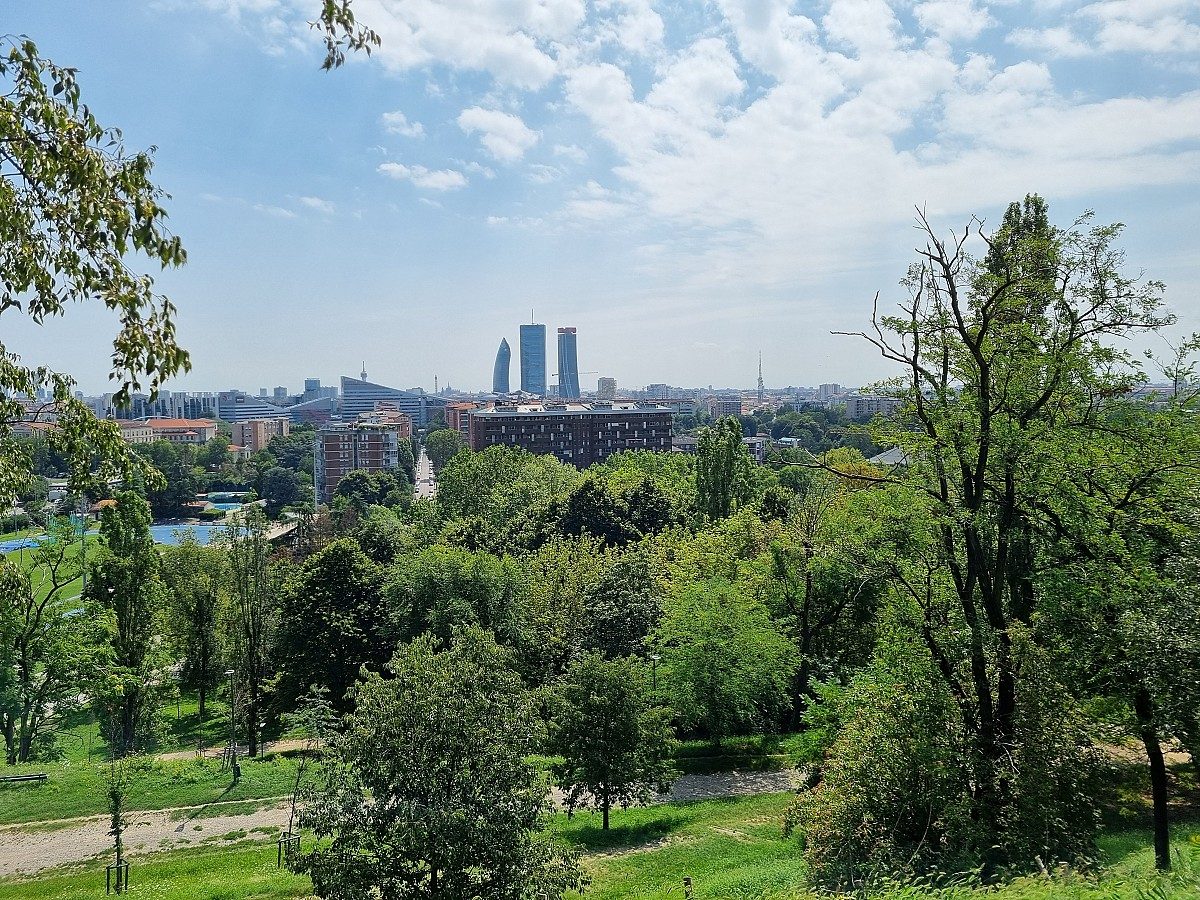
Monte Stella (Montagnetta di San Siro)
Walk up the paths of this artificial park hill in northwest Milan to photograph the skyline against the mountain backdrop. Access is free and open to the public daily.
The Best Weather: When Can You See the Swiss Alps from Milan?
The optimal window to view the Swiss Alps from Milan is during the winter and early spring months. Clear visibility relies on specific weather conditions that sweep away the Po Valley smog.
Winter (December to February)
Moderate city crowds, fewer tourists0°C to 8°C, dry and cold
Low humidity and frequent northern Föhn winds clear the Po Valley smog. Morning hours offer the highest clarity of the snow-covered peaks.
Spring (March to May)
Increasing visitors, busy holiday weekends10°C to 20°C, highly variable
Rain showers are common but leave behind exceptionally clear skies. The morning after a storm provides sharp visibility.
Mornings after rain
Standard weekday or weekend traffic—
Precipitation washes atmospheric dust and pollution out of the air. The subsequent morning offers some of the sharpest conditions for viewing the Alps.
Active Föhn wind days
Average daily commuter crowds—
These dry northern winds push the Po Valley smog away. The resulting low humidity creates ideal conditions to see the distant peaks.
Verdict: The best slot is a winter morning between 08:00 and 10:00, specifically on a day following heavy rain or during active northern Föhn winds.
Taking the Train: Can You See the Swiss Alps from Milan on the Bernina Express?
The Bernina Express is the primary rail connection linking Italy directly to the Swiss Alps, starting from Tirano and ending at Bahnhofplatz 1 in Chur. To access this route from Milan, travelers start with a regional connection heading north toward the Italian-Swiss border before boarding the panoramic train.
Trenord Regionale from Milano Centrale to Tirano
Bernina Express from Tirano to St. Moritz
Bernina Express from Tirano to Chur (Bahnhofplatz 1)
SS36 and SS38 highways from Milan to Tirano station
Essential Tips for Maximizing Your Alpine Views
Maximize your views of the Swiss Alps by planning your seat selection and timing ahead of departure.
Select the correct carriage side
For the northward journey starting from Tirano, reserve seats on the left side of the carriage. For the southbound journey starting from Chur, choose the right side to get clear views of the Landwasser Viaduct and Lago Bianco.
Minimize window reflections
Wear dark-colored clothing to prevent your garments from reflecting in the large panoramic glass windows. Alternatively, ride the regional carriages that have drop-down windows that open fully for photography.
Aim for morning departures
Plan your travel during the best arrival window of 08:00–10:00. Morning departures provide the best lighting and clearest views of the Alps.
Consult live mountain webcams
Check the official Rhaetian Railway webcams at Ospizio Bernina and Alp Grüm before departing. This provides real-time updates on cloud cover and visibility.
Utilize open-air summer cars
During summer, ride the yellow open-air carriages attached to select regional trains. These cars require no seat reservations and offer unobstructed views without glass glare.
Verify seat booking requirements
While the entrance fee is 0 CHF, a train ticket and seat reservation are required to ride. Book these well in advance on the official site at https://www.rhb.ch/en/panoramic-journeys/bernina-express.
Alternative Views: Alps Day Trips Closer to Milan
If you want to experience Alpine scenery without the long travel time to the Swiss border, several northern Italian destinations offer alternative views. These lakeside towns sit at the foot of the mountains and are easily reachable by direct train from Milan.
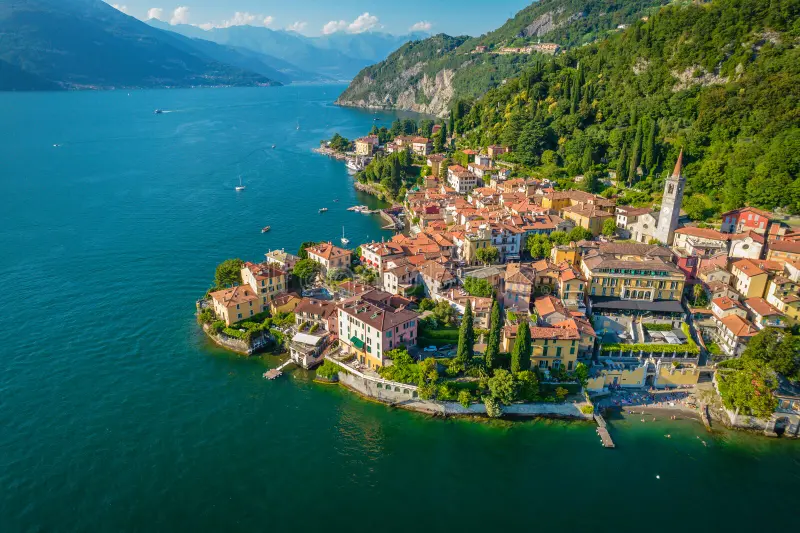
Varenna (Lake Como)
This lakeside village sits on the eastern shore of Lake Como, offering clear views of the Prealps rising straight from the water. It serves as an accessible option for travelers seeking classic mountain-and-lake scenery on a shorter day trip.
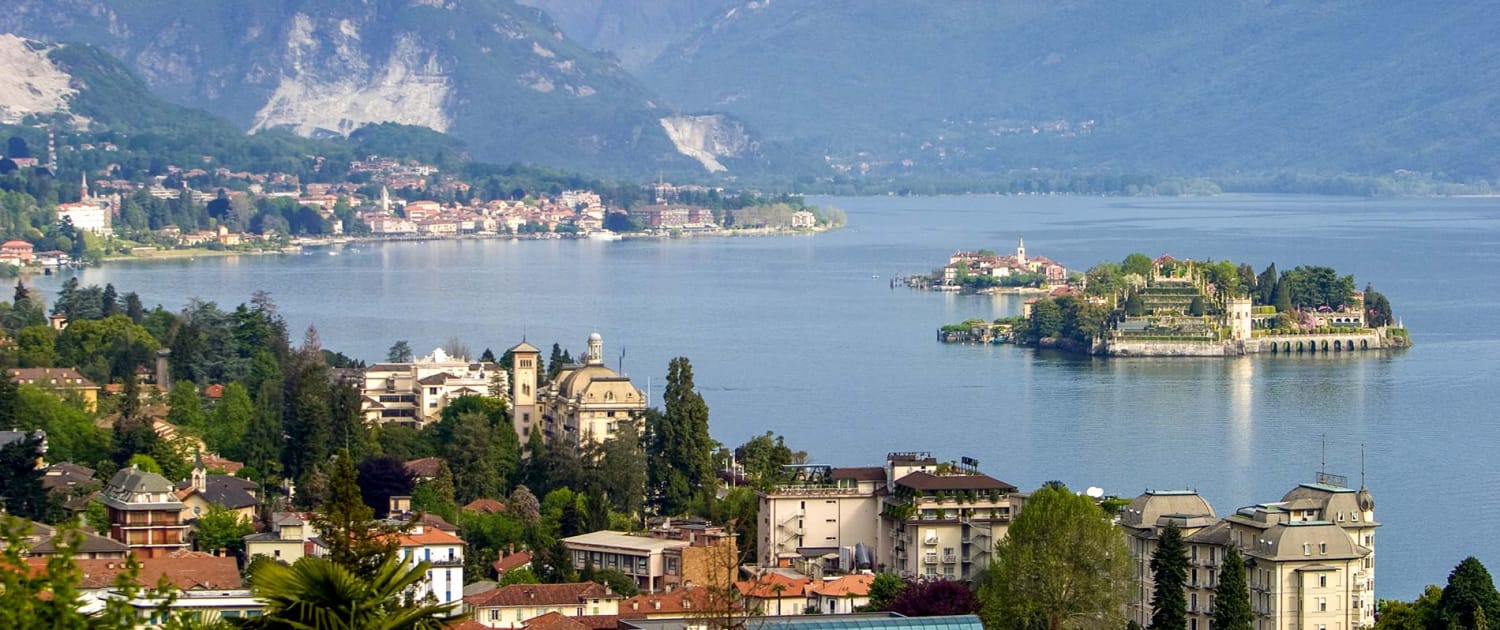
Stresa (Lake Maggiore)
Located on Lake Maggiore, Stresa offers views of the surrounding Piedmontese Alps and serves as the gateway to Mount Mottarone. You can view the mountain ranges from the lakeside promenade or take local transport up for panoramic vistas.
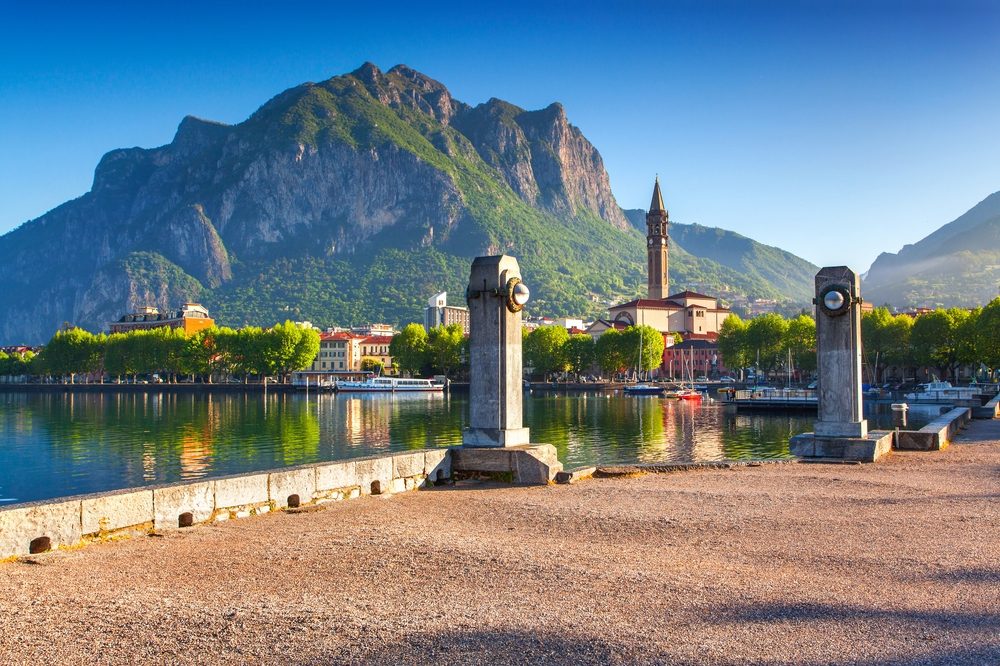
Lecco (Lake Como)
Situated on the southeastern branch of Lake Como, Lecco is surrounded by the jagged limestone peaks of the Grigna and Resegone mountains. It offers a dramatic Alpine setting and hiking trails closer to Milan than the Swiss border.
Check availability
FAQ: Can you see the swiss alps from milan
Everything you need to know about can you see the swiss alps from milan