11 hr
Swiss Alps & Bernina Red Train Day Trip from Milan
- Expert local guide
- Small group
- Skip-the-line access
- Free cancellation
Milan To Swiss Alps Train Tour — Bernina Express Reserved Seats
Milanese fog at dawn, glacier light by noon.
Compare fares, pick the fit — all bookings are mobile-voucher and eligible for free cancellation where shown.
11 hr
13 hr
12 hr
Planning a classic milan to swiss alps train tour requires deciding between standard regional carriages and official panoramic cars. Both options travel the same Tirano to St. Moritz train route, but their seating rules differ. Before booking, it is essential to compare the official milan to swiss alps train tour tickets to understand what is included. Regional trains offer openable windows for photography, whereas dedicated panoramic trains focus on wide views. These details are crucial when evaluating various milan to swiss alps train tour tours.
| Regional Train Standard Coach |
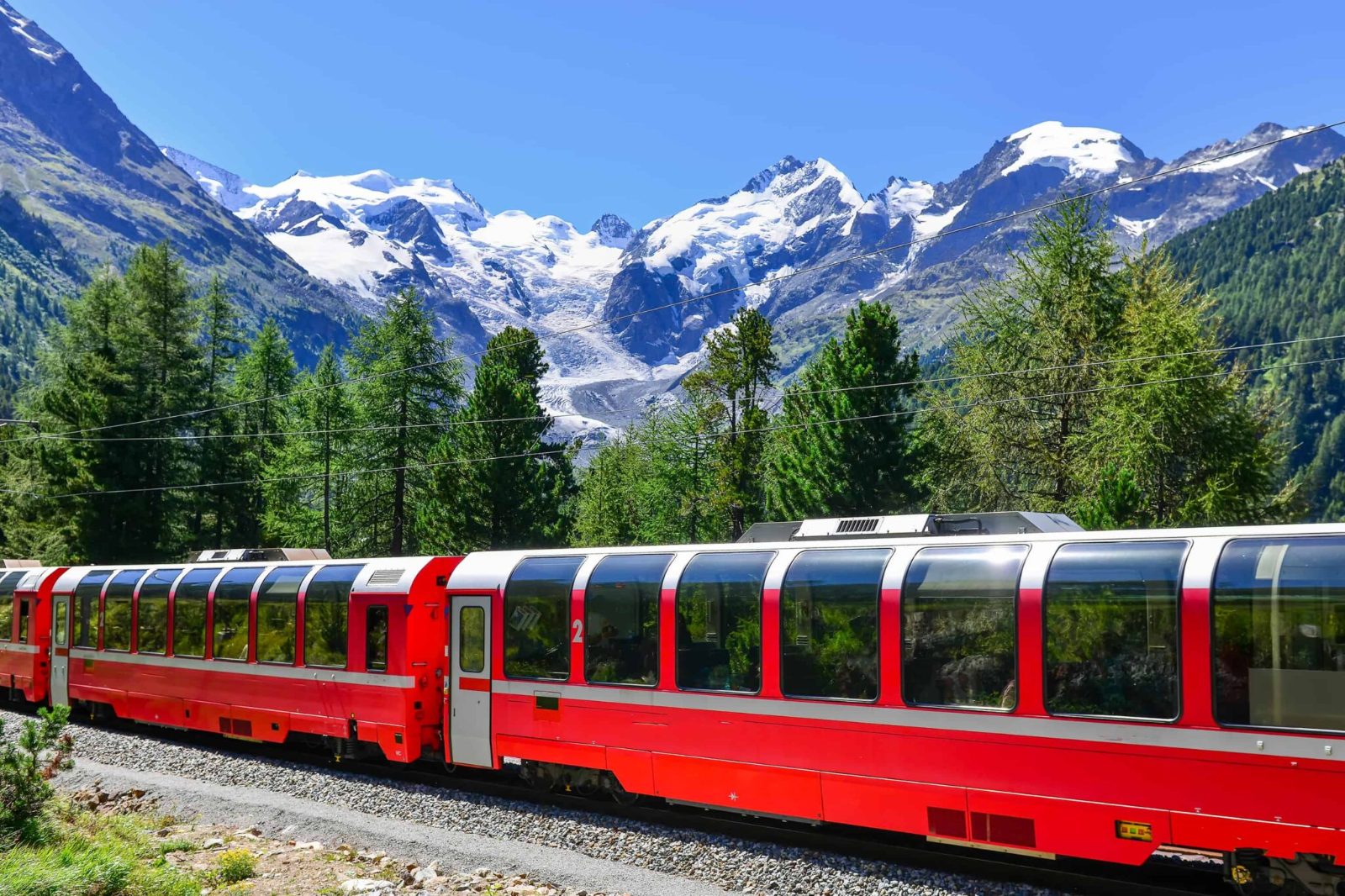
Top pick Bernina Express Panoramic Coach |
Pullman Class Historical Carriage | |
|---|---|---|---|
| Window Style | Standard openable glass | Large curved panoramic domes | Classic openable salon windows |
| Base One-Way Fare | 33 CHF (2nd class standard) | 33 CHF (excluding mandatory reservation) | Premium all-inclusive package |
| Seat Reservation | Optional (CHF 5) | Mandatory (CHF 32 to CHF 36) | Included in premium fare |
| Onboard Service | No catering or guide | Minibar cart & digital guide | Hostess service & multi-course dining |
| Ticket Flexibility | Travel on any regional connection | Bound to specific reserved train | Bound to specific excursion date |
| Best For | Budget travelers and photographers | First-time panoramic sightseers | Luxury and vintage rail enthusiasts |
| See tickets & prices |
Verdict: For the majority of first-time visitors, reserving a seat on a scheduled milan to swiss alps train tour tour provides the most comfortable journey. This option ensures you enjoy the mountain views without worrying about connections.
Worth it for scenery-first travellers, not rushers
The base rail fare is 33 CHF for a 2nd class one-way Tirano to St. Moritz ticket, and every packaged milan to swiss alps train tour on this page bundles that leg with coach transfers, so you are paying mainly for logistics rather than a different view. What you get for the outlay is the Rhaetian Railway's UNESCO-listed Albula/Bernina line: the Brusio spiral viaduct, Bernina Pass at 2,253 metres, the Morteratsch glacier front and Lago Bianco, all from panoramic carriages with no driving. The milan to swiss alps train tour tickets pay off for photographers, rail enthusiasts and anyone visiting Lombardy without a car. They pay off less for families with restless small children or travellers who dislike long coach stretches. Options such as the Lake Como cruise combination stretch the day further; the straight St. Moritz and Bernina Express scenic day tour keeps it tighter.
Bottom line: Book the milan to swiss alps train tour tours if alpine railway engineering and glacier views justify a full day in transit — otherwise your time in Lombardy is better spent elsewhere.
Choosing the right milan to swiss alps train tour tour helps you select the ideal journey along the UNESCO-listed Rhaetian Railway. If you want a Milan Swiss Alps rail day trip with curved glass roofs and a dedicated tourist experience, the Bernina Express is the premier option, whereas the standard red train serves those desiring absolute flexibility.
|
Top pick Bernina Express |
Regional Red Train | |
|---|---|---|
| Window Style | Curved panoramic windows (sealed) | Standard opening windows |
| Seat Reservations | Mandatory (extra fee) | Optional (no fee required) |
| Ticket Flexibility | Fixed departure time only | Hop-on hop-off all day |
| Price | From 65 CHF (with reservation) | 33 CHF (base fare only) |
| Onboard Atmosphere | Touristic, audio guides | Local feel, relaxed |
| See tickets & prices |
Verdict: Securing milan to swiss alps train tour tickets for the Bernina Express guarantees a reserved seat and access to the famous panoramic carriages. For budget travelers and photographers who want opening windows to capture the alpine landscapes without glare, the regional train offers a more flexible alternative. This makes it easy to customize your trip and connect with local milan to swiss alps train tour tours along the route.
Hand-picked experiences loved by thousands of travelers
12 - 13 hours
Free Cancellation
Cross the Swiss Alps on the iconic Bernina Express train and explore the glamorous resort of St. Moritz.
12.5 hours
Free Cancellation
Journey through spectacular alpine landscapes on the legendary Bernina Express and explore the upscale resort of St. Moritz.
13 hours
Free Cancellation
Journey from Italy into the Swiss Alps on the iconic Bernina Red Train, with free time in St. Moritz.
12.5 hours
Free Cancellation
Experience the spectacular Swiss Alps, ride the UNESCO-listed Bernina Express, and visit Lake Como and St. Moritz.
13 hours
Free Cancellation
Embark on a scenic rail journey through the Swiss Alps to the luxury resort of St. Moritz.
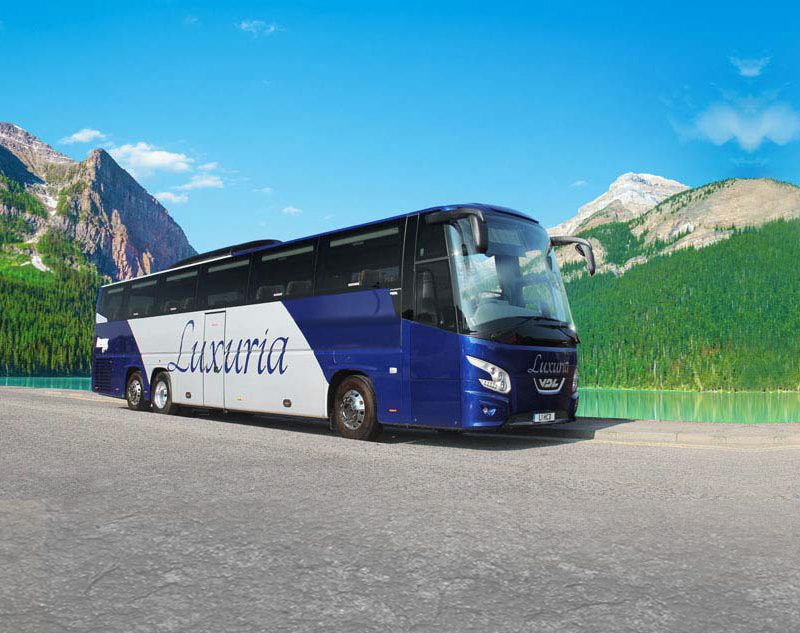
Travel north from Milan Central toward the Italian-Swiss border by road, watching the flat plains transition into steep alpine foothills.
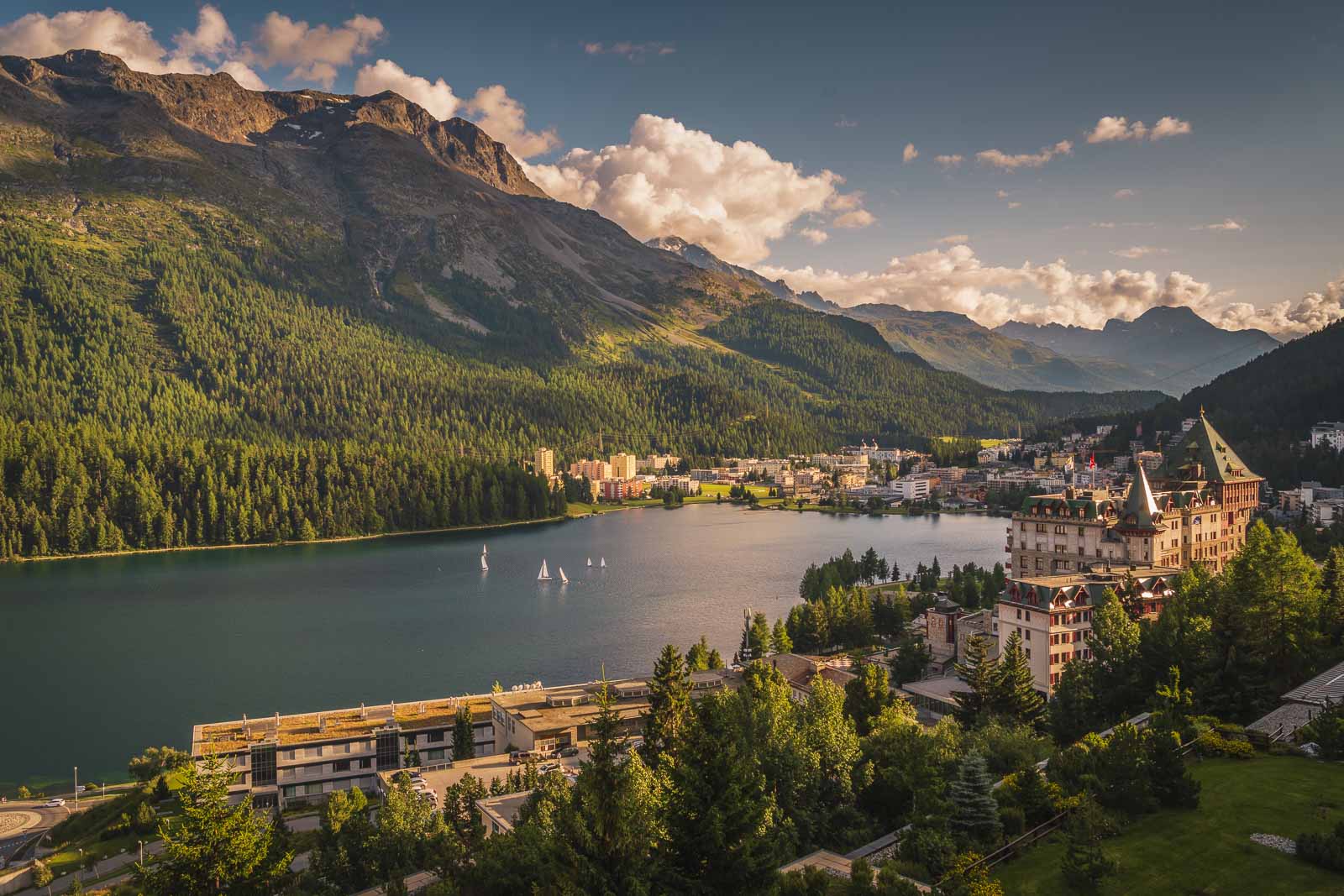
Enjoy free time to explore the streets and lakeside paths of this famous resort town during your Milan St. Moritz day excursion.
Depart St. Moritz on the panoramic train, climbing over the Bernina Pass and descending past glaciers toward Italy.
Stroll through the historic streets of Tirano and enjoy a quick coffee or snack before your return journey.
Board the motorcoach for a relaxing drive back to Milan, arriving in the evening.
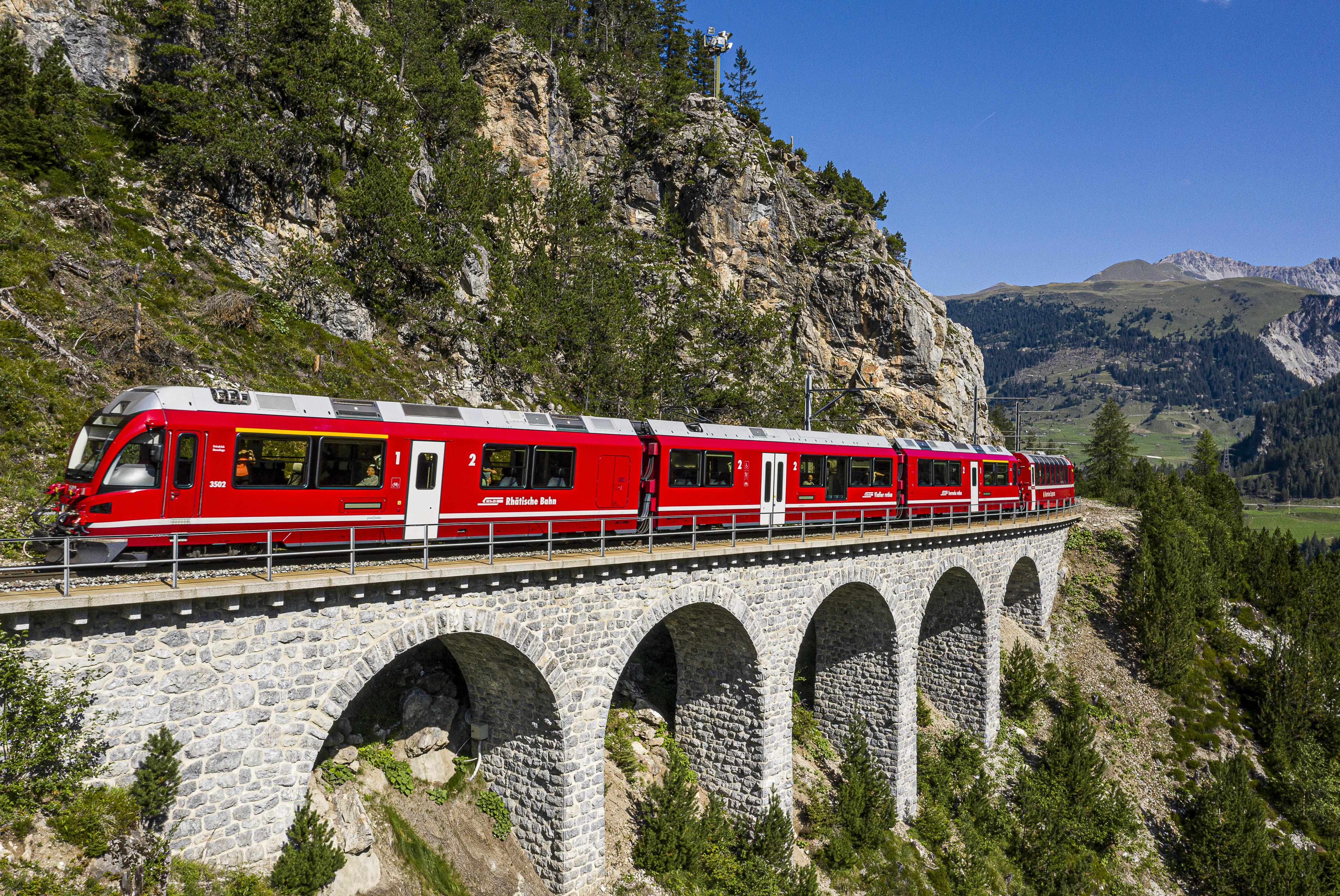
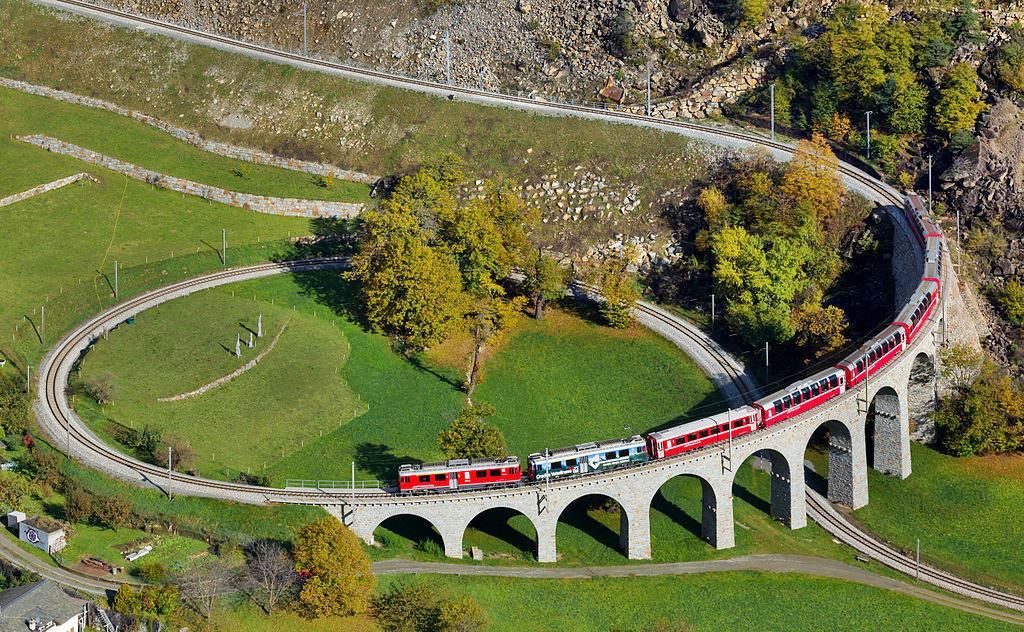
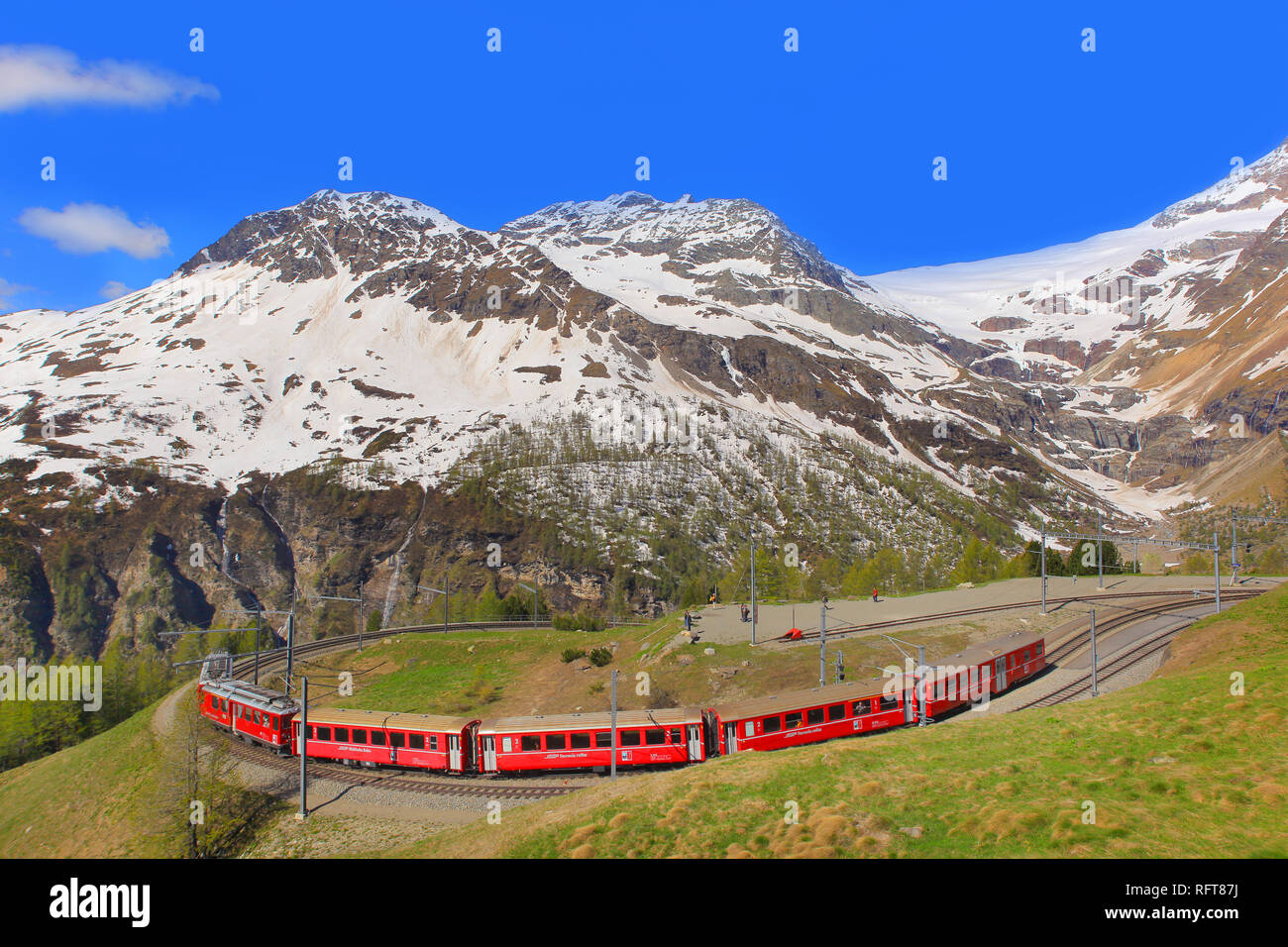
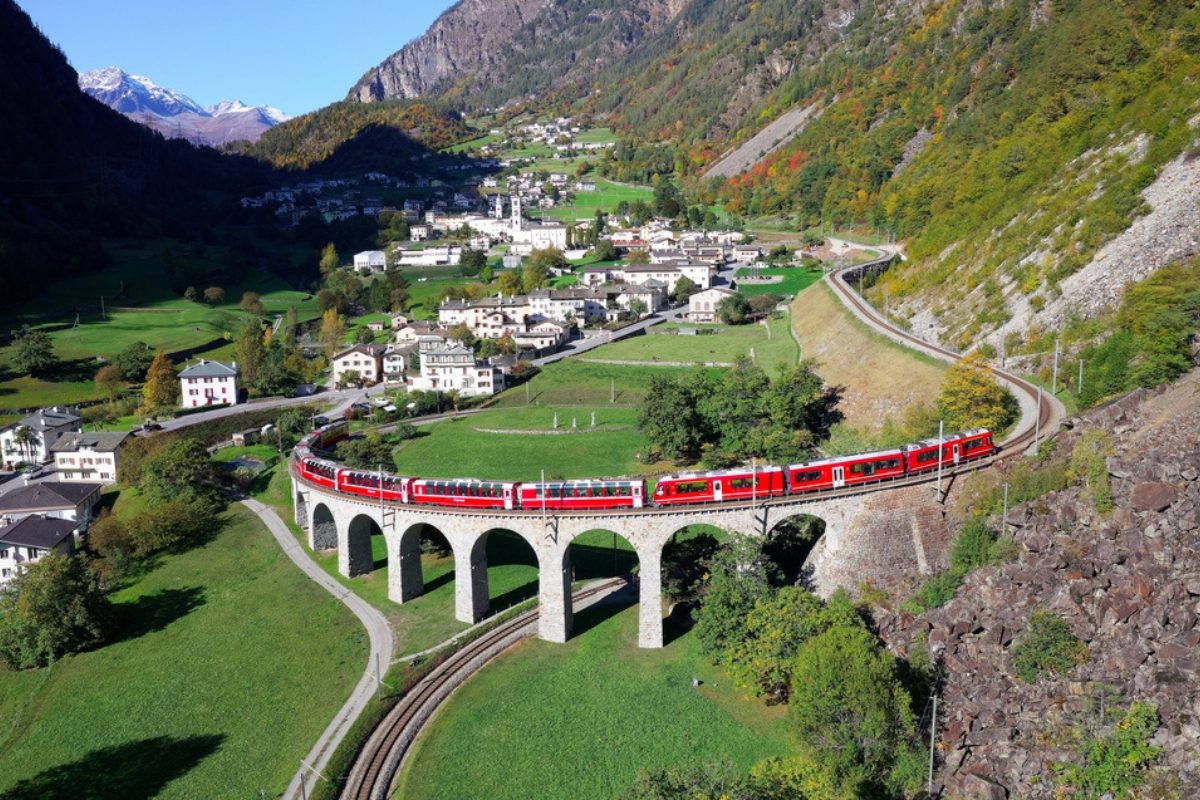
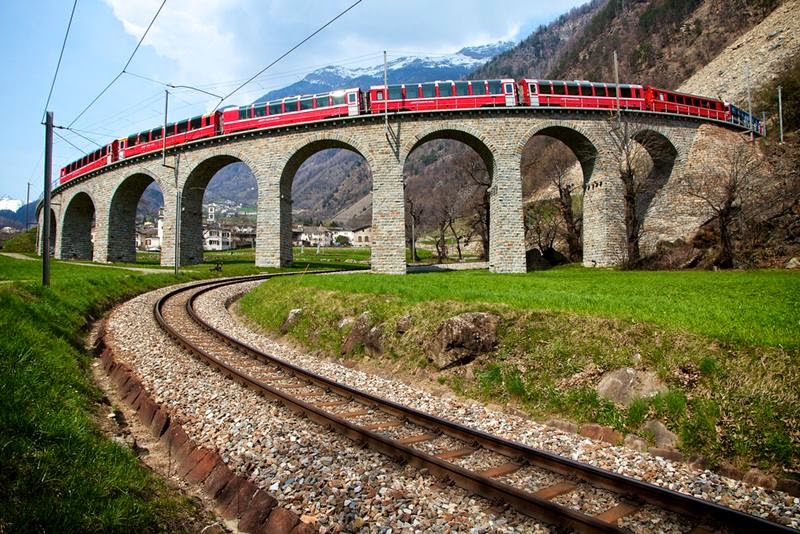
This circular stone viaduct features nine arches and a 70-meter radius, allowing trains to descend 10 meters in a tight valley space without slipping.
Standing at 2,253 meters above sea level, this is the highest point on the Rhaetian Railway network, offering views of the surrounding glaciers.
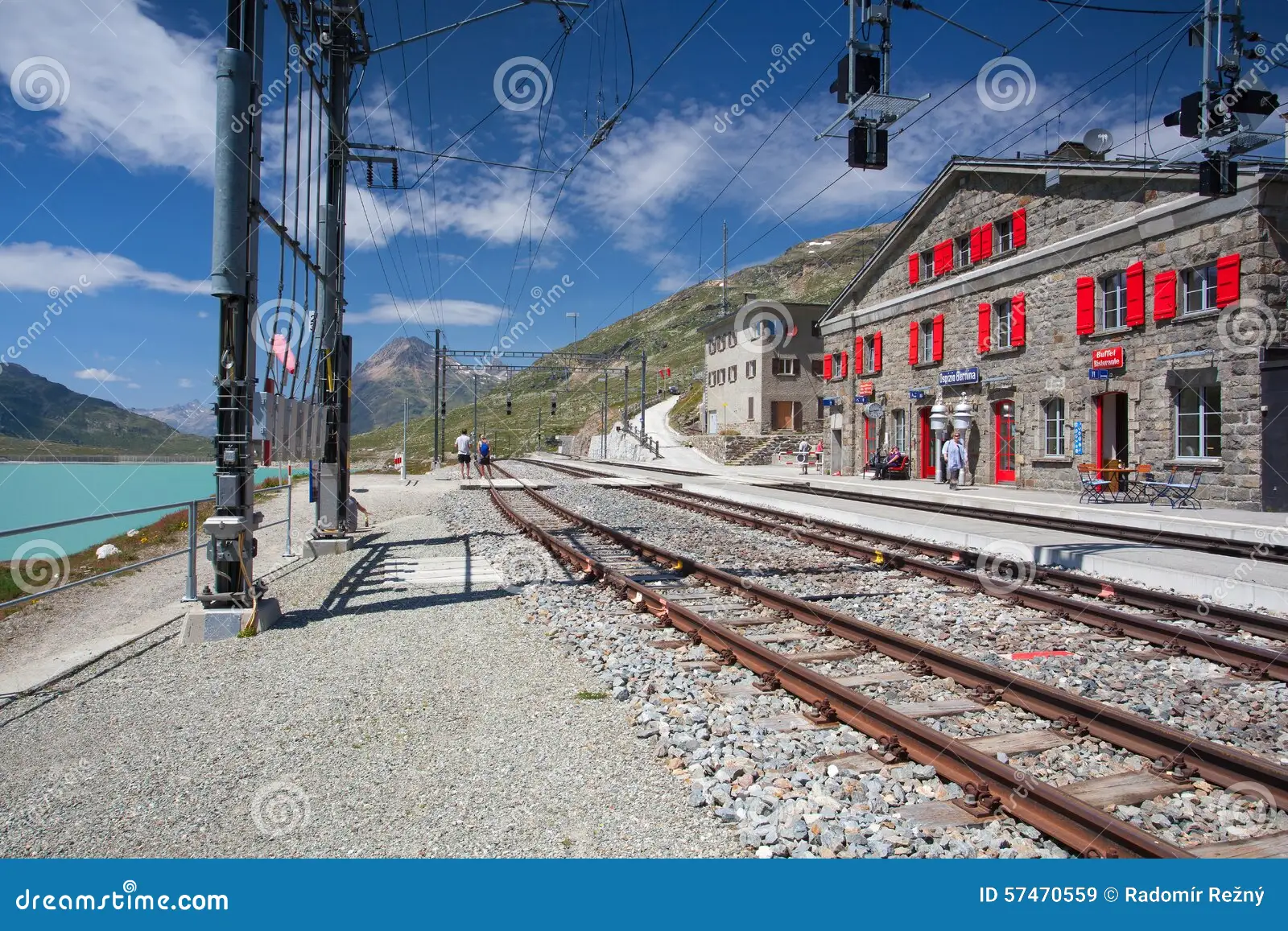
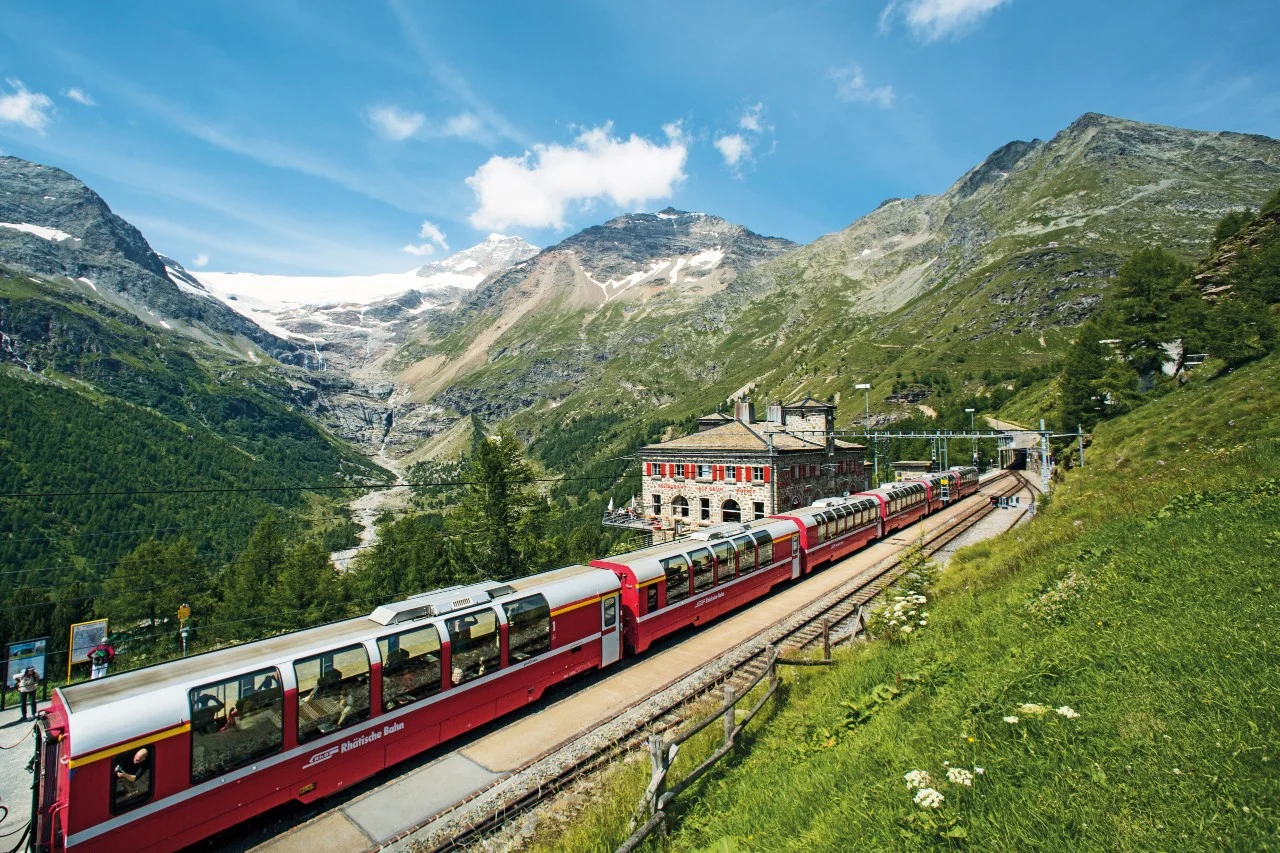
Located at 2,091 meters, this station is accessible only by train or foot and features a restaurant veranda overlooking the Palü Glacier.
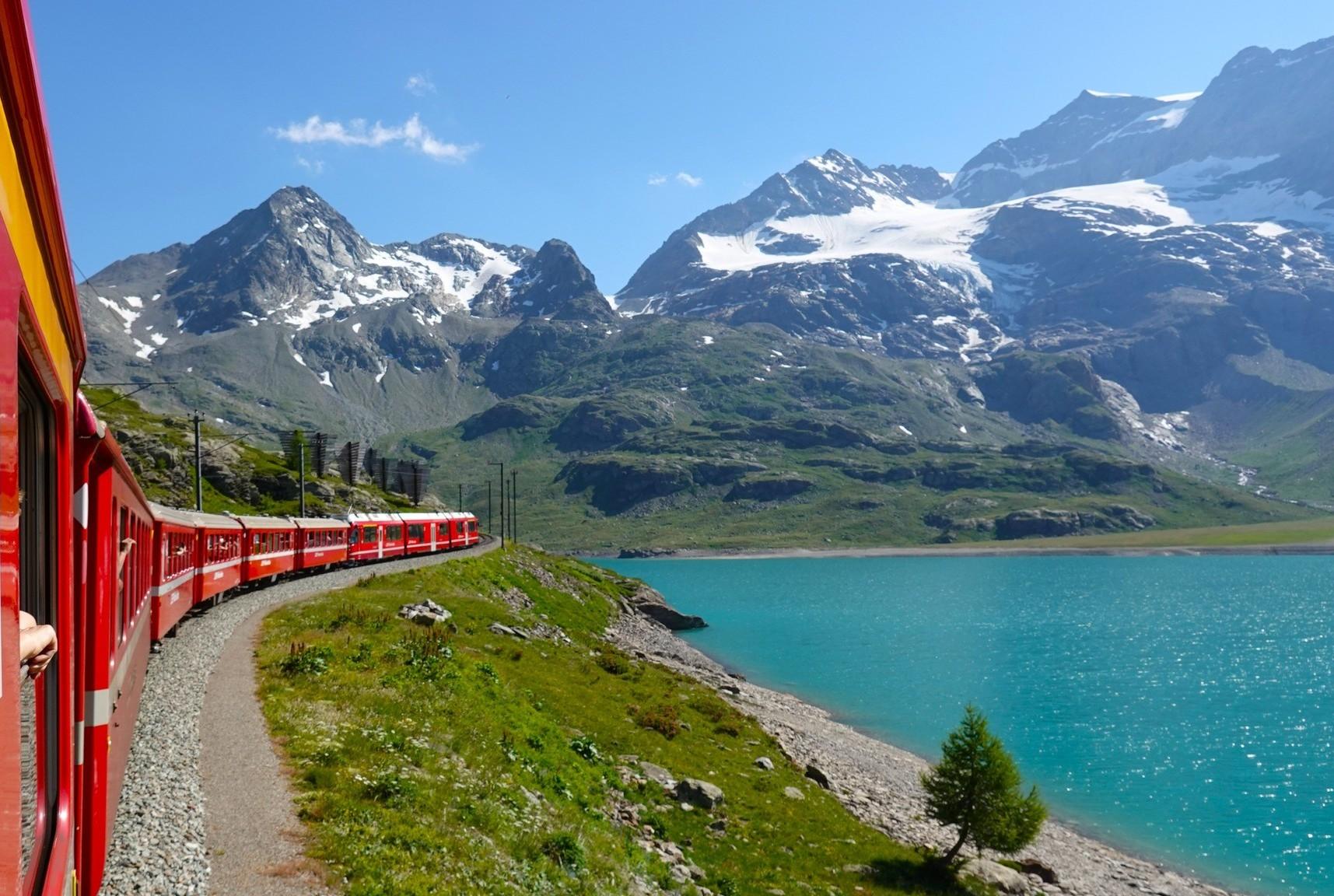
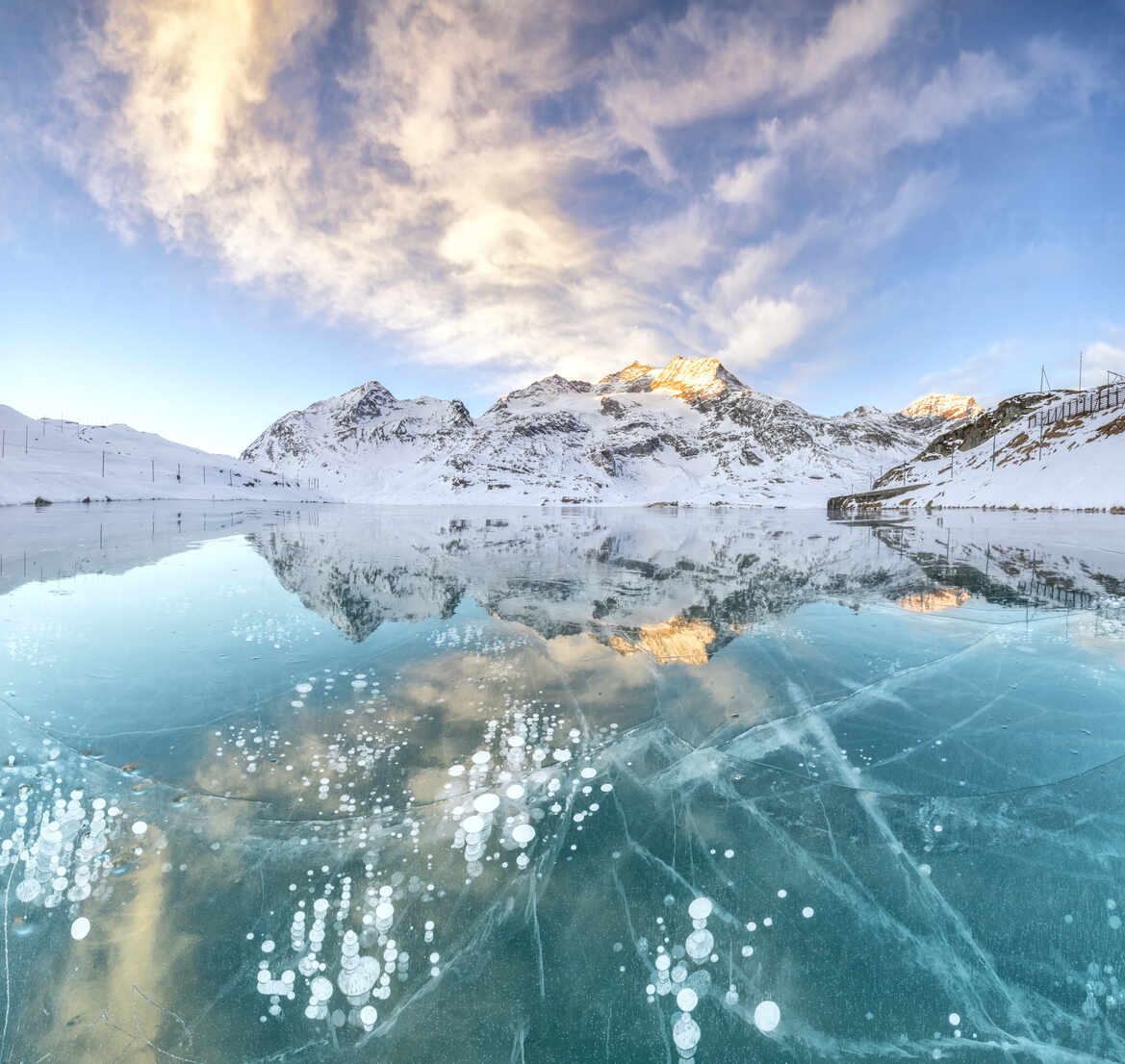
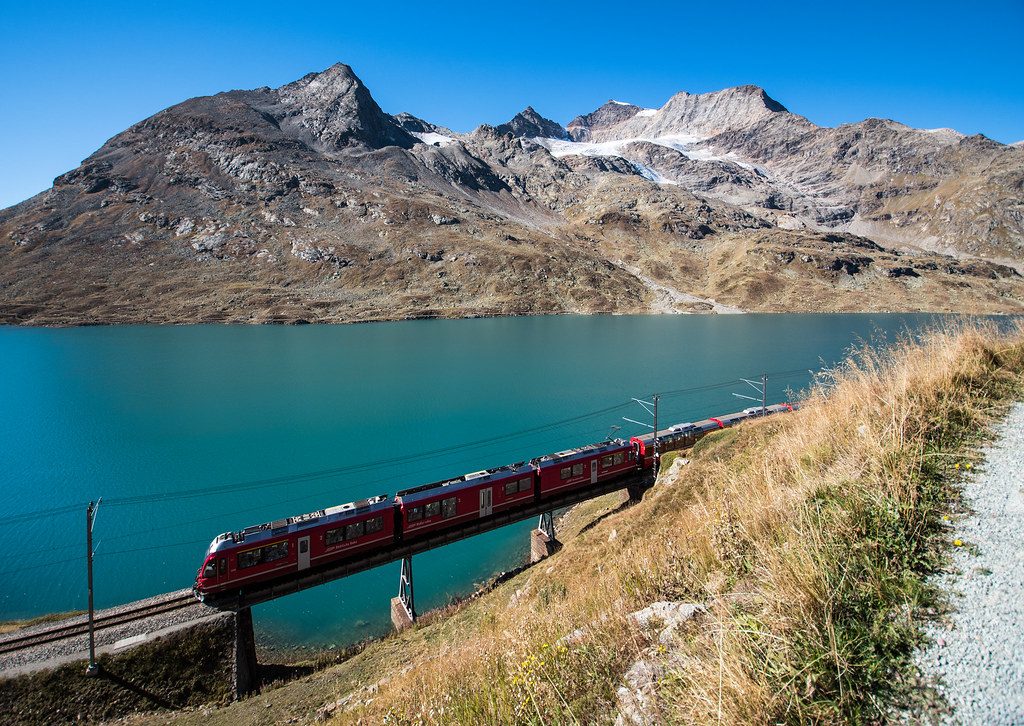
This reservoir at the Bernina Pass watershed appears white due to glacier milk and sand, contrasting with the nearby dark waters of Lej Nair.
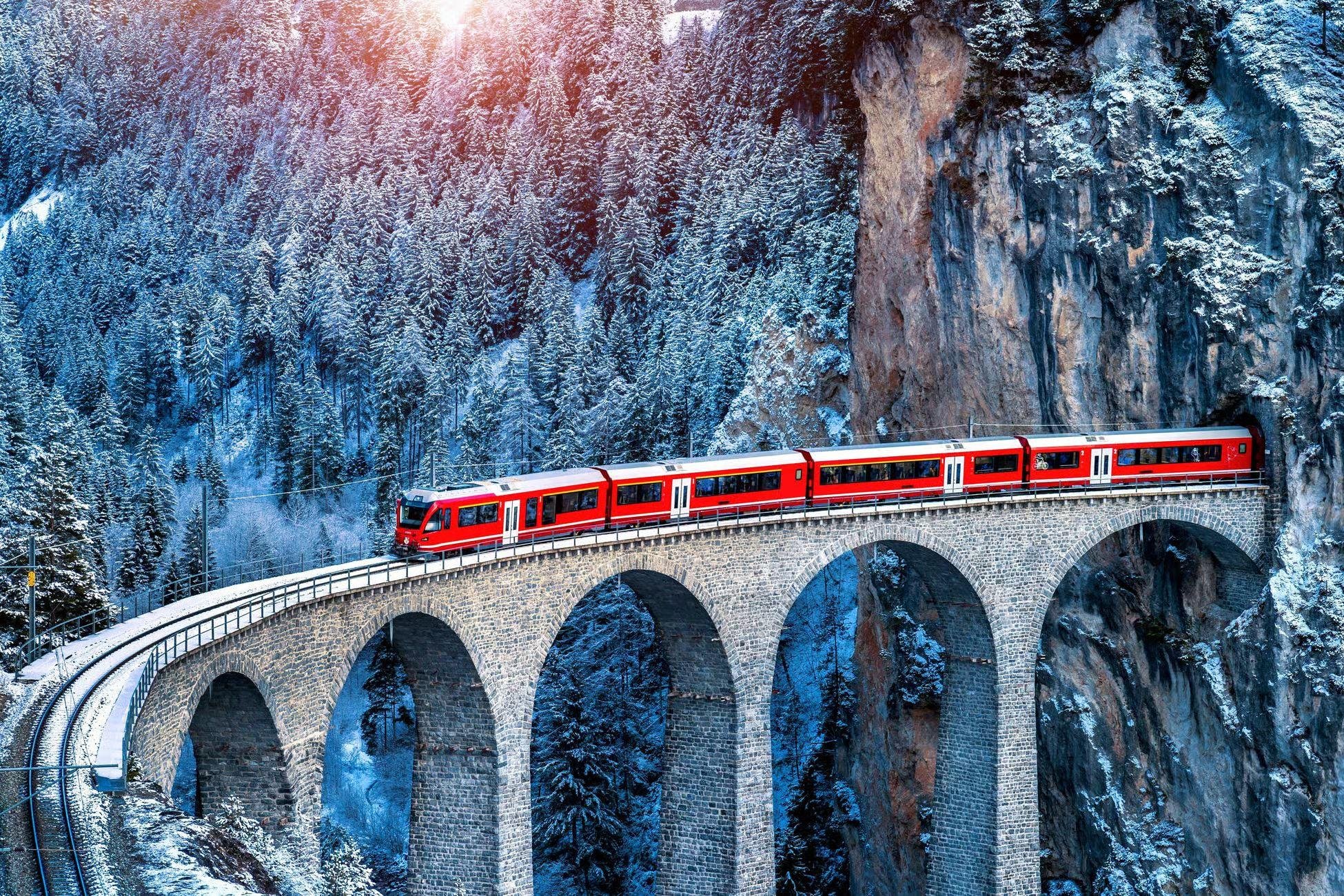
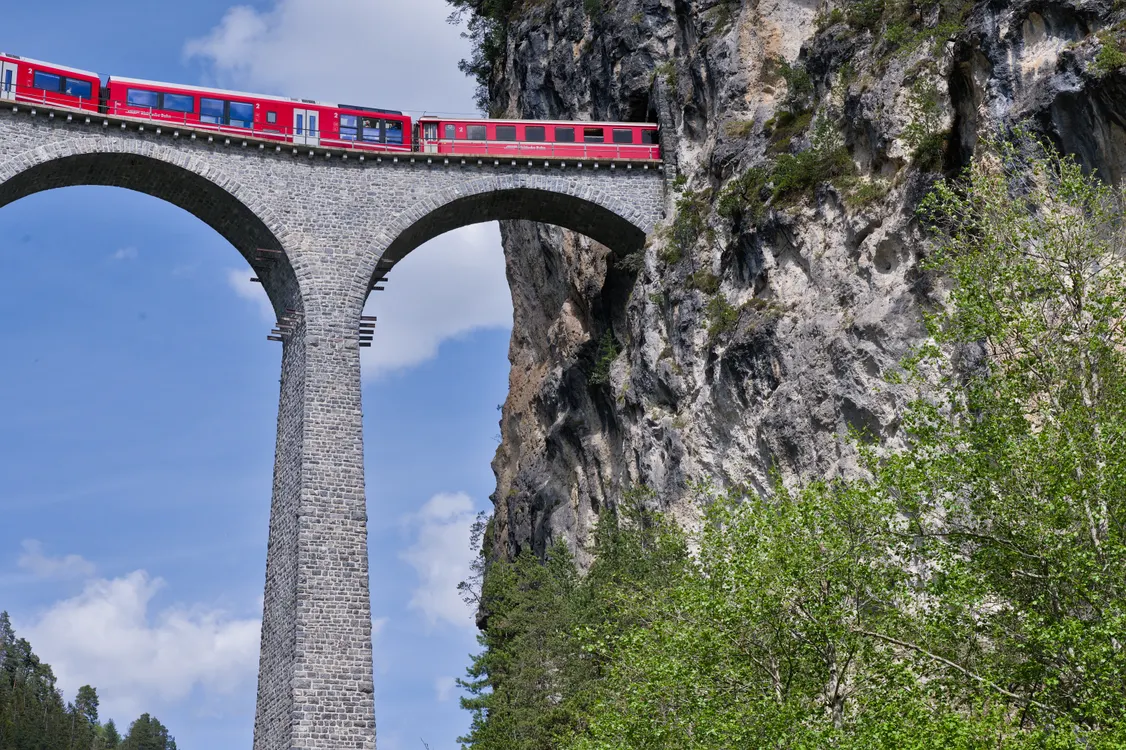
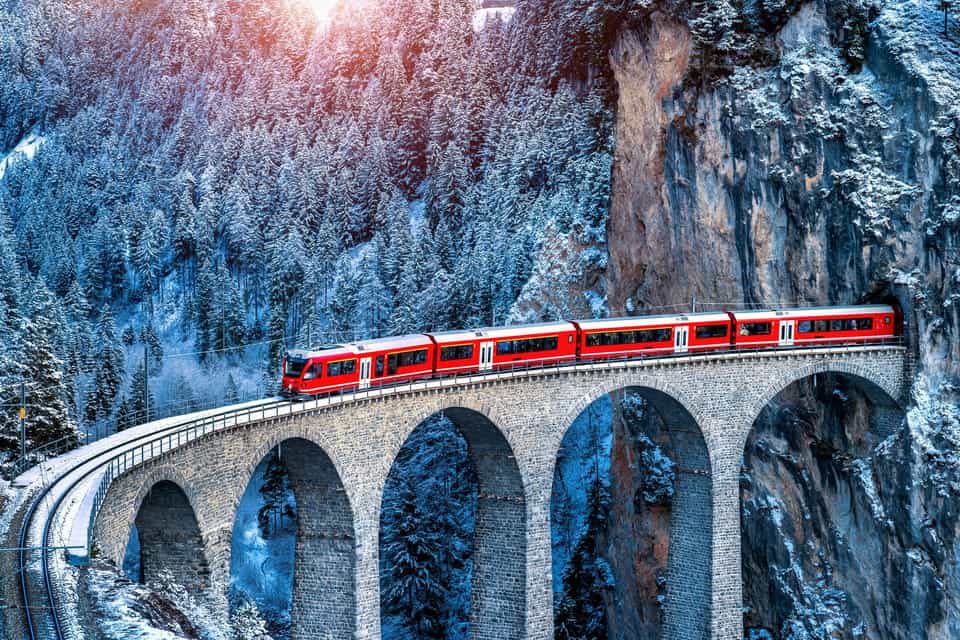
This six-arched curved limestone viaduct stands 65 meters high and leads the train directly into the rock face of the Landwasser Tunnel.
You board the coach in central Milan in the dark, before the city's shutters lift, and you watch the Po plain flatten out toward Lecco. Lake Como appears on your left about an hour in, and on the itineraries that include a cruise you step off at the shoreline before continuing north.
The border comes at Tirano, where you collect physical tickets and settle luggage — arriving in the 07:30–09:30 window on independent departures gives you room to do both without hurrying.
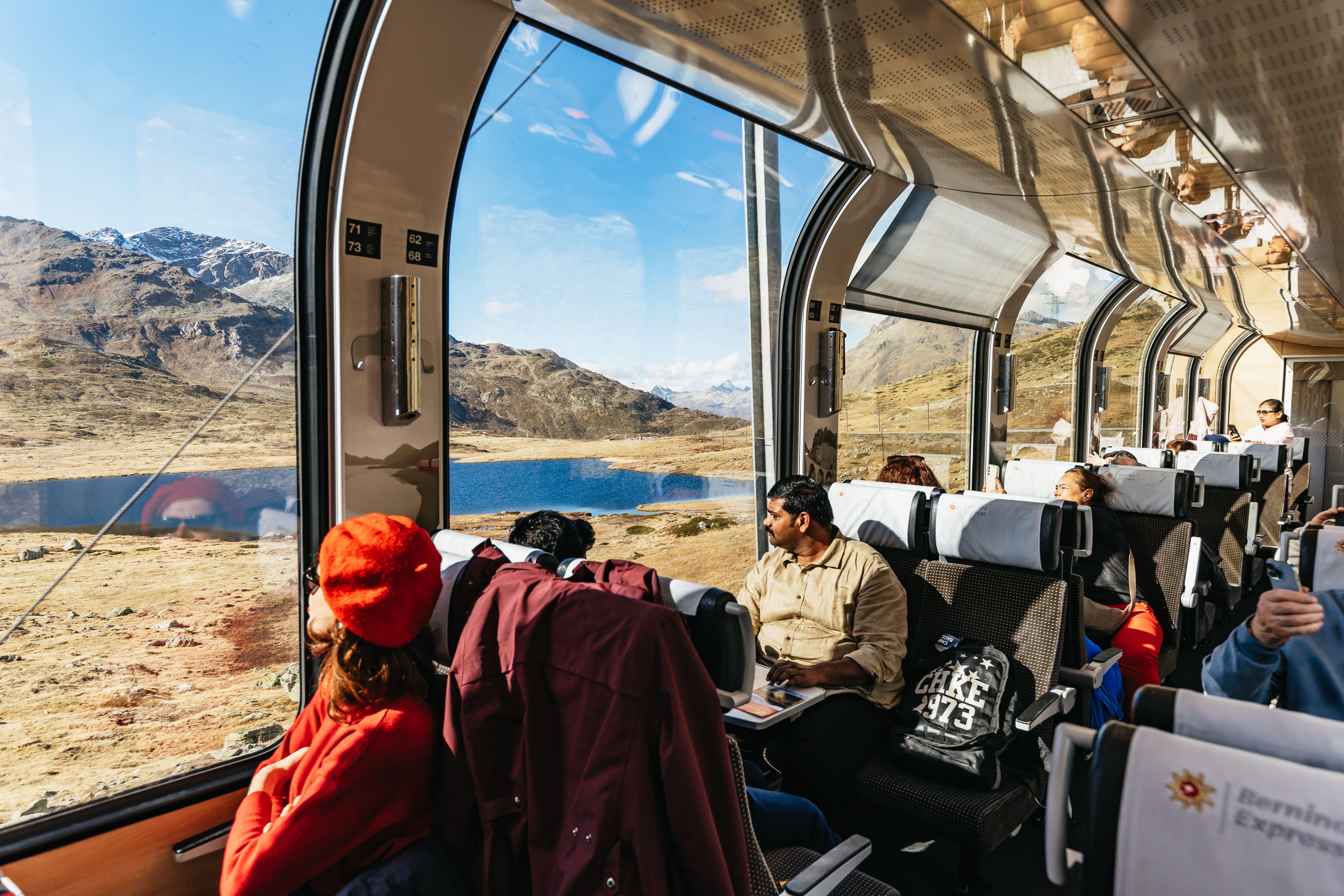
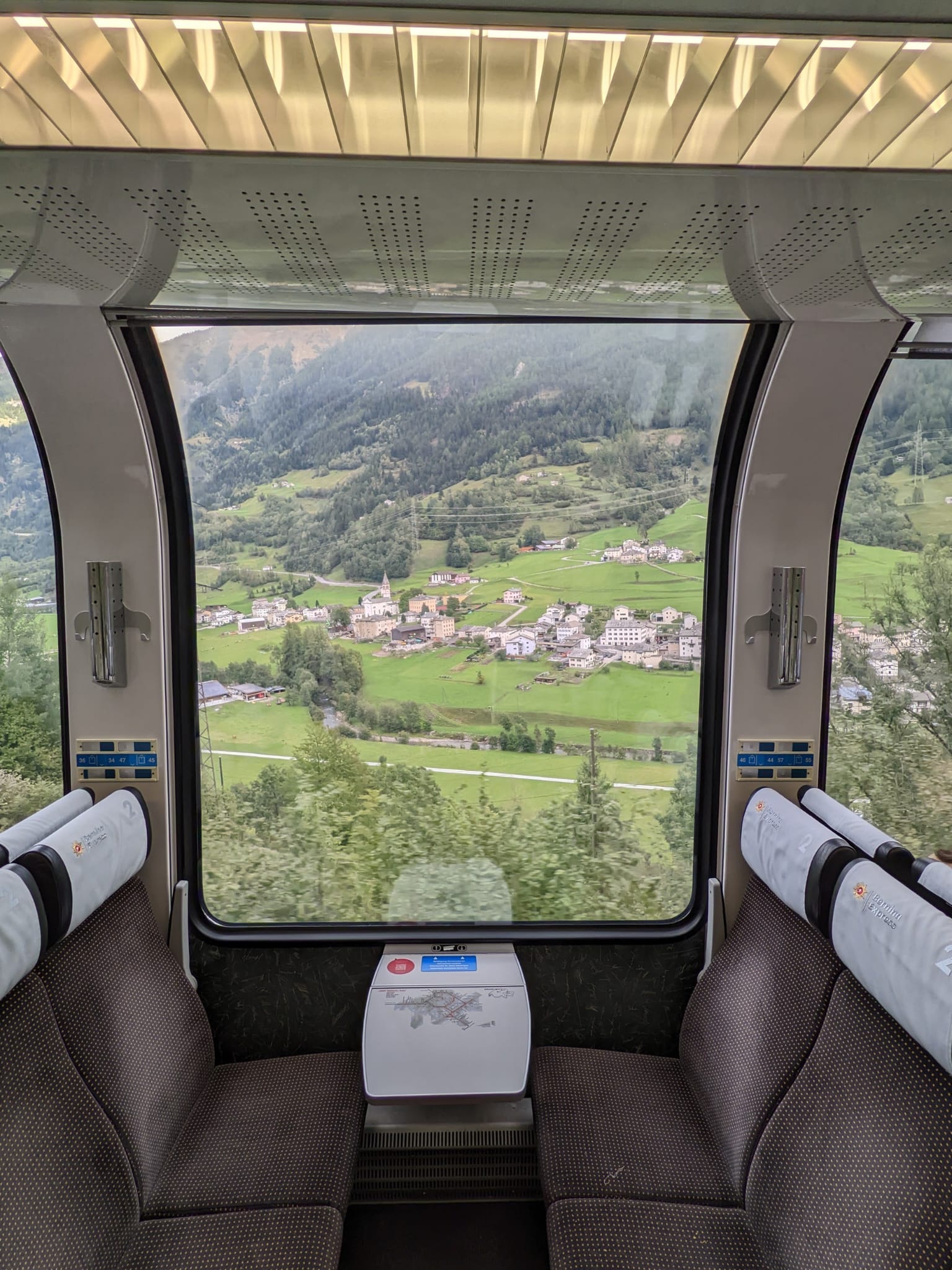
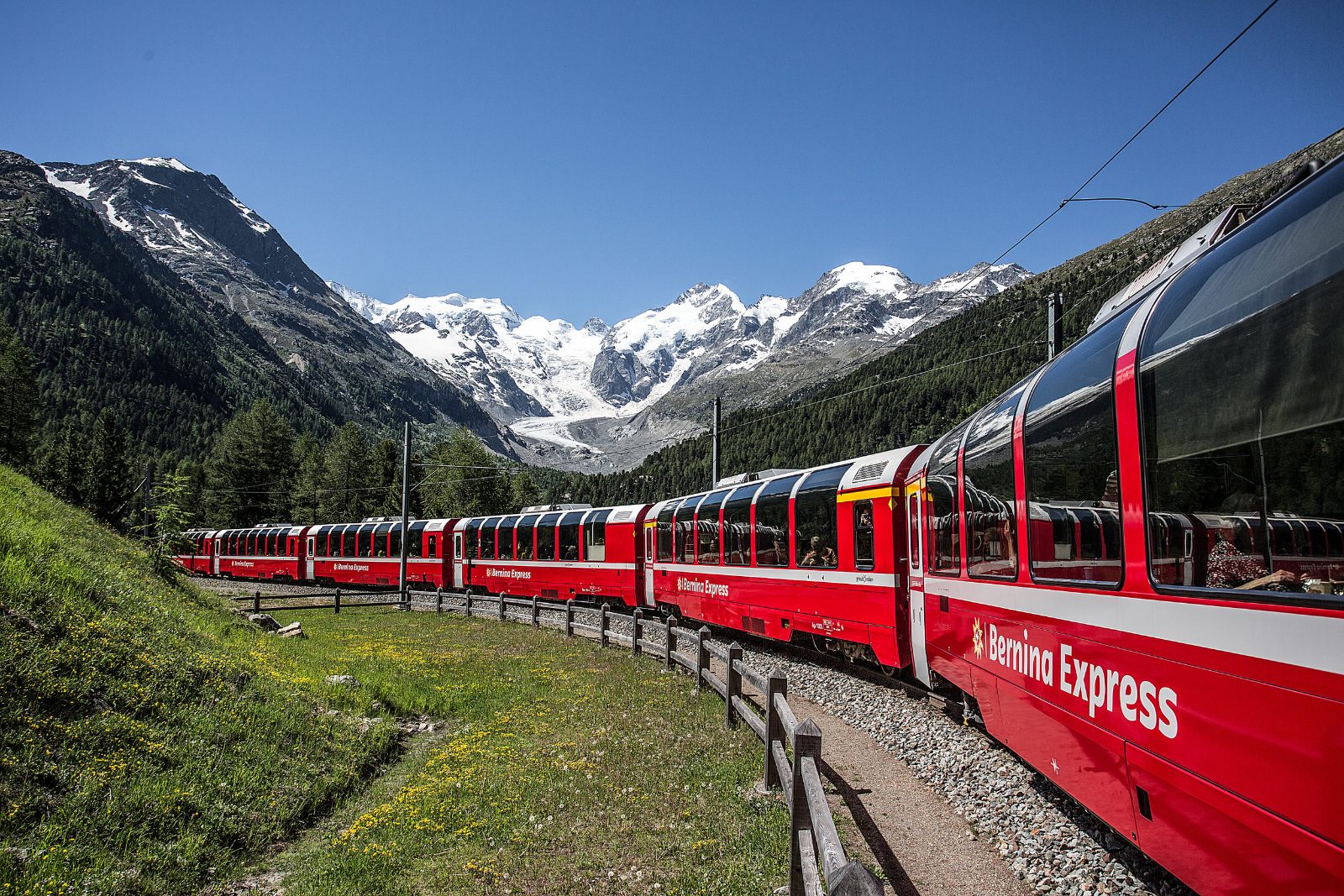
Then you climb. You take a seat under the curved panoramic glass and the town drops away below the Brusio spiral within twenty minutes. You pass Lago di Poschiavo with the water going from green to slate. At Alp Grüm you press against the window for the Palü Glacier. At Ospizio Bernina the treeline is simply gone and Lago Bianco sits pale and flat beside the track.
You arrive in St. Moritz with time to walk the lakefront, buy coffee at Swiss prices, and photograph the Engadine valley before the return. Some day trips reverse by coach through the Maloja Pass instead of retracing the rails. Either way you are back in Milan the same evening, roughly twelve hours after you started, having crossed two countries and 1,800 metres of vertical gain.
All the details about your upcoming adventure in one place
The Bernina line climbs to 2,253 metres at Ospizio Bernina without a single rack rail or cable — adhesion alone, steel wheel gripping steel track, on gradients of seven percent.
That engineering stubbornness is why UNESCO inscribed the Albula/Bernina route in 2008, one of only three railways on the World Heritage list. A milan to swiss alps train tour follows the southern half of that inscription, beginning where Italian Valtellina ends and Graubünden begins.
The route was completed in 1910 under engineer Friedrich Hennings, who refused tunnelling shortcuts wherever a spiral could hold the grade instead. The Brusio circular viaduct is the result: nine stone arches curving through 360 degrees in open daylight, a solution to elevation that looks like an accident of geometry. The Landwasser Viaduct, further north on the Albula stretch, drives straight into a cliff face. Both are load-bearing masonry, still carrying scheduled service more than a century after the last block was laid.
What makes the line matter now is less nostalgia than function. This is a working metre-gauge railway operated by the Rhaetian Railway, not a heritage attraction. Freight moves on it. Villages along the Val Poschiavo — Miralago, Cavaglia, Alp Grüm — depend on it in February as much as August. The panoramic carriages with their curved observation glass are simply the tourist expression of infrastructure that exists regardless of visitors. Passengers on a milan to swiss alps train tour tour share the corridor with commuters carrying groceries.
The geography compresses unusually fast. In roughly two hours the train passes from chestnut and vine terraces near Tirano to the Morteratsch Glacier's terminal moraine, a transition that would take a full day on foot. Palm-adjacent Mediterranean flora gives way to larch, then to bare rock and the Lago Bianco reservoir, its water milk-white with glacial rock flour. The climatic band crossed is closer to what a traveller would cover between Lombardy and Lapland.
St. Moritz at the northern end has been a resort since 1864, when hotelier Johannes Badrutt wagered English summer guests that they would find the winter sun agreeable — and won. The Rhaetian Railway's own base sits at Bahnhofstrasse 25, 7001 Chur, Switzerland. Tirano at the southern end remains a small Italian border town with a pilgrimage basilica and a level crossing where the train runs down the middle of the street. Most bernina express day tour operators from Milan connect the two, and milan to swiss alps train tour tickets for the rail leg start from a base 2nd class one-way fare of 33 CHF between Tirano and St. Moritz.
Adhesion alone, steel wheel gripping steel track, on gradients of seven percent.
When packing clothes for your Milan to Swiss Alps train tour, remember that temperatures drop significantly at the high mountain passes. Even in summer, high-altitude stops can be chilly and windy. Comfortable closed-toe walking shoes are recommended for exploring the platform areas.
The overhead racks on the Milan to Swiss Alps train tour can hold standard travel bags and backpack sizes. Keep valuables and passports in your hand luggage for easy access during border checks. Luggage storage is available at the stations in Tirano and St. Moritz.
Passengers on the Milan to Swiss Alps train tour can capture clear landscape shots through the large glass windows. The panoramic coaches have large glass windows that do not open, while the regional train options on the same route feature windows that can be lowered. Do not block the aisles or other passengers with tripods.
Families traveling with children can enjoy the changing scenery on the trenino rosso del Bernina tour. Children under 6 years old travel free of charge if they do not occupy a separate seat. Strollers must be folded and stored in the luggage areas during the journey.
Wheelchair users should coordinate with the operator before booking their Milan to Swiss Alps train tour tour. The panoramic coaches have limited wheelchair spaces that require advance reservations. Stations along the route offer varying levels of step-free boarding assistance.
While hot meals are not sold on board, a trolley service offers snacks during the Milan to Swiss Alps train tour. Passengers are also welcome to bring their own food and non-alcoholic drinks on board. Sit-down dining is not available, but you can find restaurants near the main stations.
Quiet morning departures
Standard daily schedule
High weekend-eve demand
Peak weekend traffic
Popular tourist departures
Best Arrival Window
07:30–09:30
Address
Bahnhofstrasse 25, 7001 Chur, Switzerland
Luggage Policy
Storage at Tirano and St. Moritz stations
Accessibility
Wheelchair spaces require reservations
Operating Season
Year-round daily service
Public transport · 2.5 hours · 15 EUR
Take a Trenord train from Milan Centrale to Tirano station, which takes around 2.5 hours. From Tirano, transfer directly to the Rhaetian Railway platform to board the scenic train.
Car · 2.5 hours · Fuel and tolls
Drive north via the SS36 highway along Lake Como, continuing to Tirano, where public parking is available near the station.
Public transport · 12 hours · Varies
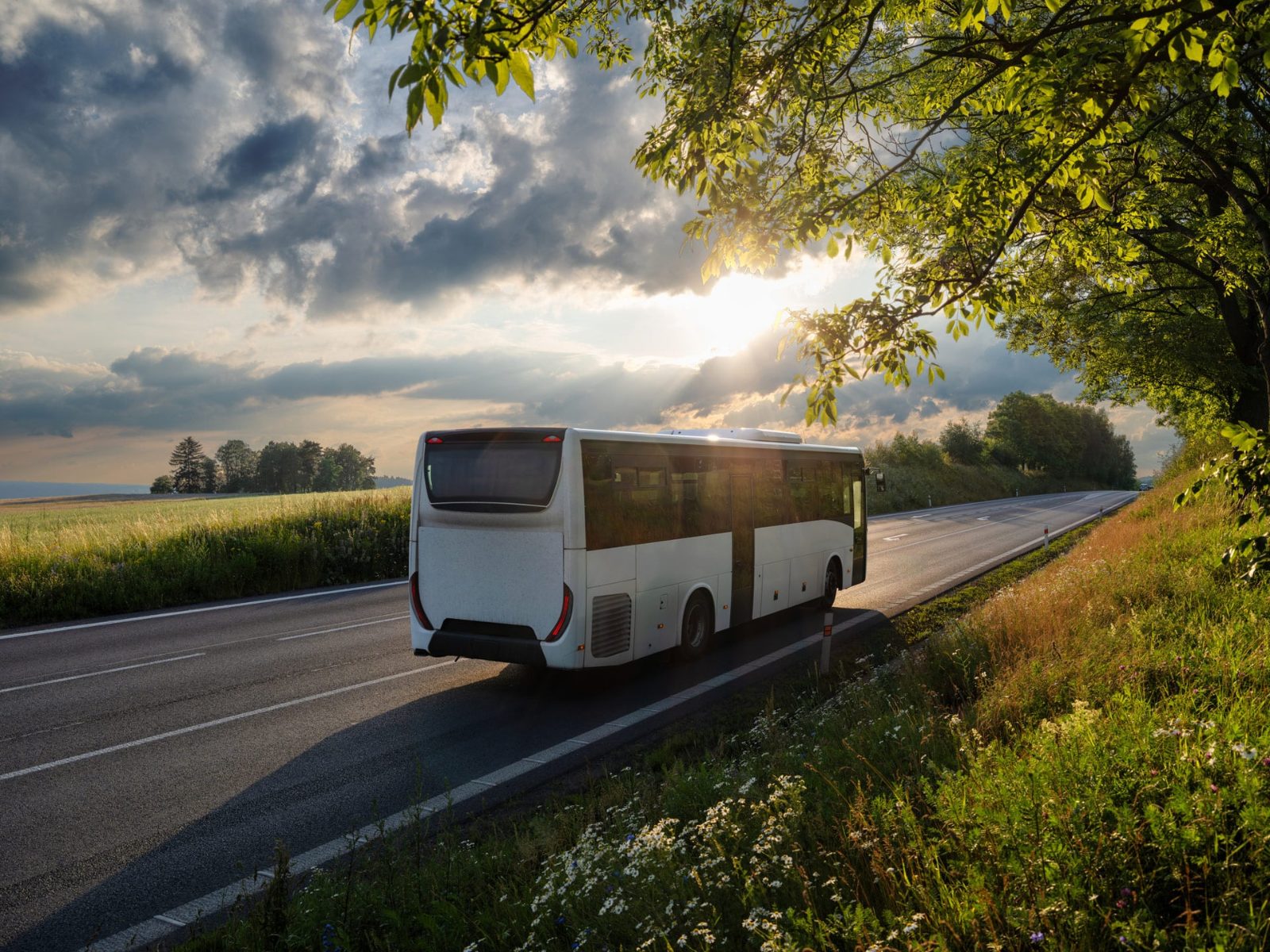
Taking a guided Milan to Swiss Alps train tour from Milan Central is the most convenient way to complete this cross-border route.
Refund options depend on the booking channel used for your Milan to Swiss Alps train tour tickets. If you purchase the base 2nd class one-way ticket Tirano to St. Moritz for 33 CHF directly from the Rhaetian Railway, cancellations are subject to their official tariff rules.
Recommended time
12-14 hours
A standard milan to swiss alps train tour requires a full day of travel, often spanning twelve to fourteen hours. The journey typically begins with an early transit from Milan Centrale to the Tirano station, followed by the alpine rail climb. Many travelers select pre-booked milan to swiss alps train tour tours to bundle the return coach ride with their train vouchers. Securing seats in the panoramic carriage allows you to comfortably witness the changing elevation and mountain scenery up to St. Moritz. We recommend purchasing milan to swiss alps train tour tickets during the 07:30–09:30 departure window to ensure you collect physical tickets and secure luggage space. Remember to bring a passport for border checks, as the rail route crosses between Italy and Switzerland. Utilizing an organized milan to swiss alps train tour tour ensures all connection schedules and group transfers are handled seamlessly.
Crowd levels through the day
Weather · crowds · average price — dots go green to amber to red as each metric rises.
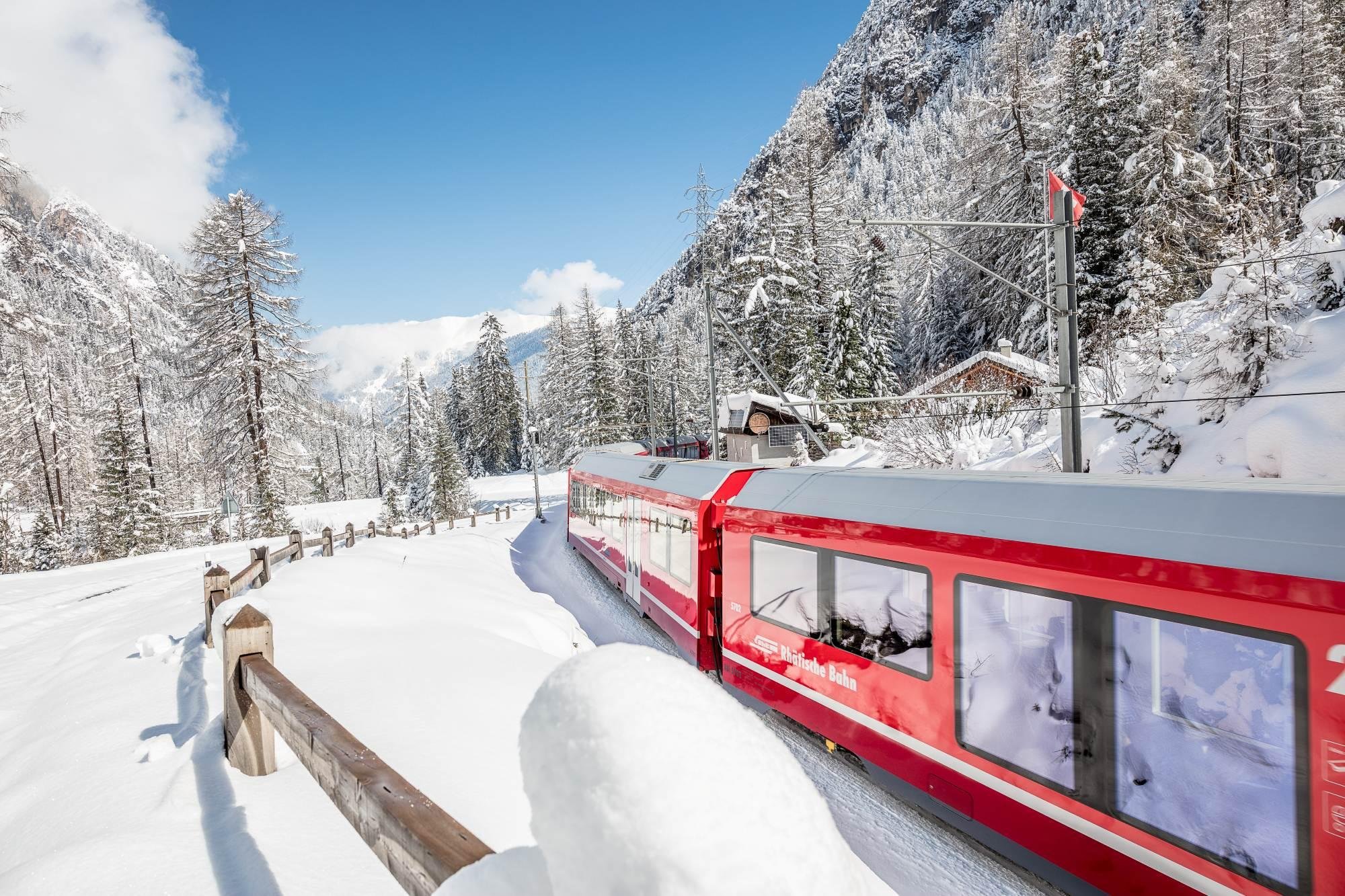
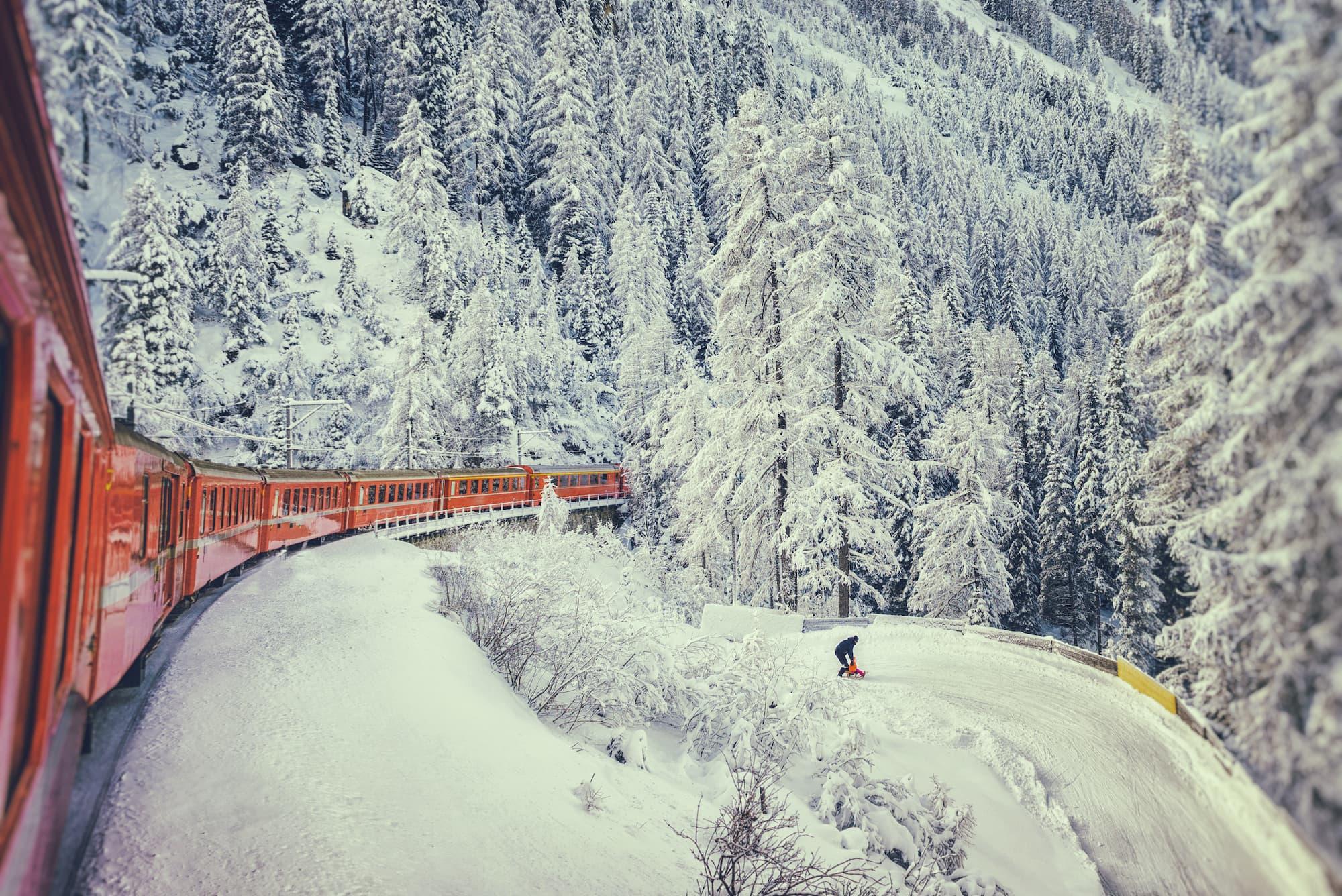
From December to March, the route is covered in deep snow, offering views of frozen lakes and snow-draped forests.
From April to June, you can observe the contrast of melting snow on the high passes and blooming green meadows in the Italian valleys.
From July to August, the weather is warm enough for open-air observation carriages, though passenger numbers peak during these months.
From September to November, the larch forests turn golden-yellow, making it a highly scenic time for photography.
Panoramic coach seats sell out months in advance during peak seasons, so secure your booking early.
When traveling north from Tirano to St. Moritz, the right side of the carriage offers the best views of the valley.
The train climbs to 2,253 meters, where the temperature can drop quickly even on sunny summer days.
Food options on board are limited to snacks, so purchasing a meal in Tirano or St. Moritz is recommended.
Booking a skip-the-line Bernina Express tour helps you bypass ticket office queues during busy mornings.
Aim to arrive between 07:30–09:30 to collect your physical tickets and secure your luggage space before morning departures.
Since you are crossing the Italian-Swiss border, border police may board the train to check travel documents.
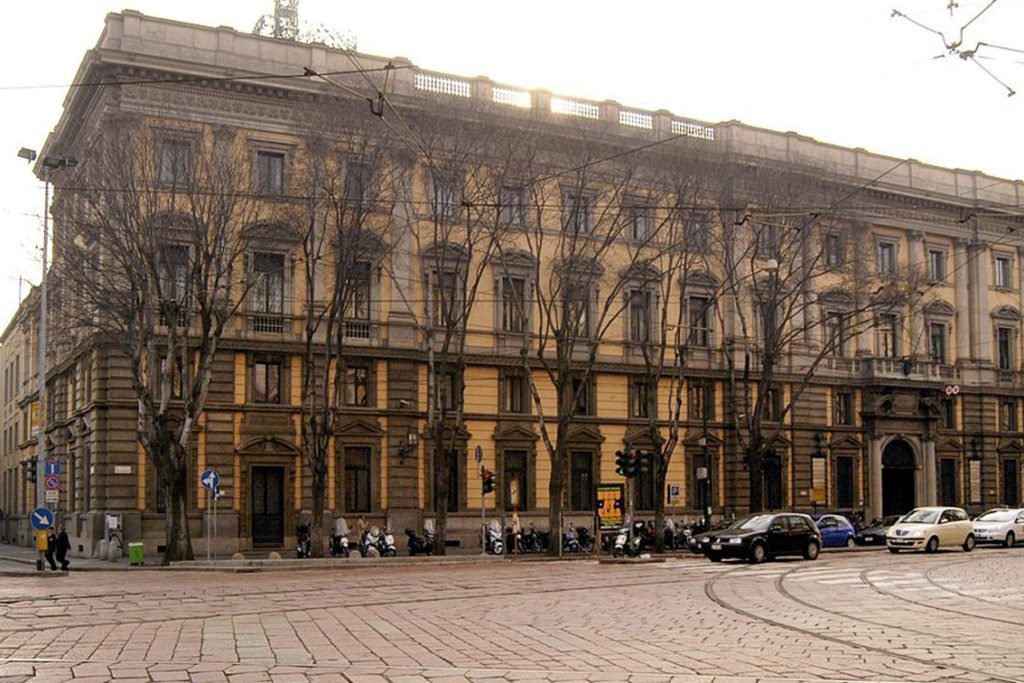
Foro Buonaparte 10, 20121 Milan, Italy
Meet near the visitor center 20 minutes before departure.
Get directions
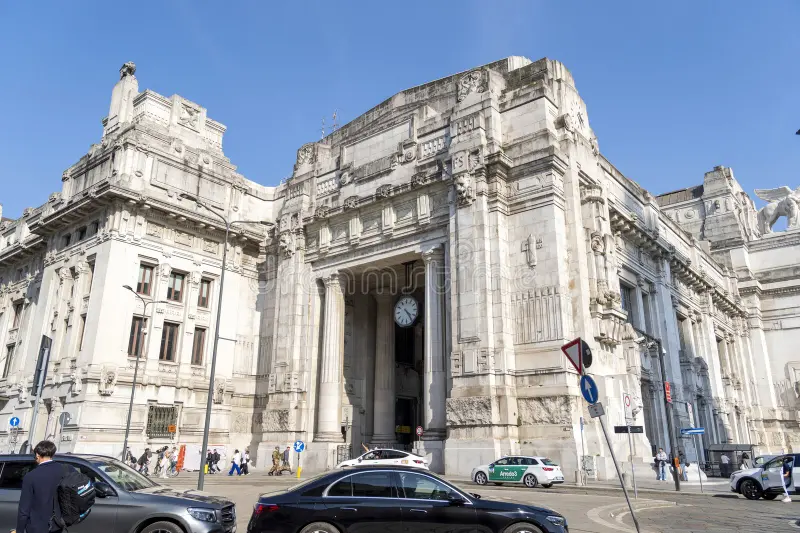
Piazza Duca d'Aosta, 20124 Milan, Italy
Meet outside the main entrance under the arches.
Get directionsThe Bernina line was never meant to be ordinary. On 5 July 1908 the Bernina-Bahn-Gesellschaft opened its first section, from St. Moritz to Pontresina and Morteratsch. Two years of winter work followed. The full route to Tirano opened on 5 July 1910. It remains a metre-gauge line worked entirely by adhesion, without rack rails — the reason the modern milan to swiss alps train tour still climbs as it does. The engineering problem was gradient. From Tirano at 429 metres the line reaches Ospizio Bernina at 2,253 metres, the highest transalpine crossing in the Alps served by an adhesion railway. Engineers under Friedrich Hennings answered with distance rather than teeth: gradients capped near 70 per thousand, and curves tightened to a 45-metre radius. The Brusio circular viaduct, a nine-arch spiral opened in 1908, exists solely to shed altitude in open ground. Chur, the company's later administrative seat at Bahnhofstrasse 25, gained control when the Rhaetian Railway absorbed the bankrupt Bernina company in 1943 after decades of losses. Early winters nearly ended it. Snow closed the summit section repeatedly after 1910, and year-round operation was only secured in 1913, then abandoned, then restored. Electrification at 1,000 volts direct current — unusual for Switzerland — was chosen in 1908 and never changed, so today's stock still runs on that century-old standard. On 7 July 2008 UNESCO inscribed the Albula and Bernina lines as World Heritage, citing the viaducts, the galleries and the untouched alignment. Travellers booking a milan to swiss alps train tour tour now ride an alignment altered remarkably little since Hennings signed it off. Those buying milan to swiss alps train tour tickets, or comparing Swiss panoramic rail journeys and Bernina Express tours, are buying passage over original 1910 masonry — the honest appeal of milan to swiss alps train tour tours.
Construction began on the Bernina line as a private narrow-gauge electric railway.
The St. Moritz–Morteratsch and Tirano–Poschiavo sections opened, including the Brusio circular viaduct.
The complete Tirano–St. Moritz route opened on 5 July, crossing the Bernina Pass by adhesion alone.
Year-round operation was first attempted, defeated repeatedly by snow at Ospizio Bernina.
The Rhaetian Railway absorbed the loss-making Bernina company and took over operations.
The Bernina Express branding was introduced for through panoramic services.
UNESCO inscribed the Albula and Bernina lines as a World Heritage Site on 7 July.
The line still runs on its original 1,000 V DC electrification and 1910 alignment.
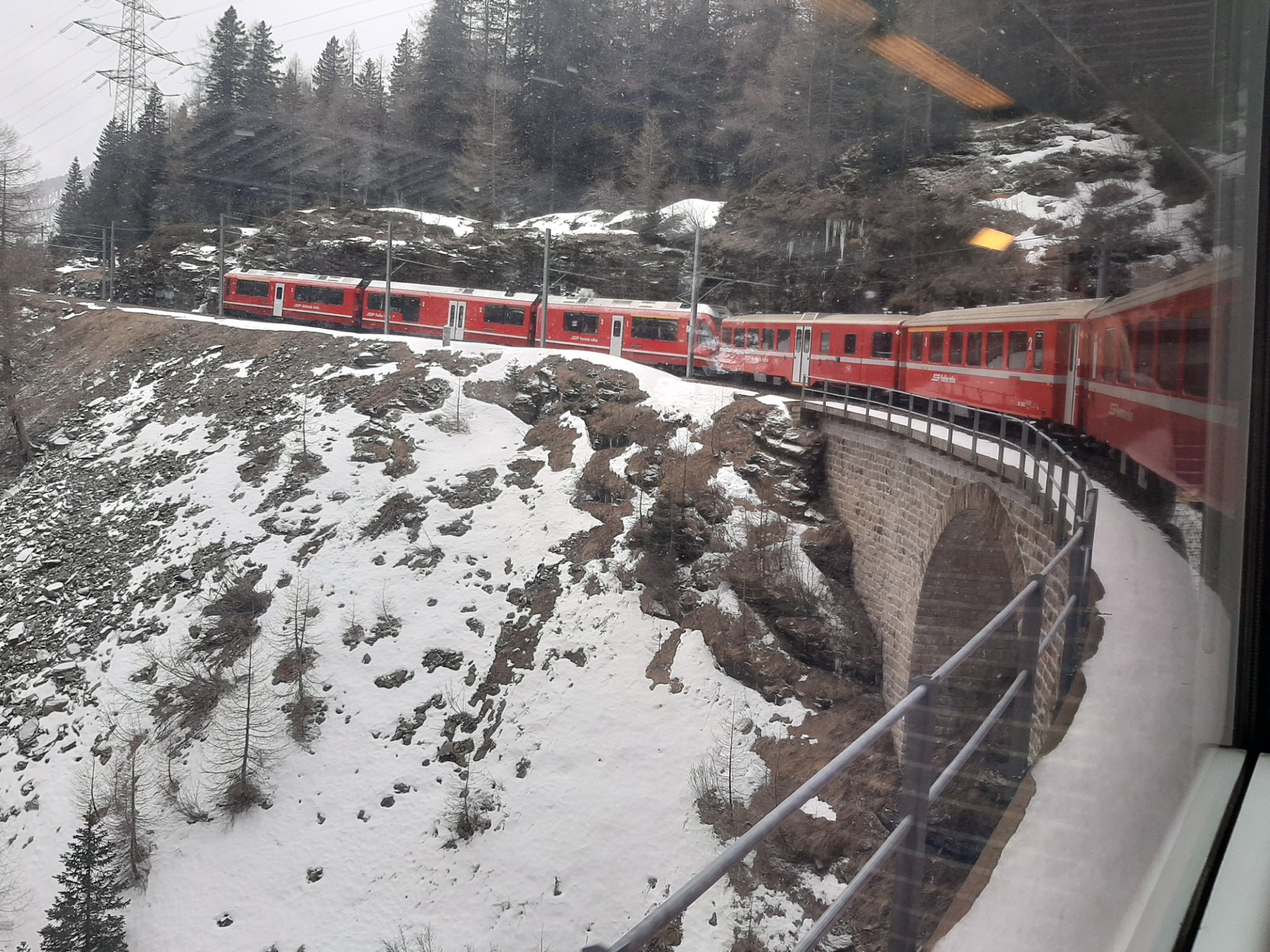
This circular nine-arched stone bridge on the Rhaetian Railway allows trains to descend gracefully down the valley. Photographers can capture the red carriages curving 360 degrees from the nearby meadow footpaths. Ensure you book the official milan to swiss alps train tour tickets for this memorable segment.
Positioned at 2,091 meters above sea level, this rustic stone station overlooks the Palü Glacier and the Val Poschiavo. Passengers on a milan to swiss alps train tour can look through panoramic windows or step off during brief stops to photograph the alpine landscape.
The milky turquoise reservoir at Ospizio Bernina represents the highest point of the railway line. The shoreline walk yields reflections of the Bernina Red Train passing against a backdrop of snow-capped mountains. This highlights why booking a milan to swiss alps train tour tour is so popular among landscape photographers.
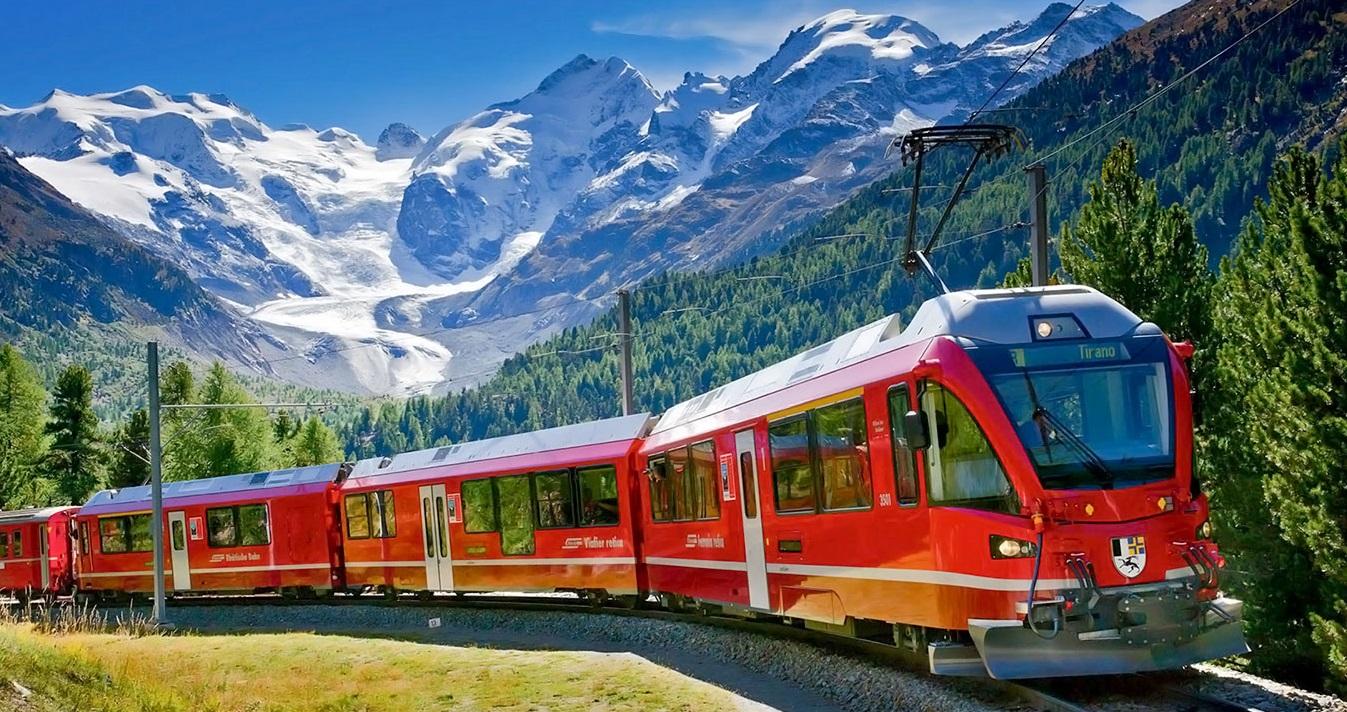
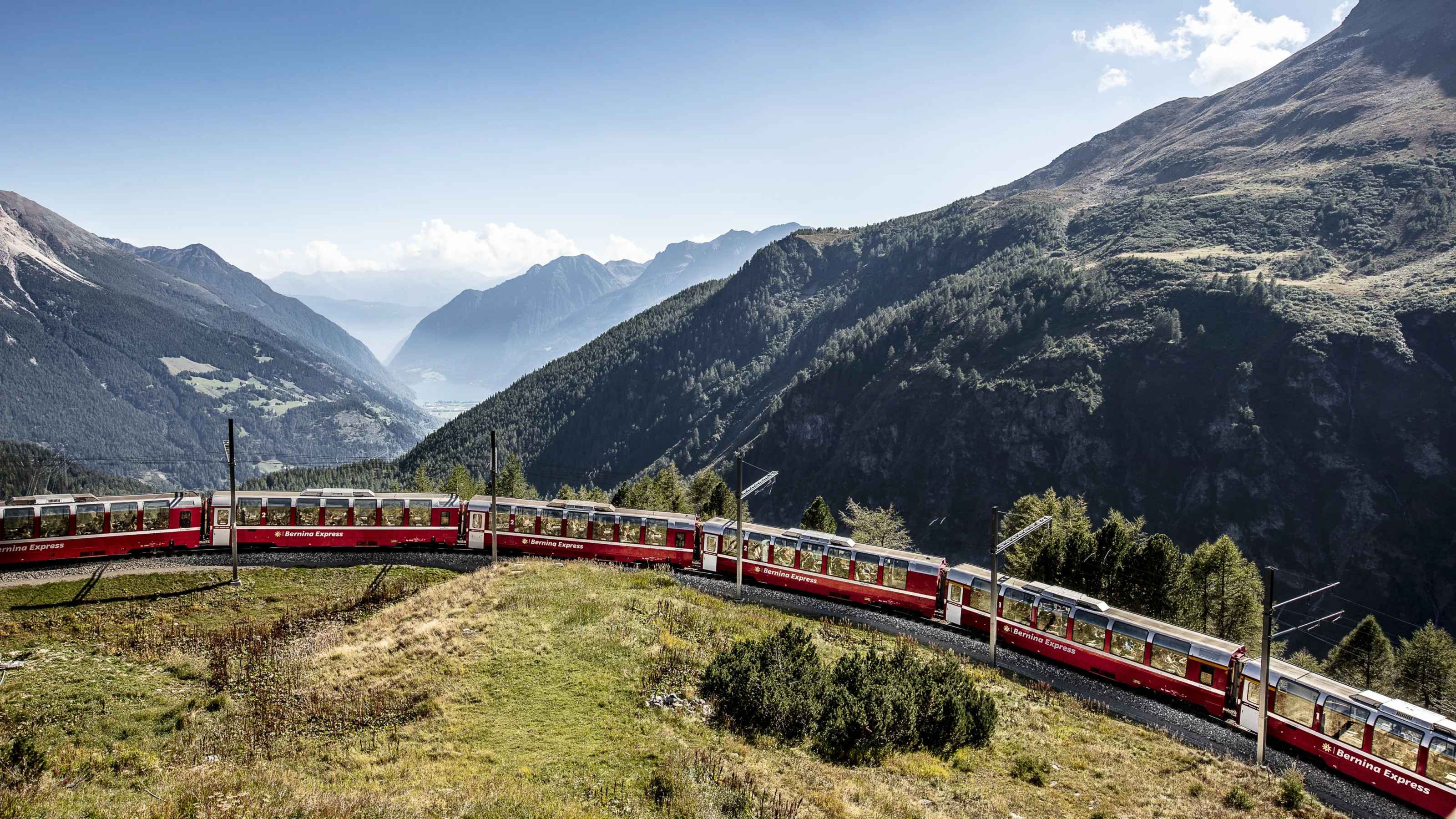
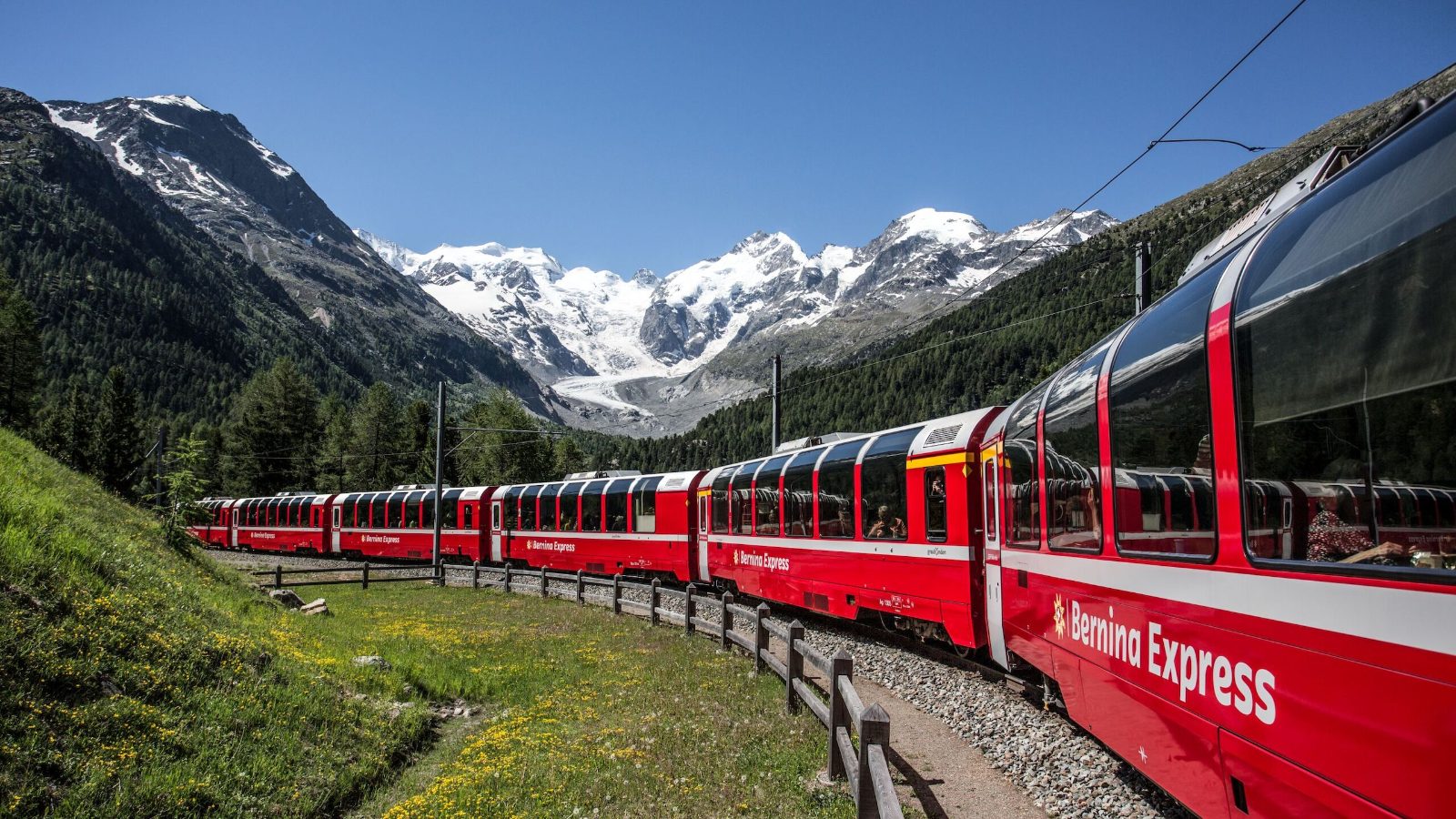
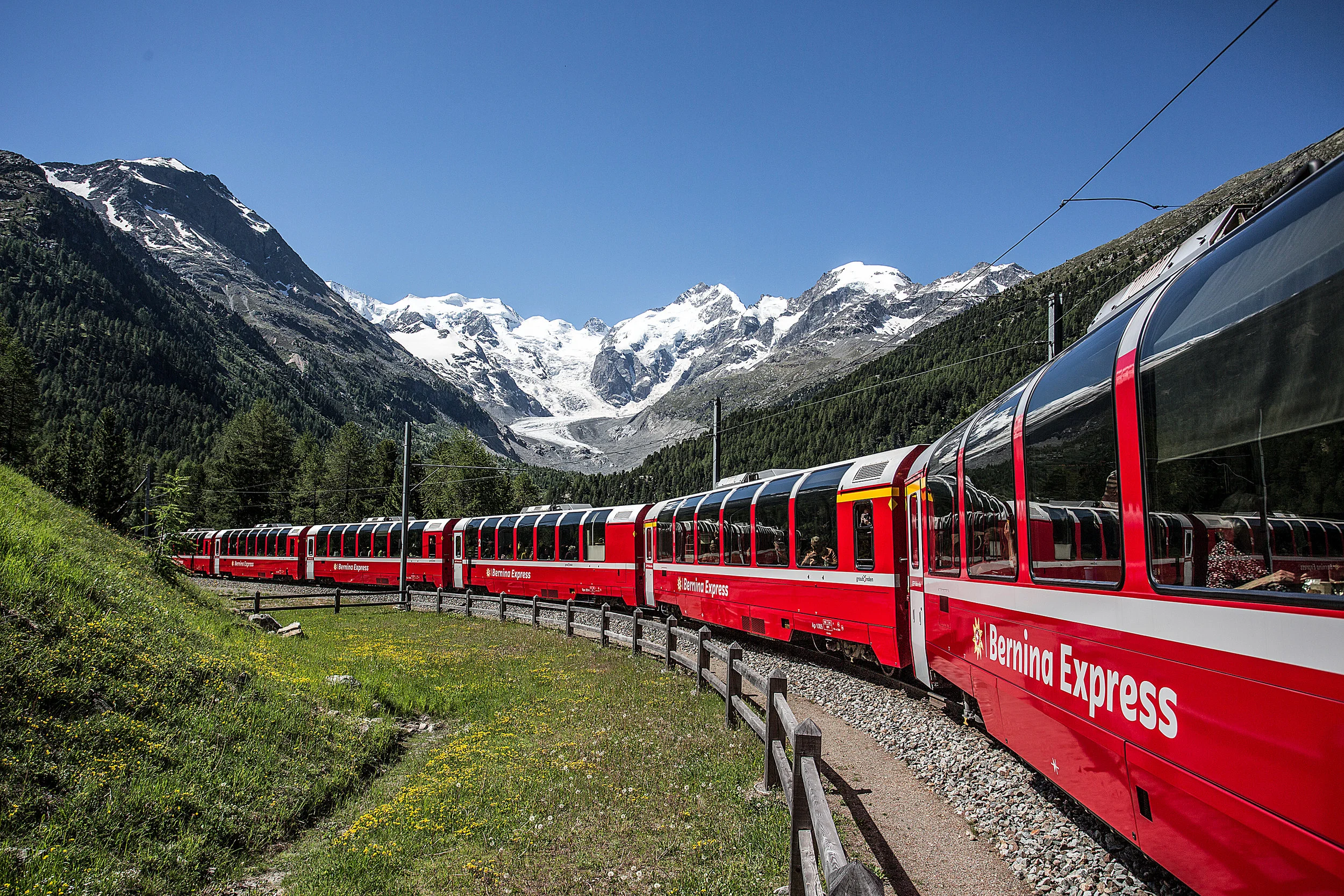
The tracks sweep around a dramatic curve near the Morteratsch Glacier, offering clear vistas of the Bernina massif. Travelers on milan to swiss alps train tour tours often capture this angle through open windows in the regional coaches.
Taking a milan to swiss alps train tour with kids is a scenic adventure requiring smart preparation. Managing the onboard layout is key to keeping the journey stress-free for families.
You must fold strollers before boarding the train. Store them in the dedicated luggage racks at the end of the carriage. Heavy prams are difficult to navigate through the narrow aisles of the panoramic cars during your Red Train excursion.
Children under six travel free but need a paid seat reservation to occupy their own seat. Book these alongside your milan to swiss alps train tour tickets. Aim to arrive during the best arrival window of 07:30–09:30 to collect physical tickets and secure luggage space before morning departures.
The classic route between Tirano and St. Moritz takes about two to three hours. Bring coloring books and snacks to keep children occupied as there are no play areas on these panoramic trains.
Many families choose structured milan to swiss alps train tour tours to avoid coordinating the logistics. This allows parents to focus on their children while transport details are handled.
Booking a comprehensive milan to swiss alps train tour tour covers both coach transfers and rail seats. Confirm whether your booking details include seat reservations for younger kids.
A typical milan to swiss alps train tour stops for lunch at Tirano station on the Italian border, where visitors sample hearty Valtellina specialties. A quick Bernina Express day trip from Milan leaves just enough time for a rustic meal before the next connection. Those traveling with milan to swiss alps train tour tickets will find diverse options steps from the platforms.
Located right near the platform, this modern hub is a popular choice for visitors on milan to swiss alps train tour tours. Order the local buckwheat pizzoccheri pasta or grab a quick coffee before departure.
A family-run tavern serving authentic cuisine in a historic square. Try the cured bresaola and red wine during your milan to swiss alps train tour tour stopover.
Famous for its bakery, this spot in the Engadin valley serves regional nut torte and chocolates. The terrace is perfect for relaxing after the mountain rail journey.
Everything you need to know for your journey
The Rhaetian Railway operates year-round, making any season excellent depending on whether you prefer snow-covered vistas or green valleys.
The base 2nd class one-way ticket Tirano to St. Moritz costs 33 CHF when booked directly. Guided packages from Milan cover round-trip coach transfers and guide services.
Yes, you must carry a valid passport because the route crosses the border between Italy and Switzerland.
Yes, you can bring large suitcases on the Bernina Express, but they must be stored in the designated overhead compartments or luggage racks.
Luggage space is first-come, first-served, so passengers on the Bernina Express are advised to board early to secure room for large bags.
Wheelchair spaces are available on the Bernina Express, but these must be reserved well in advance due to limited availability on each carriage.
No, meals are not included, but a snack trolley operates on the Bernina Express, and you can bring your own food.
Cancellation policies vary by operator, but direct bookings for the Bernina Express can be modified according to the Rhaetian Railway tariff guidelines.
Most day trips include round-trip bus transfers back to Milan, while independent travelers can return via regional train connections from the station.
The official route of the Bernina Express runs from the station at Bahnhofstrasse 25, 7001 Chur, Switzerland, down to Tirano in Italy.
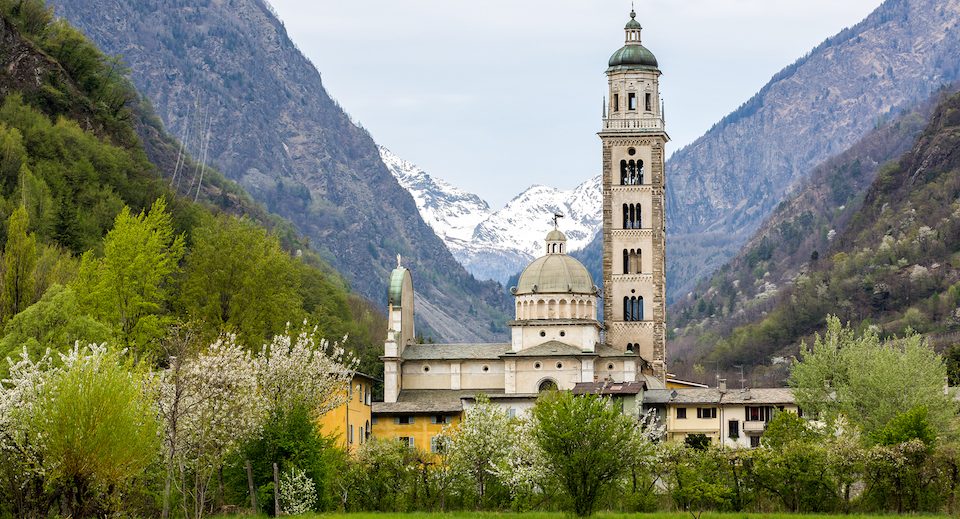
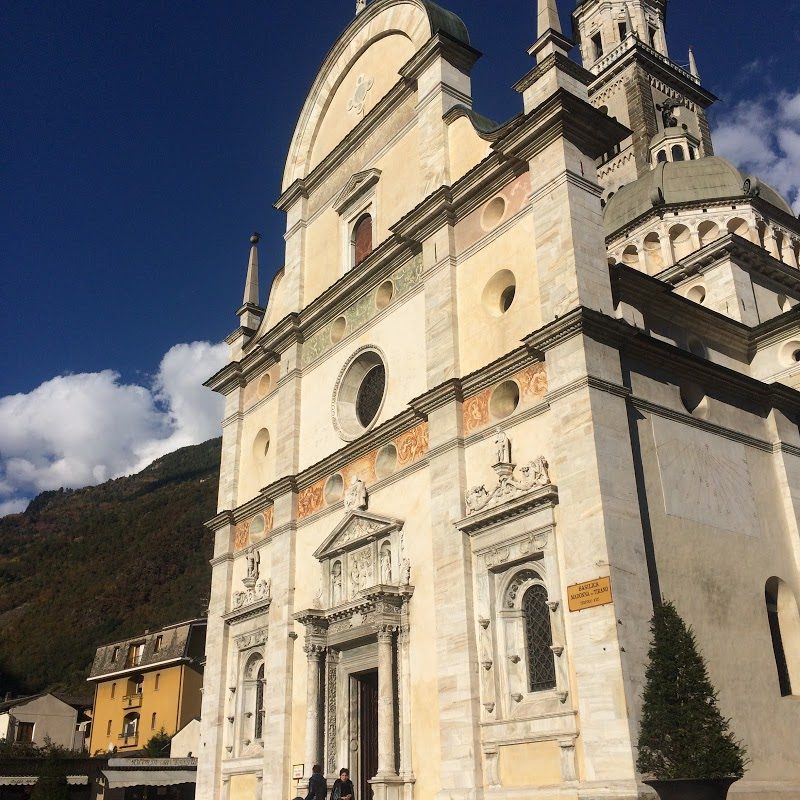
A 16th-century Renaissance church located in Tirano, featuring ornate stucco work. It is one of the key historic sites along the route near these Milan alpine landmarks.
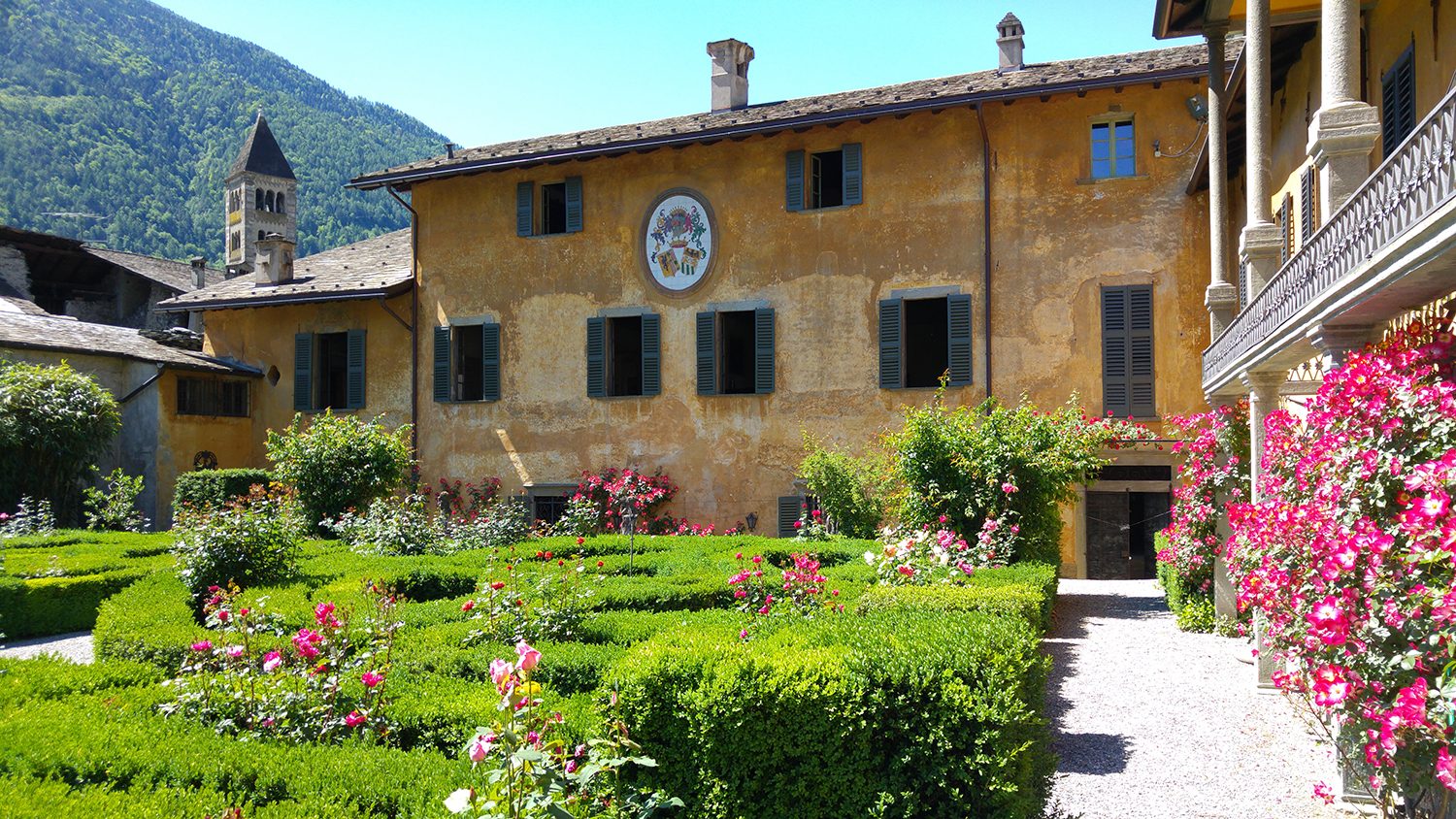
A historic palace in Tirano featuring restored rooms, trompe-l'oeil vaulted ceilings, and a private garden.
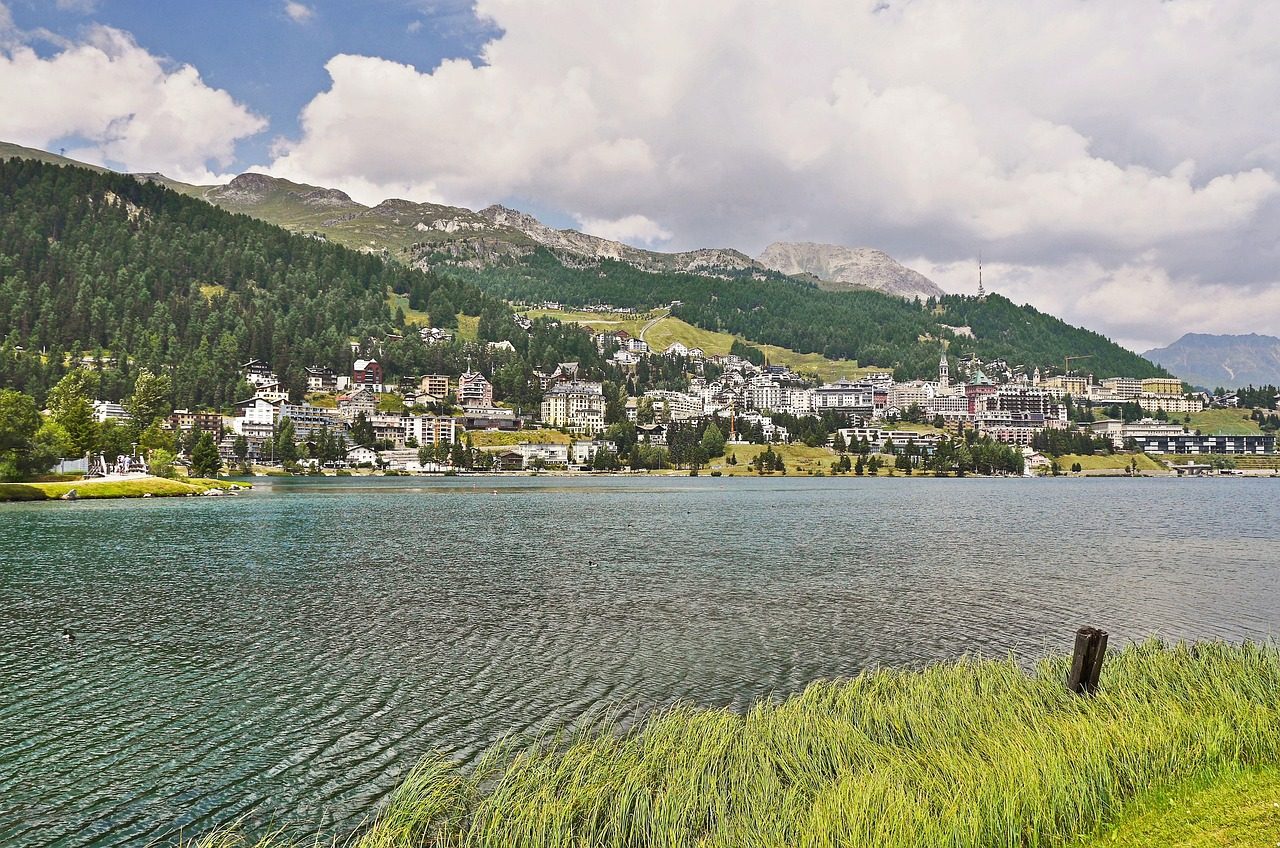
A scenic alpine lake in St. Moritz offering walking paths, boat rentals, and panoramic mountain views.
A unique circular stone viaduct that helps the train adjust its elevation in a tight space.
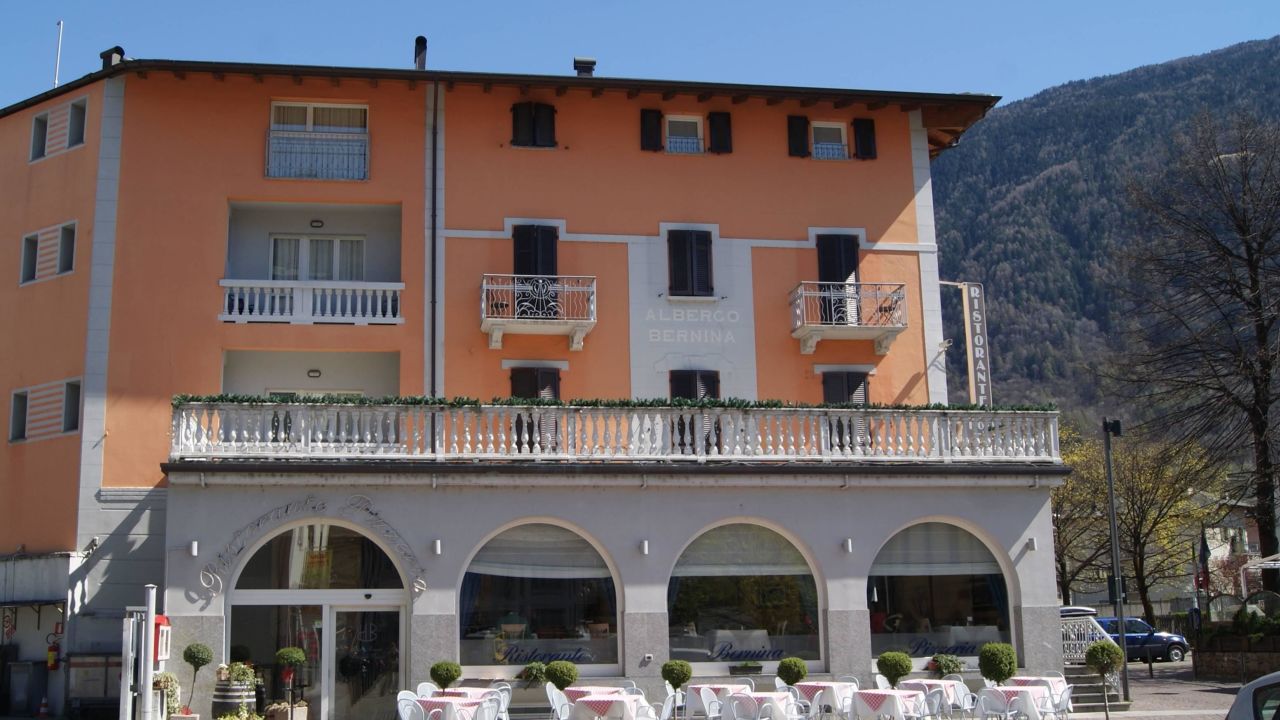
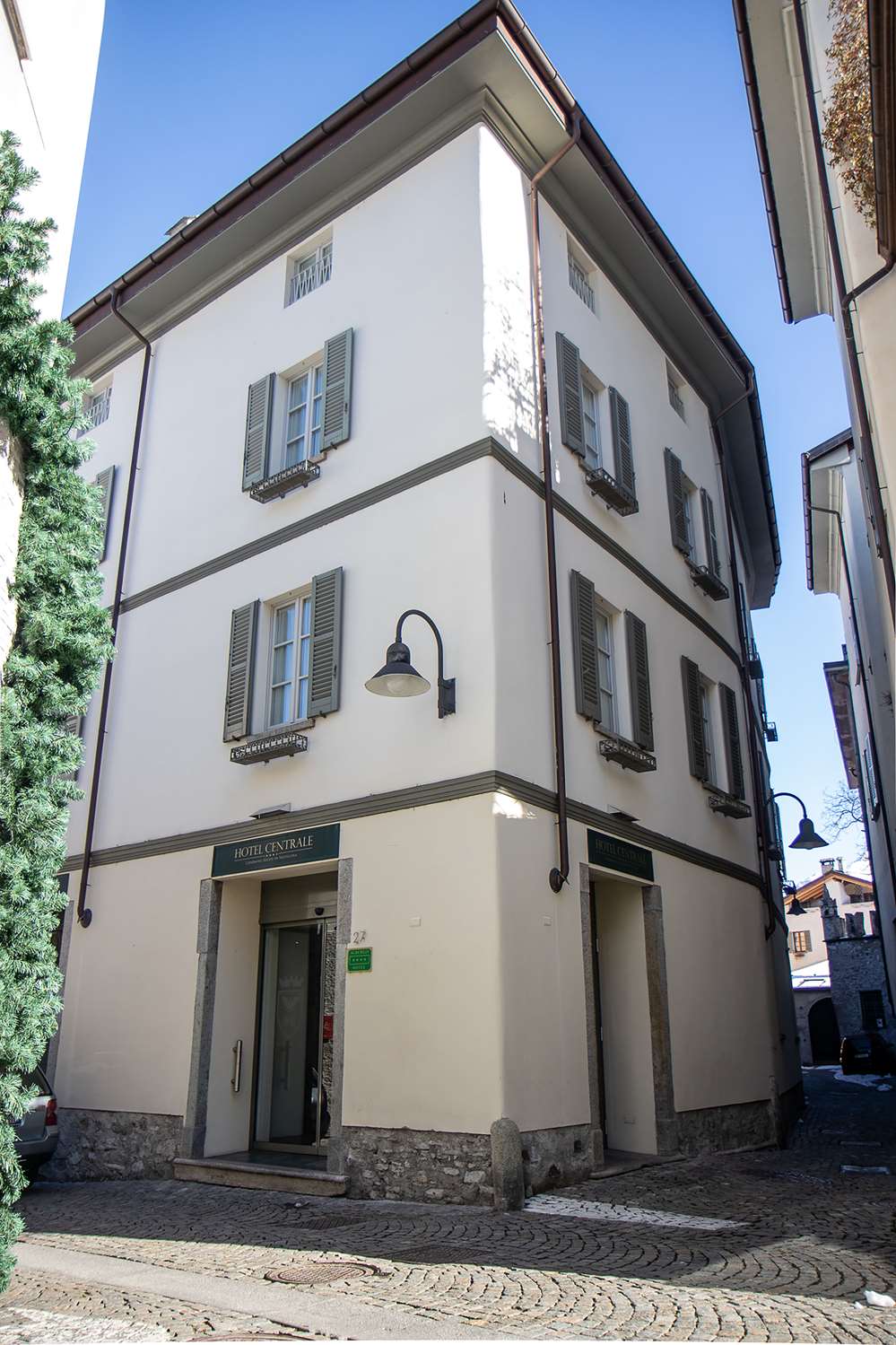
Convenient hotel located directly opposite the Tirano train station, ideal for early departures.
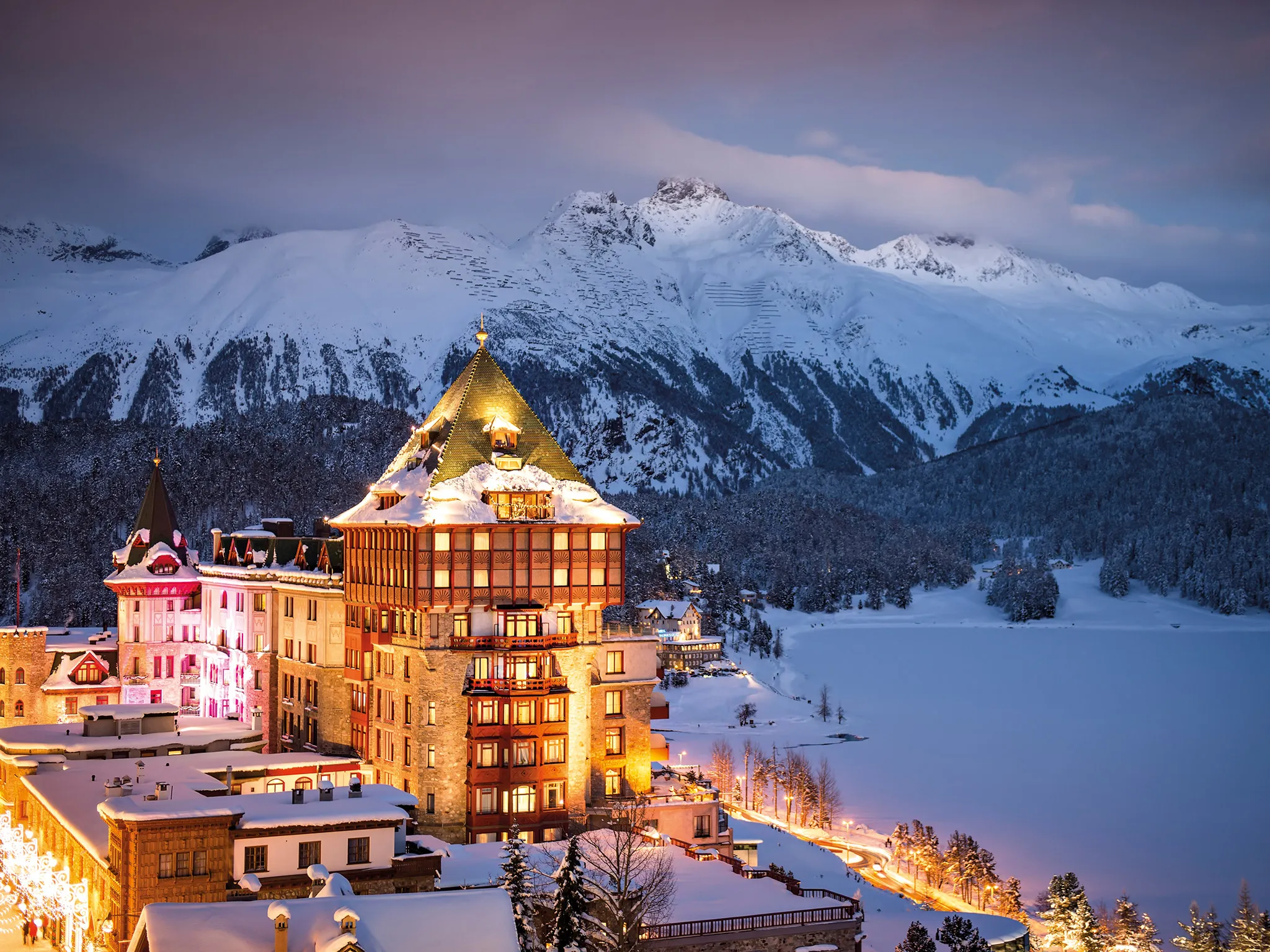
Historic 5-star hotel in St. Moritz offering views of the lake and high-end spa facilities.
A simple and clean accommodation option located in the heart of Tirano.
Join thousands of happy travelers who have discovered this incredible experience
Book Your Experience Now