11 hr
Swiss Alps Day Trip from Milan: Bernina Red Train & St. Moritz
- Expert local guide
- Small group
- Skip-the-line access
- Free cancellation
Bernina Express — Reserved Seats From Milan To St. Moritz
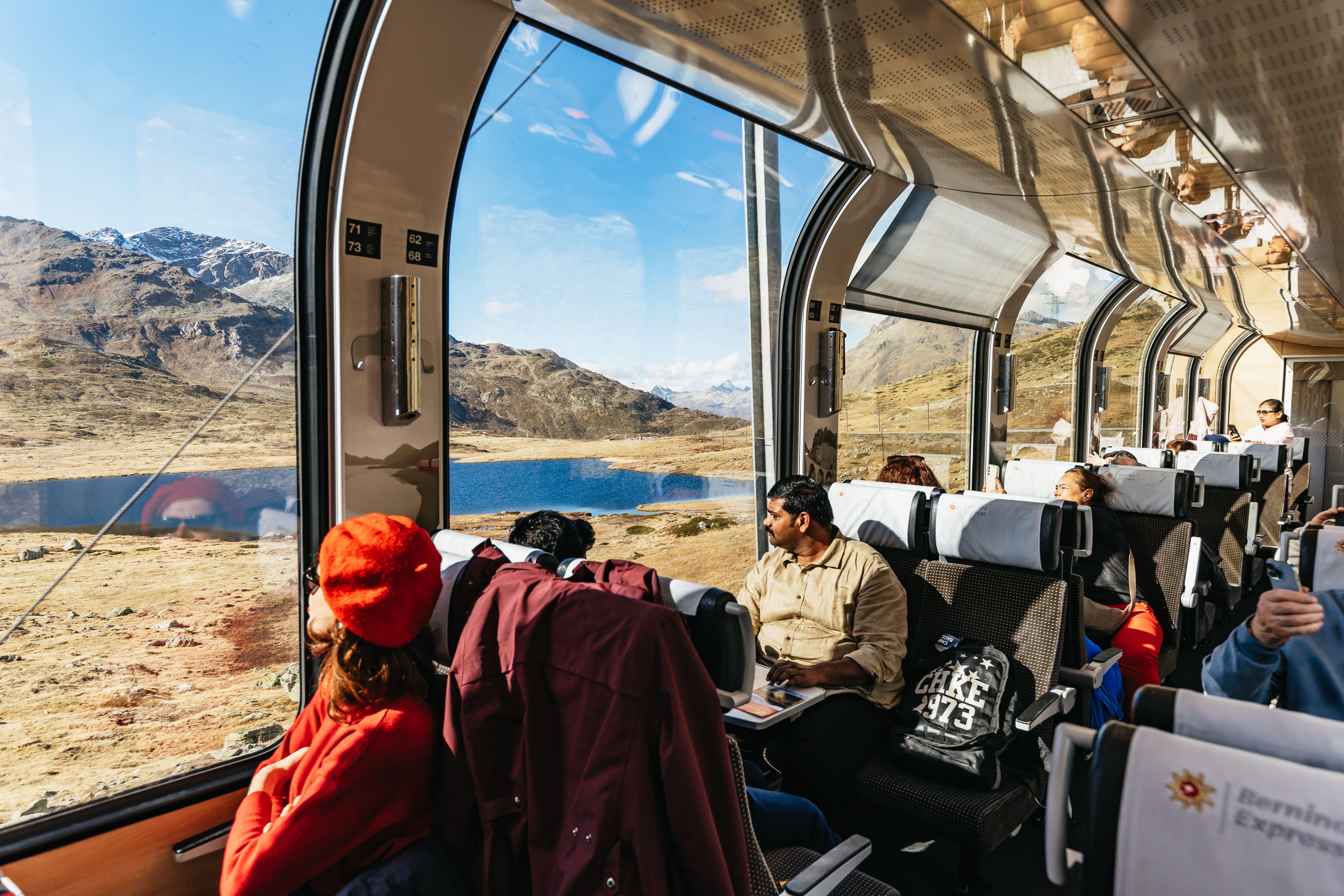
Glaciers gather at the window, valleys fall away behind.
Compare fares, pick the fit — all bookings are mobile-voucher and eligible for free cancellation where shown.
11 hr
13 hr
12 hr
When planning to ride a scenic train from milan to swiss alps, you must choose between standard regional coaches and official panoramic carriages. This matrix helps you compare comfort levels, window styles, and booking rules for this iconic Swiss Alps rail tour. Selecting the right layout ensures your alpine journey meets expectations, especially when comparing various scenic train from milan to swiss alps tours. It is important to note that the reservation fee is separate from the base fare. Travelers should secure their official scenic train from milan to swiss alps tickets early to avoid peak-season sell-outs.
| Regional Train Carriage (Flexible Coach) |
Top pick Panoramic 2nd Class (Panoramic Coach) |
Panoramic 1st Class (First Class Coach) | |
|---|---|---|---|
| Ticket Price | 33 CHF standard ticket | 33 CHF ticket + reservation fee | 57 CHF ticket + reservation fee |
| Seat Reservation | Optional (not required for travel) | Mandatory (surcharge up to 36 CHF) | Mandatory (surcharge up to 36 CHF) |
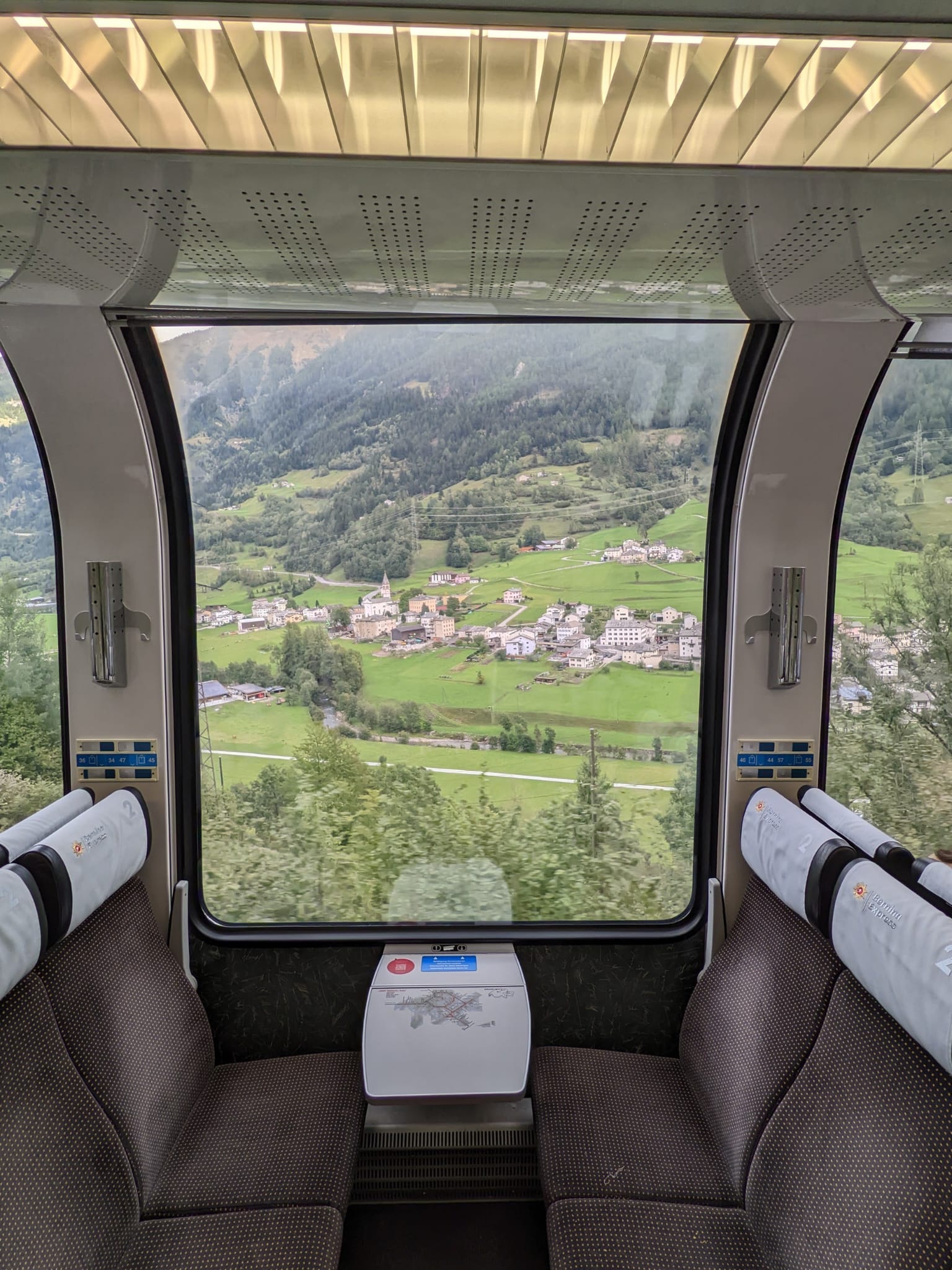
| Window Design | Standard windows that open for photos | Large curved glass to the ceiling | Large curved glass to the ceiling |
| Seating Layout | 2+2 layout with standard legroom | 2+2 layout with standard legroom | Spacious 2+1 layout with extra legroom |
| Travel Flexibility | High (valid on any regional train) | Fixed seat on specific timed departure | Fixed seat on specific timed departure |
| Best For | Photographers and budget-conscious travelers | First-time visitors wanting panoramic views | Travelers seeking maximum space and comfort |
| See tickets & prices |
Verdict: We recommend the panoramic second-class option for first-time travelers, while those wanting complete flexibility on their route can opt for a self-guided scenic train from milan to swiss alps tour.
Worth it for scenery lovers, not schedule-packers
The scenic train from milan to swiss alps is a full-day commitment: roughly three hours each way to Tirano before the Rhaetian Railway section even begins. The rail leg itself costs 33 CHF for a standard adult one-way second-class ticket between Tirano and St. Moritz, and that fare buys real value — the Brusio circular viaduct, the climb past Alp Grüm, the Bernina Pass at over 2,250 metres, and the Morteratsch glacier views, all on a UNESCO World Heritage line with no rack or cog assistance. Organised scenic train from milan to swiss alps tours bundle the transfer, the panoramic carriage and St. Moritz time into one booking, which is where most travellers save friction rather than money. It pays off for photographers, rail enthusiasts and anyone treating the ride as the destination. It disappoints people who want maximum ground covered per day.
Bottom line: Book the Bernina alpine railway day trip if the ride itself is the point — otherwise your day is better spent elsewhere.
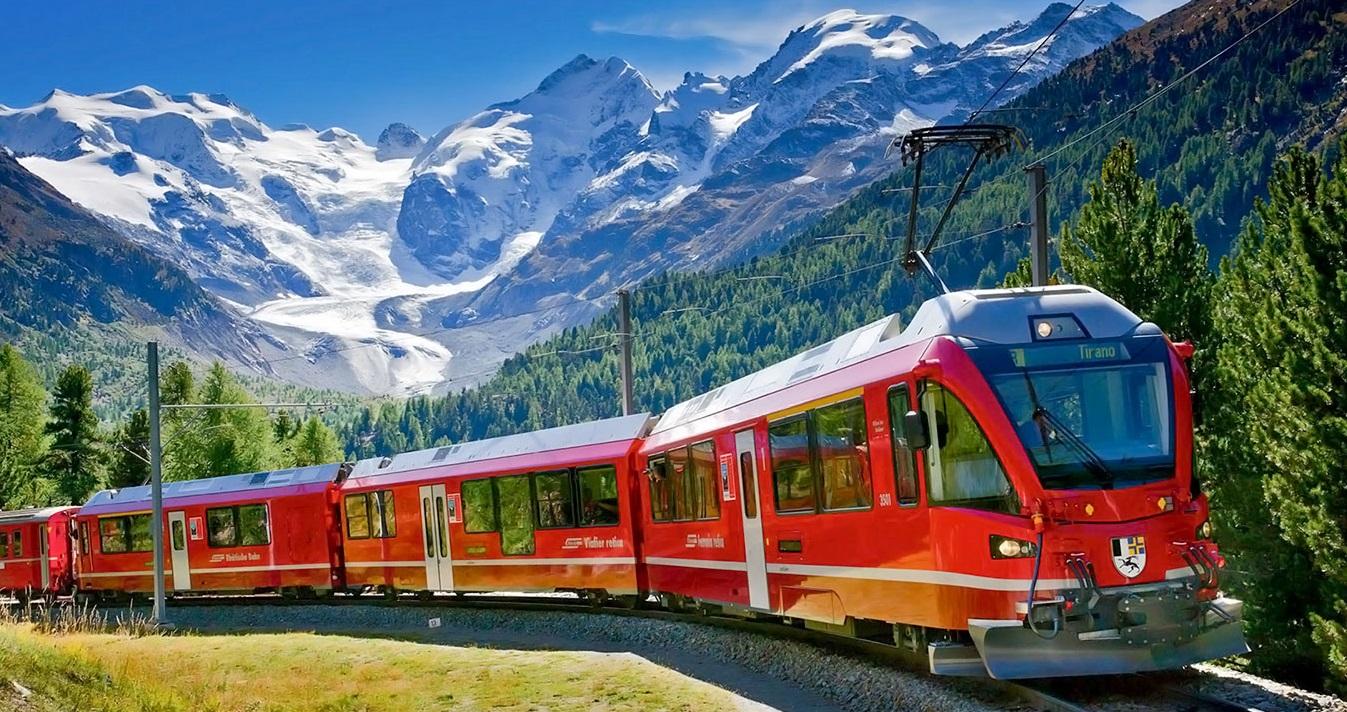
While both options run on the exact same spectacular UNESCO heritage tracks, buying scenic train from milan to swiss alps tickets secures a premium seat in the panoramic cars, which most travelers find superior to the basic local carriages. The regional line operates daily from 07:00–19:00, departing from the historic Piazza delle Stazioni 22 in Tirano, allowing for spontaneous travel without any advance planning. This hourly availability makes the red train the preferred choice for those booking a scenic train from milan to swiss alps tour on a highly flexible schedule.
|
Top pick Bernina Express |
Regional RhB Trains | |
|---|---|---|
| Window Style | Curved panoramic glass (sealed) | Standard openable sash windows |
| Ticket Pricing | CHF 33 ticket plus reservation | CHF 33 standard fare only |
| Reservation Requirement | Mandatory (sells out early) | Optional (voluntary CHF 5 fee) |
| Schedule Frequency | 1 to 3 departures daily | Roughly hourly departures |
| Passenger Comfort | Panoramic cars, minibar service | Standard coaches, no catering |
| Hop-on Hop-off Flexibility | — (reservation lost upon exiting) | ✓ (unlimited stops on valid route) |
| See tickets & prices |
Verdict: For travelers planning multi-day scenic train from milan to swiss alps tours, the Trenino Rosso regional trains offer unmatched scheduling flexibility and lower costs across the Rhaetian Railway network, while the official Bernina Express remains the peak choice for sheer visual drama and curated comfort.
Hand-picked experiences loved by thousands of travelers
12 - 13 hours
Free Cancellation
Travel through the Swiss Alps on the iconic Bernina Express and explore the luxury resort of St. Moritz.
Discover the best local experiences, guided tours, and popular landmarks with a flexible city activity voucher.
13 hours
Free Cancellation
Journey through the Swiss Alps on the historic Bernina Red Train and explore glamorous St. Moritz.
12.5 hours
Free Cancellation
Discover the Swiss Alps from Milan on a small-group trip featuring the iconic Bernina Express and St. Moritz.
12 hours
Free Cancellation
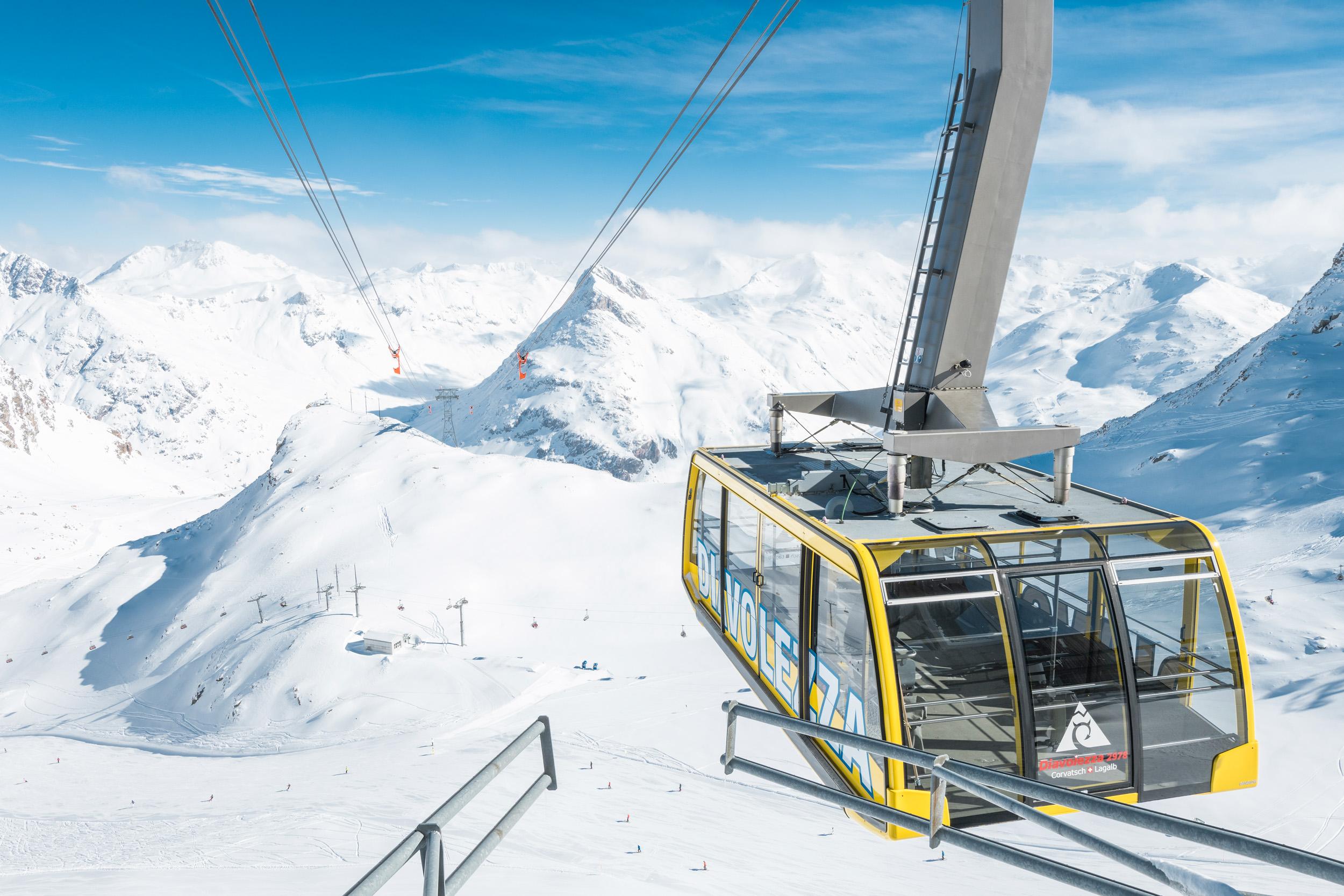
Ascend to 2,978 meters by cable car for an alpine lunch, followed by a scenic ride on the legendary Bernina Red Train.
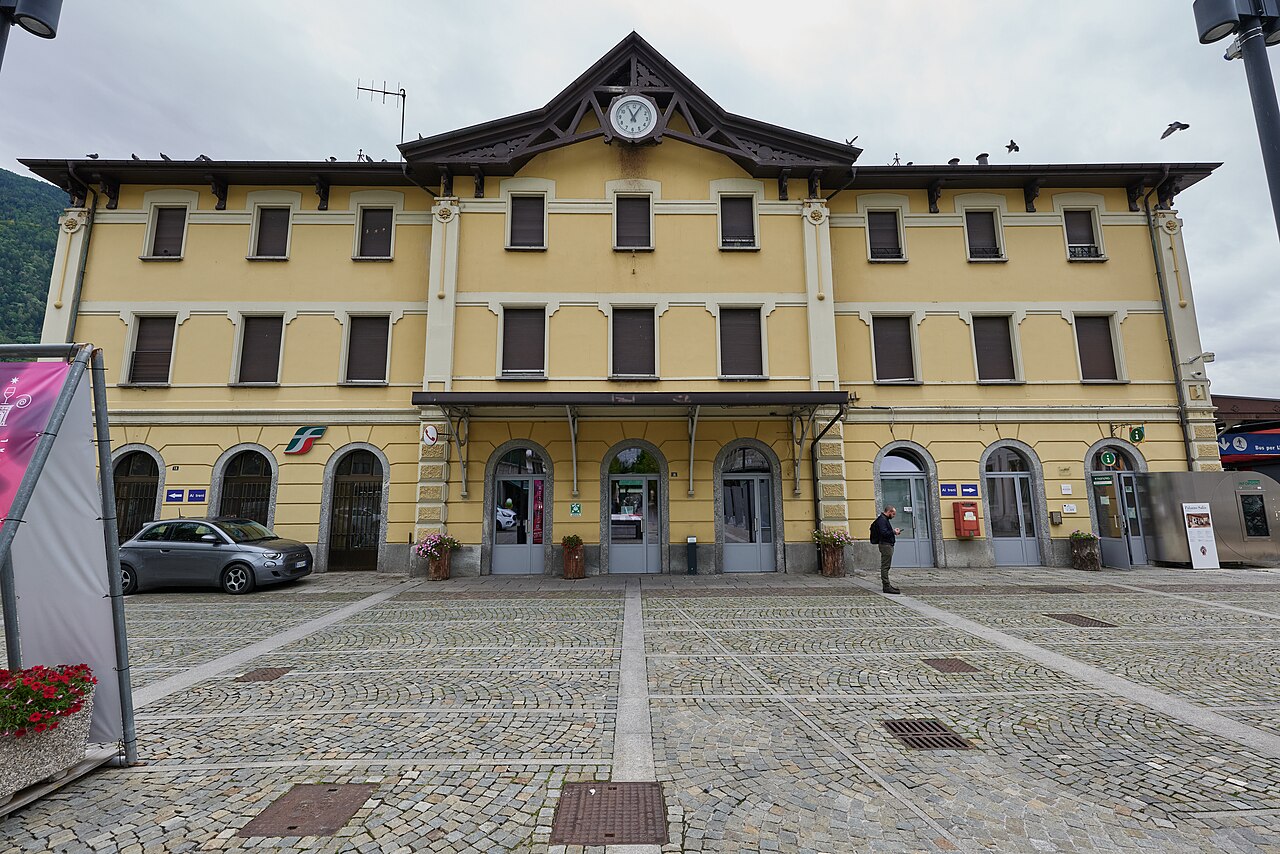
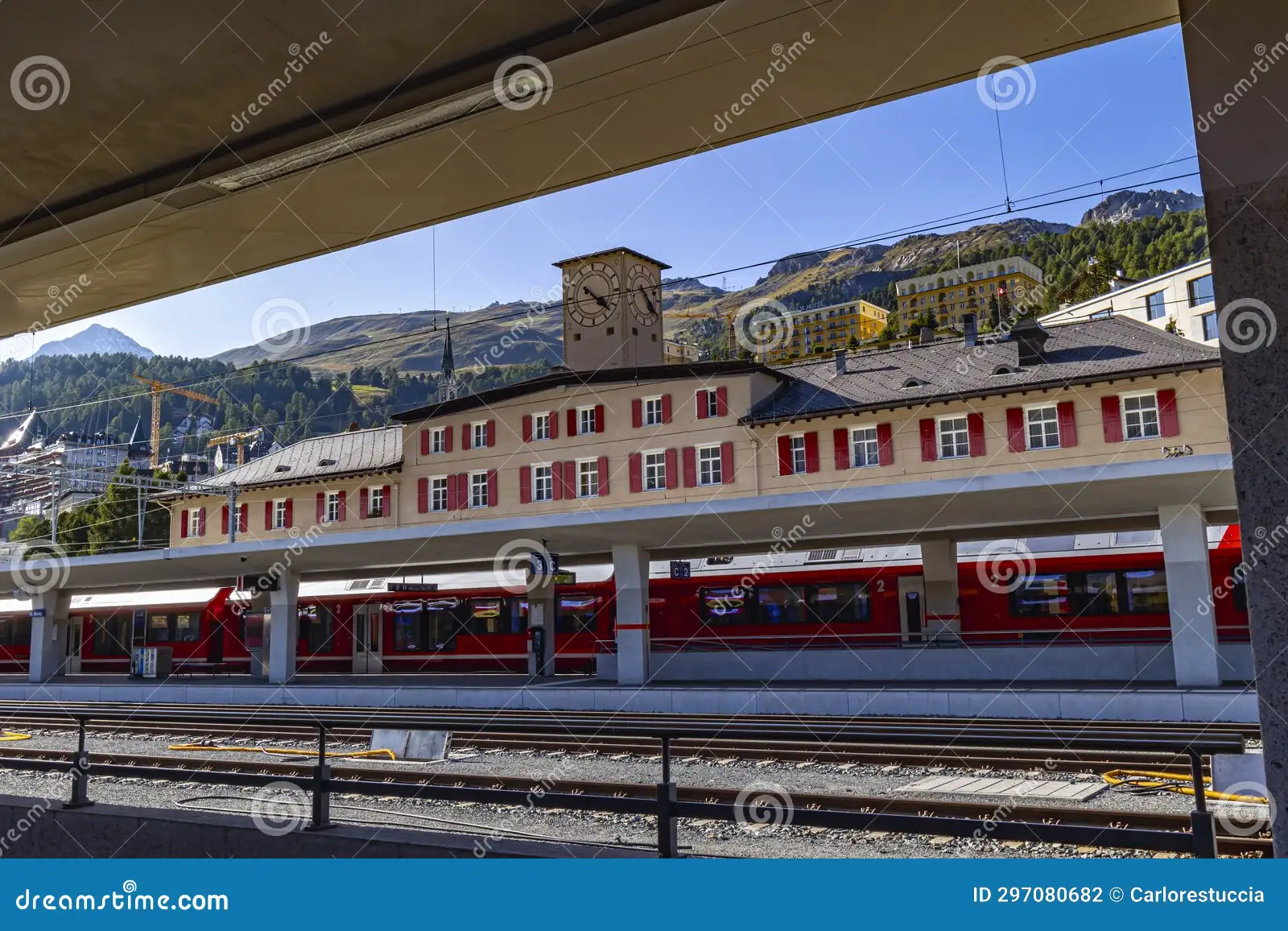
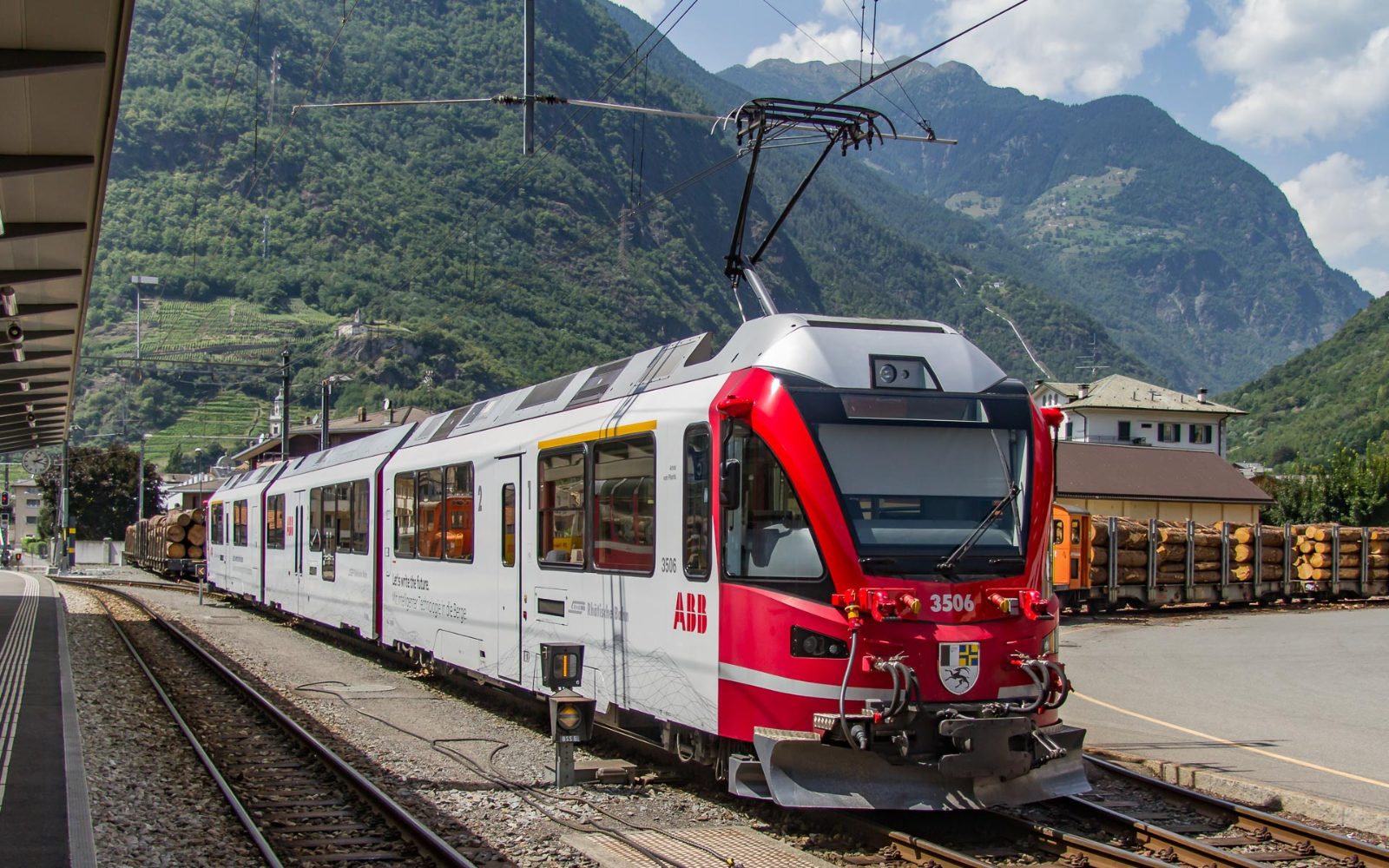
Arrive at the Tirano station to begin your journey on the scenic train from Milan to Swiss Alps.
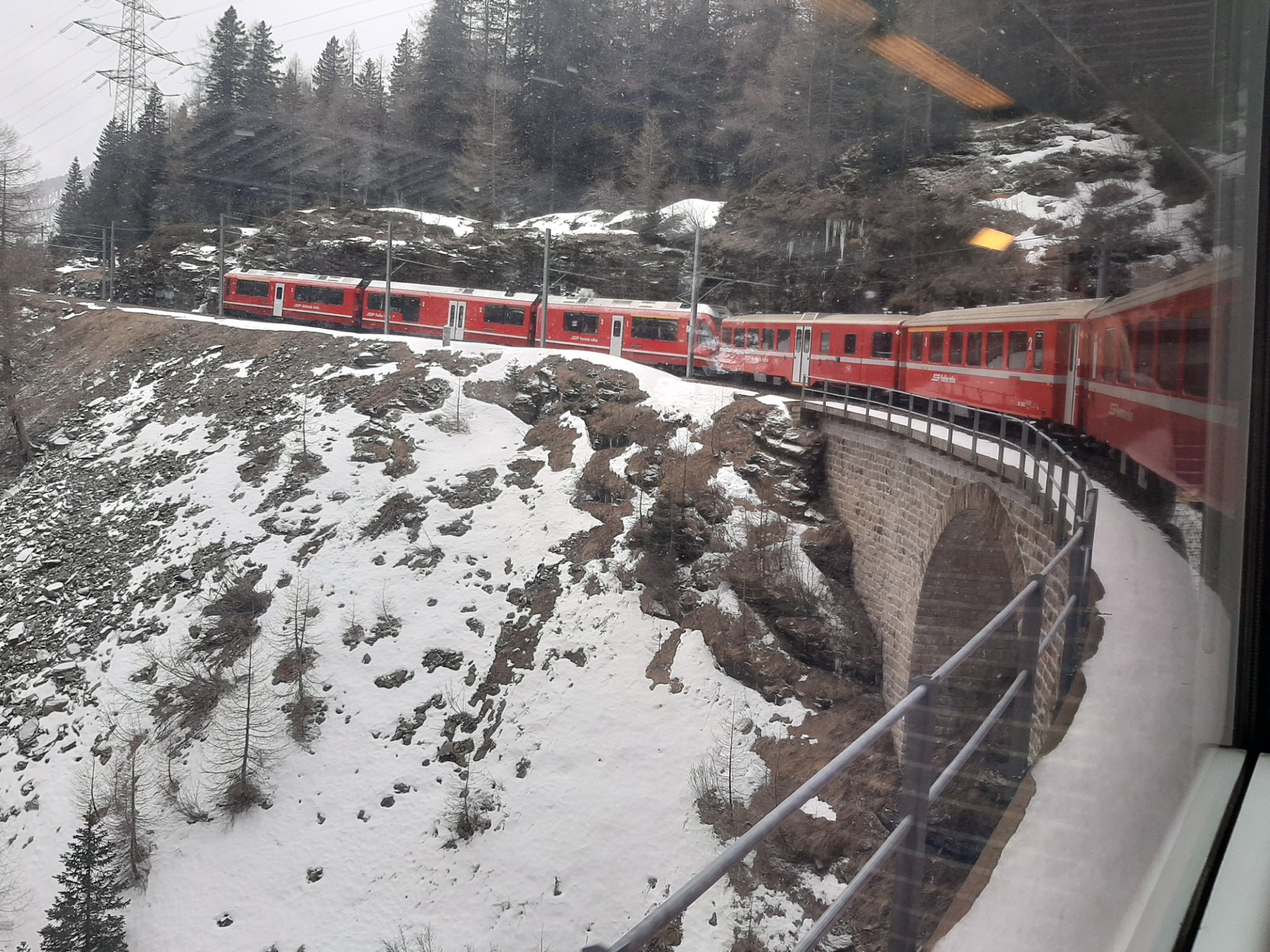
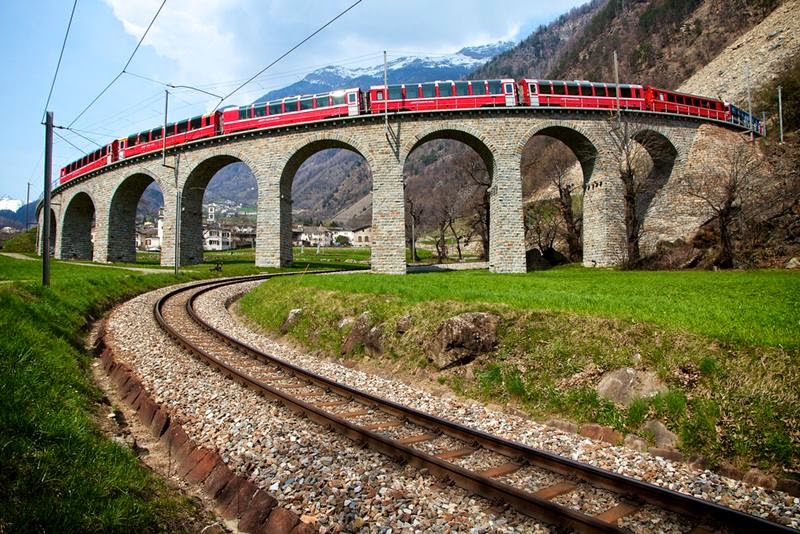
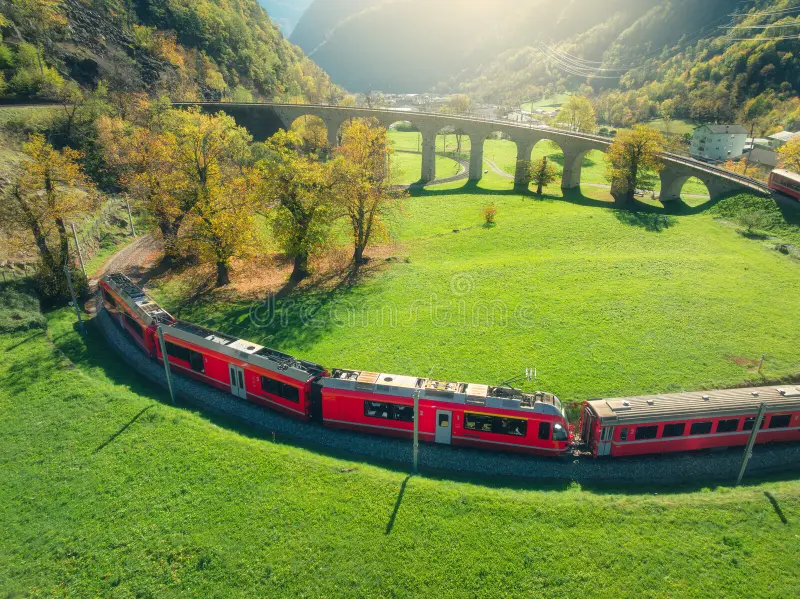
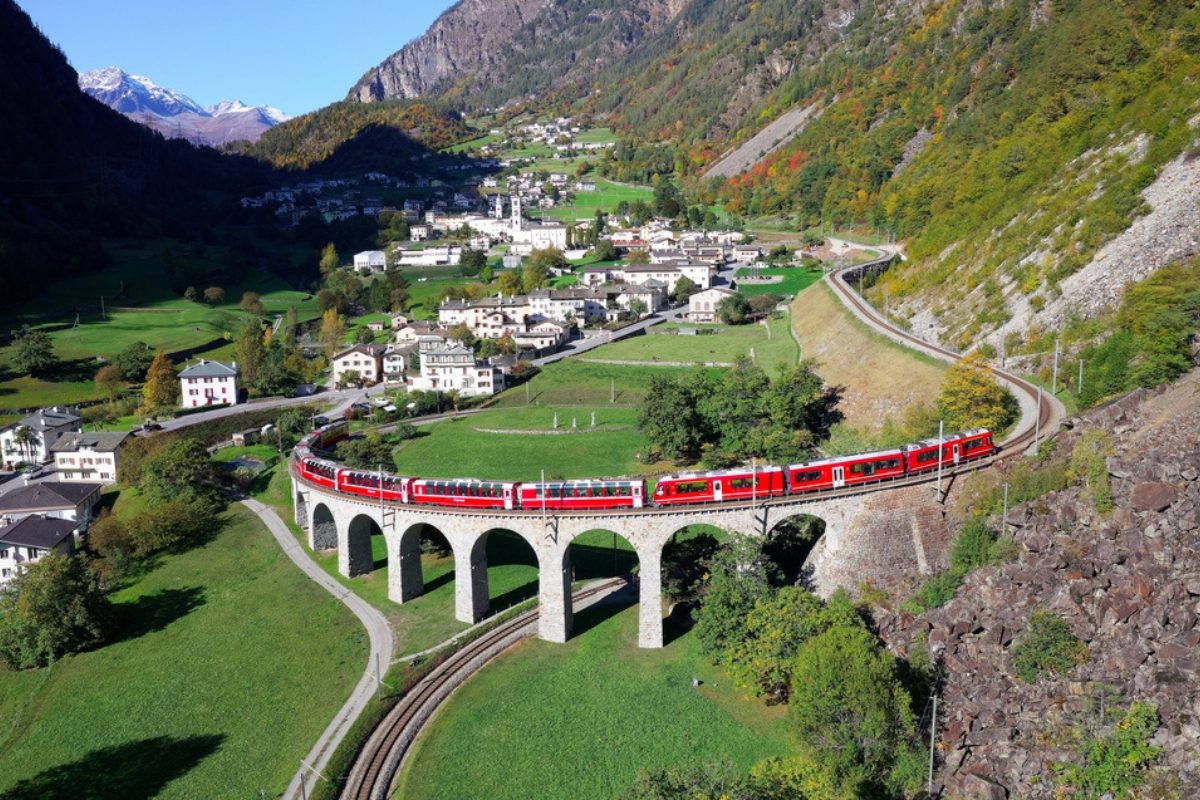
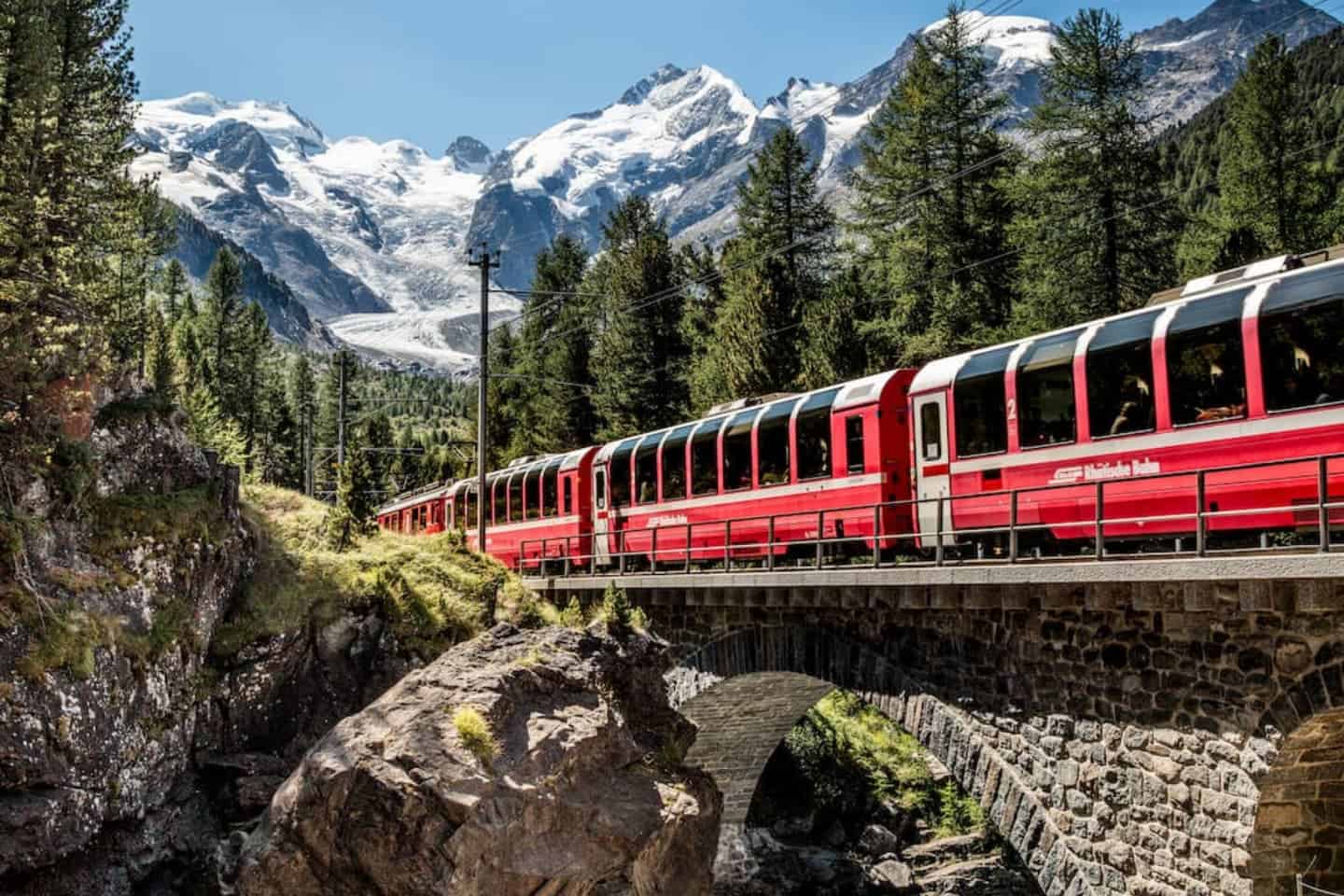
Cross the iconic 360-degree spiral viaduct to gain altitude.
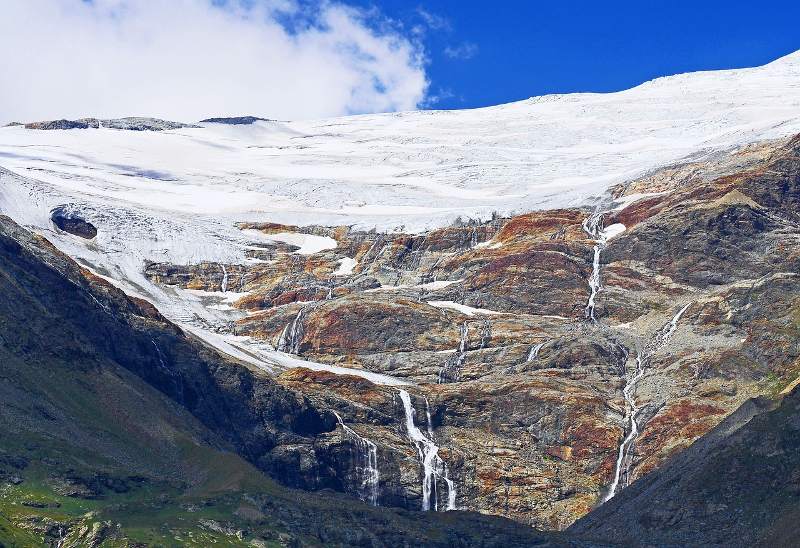
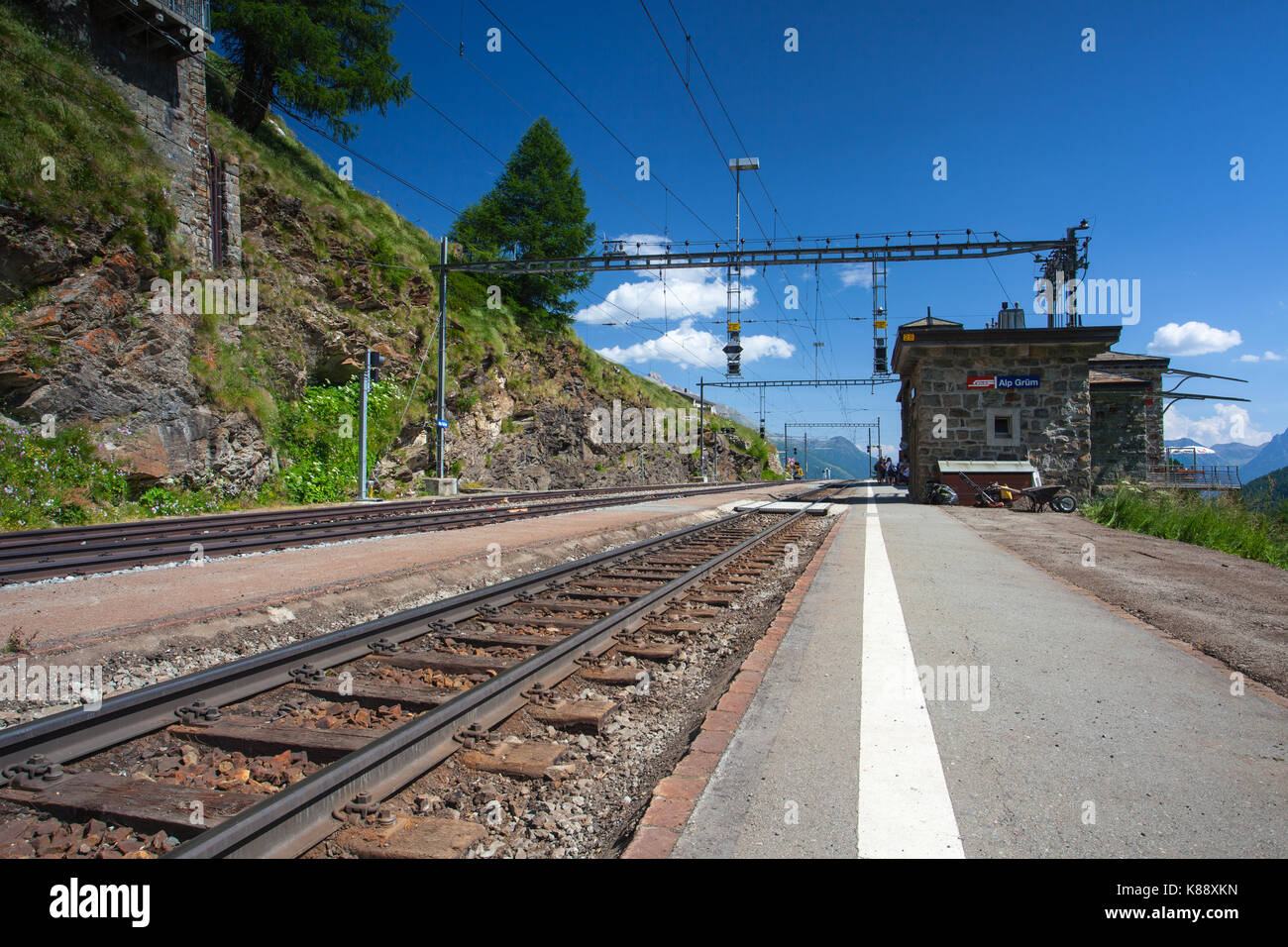
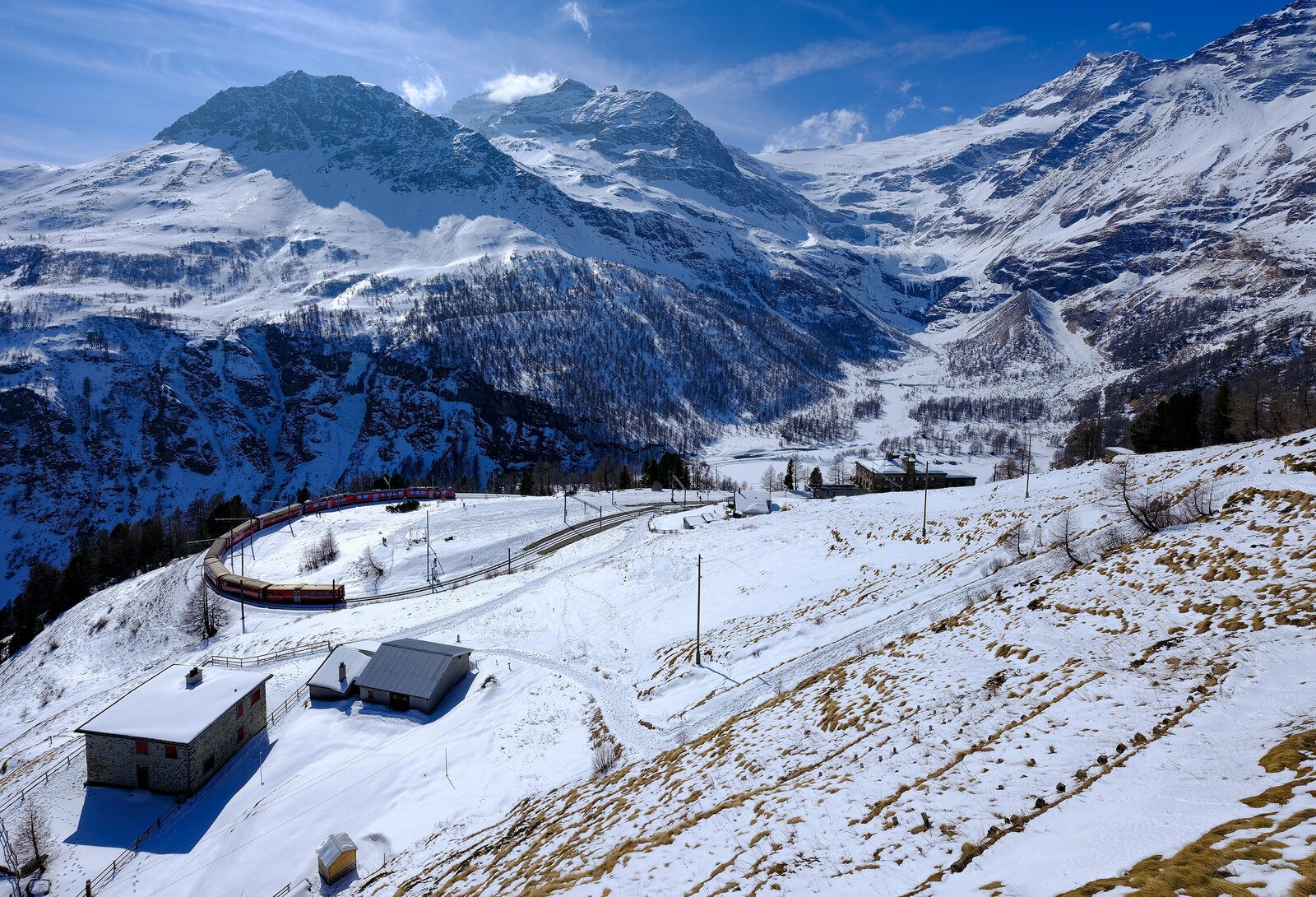
Pass through Poschiavo and climb steeply to Alp Grüm for views of the Palü Glacier.
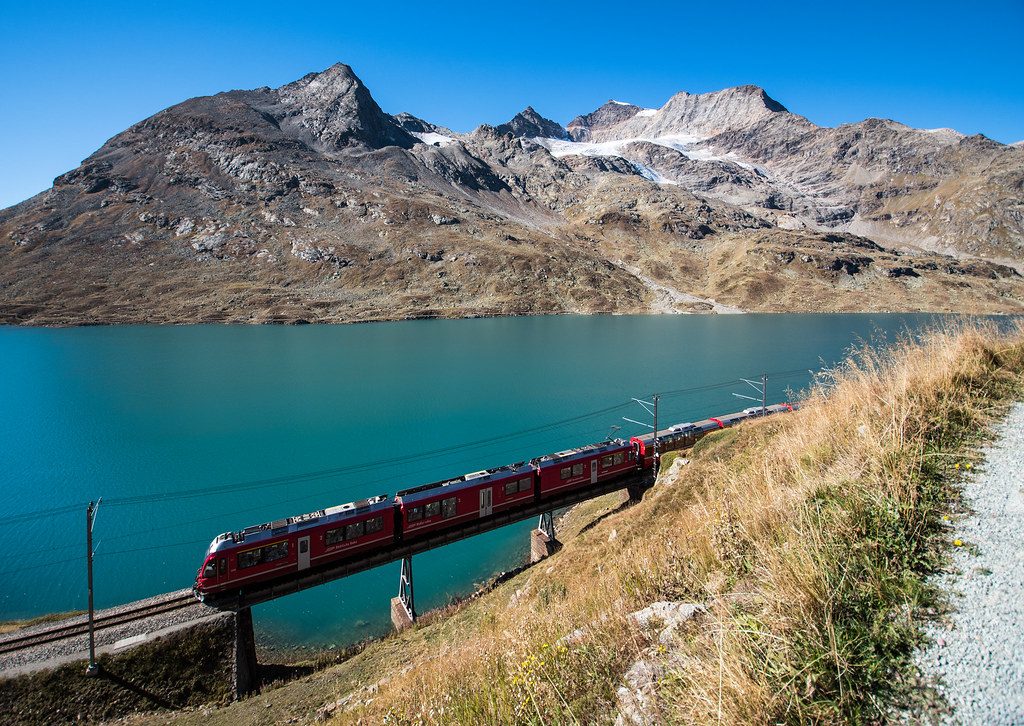
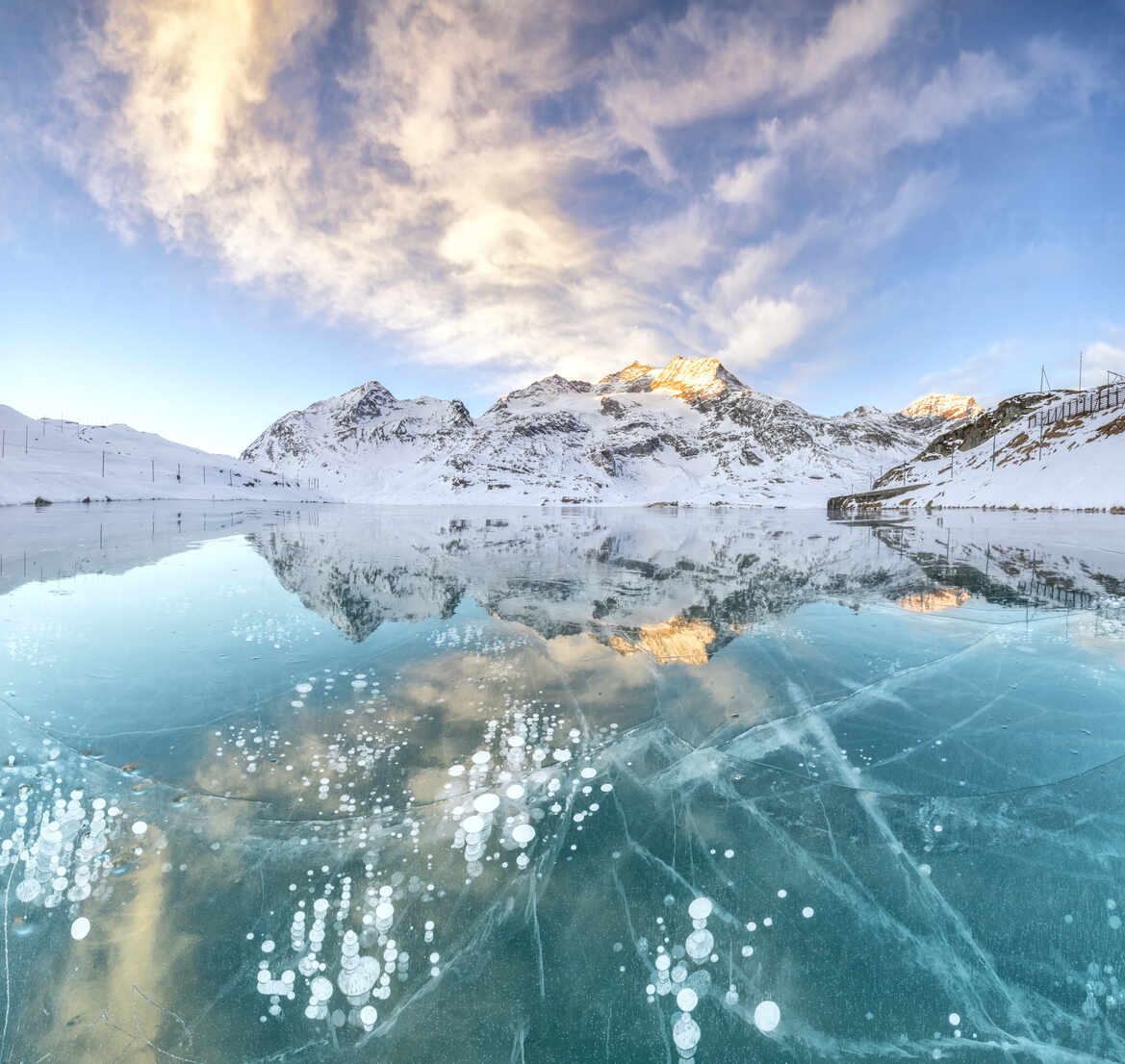
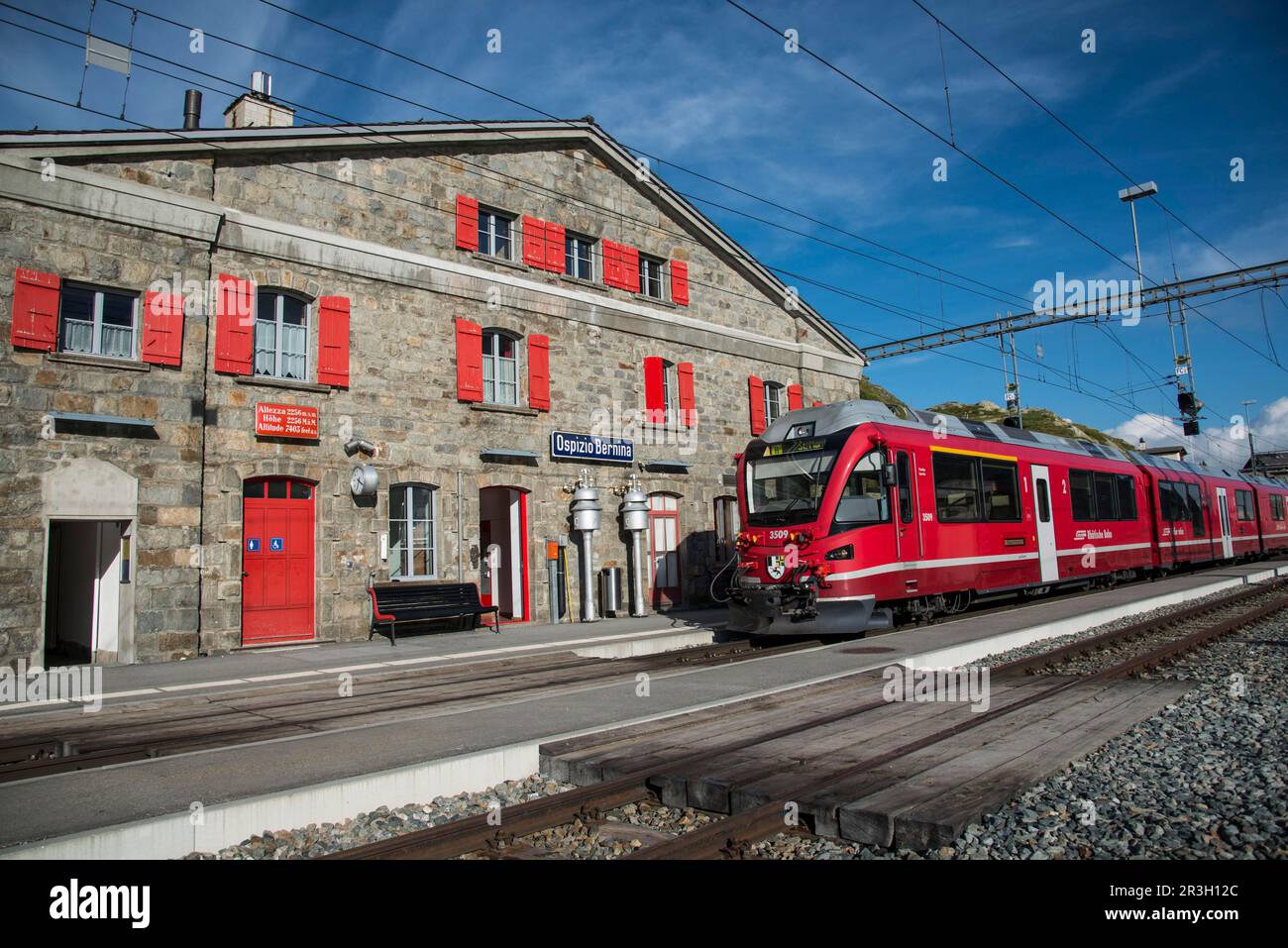
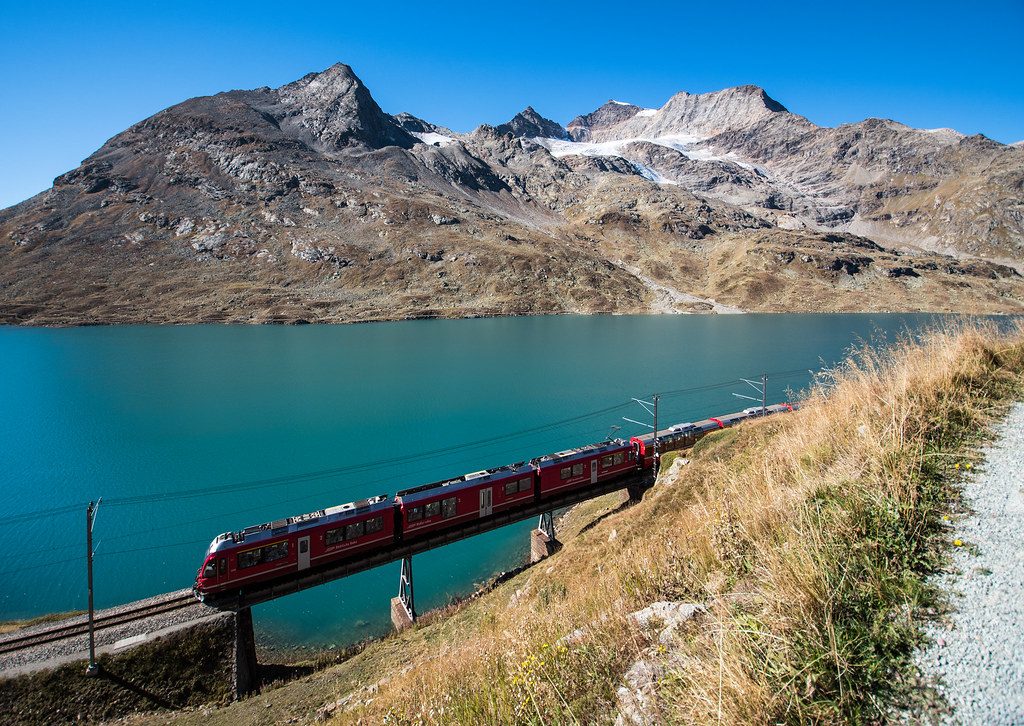
Reach the summit at Ospizio Bernina, passing the milky waters of Lago Bianco.
Descend into the Engadin Valley and arrive in the resort town of St. Moritz.
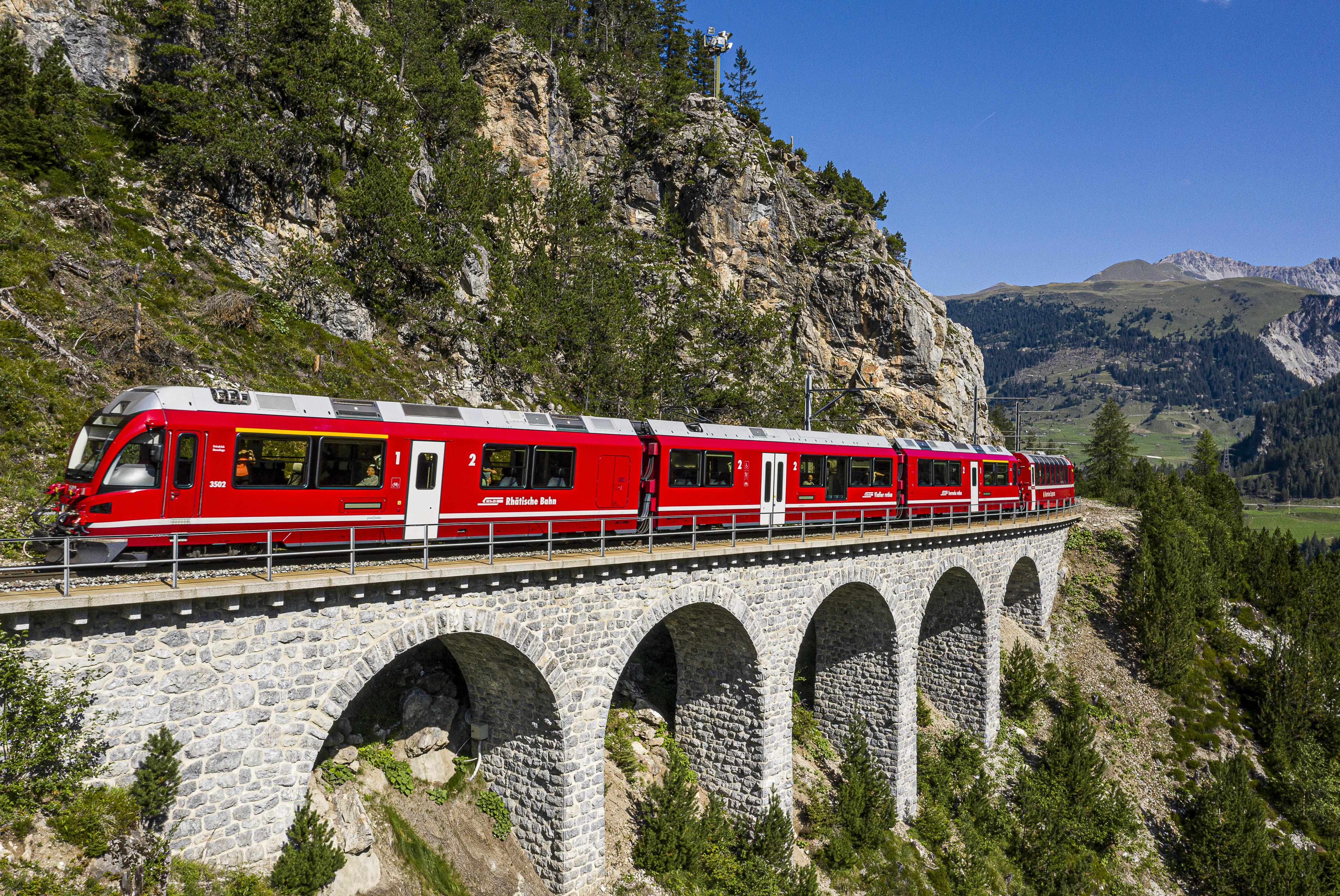
This nine-arch stone spiral viaduct was opened in 1908 to solve the steep altitude decline. The train travels a full 360-degree loop on the open-air structure to descend without using cogwheels.
Situated at an altitude of 2,091 meters, this isolated railway station is accessible only by train or on foot. It features a stone station building with views overlooking the Palü Glacier and the lake below.
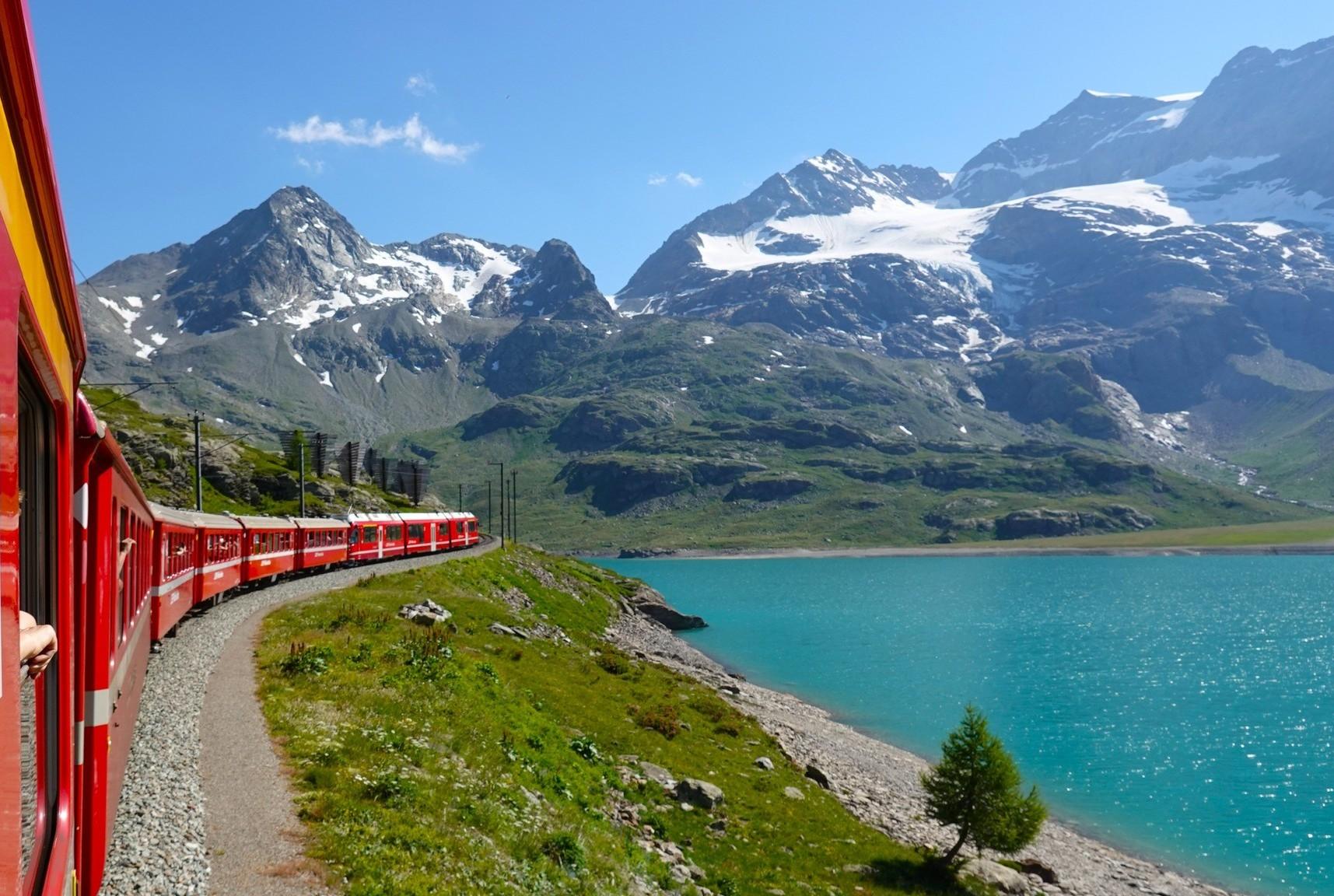
A reservoir situated at the summit of the Bernina Pass at 2,234 meters above sea level. The lake gets its distinct milky-white color from the glacial silt carried by runoff water.
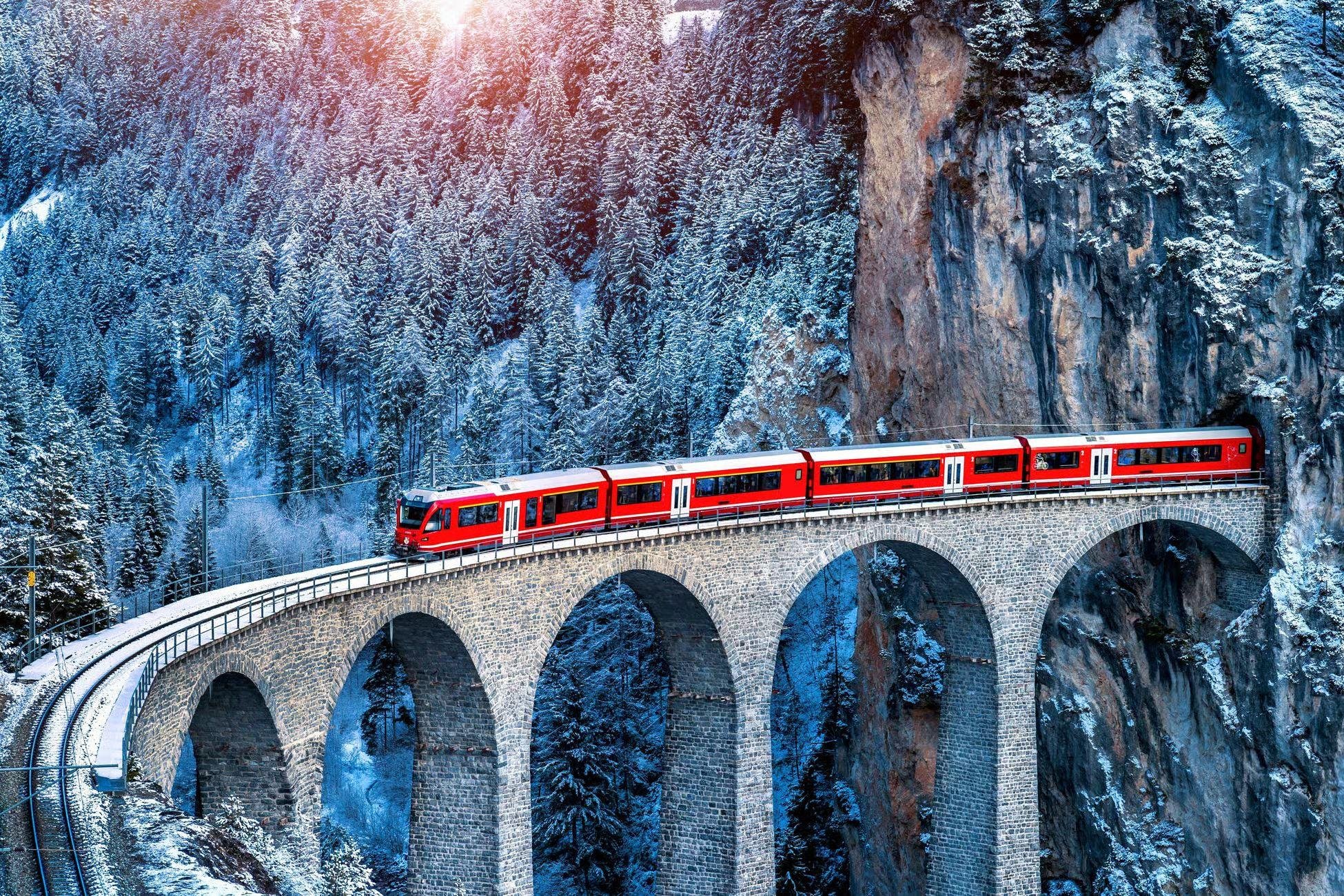
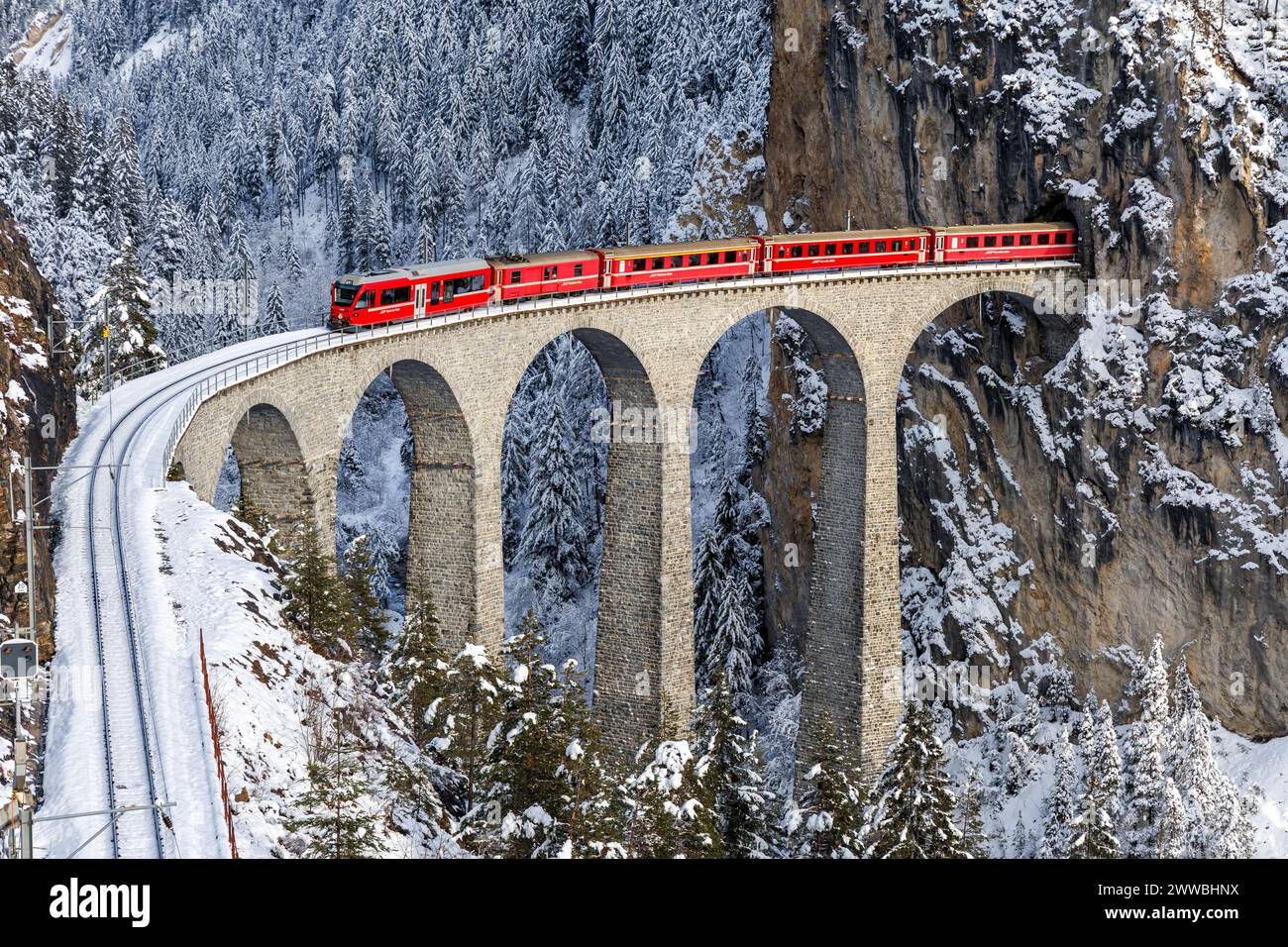
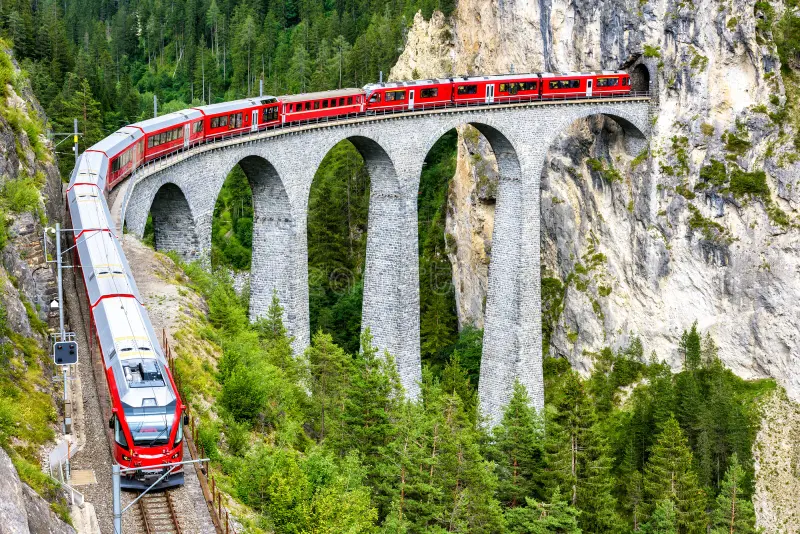
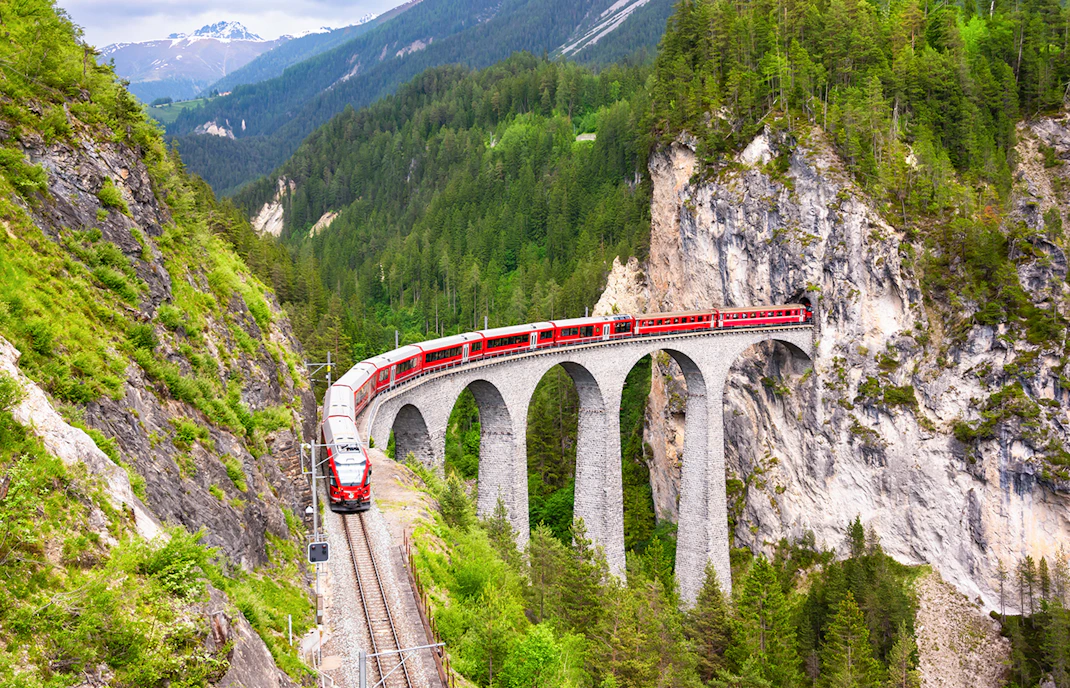
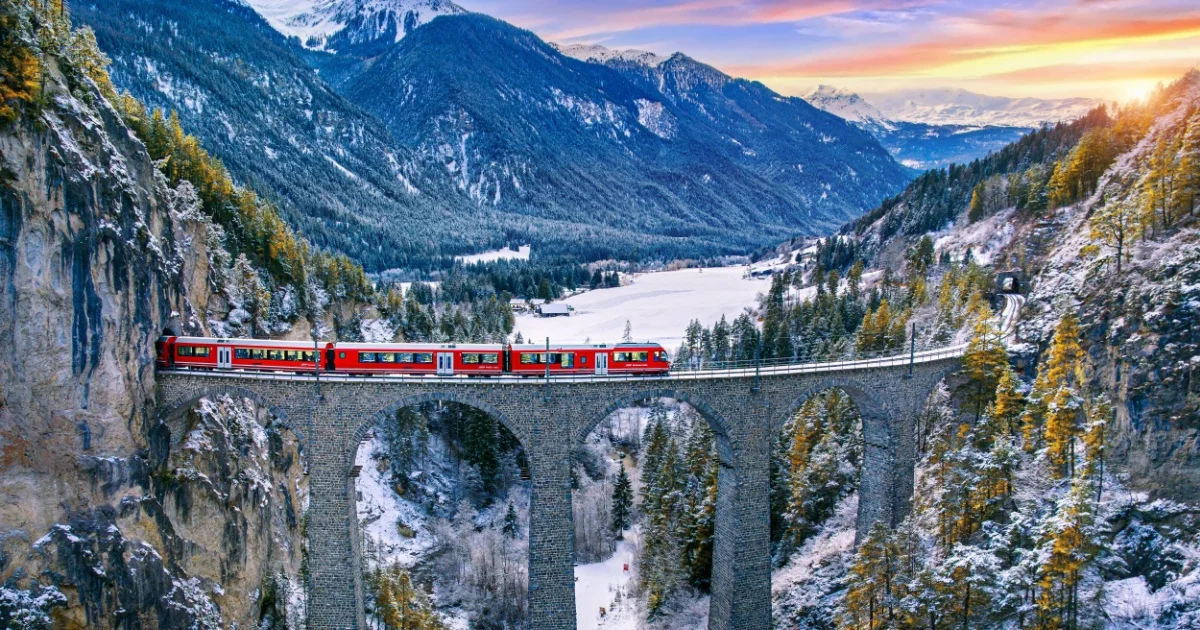
A 65-meter-high single-track limestone railway viaduct spanning the Landwasser torrent. The curving six-arch bridge leads the train directly into the entrance of the Landwasser Tunnel on a steep cliff.
At 2,253 meters above sea level, this is the highest railway station on the entire Rhaetian Railway network. It serves as the climatic divide between the northern and southern valleys of the Alps.
You reach Tirano between 08:00 and 10:00, when the alpine light is cleanest and full-day connections still hold. The station sits at Piazza delle Stazioni 22, and you cross the piazza on foot to find the red carriages waiting on street-level track beside the basilica.
You settle in on the right-hand side heading north. Within twenty minutes the train enters the Brusio spiral and you feel the carriage bank through a full circle while the arches you just crossed reappear below the window. You pass vineyards, then Poschiavo, then the lake at Le Prese where the water sits level with the rails. The climb tightens. At the Montebello curve you reach for the glacier, and by Ospizio Bernina the tree line has gone entirely and Lago Bianco lies grey-white on your left.
You step down at St. Moritz into thinner, drier air. Most scenic train from milan to swiss alps tours give you a couple of hours here before the coach or return leg, enough to walk the lakeshore promenade and watch the Engadin light flatten against the water. Independent travellers holding 33 CHF second-class tickets simply reverse the route. Either way you descend the same 1,800 metres, and the vines return before the valley does.
All the details about your upcoming adventure in one place
The Bernina line climbs to 2,253 metres at Ospizio Bernina without a single rack rail, making it the highest transalpine crossing in Europe worked entirely by adhesion.
Engineer Friedrich Hennings drew the route in the first decade of the twentieth century, and the Tirano–St. Moritz section opened in 1910. In 2008 UNESCO inscribed the Albula and Bernina lines together as a World Heritage cultural landscape, one of only three railways on the list. The distinction rests less on record-keeping than on restraint: the track was laid to follow terrain rather than defeat it.
That philosophy is legible from any seat. The Brusio circular viaduct spirals through 360 degrees on nine open stone arches, shedding altitude in a single turn where a lesser design would have blasted a tunnel. Further north the Montebello curve delivers the Morteratsch glacier and the Piz Bernina massif, the only 4,000-metre peak in the Eastern Alps, in one continuous sweep. Between them the line passes Alp Grüm, Lago Bianco and the Lagalb slopes, gaining roughly 1,800 metres of elevation across 61 kilometres. Metre-gauge track, 196 bridges and 55 tunnels carry the whole of it. A scenic train from milan to swiss alps begins, in practice, at Piazza delle Stazioni 22 in Tirano, where Italian State Railways track meets Rhaetian Railway track at street level and the red carriages simply cross the piazza among parked cars.
The crossing matters today as working infrastructure, not preserved curiosity. Rhaetian Railway trains serve Poschiavo, Le Prese and the Val Bernina year-round for residents as well as visitors, which is why panoramic coaches share the timetable with ordinary regional services. Departures run daily on a 07:00–19:00 operating window, and reservations for the glass-roofed panoramic cars are separate from the base fare of 33 CHF for a standard adult one-way second-class ticket between Tirano and St. Moritz.
St. Moritz sits at the northern end, a resort that has hosted two Winter Olympics and still trades on the dry Engadin light. Palm-fringed Tirano sits 1,400 metres below it in the Valtellina. Between the two the vegetation shifts from vines to larch to bare moraine in under three hours. Operators bundle the route with Lake Como and Poschiavo on a scenic train from milan to swiss alps tour, but the engineering carries the day on its own — a treno panoramico threading terrain that arguably should have refused it.
The track was laid to follow the terrain rather than defeat it.
When preparing for a scenic train from Milan to Swiss Alps tour, layering is essential because temperatures vary dramatically. Bring a warm jacket and sunglasses, as the altitude at the Bernina Pass exceeds 2,250 meters and snow can be present even in summer.
There are no strict luggage weight limits for travellers on the scenic train from Milan to Swiss Alps, but bags must fit in overhead racks or designated luggage areas. Security checks are not routinely conducted, but passport control occurs at the Swiss-Italian border.
Photography on the scenic train from Milan to Swiss Alps is best done from the openable windows of regional carriages. Panoramic coaches have curved glass that reflects light, making glare-free pictures challenging to capture.
Families opting for a scenic train from Milan to Swiss Alps experience will find that children under six travel free of charge. Strollers can be folded and stored in the vestibules, and some carriages offer family-friendly configurations with tables.
For guests booking scenic train from Milan to Swiss Alps tickets, wheelchair-accessible compartments are available on designated carriages. Mobilift boarding aids are stationed at key platforms, including Tirano and St. Moritz, but reservations should be made 24 hours in advance.
You can purchase local snacks on board the scenic train from Milan to Swiss Alps, though carrying personal refreshments is permitted. A mobile trolley service circulates through the carriages offering regional delicacies, hot drinks, and Swiss chocolate.
Opening Hours
07:00–19:00
Address
Piazza delle Stazioni 22, 23037 Tirano, Italy
Best Arrival
08:00–10:00
Luggage Policy
No weight limit
Official Site
https://www.rhb.ch/en/panoramic-journeys/bernina-express
Public transport · 2.5 hours · EUR 12.50
To ride the scenic train from Milan to Swiss Alps, board a Trenord service from Milano Centrale to Tirano, which takes about 2.5 hours. From Tirano, cross the plaza to the Rhaetian Railway station to board the panoramic train.
Car · 2.5 hours · EUR 20–30 toll and fuel
Drive north from Milan via the SS36 highway along Lake Como, then continue on the SS38 through the Valtellina valley to Tirano. Parking is available at the stations for a daily fee.
Cancellations made up to 24 hours prior to departure receive a full refund, excluding the non-refundable seat reservation fee. Standard tickets costing 33 CHF can be canceled or changed online before the first day of validity.
Recommended time
Full day (11-13 hours)
Securing seat reservations on the popular scenic train from milan to swiss alps tours is highly recommended because the observation carriages fill up rapidly during the peak travel hours. A full-day excursion utilizing the iconic scenic train from milan to swiss alps requires an 11 to 13-hour commitment, which covers the initial coach or regional railway transfer from Milano Centrale to the Italian border town of Tirano. For those traveling independently with individual scenic train from milan to swiss alps tickets, arriving at the station platform at least 30 minutes before departure is recommended to avoid last-minute platform congestion. Initiating your journey during the optimal morning arrival window between 08:00 and 10:00 maximizes daylight exposure for viewing the alpine peaks on this scenic alpine rail journey, whereas a later start limits your time to explore St. Moritz before the return trip.
Crowd levels through the day
Weather · crowds · average price — dots go green to amber to red as each metric rises.
Taking the scenic train from Milan to Swiss Alps during spring reveals a contrast between blooming valley floors and snowy peaks. As snow melts, the waterfalls along the route flow with high volume. Crowds are moderate compared to the peak summer months.
Summer offers long daylight hours and clear views of the alpine lakes and the Palü Glacier. Temperatures at high elevations hover around 15 degrees Celsius, making it comfortable for hiking during stops. This is the busiest season, requiring early seat reservations.
Autumn brings golden larch forests to the Engadin Valley. The cooler temperatures make for pleasant sightseeing, and passenger volumes decrease significantly after October.
Winter transforms the pass into a snowy landscape with frozen alpine lakes. The snow-draped forests and glaciers offer a winter wilderness experience. Seats are easier to book, though daylight hours are shorter.
Book your scenic train from Milan to Swiss Alps tours well in advance as seat reservations sell out quickly. Panoramic cars require a supplement that can be purchased up to six months before travel. Regular tickets can be bought later.
Consider taking the regional trains that run along the route of the scenic train from Milan to Swiss Alps. These trains do not require seat reservations and feature windows that can be pulled down. This allows you to take pictures without glass reflections.
When traveling north from Tirano to St. Moritz, secure a seat on the left side of the train for the views of the Brusio spiral viaduct. As the train climbs toward Alp Grüm, the left side also offers views of the valley.
Bring your own lunch and snacks to save money on the journey. While there is a minibar trolley service on board, the options are limited and priced higher than local shops in Tirano.
Keep your passport easily accessible throughout the journey. The train crosses the border between Italy and Switzerland, and officials occasionally board to conduct customs and identity checks.
Piazza delle Stazioni 22, 23037 Tirano, Italy
The main departure point for the Swiss narrow-gauge rail network.
Get directionsThe Bernina line began as a private venture. In 1906 the Bernina-Bahn-Gesellschaft broke ground at Pontresina, driven by engineer Gustavo Bianchi and financed largely by Swiss and Italian hotel interests hoping to draw summer traffic to the Engadine. The metre-gauge route was electrified from the outset, an unusual decision for 1908, when the first stretch from St. Moritz to Pontresina opened. The scenic train from milan to swiss alps that visitors board today follows that original alignment almost exactly. Construction proved punishing. Crews worked at Ospizio Bernina, 2,253 metres above sea level, through winters that buried the formation under metres of snow. Avalanches in 1908 and 1909 destroyed sections of embankment near Alp Grüm. The line reached Tirano on 1 July 1910, completing 61 kilometres of track that climbs 1,824 metres using adhesion alone, without rack or cog. Gradients touch 70 per mille. The Brusio circular viaduct, a spiral of nine arches opened in 1908, remains the most quoted engineering answer to that problem. Winter nearly ended the enterprise. The company suspended year-round service in 1911 after snow clearance costs collapsed its finances, and only in 1913 did continuous winter operation resume with rotary snowploughs. The bankrupt Bernina-Bahn was absorbed by the Rhaetian Railway in 1943. The Bernina Express branding followed decades later, and today's panoramic carriages carry passengers over the Landwasser Viaduct and past the Morteratsch glacier retreat markers. On 7 July 2008 UNESCO inscribed the Albula and Bernina lines as a World Heritage Site, citing the harmony of the viaducts, spiral tunnels and galleries with the landscape they cross. That listing transformed a working regional railway into a heritage attraction. Operators now sell scenic train from milan to swiss alps tickets alongside guided scenic train from milan to swiss alps tours, and the Alpine railway journey draws roughly 200,000 panoramic-coach passengers annually. Anyone booking a scenic train from milan to swiss alps tour rides infrastructure over a century old, still carrying local commuters between Poschiavo and Tirano.
The Bernina-Bahn-Gesellschaft broke ground at Pontresina on a metre-gauge, electrically operated mountain line.
The first section from St. Moritz to Pontresina opened, along with the nine-arch Brusio circular viaduct.
Track reached Tirano on 1 July, completing 61 kilometres climbing 1,824 metres without rack or cog.
Snow clearance costs forced suspension of year-round service after the company's first full winter.
Continuous winter operation resumed following the introduction of rotary snowploughs.
The insolvent Bernina-Bahn was absorbed into the Rhaetian Railway network.
UNESCO inscribed the Albula and Bernina lines as a World Heritage Site on 7 July.
The route still carries Poschiavo commuters alongside panoramic tourist coaches.
This open-air stone loop is a famous engineering marvel of the Rhaetian Railway. When riding the scenic train from milan to swiss alps, sit on the right side when heading north to frame the carriages winding down the helix. You can also disembark to shoot from the grassy fields inside the circle.
Perched at 2,091 meters, this station offers a dramatic view of the Palü Glacier. Many travelers who purchase scenic train from milan to swiss alps tickets get off here to shoot from the station terrace. The red carriages contrast beautifully with the white glacial tongue and the deep blue lake below.
This high-altitude reservoir sits at the summit of the Bernina Pass. If you book scenic train from milan to swiss alps tours, you will cruise right along the shoreline. Shoot from the window as the turquoise water reflects the rugged alpine peaks.
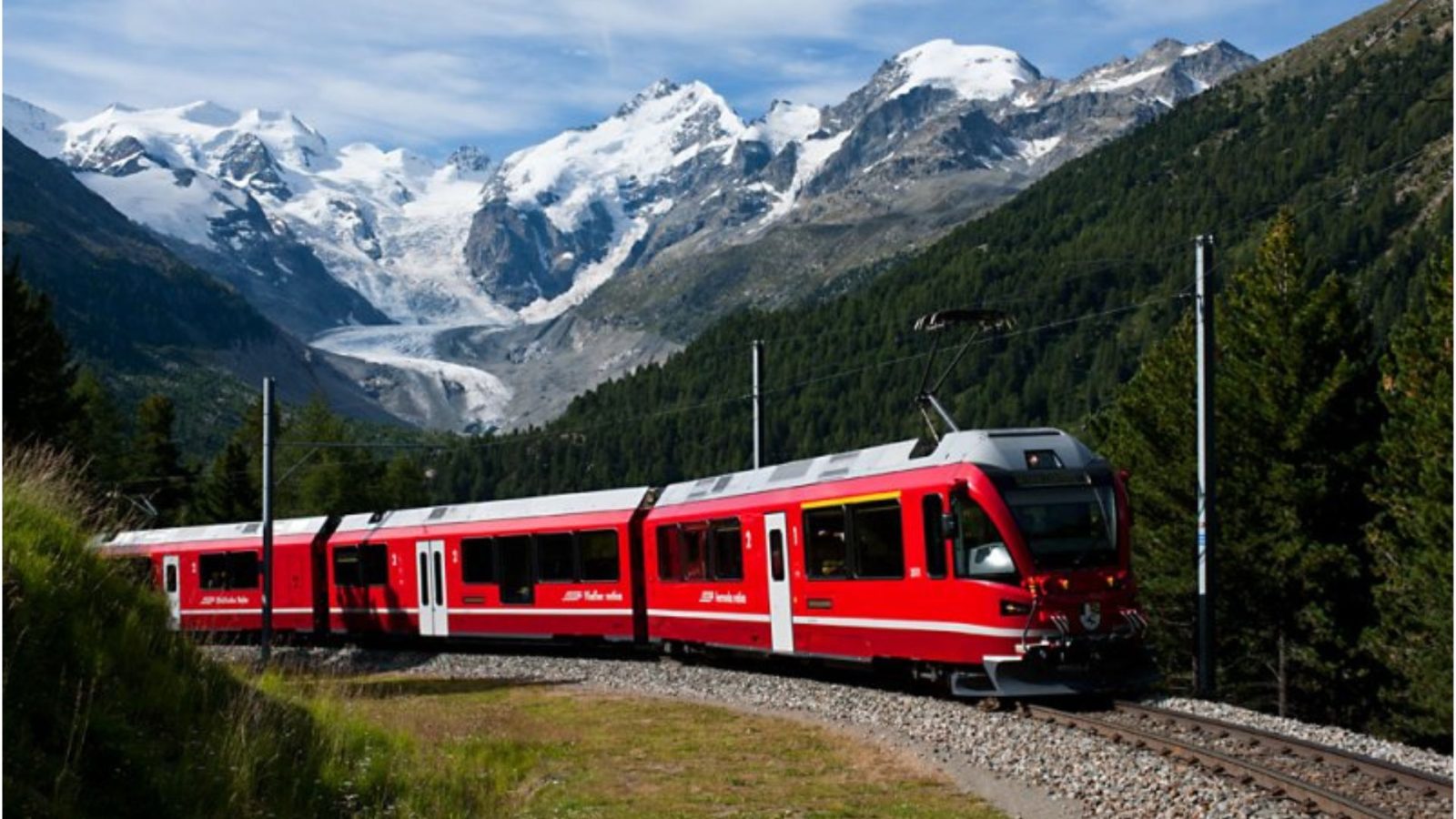
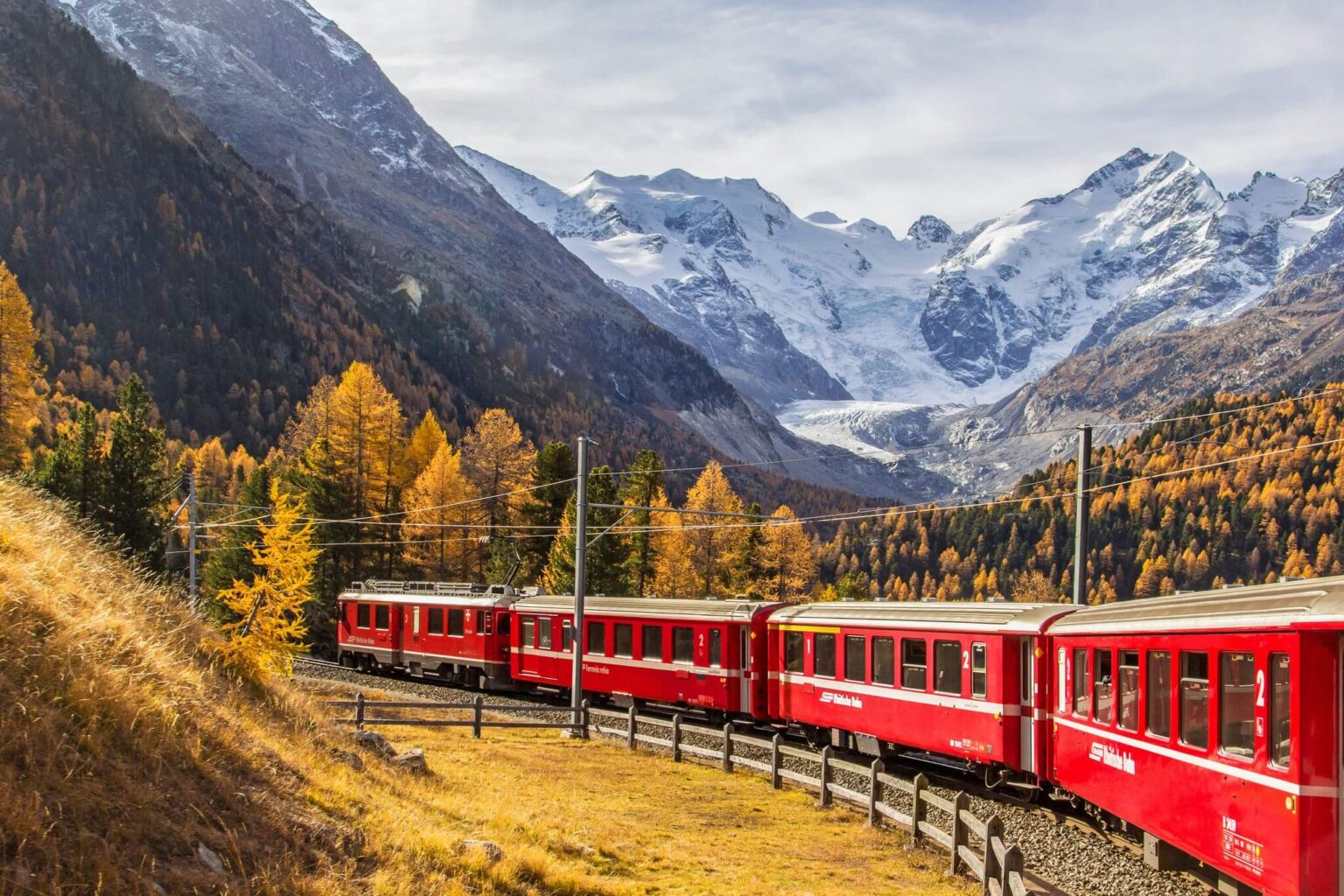
A sweeping 180-degree bend offers a classic view of the Morteratsch Glacier. This angle is a highlight of any scenic train from milan to swiss alps tour. Stand near the back of the train and shoot forward to capture the curved red carriages snaking through the valley.
This 65-meter-high curved stone bridge spans a deep forested ravine. The train arches gracefully across the masonry pillars before plunging straight into a cliffside tunnel. A viewing platform on the valley floor offers a vantage point for photographers.
Taking a scenic train from milan to swiss alps is a relaxed way to travel through dramatic peaks with children. The high-altitude journey offers spacious seating and giant windows, keeping youngsters engaged without the stress of driving.
You can bring strollers on board, but they must be folded and stored in the dedicated luggage zones or vestibules during the journey. Because aisle space in the panoramic carriages is limited, a compact, lightweight folding stroller is highly recommended for easy boarding.
Kids under six years of age travel free of charge but must sit on your lap unless you purchase a separate seat reservation. If you want to secure discounts for older children, searching for scenic train from milan to swiss alps tickets online helps you find options like the Swiss Family Card for those under sixteen.
The red train features onboard toilets in every carriage, though they are standard size and do not have specialized diaper changing tables. Families planning scenic train from milan to swiss alps tours should prepare by using the baby-change facilities at the larger stations like Chur or Tirano before boarding.
While a snack trolley circulates with sweet treats, there is no full dining car on this route, making it essential to pack plenty of snacks and drinks. Booking a scenic train from milan to swiss alps tour that allows for stops in local alpine villages gives you time to sit down for a proper warm meal.
The full panoramic rail journey to Chur takes around four hours, which might be long for toddlers. Choosing a shorter leg between Tirano and St. Moritz takes about two to three hours and keeps the trip manageable for younger kids.
Riders booking the scenic train from milan to swiss alps can look forward to exceptional local restaurants right next to the platforms. Travelers often plan their schedules around these culinary stops to try regional specialties. Enjoying a hot meal before or after cross-border travel makes the journey much more comfortable.
Located directly at Piazza delle Stazioni, this cozy spot is perfect for a quick turnaround. The kitchen features homemade buckwheat pasta and local cheeses. Try their authentic Valtellina pizzoccheri after completing a scenic train from milan to swiss alps tour.
A contemporary venue situated just down the street from the Tirano platform. The bright interior offers a welcoming atmosphere for wine tastings. It is a popular dining choice for travelers holding scenic train from milan to swiss alps tickets.
A traditional wood-paneled establishment that specializes in classic Swiss alpine food like cheese fondue. Visitors love the rustic charm and hearty mountain platters. It is highly recommended for those booking scenic train from milan to swiss alps tours.
Everything you need to know for your journey
You can buy tickets online via the official Rhaetian Railway site. The standard adult one-way second-class ticket between Tirano and St. Moritz on the Bernina Express costs 33 CHF.
Summer and winter are both popular times. Summer offers clear views of glacier lakes, while winter transforms the Bernina Express route into a snowy landscape.
Yes, if you wish to travel in the panoramic cars of the Bernina Express, a seat reservation is mandatory in addition to a valid ticket. Regular regional trains on the same route do not require reservations.
There is no formal dining car on the Bernina Express, but a mobile trolley service circulates through the carriages offering snacks, drinks, and chocolates.
The train departures begin from the train station located at Piazza delle Stazioni 22, 23037 Tirano, Italy. Many travelers arrive here via connections from Milan.
Windows in the panoramic carriages of the Bernina Express cannot be opened. However, the regional trains running along the same tracks have windows that can be pulled down for photos.
Yes, dogs are permitted on the Bernina Express. Small dogs under 30 centimeters travel free in a container, while larger dogs require a dog ticket.
Standard Rhaetian Railway tickets costing 33 CHF can be canceled or changed before the first day of validity. The seat reservation fee for the Bernina Express is generally non-refundable.
The train journey between Tirano and St. Moritz takes approximately 2 hours and 30 minutes. If you are taking the full Bernina Express route between Tirano and Chur, it takes around 4 hours and 20 minutes.
Yes, the Rhaetian Railway offers wheelchair-accessible coaches on the Bernina Express. You must notify the passenger assistance service at least 24 hours prior to departure.
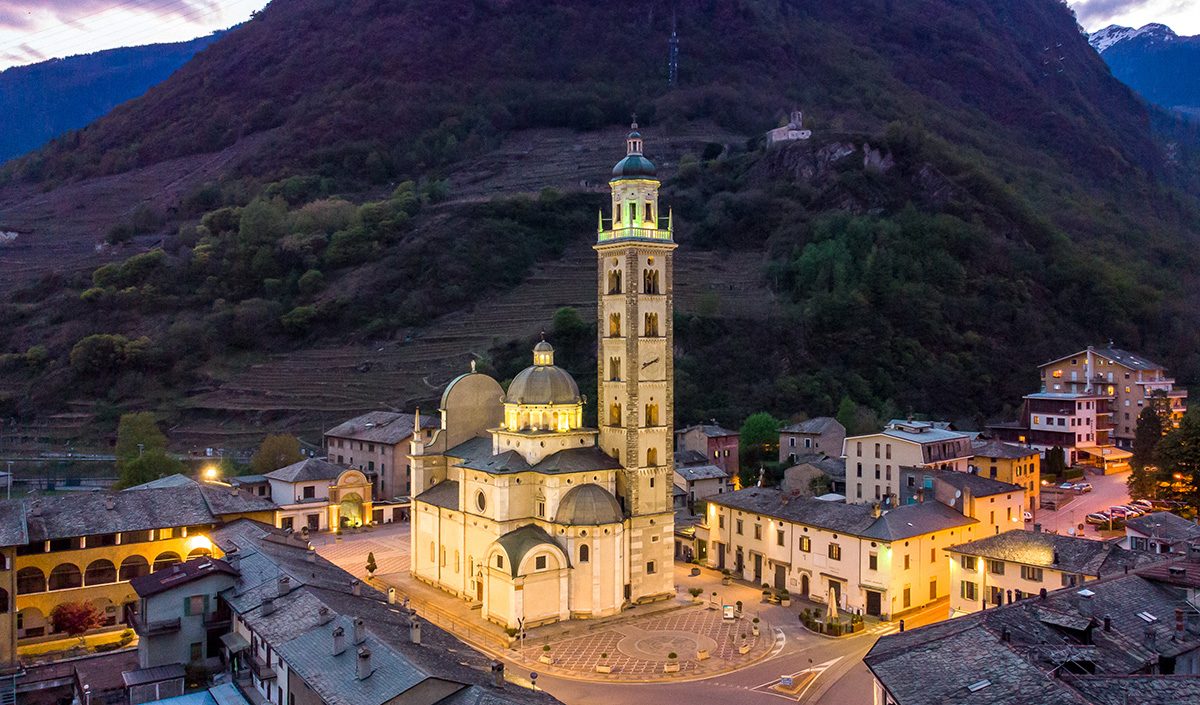
A Renaissance sanctuary built in the early 16th century, featuring a highly decorated organ. It marks the spot where the Virgin Mary reportedly appeared in 1504.
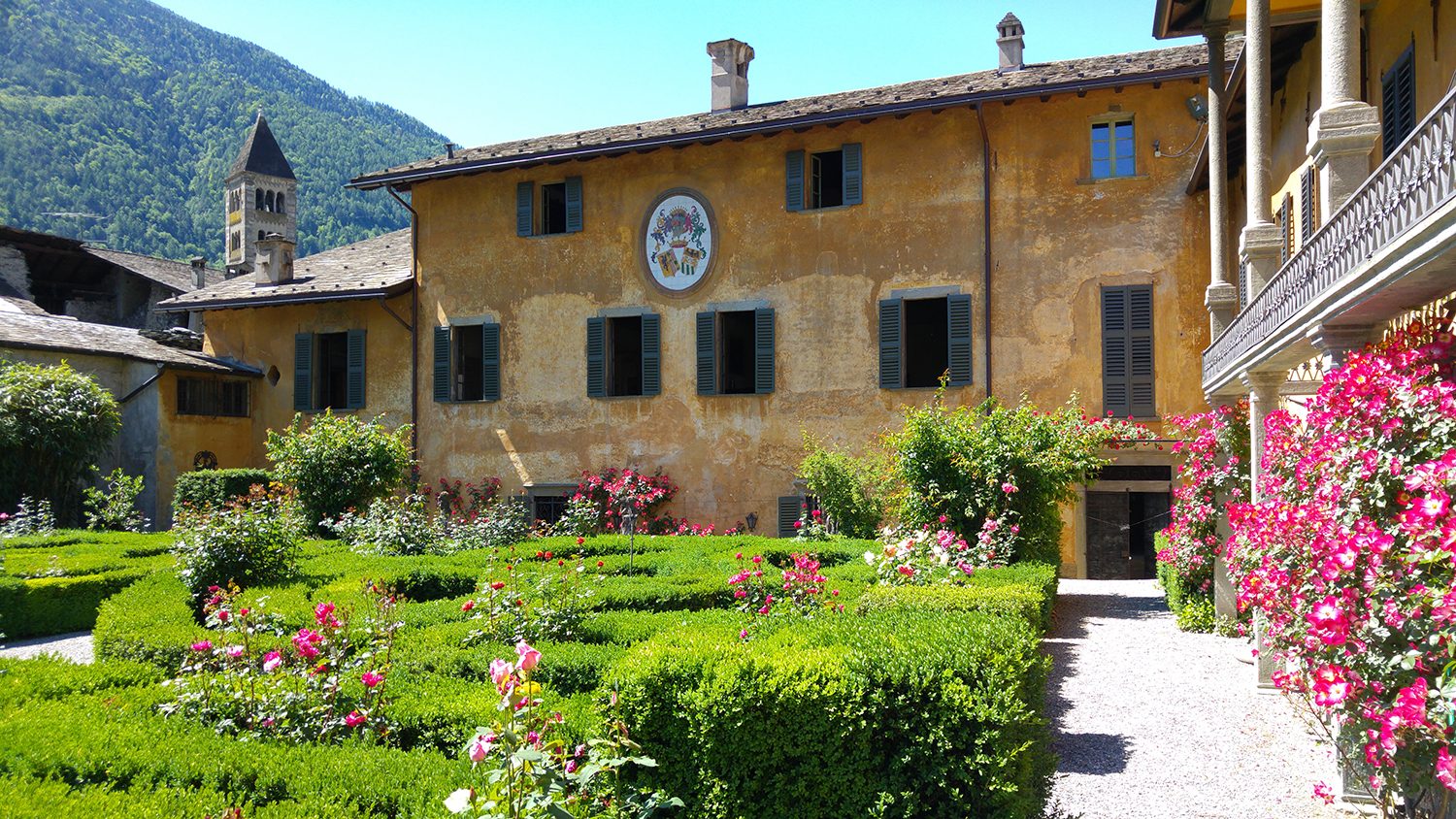
A late Renaissance palace in Tirano featuring historical frescoes and a baroque garden. It offers tours through its historic rooms.
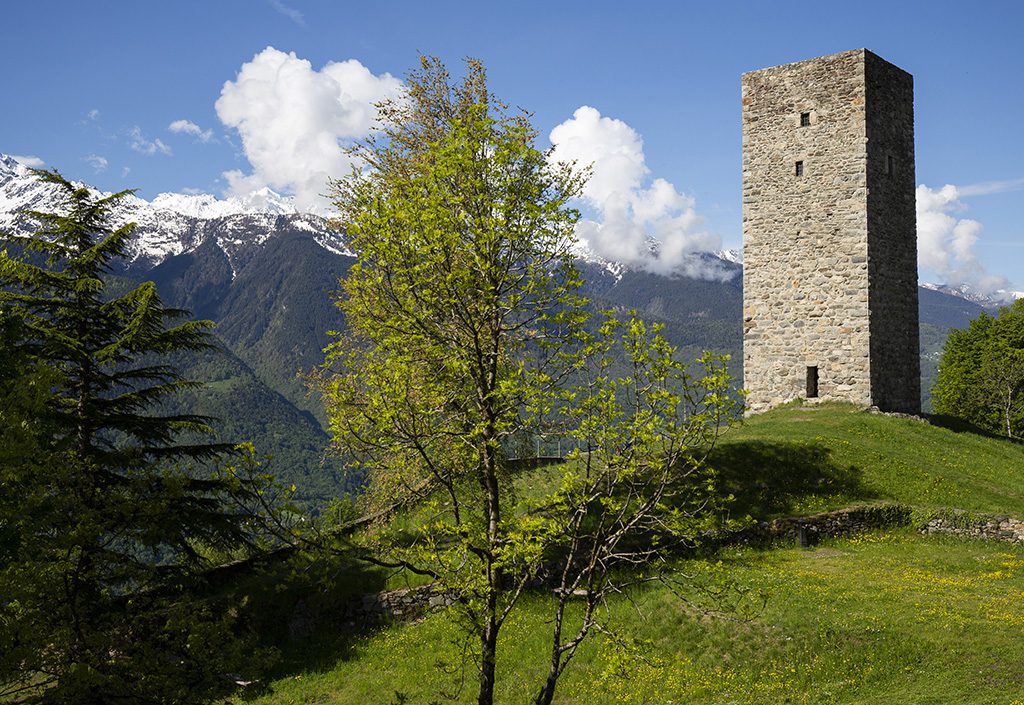
The remains of medieval defensive walls built during the Sforza rule of the region. It stands as a historical gateway into the old town.
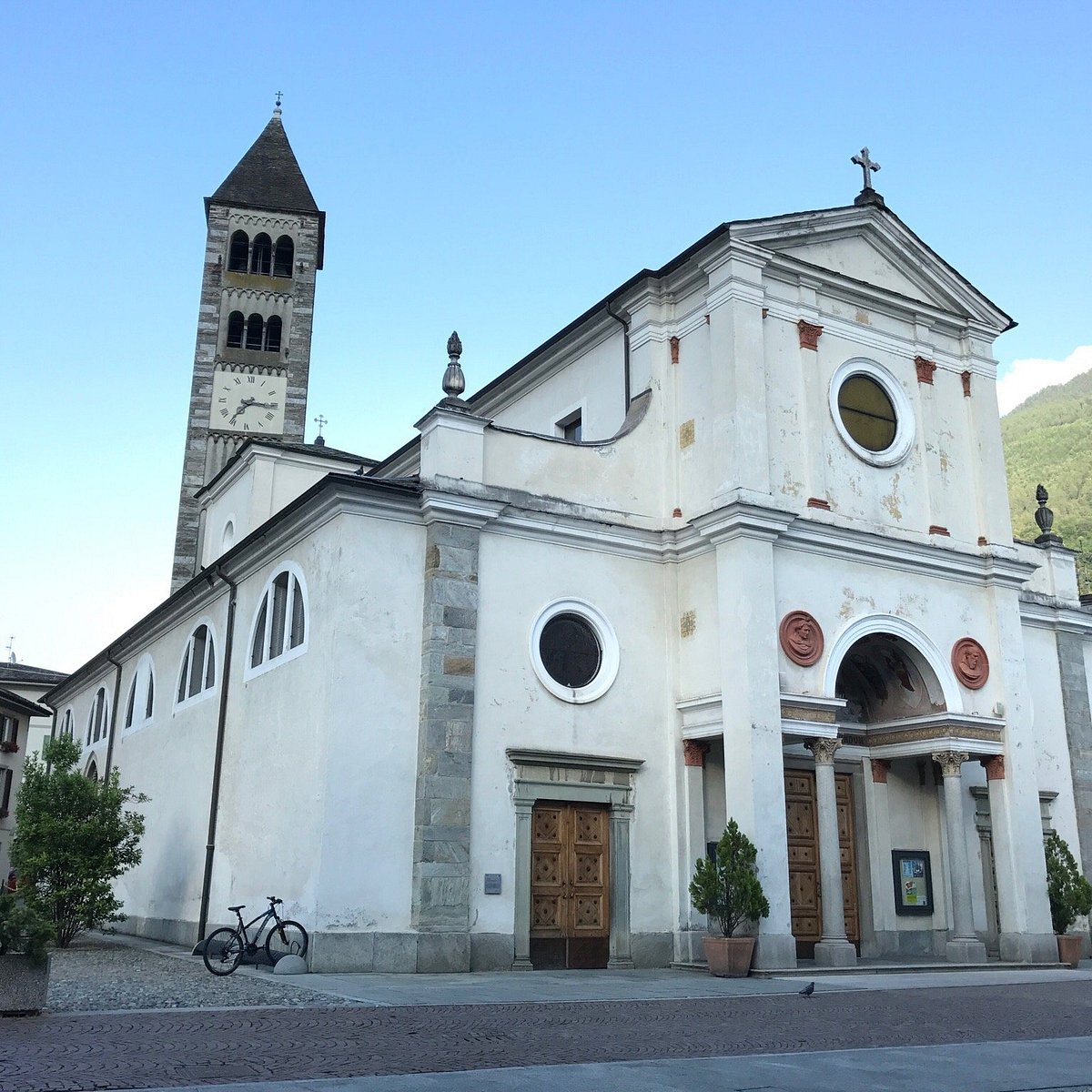
A historic church located in the center of Tirano featuring a prominent Romanesque bell tower. The interior houses artwork from local Lombard masters.
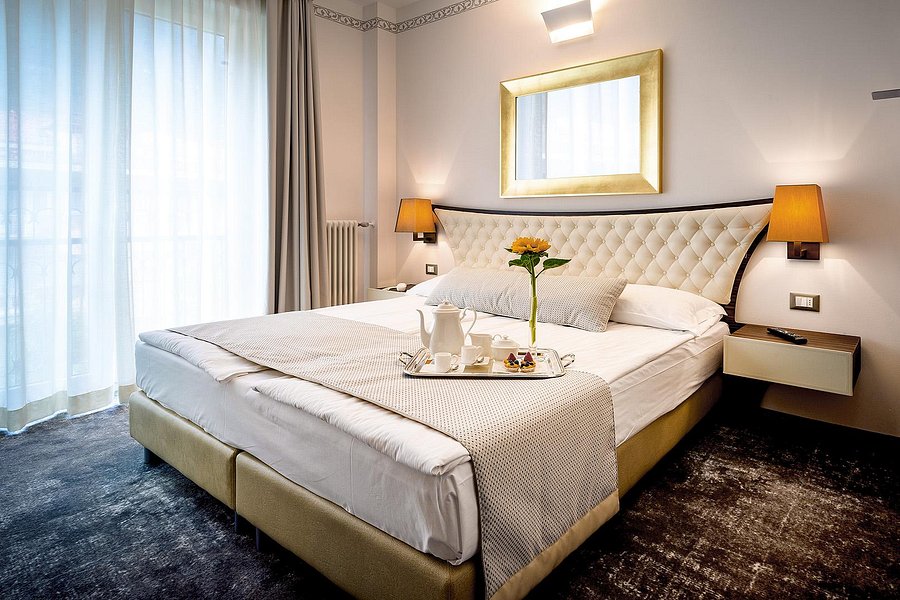
Located close to the Tirano railway stations, this hotel offers comfortable rooms and an on-site restaurant serving local Valtellina dishes.
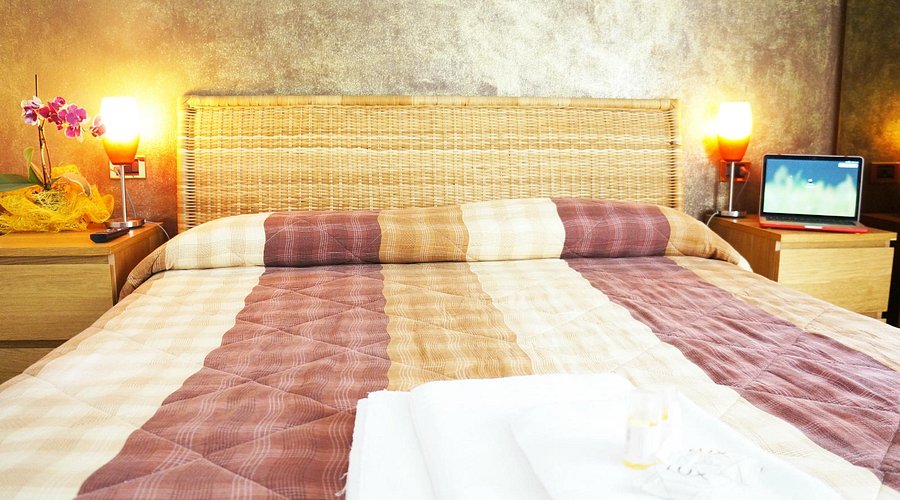
A simple guest house offering clean rooms and breakfast within easy walking distance of the train platforms.
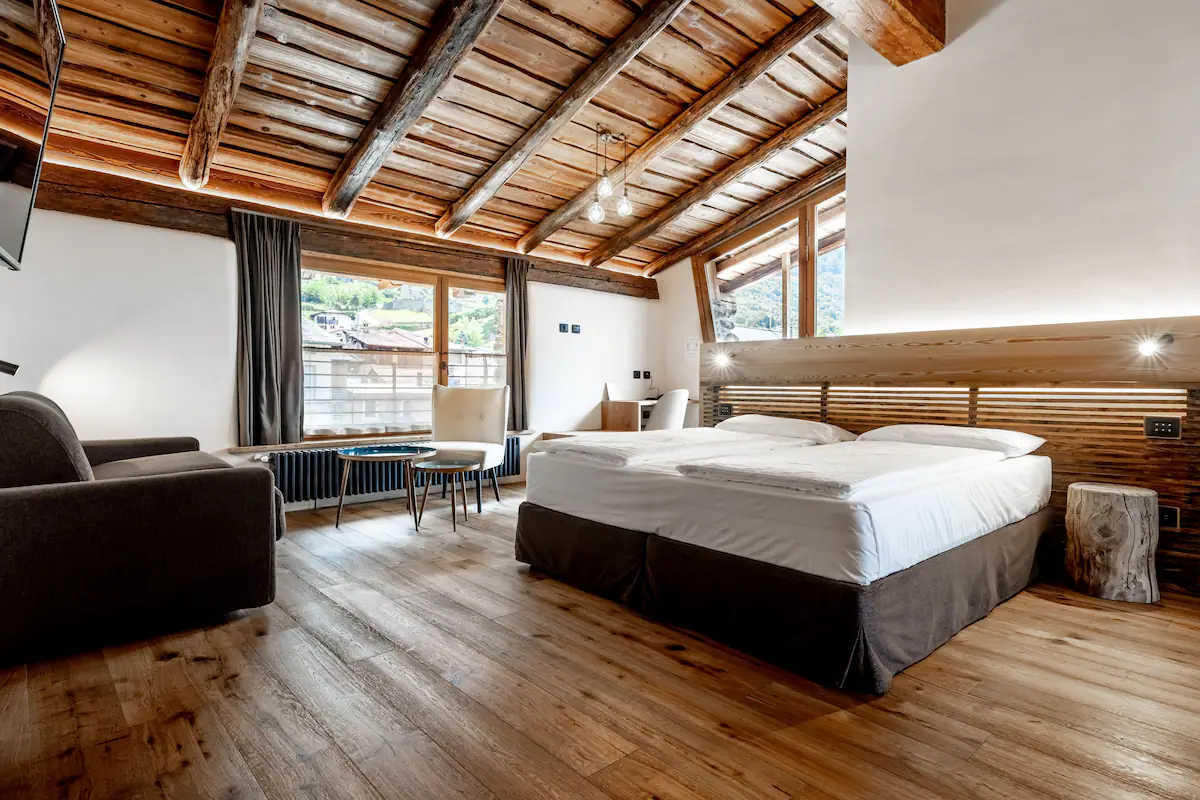
An eco-friendly hotel located in a historic courtyard offering modern rooms and sustainable travel amenities.
Join thousands of happy travelers who have discovered this incredible experience
Book Your Experience Now